
GSK
Pharmaceutical R&D Manufacturer

Original article title: "Ultra-long-acting Cabotegravir Can Be Injected 3 Times a Year for HIV PrEP and Treatment""》," Author: Liz Highleyman
According to early research results presented at the Conference on Retroviruses and Opportunistic Infections (CROI 2024),Cabotegravir Long-Acting Injectable Provides HIV Pre-Exposure Prophylaxis (PrEP) and Treatment, Administered Every Four Months.

Kelong Han, Ph.D. of GSK reported that a small Phase I trial showed a new ultra-long-acting formulation administered subcutaneously or intramuscularly every four months achieved similar drug exposure but persisted longer in the body compared to the approved formulation given every two months.
The ViiV press release stated that this study is "the first step in providing ultra-long-acting injectable HIV treatment and preventive drugs, which may allow people to have at least four months before visiting the clinic."

Although daily oral PrEP prevention or combination oral antiretroviral therapy is highly effective, some people find it difficult or undesirable to take medication every day. A key theme of the conference was the importance of having options for HIV prevention and treatment regimens.
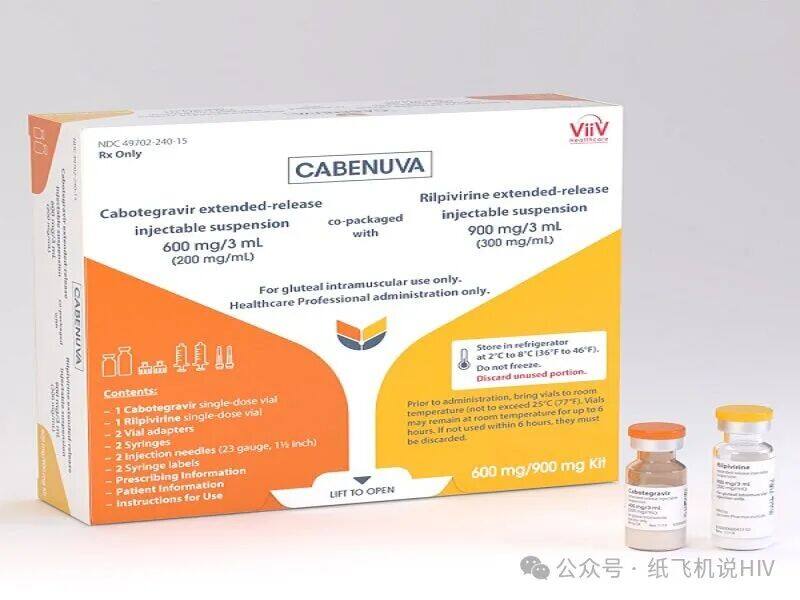
The cabotegravir formulation approved for PrEP (sold as Apretude) is currently the longest-lasting HIV prevention method, while the long-acting combination of cabotegravir and rilpivirine (Vocabria and Rekambys) represents the longest-lasting complete HIV treatment regimen. (In North America and Australia, these two drugs are packaged together and sold under the name Cabenuva.) Both PrEP and treatment involve intramuscular injections in the buttocks administered by a healthcare provider every other month.
One strategy to achieve a lower dosing frequency is to increase the injection volume or formulation concentration. Another approach is to develop a long-acting formulation with a slower absorption rate and a longer half-life in the body (the time it takes for the drug concentration to drop to half of its original level).
Han and colleagues evaluated the safety and pharmacokinetics of different cabotegravir formulations and administration methods. They tested the approved 200 mg/ml cabotegravir (CAB200) co-administered with recombinant human hyaluronidase PH20 (rHuPH20) (allowing for larger injection volumes), as well as a novel ultra-long-acting formulation without rHuPH20 (referred to as CAB-ULA).
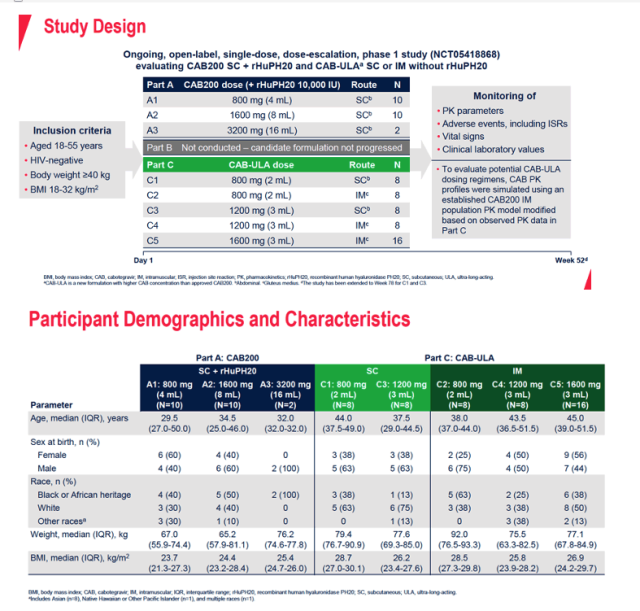
This open-label trial (NCT05418868) enrolled 70 healthy HIV-negative adults. Approximately 60% were male, with an average age of around 40 years, and they represented diverse ethnicities. The median body mass index fell within the overweight range. Some studies suggest that individuals who are obese or overweight may respond less effectively to injectable cabotegravir, but the data remain inconsistent.
In the first part of the study, volunteers received subcutaneous abdominal injections of different doses (800mg/4ml, 1600mg/8ml, or 3200mg/16ml) of CAB200 along with rHuPH20 (10,000 IU). In the subsequent parts, they received different doses of CAB-ULA (800mg/2ml, 1200mg/3ml, or 1600mg/3ml) via subcutaneous abdominal injection or intramuscular gluteal injection, without rHuPH20.
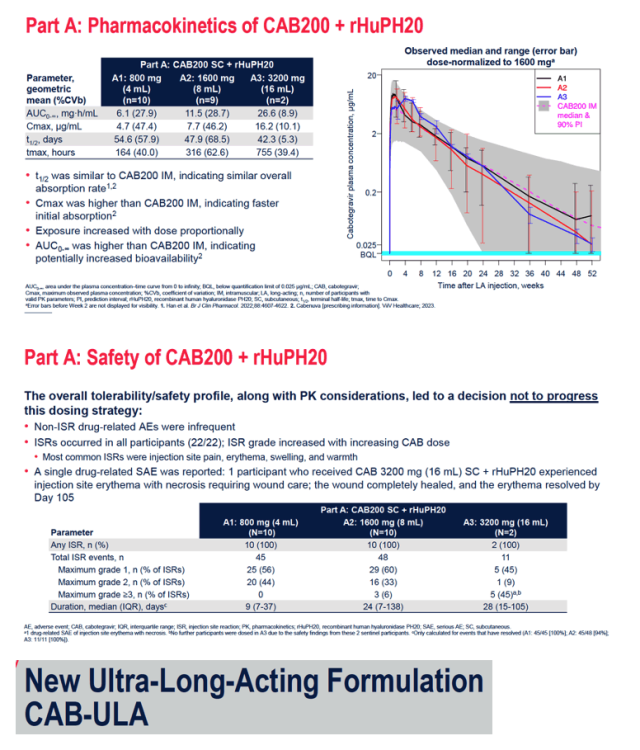
Patients receiving subcutaneous injections of CAB200 plus rHuPH20 had higher maximum plasma drug concentrations and area under the curve (a measure of total drug exposure) compared to the approved intramuscular injection of CAB200 (without rHuPH20), indicating a possible increase in bioavailability. However, the half-life was similar, suggesting comparable absorption rates.
But the tolerance of subcutaneous injection of CAB200 and rHuPH20 was not good. All 22 participants who received this formulation experienced injection site reactions, which were more severe at higher doses. Eight people had severe reactions, one of whom, in the highest dose group, had a serious reaction with redness and necrosis (tissue death) that required wound care. Han reported that, given the poor tolerance, the company decided not to continue with this dosing strategy.
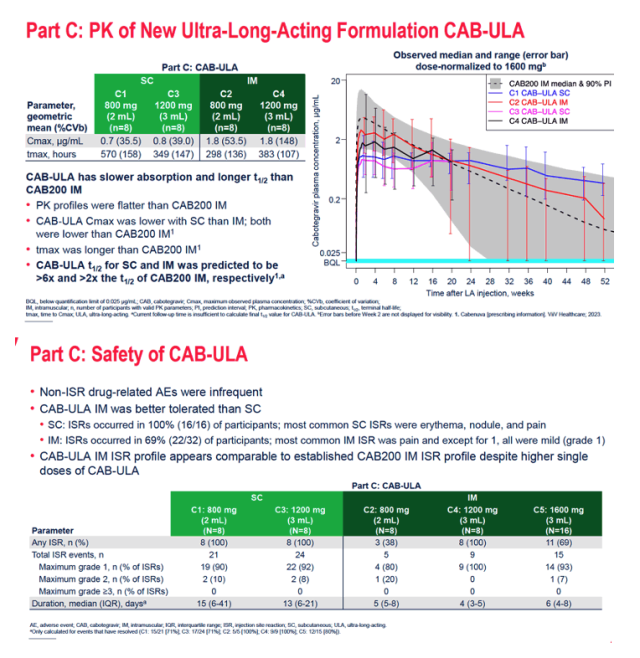
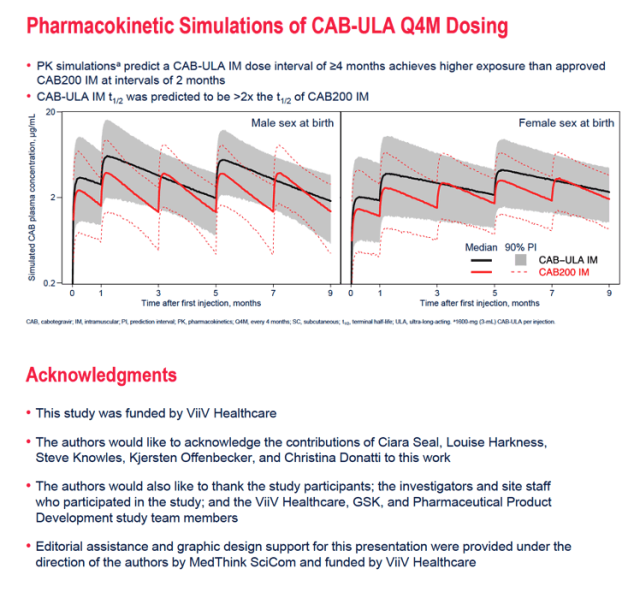
As for the new ultra-long-acting formulations, the maximum concentration of subcutaneous CAB-ULA is lower than that of intramuscular CAB-ULA, and both are lower than the approved intramuscular CAB200. Han stated that the pharmacokinetic profile is "flatter," indicating a slower absorption rate. Additionally, the half-life of subcutaneous CAB-ULA is longer than that of intramuscular CAB-ULA, and both are longer than that of intramuscular CAB200. The estimated half-life of intramuscular CAB-ULA is more than twice that of CAB200, while the estimated half-life of subcutaneous CAB-ULA is more than six times that of CAB200.
Fortunately,CAB-ULA without rHuPH20 is better tolerated, especially when administered intramuscularly. All 16 participants who received subcutaneous injections experienced injection-site reactions (redness, nodules, or pain), and 22 of the 32 participants who received intramuscular injections also reported injection-site reactions, but most were mild. Other types of adverse events were rare. Han noted that despite the higher dose, the tolerability of intramuscular CAB-ULA was comparable to that of the approved CAB200.
Pharmacokinetic modeling predicts that intramuscular administration of CAB-ULA at dose intervals of at least 4 months will result in higher drug exposure compared to intramuscular administration of CAB200 every two months, for both males and females.
Based on these findings,Researchers concluded that CAB200 and rHuPH20 had a "lower" dosing frequency. However, the new ultra-long-acting cabotegravir formulation showed good tolerability and safety, with pharmacokinetic characteristics supporting a dosing interval of four months or longer.
Han said that the intramuscular CAB-ULA, administered every four months, will enter upcoming late-stage PrEP and treatment trials, with additional evaluations planned for subcutaneous administration. Unlike intramuscular injections, subcutaneous injections may allow for self-administration.

Han stated in a ViiV press release, "These findings suggest that the pharmacokinetic profile of CAB-ULA has the potential for dosing intervals of at least four months, which is longer than any currently approved HIV prevention regimen. Looking ahead, further advancements in long-acting drugs have the potential to revolutionize the treatment and prevention of HIV."
However, ultra-long-acting cabotegravir will face competition from Gilead Sciences' long-acting capsid inhibitor lenacapavir, which is administered via subcutaneous injection every six months. Lenacapavir (brand name Sunlenca) has been approved for use in treatment-experienced patients with multidrug-resistant HIV and is being evaluated as a twice-yearly PrEP option.
END
Follow "Paper Plane Talks HIV" to stay on track with antiviral treatment!