GE HealthCare and NVIDIA Pioneer Boundaryless Ultrasound Innovation with AI-Powered SonoSAMTrack

GE Healthcare
Digital Solution Provider
NVIDIA
Artificial Intelligence Computing Service Provider


Recently, GE Healthcare successfully developed the latest research model, SonoSAMTrack, using NVIDIA technology.1, another significant innovation from GE Healthcare's long-term close collaboration with NVIDIA in the artificial intelligence field.
SonoSAMTrack will be used for segmenting anatomical structures, lesions, and other critical regions in GE Healthcare ultrasound images, marking a groundbreaking application of artificial intelligence in ultrasound image segmentation. Across various datasets and experimental conditions, the model consistently delivers high-quality segmentation results, showcasing its exceptional flexibility and broad applicability while highlighting the immense potential of AI in enhancing medical imaging. To meet the needs of a wider range of devices, the research team is simultaneously developing a simplified version of the model—SonoSAMLite—to address application requirements in different scenarios.
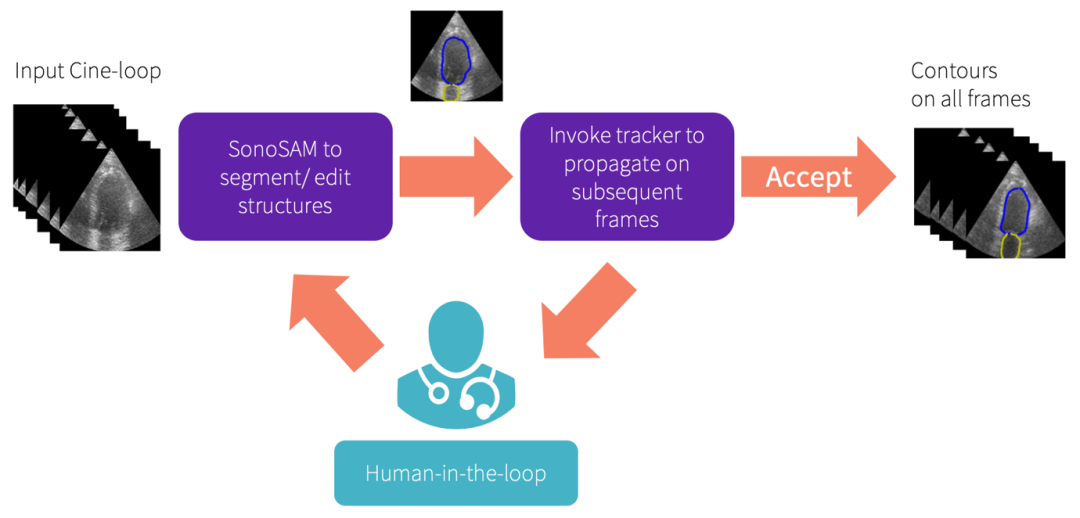
SonoSAMTrack Workflow
Previous methods of integrating artificial intelligence into healthcare systems required retraining models.To meet the unique needs of different patient populations and hospital environments. This process not only increases overall costs and implementation complexity but also requires specialized personnel, which undoubtedly adds to the difficulty of popularizing AI technology in the healthcare field. Meanwhile, foundation models have gained widespread attention in the industry for enabling human-machine collaborative AI system operations.
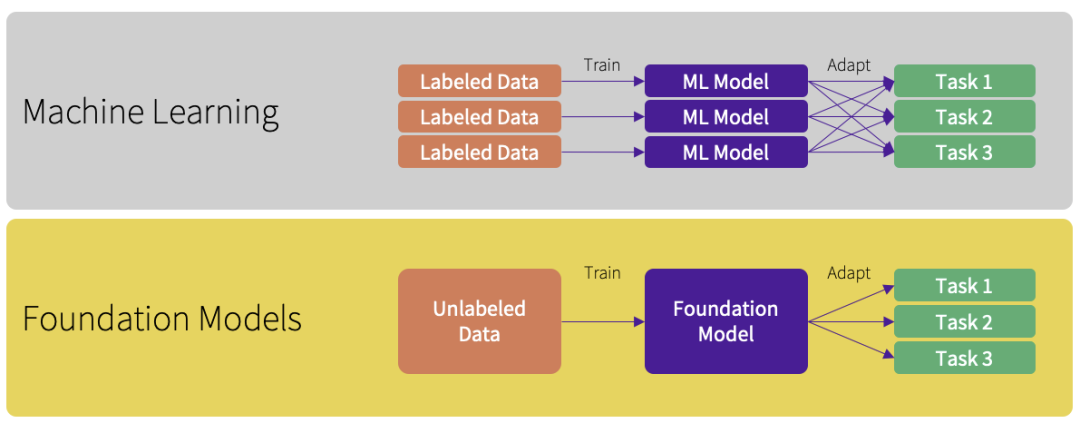
Basic Model: Training Unlabeled Data to Make AI Models More Generalizable
Basic and generative artificial intelligence models can rapidly adapt to various diseases with minimal training requirements (e.g., zero-shot or few-shot settings), accelerating screening, early detection, progress tracking, and identification of non-invasive biomarkers. According to a recent research report by GE Healthcare, its development project, SonoSAMTrack, has demonstrated excellent performance across seven different ultrasound datasets. These datasets cover a wide range of anatomical types, such as adult hearts and fetal heads, as well as various pathological conditions like breast lesions and musculoskeletal disorders. Additionally, the project is adaptable to different scanning devices, showcasing strong versatility and adaptability.
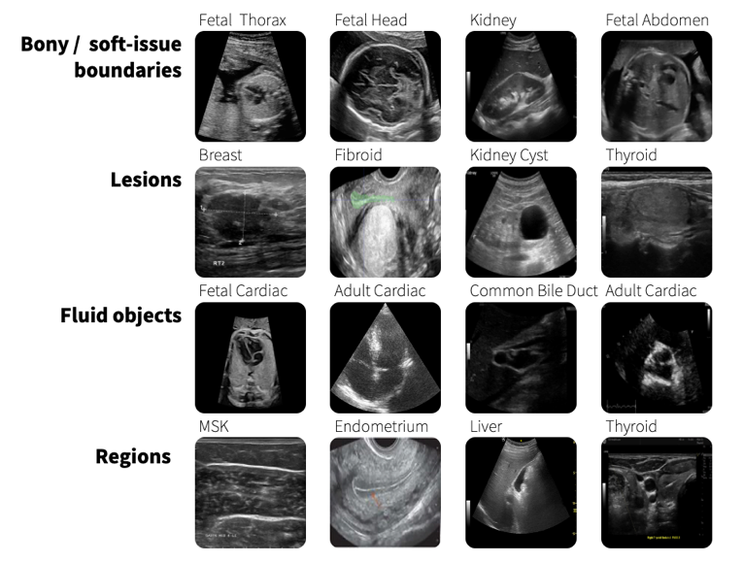
Examples of Algorithm Application in Ultrasound Images
In addition, SonoSAMTrack excels in enhancing operational speed and efficiency, requiring only 2-6 clicks to complete precise segmentation tasks, thereby significantly reducing user input.2Burden. The realization of this outstanding performance is mainly due to the application of distillation and quantization technologies, as well as the support of NVIDIA's TensorRT software development kit and other quantization-aware training functions.

In the healthcare sector, particularly in the field of ultrasound, the application of artificial intelligence is increasingly demonstrating its tremendous potential to enhance patient care experiences, improve hospital operational efficiency, and optimize clinical decision-making. Through boundless innovation, it continuously pushes the limits of ultrasound technology, indicating that it will lead the medical field into a new stage of development and shape an entirely new era of limitless healthcare compassion.

1. Technology in development that represents ongoing research and development efforts. These technologies are not products and may never become products. Not for sale. Not cleared or approved by the U.S. FDA or any other global regulator for commercial availability.
2. Hariharan Ravishankar, Rohan Patil, Vikram Melapudi, Harsh Suthar, Stephan Anzengruber, Parminder Bhatia, Kass-Hout Taha, Pavan Annangi. SonoSAMTrack -- Segment and Track Anything on Ultrasound