

Wegovy (Semaglutide) for Cardiovascular Risk Reduction in Obese Patients Gains Medicare Part D Coverage
Novo Nordisk
Insulin Developer and Manufacturer

AstraZeneca
Biopharmaceutical Manufacturer
Fusion Pharmaceuticals
Biopharmaceutical R&D and Manufacturing

Warm Tips
Peptide Research Society Builds Reader Communication Group~
Industry Exchange, Business Cooperation, Report Consultation
Please add the editor's WeChat for future group joining.?

Enterprise Dynamics

01
Recently, the U.S. CMS announced that Novo Nordisk's weight-loss drug Wegovy will be covered under Medicare Part D, but only for patients with heart disease, primarily to reduce the risk of heart attacks and strokes. This marks the first time Medicare has allowed a weight-loss drug into its reimbursement catalog, albeit only for a specific population and requiring prior authorization from the payer. Nonetheless, it signifies that health insurance has begun reimbursing weight-loss drugs with therapeutic benefits for certain medical conditions.
However, due to legal restrictions preventing Medicare from covering weight-loss drugs, the standalone indication for weight loss will not yet enter the U.S. health insurance system.
02
On March 19, 2024, Novo Nordisk announced an investment of approximately $556 million (approximately ¥4 billion) in Tianjin for the expansion project of sterile formulations, and held a groundbreaking ceremony for the expansion project. On the day of the event, representatives from the Danish Embassy in China, relevant departments of Tianjin Municipality, and Binhai New Area were invited to attend and jointly witnessed the launch of the project.
Novo's Tianjin production plant, which first opened in 1994, is one of its global strategic production bases and an important part of the global drug supply system. This expansion project, commemorating Novo's 30th anniversary of operating in China, will increase the pharmaceutical company’s production capacity and support localized drug manufacturing.
03

On March 19, 2024, AstraZeneca announced that it had reached a definitive agreement to acquire Fusion Pharmaceuticals, Inc. This acquisition complements AstraZeneca's leading oncology portfolio, including the Phase II program FPI-2265, a potential new therapy for patients with metastatic castration-resistant prostate cancer (mCRPC).
According to the terms of the agreement, AstraZeneca will acquire all outstanding shares of Fusion Pharmaceuticals, Inc. at a cash price of $21.00 per share through a subsidiary, plus a non-transferable or valuable cash right of $3.00 per share payable upon achieving specific regulatory milestones. The total transaction consideration is approximately $2.4 billion.
Among them, Fusion is a clinical-stage oncology company focused on developing next-generation radiopharmaceuticals as precision medicines. Fusion is an industry leader in targeted alpha-particle therapy, utilizing medical isotopes that emit alpha particles to "bind" antibodies targeting cancer cells with alpha particles for precise elimination of cancer cells. Using its proprietary Fast-Clear linker technology, Fusion attaches alpha-emitting isotopes to various targeting molecules to selectively deliver the alpha-emitting payload to tumors, expanding the therapeutic window compared to traditional technologies. Currently, this technology is applied to different categories of drugs, such as antibodies, small molecules, etc.
04

On March 18, 2024, Protagonist Therapeutics announced the completion of a global collaboration and licensing agreement for rusfertide with Tekada. Protagonist will receive a $300 million upfront payment related to the transaction in Q2 2024.
Among them, Protagonist Therapeutics is a biopharmaceutical company whose peptide-based new chemical entities (NCEs), rusfertide and JNJ-2113 (formerly known as PN-235), are in the late stages of clinical development, both originating from the company's proprietary technology platform. PN-235 (now called JNJ-2113) was co-discovered by Protagonist and JNJ scientists as part of Protagonist’s collaboration with JNJ targeting the interleukin-23 receptor (IL-23R). Following IND-enabling preclinical and Phase Ⅰ studies, JNJ took over further clinical development. Rusfertide, a mimetic of the natural hormone hepcidin, is the company’s lead candidate currently in a global Phase Ⅲ development program. The randomized portion of the Phase 2 REVIVE study was open-label and demonstrated positive results; it has now been completed, and an open-label extension is ongoing. The global Phase 3 VERIFY study for rusfertide in treating polycythemia vera is currently underway. According to a global collaboration and licensing agreement signed with Takeda in 2024-1, rusfertide will be co-developed and commercialized with Takeda.
05

On March 19, 2024, Nimble Therapeutics announced that Dan Flynn and Brian Cali have joined the company's board of directors. Both individuals bring extensive experience in entrepreneurship and drug development, and will guide Nimble in advancing its internal product pipeline.
"Nimble Therapeutics founder and CEO Jigar Patel said, 'Both are renowned pharmaceutical biotechnology entrepreneurs who have founded and successfully led companies developing novel small-molecule or peptide drugs. We look forward to their guidance as we strive to bring breakthrough medicines into clinical development and ultimately benefit patients in need.'"
Research Progress

01
2024-3-23, OKYO Pharma announced the Phase II clinical trial data of its investigational OK-101 (0.05%) eye drops for the treatment of patients with dry eye disease (DED). Analysis shows that OK-101 significantly improved multiple DED symptoms in patients. According to the press release, this drug is the first investigational DED treatment to demonstrate statistically significant and sustained improvements in tear film breakup time (TFBUT) and ocular pain. These positive results support OKYO in advancing to related Phase III trials.
The published trial was a randomized, double-blind, placebo-controlled Phase 2 trial, with a total of 240 patients enrolled. The main clinical results are as follows:
By Day 15, the patients' eye pain relief showed statistically significant improvement and was maintained throughout the trial. The patients' conjunctival staining results improved by Day 29 and remained consistently improved throughout the trial. By Day 15, the tear film break-up time demonstrated statistically significant improvement, and this benefit persisted for the remainder of the trial. Burning/stinging sensations and blurred vision in the patients' eyes improved by Day 15 and were sustained throughout the trial. According to measurements from the patients' daily symptom diaries, significant improvements in multiple symptoms were observed within two weeks of treatment initiation, including pain, burning/stinging, dry eyes, and itching. OK-101 exhibited excellent drop comfort comparable to artificial tears, with very good ocular tolerability and a favorable adverse event profile, with no drug-related serious adverse events.
Among them, OK-101 is a lipid-conjugated chemerin peptide agonist that initiates an anti-inflammatory response by targeting the G protein-coupled receptor ChemR23, which is commonly found on immune cells in the eye responsible for inflammatory responses.
02

On March 21, 2024, Lisata Therapeutics announced that the FDA had granted Rare Pediatric Disease Designation (“RPDD”) to the company’s lead candidate product LSTA1 for the treatment of osteosarcoma, a rare cancer that can occur in children, adolescents, and young adults.
Among them, LSTA1 is a novel tumor-targeting penetrating peptide designed to activate a tumor-specific transport system, allowing systemic anticancer drugs used in combination with it to penetrate tumors more effectively and accumulate within the tumor. LSTA1 also has the potential to alter the tumor microenvironment, making tumors more susceptible to immunotherapy. Lisata and its collaborators have gathered extensive non-clinical data demonstrating that the delivery of a range of existing and emerging anticancer therapies—including chemotherapy, immunotherapy, and RNA-based therapies—has been enhanced when combined with LSTA1. Furthermore, LSTA1 has shown good safety, tolerability, and activity in clinical trials, enhancing the administration of the standard of care (SOC) for pancreatic cancer. The company is exploring the potential of LSTA1 to make various treatment modalities more effective in treating a variety of solid tumors.
03
On 2024-3-22, Novo Nordisk registered the Phase II clinical trial of NN0519-0130 for weight loss and glucose reduction on the Clinicaltrials.gov website, planning to enroll 343 and 288 patients respectively, with an expected preliminary completion date of November 2024.
Among them, both Phase II clinical trials used Tirzepatide as the positive control group. According to the planned timeline of Novo Nordisk's R&D pipeline, NN0159-0130 is most likely a GLP-1R/GIPR dual-target agonist administered once weekly.
The phase I clinical data of this GLP-1R/GIPR dual-target agonist are as follows: the hypoglycemic dosing regimen is 3mg administered once a week for three weeks, followed by 6mg administered for one week. The weight loss dosing regimen consists of five escalating doses administered daily, starting from 0.3mg and escalating to 3mg over a total of 15 weeks. After four weeks of hypoglycemic treatment, HbA1c decreased by more than 0.5%, and after 15 weeks of weight loss treatment, body weight decreased by nearly 12%.
04

On March 20, 2024, Entera Bio, dedicated to the development of oral peptide delivery, announced positive pharmacokinetic results from its collaborative research. The study combines OPKO Health's proprietary long-acting GLP-2 agonist with Entera's proprietary N-Tab™ technology.
Entera and OPKO completed a proof-of-concept (PoC) single-dose pharmacokinetic study in rodents as the first validation of an oral GLP-2 therapeutic. Oral tablets (1.8mg; n=15) and intravenous injections (2mg/kg; n=6) were administered to rats. Pharmacokinetic blood samples were collected 24 hours post-administration and drug concentrations were analyzed using a validated LC-MS/MS method.
Oral GLP-2 tablets demonstrated significant systemic exposure, achieving the study's objectives. Moreover, the plasma levels attained with the oral tablet form of the GLP-2 analog were approximately 10 times higher than the therapeutic plasma concentrations reported for subcutaneous teduglutide (Gattex label). Pharmacokinetic analysis of data obtained after intravenous administration of the GLP-2 peptide showed that the plasma half-life in rats was about 6 times longer than the reported half-life of teduglutide in the same animal model. This data is consistent with previously reported PK data associated with the long-acting characteristics of OPKO's GLP-2 peptide.
05
On March 21, 2024, Novo Nordisk announced that the European Medicines Agency's Committee for Medicinal Products for Human Use (CHMP) had adopted a positive opinion, recommending approval of the product named Awiqli (once-weekly basal insulin Icodec) for the treatment of diabetes in adults.
Among them, Icodec is an ultra-long-acting insulin formulation designed by Novo Nordisk based on the oral insulin OI338, with a half-life of up to 196 hours in the human body. Its core design includes: ① replacing the 18C long-chain fatty acid with a 20C long-chain fatty acid to enhance the molecule's binding affinity to human serum albumin; ② substituting His (histidine) for Tyr (tyrosine) at position 16 of the B chain to reduce the molecule’s affinity for the human insulin receptor. The product has also been submitted for marketing approval in the United States and China.
The positive opinion of the CHMP is based on the results of the ONWARDS clinical trial program. This program includes six global Phase IIIa clinical trials investigating the efficacy and safety of once-weekly basal insulin icodec, involving more than 4,000 patients with type 1 or type 2 diabetes, including a real-world study.
Among them, compared with daily basal insulin therapy, once-weekly basal insulin therapy enabled patients with type 2 diabetes to achieve better glycemic control (measured by changes in HbA1c) and a longer duration of blood glucose levels maintained within the recommended range. In patients with type 2 diabetes who had not previously received insulin therapy, the overall observed rates of clinically significant or severe hypoglycemia were less than 1 event per patient-year in both the once-weekly basal insulin group and the control group.
In patients with type 1 diabetes, once-weekly basal insulin Icodec demonstrated non-inferiority in reducing HbA1c, with a statistically significant increase in the estimated rate of severe or clinically significant hypoglycemia. Throughout the program, once-weekly basal insulin Icodec showed good safety and tolerability.
Cutting-edge Technology

01
Professor Chen Chongyi from Ningbo University published an article titled "Synthetic Polypeptide Bioadhesive Based on Cation−π Interaction and Secondary Structure" in ACS Macro Lett.
The article points out that bioadhesives, due to their excellent biocompatibility and biodegradability, have gradually gained widespread attention in the fields of medicine and bioengineering. They are suitable for wound closure, hemostasis, biosensors, and drug delivery. However, most commercial polymer adhesives and natural protein adhesives currently on the market have drawbacks such as weak tissue adhesion, high toxicity, or non-biodegradability, failing to meet the requirements of bioadhesives. Therefore, designing a new type of strong bioadhesive with both biocompatibility and biodegradability is of great significance. The selection of matrix materials plays a crucial role in the development process of bioadhesives. Typical matrix materials include sodium alginate, collagen, and hyaluronic acid. Among them, polypeptide materials obtained through the ring-opening polymerization of N-carboxyanhydride (NCA) not only exhibit excellent biocompatibility, biodegradability, and chemical diversity but can also be produced on a large scale. However, the adhesive properties of polypeptide materials remain largely unexplored.
In the article, the author synthesized a novel aqueous copolypeptide adhesive material through the ring-opening copolymerization of BLL NCA and BLG NCA, followed by selective deprotection. The cation-π interactions between the ammonium cations and phenyl groups endowed the material with strong cohesion, while the hydrophobicity of the phenyl groups significantly enhanced the interaction between the copolypeptide and the substrate interface, giving it excellent adhesive properties. Moreover, this copolypeptide adhesive exhibited outstanding adhesion performance on various substrates, making it a promising candidate as an alternative medical adhesive material.
Some images are sourced from the internet. If there is any infringement, please contact us for removal.
END

Flagship Report
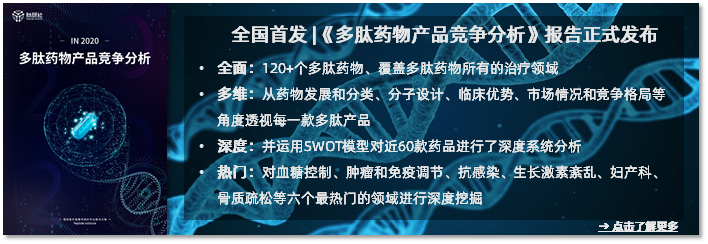

Column Recommendation






Peptide Research Society

Biopharmaceuticals · Beauty & Personal Care · Nutrition & Health
Animal Health · Green Agriculture · Biomaterials
Professional Focus | Customer Success | Co-growth