

InnoVec Biotherapeutics Announces Successful First-in-Human Intravitreal Administration of IVB102 Gene Therapy for X-Linked Retinoschisis

Innovecbio
Gene Editing Delivery Technology and Drug Developer
On March 22, 2024, a study on X-linked retinoschisis (XLRS) led by Professor RuiFang Sui from the Department of Ophthalmology at Peking Union Medical College HospitalAn open-label, dose-escalation clinical study evaluating the safety, tolerability, and preliminary efficacy of IVB102 injection in subjects has successfully completed vitreous injection administration in the first subject. The subject was in good condition after dosing, with no drug-related adverse events observed.
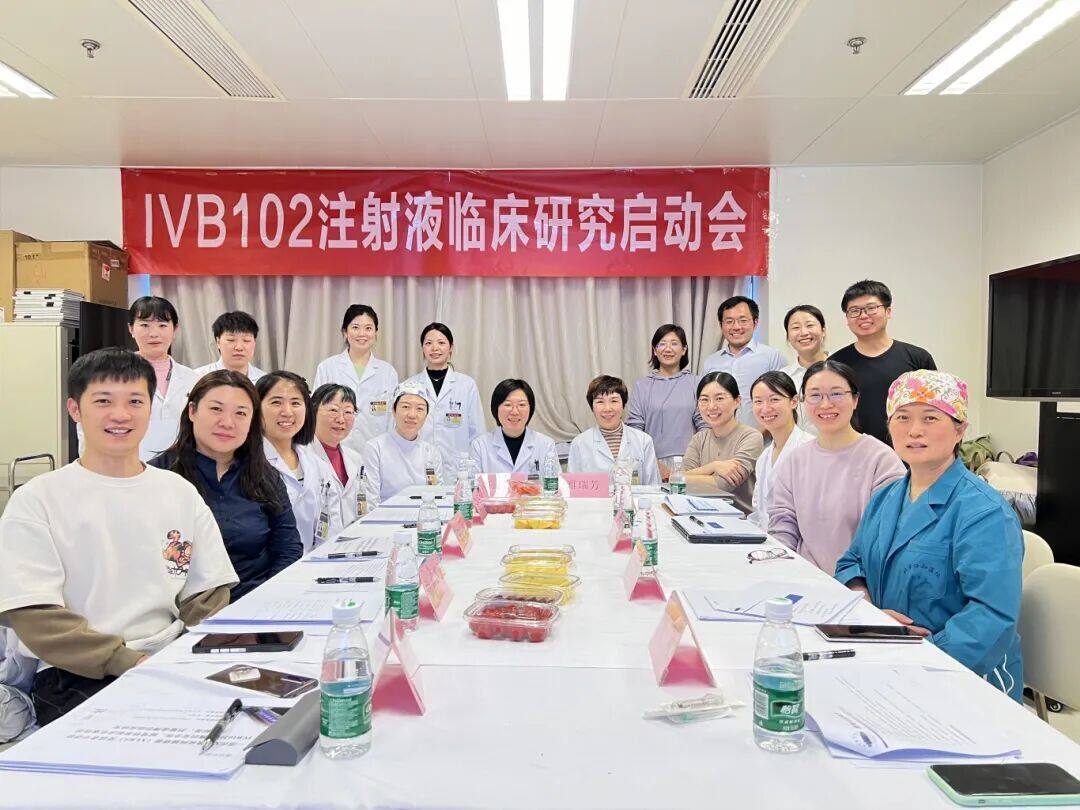
In early March 2024, the IVB102 Injection Clinical Research Kick-off Meeting was successfully held at the Department of Ophthalmology of Peking Union Medical College Hospital. For XLRS, there are currently no effective treatment methods available in China or internationally; the launch of this research is expected to bring new treatment options and hope for patients with XLRS, marking a significant milestone.
XLRS belongs to X-linked recessive hereditary retinal diseases, with a prevalence of approximately 1/15,000 to 1/30,000, and primarily affects males. The disease can manifest as early as two to three years old, causing varying degrees of vision impairment, characterized by inner retinal splitting, macular schisis leading to spoke-wheel changes, and peripheral retinal splitting. Electroretinogram (ERG) shows a negative waveform with a significantly reduced b-wave amplitude. Complications may include vitreous hemorrhage and retinal detachment, making "awaiting blindness" seemingly the foreseeable fate for patients. RS1 is the only XLRS-causing gene discovered so far, but currently, there are no effective treatments available for XLRS either in China or internationally.
IVB102 is a gene therapy drug based on an AAV vector independently developed by Innovecbio for the treatment of X-linked retinoschisis (XLRS). The Rui Fang Sui team from Peking Union Medical College Hospital participated in preclinical animal studies. In the treated model animals, not only did the retinoschisis cystic cavities disappear, but the electroretinogram waveform also recovered to a level comparable to that of wild-type animals, demonstrating "best in class" potential. IVB102 injection has successively received Pediatric Rare Disease Drug Designation (RPDD) and Orphan Drug Designation (ODD) from the U.S. Food and Drug Administration (FDA), indicating the FDA's recognition of the early development of IVB102 injection.
Professor RuiFang Sui leads the ophthalmology team at Peking Union Medical College Hospital in the field of genetic eye diseases.20For many years, a complete clinical diagnosis, gene diagnosis, natural course observation, endpoint indicator evaluation, and gene therapy clinical trial standards for eye genetic diseases have been established. "Rigor, innovation, and humanistic care" run through the team's clinical work and research. Currently, multiple clinical studies on hereditary eye diseases have been carried out./Test.
InnoVec Biotherapeutics Inc. (Innovecbio), a national high-tech enterprise located in Haidian, Beijing, is staffed by a team from world-class universities, hospitals, and drug research institutions such as Tsinghua, Peking University, PUMC, Regeneron, and Lonza. Innovecbio is dedicated to developing gene therapy delivery tools for human use, addressing the challenge of translating delivery tools from animals to humans, with the goal of finding gene delivery tools for all tissues and organs. Currently, the pipeline based on self-developed vectors has shown best-in-class potential in preclinical studies. In early 2024, these products will gradually advance into IIT and IND stages.
E.N.D
Previous article recommendations:
NeuroD1 Gene Therapy by Shenxi Biotech Successfully Administers First Patient Globally
General Office of the State Council Issues Important Action Plan
Advances in Organoid Technology and Industry
A Cell Therapy Company Goes Public
InnoVec Bio Completes RMB 200 Million Series A+ Financing
Fosun Pharma Subsidiary’s NK Cell Therapy GCK-01 Approved for Clinical Trials
First in China, Yaotang Biotech's In Vivo Gene Editing Drug YOLT-201 Approved for Clinical Trials
First AAV Gene Therapy for Hemophilia A Falls Far Short of Sales Expectations Last Year
Disclaimer: The content is sourced from INNOVEC, Danlu Capital, and other sources.This article is intended for knowledge sharing. All content is for reference only and does not constitute any advice.