

TSLP: The Next Pan-Disease Target? From Autoimmunity to Alopecia, a Multifaceted Cytokine Takes Center Stage

GSK
Pharmaceutical R&D Manufacturer

Aiolos Bio
Developer of Respiratory and Inflammatory Disease Treatments

Perseus Therapeutics
Hair Loss Treatment Product Developer
At the beginning of 2024, a $1 billion upfront payment and “40x return” acquisition set the pharmaceutical industry ablaze — GSK acquired Aiolos for $1.4 billion, gaining its core product AIO-001. AIO-001 was developed by Hengrui Medicine and in August 2023, the company sold the exclusive rights for global development and commercialization outside Greater China to Aiolos for an upfront payment of only $21.5 million, with potential milestones exceeding $1 billion.
Behind the sharp-eyed "speculators" is GSK's $1 billion bet on a potential, best-in-class, long-acting anti-thymic stromal lymphopoietin (TSLP) monoclonal antibody.
In the same month, Perseus Therapeutics, a biotech newcomer with a core project focused on a novel anti-TSLP monoclonal antibody drug, made its debut.Notably, Perseus Therapeutics is using a novel anti-TSLP monoclonal antibody to prevent hair cycle arrest caused by chemotherapy-induced cytotoxicity.
Following its significant impact in the field of autoimmune diseases such as asthma and atopic dermatitis, the research on the TSLP target is now making waves in the areas of hair loss, cancer, and obesity.
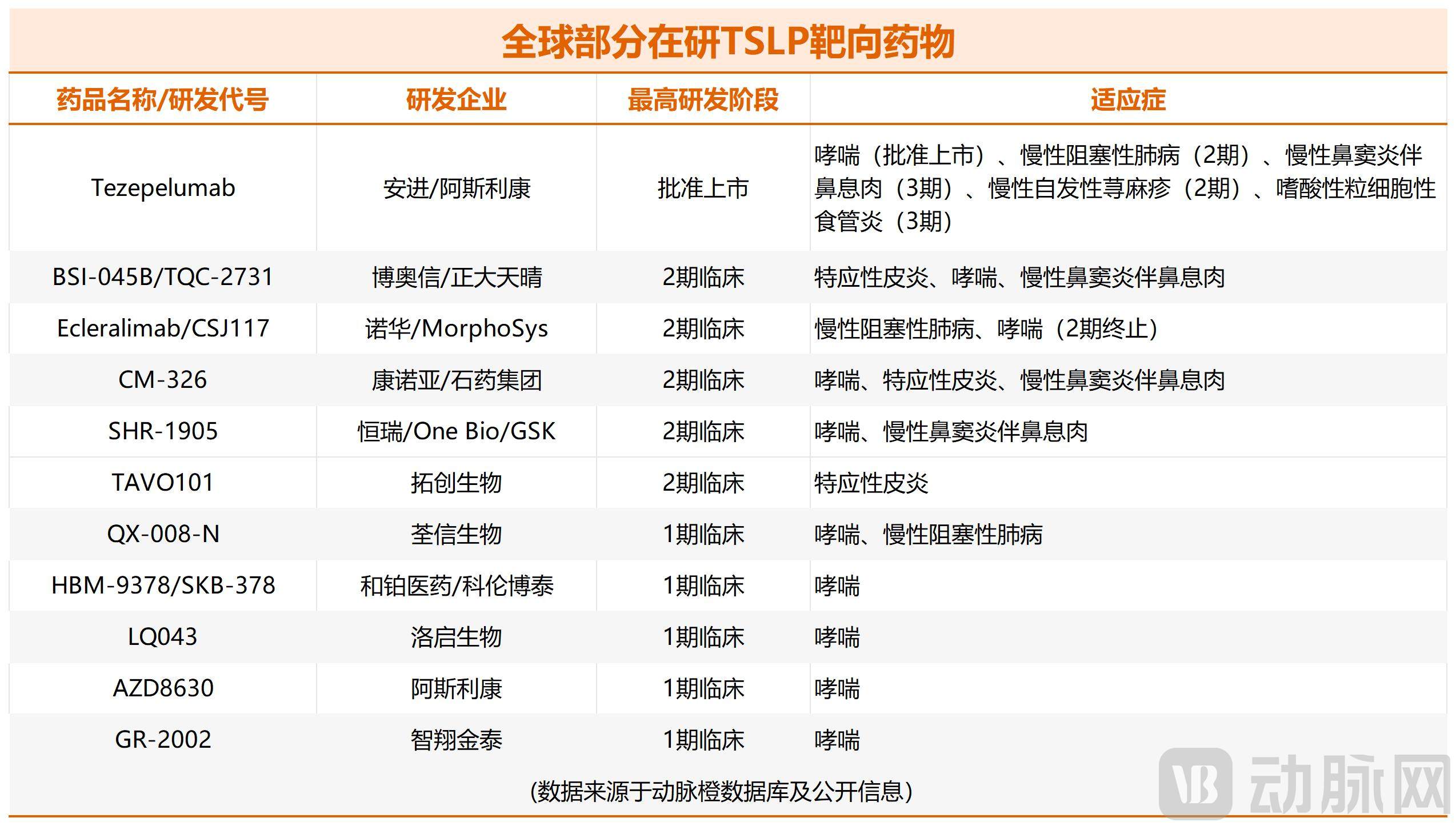
Global TSLP-Targeted Drugs in Development - VCBeat Mapping
TSLP is a pleiotropic cytokine produced in response to pro-inflammatory stimuli, such as pulmonary allergens, viruses, and other pathogens. By activating antigen-presenting cells, it can act on T cells, B cells, dendritic cells, mast cells, eosinophils, tumor cells, etc., and is at the top of the inflammatory cascade, playing a significant role in various immune responses. Blocking the TSLP signaling pathway is a validated mechanism of action, and current global research and development progress is mainly concentrated in autoimmune diseases.
In the indication of asthma, TSLP is considered a central regulator of Th2 cell-mediated asthma inflammation, playing a key role in the onset and persistence of airway inflammation. It can also activate various types of cells involved in non-T2-driven inflammation. Therefore, the early upstream activity of TSLP in the inflammatory cascade has been identified as a potential target in a broad population of asthma patients.
In December 2021, Tezspire (tezepelumab), the world's first anti-TSLP monoclonal antibody drug developed by Amgen in collaboration with AstraZeneca, was approved for marketing in the United States. This humanized monoclonal antibody is indicated as an add-on maintenance treatment for children aged 12 years and older and adults with severe asthma. It is also the first biologic that has been shown to consistently and significantly reduce exacerbations in a broad population of patients with severe asthma.
According to Amgen's annual report, Tezspire's sales reached $174 million in 2022 and continued to penetrate and increase in volume, with sales reaching $567 million in 2023. Sales are expected to reach $2 billion by 2026.
The key reason why Tezspire is widely favored in the market lies in the fact that it is the only biologic in the severe asthma treatment field without phenotypic (e.g., allergic status) or biomarker restrictions (e.g., eosinophil count). Tezspire acts on multiple inflammatory pathways and targets various inflammation routes that cause asthma symptoms and exacerbations. By acting on the early upstream of the inflammatory cascade, Tezspire may be suitable for a broad population of patients with severe uncontrolled asthma, regardless of their phenotype or T2 biomarker status.
With the precedent set, TSLP antibody drugs have also initially expanded their indications in the autoimmune field. The current indications under research for Tezspire includeAtopic dermatitis, chronic rhinosinusitis with nasal polyps, eosinophilic esophagitis, chronic obstructive pulmonary disease, chronic spontaneous urticaria.In addition to the existing layout indications, TSLP has some potential drug and diagnostic directions in the autoimmune field:
Celiac Disease (CD)
Celiac disease is a chronic, immune-related small intestinal disorder, characterized as a chronic malabsorption syndrome caused by gluten intolerance in patients. Studies have shown that TSLPR (TSLP receptor) and IL-7Rα are expressed in the CD mucosa, and compared with control subjects, the mRNA of Lf TSLP and Sf TSLP are both reduced in CD.
Rheumatoid Arthritis (RA)
Rheumatoid arthritis is a systemic autoimmune disease characterized by chronic synovitis. TSLP is considered one of the aggravating mediators of RA. Compared with osteoarthritis patients, RA patients have increased concentrations of TSLP in synovial fluid because their fibroblasts can produce TSLP when activated by several immune stimuli (e.g., IL-1β, TNF-α). Additionally, mast cells and macrophages present in RA synovium may elevate the levels of TSLP in the joints of RA patients.
Psoriasis
Studies show that TSLP levels are significantly elevated in both the skin lesions and serum of psoriasis patients, and it has been demonstrated that the degree of TSLP elevation is significantly correlated with disease severity. The excessive expression of TSLP in psoriasis is regulated by complex mechanisms; for example, TSLP can induce dendritic cell maturation and provide the conditions for the subsequent CD40L-induced production of IL-23.
As scientific research progresses at an accelerated pace, the competition for TSLP-targeted drugs led by Amgen/AstraZeneca has also intensified, with numerous companies in China already entering the field. According to data from VBInsight and publicly available sources,In China, innovative pharmaceutical companies targeting TSLP have made rapid progress in the past three years.Companies like BioShin and Convelo have entered Phase 2 clinical trials and are expected to be the first to capture the global market for TSLP in the new indication of atopic dermatitis.
According to Frost & Sullivan data, in 2019, there were 19.7 million and 190 million people suffering from atopic dermatitis (AD) in China and globally, respectively, with the prevalence rate among children and adolescents reaching up to 20%. It is estimated that by 2030, there will be 81.7 million and 750 million people with AD in China and globally, respectively, of which approximately 30% will be moderate to severe patients. If successful in this indication, the AD medication market will become another major potential market for TSLP antibody drugs.
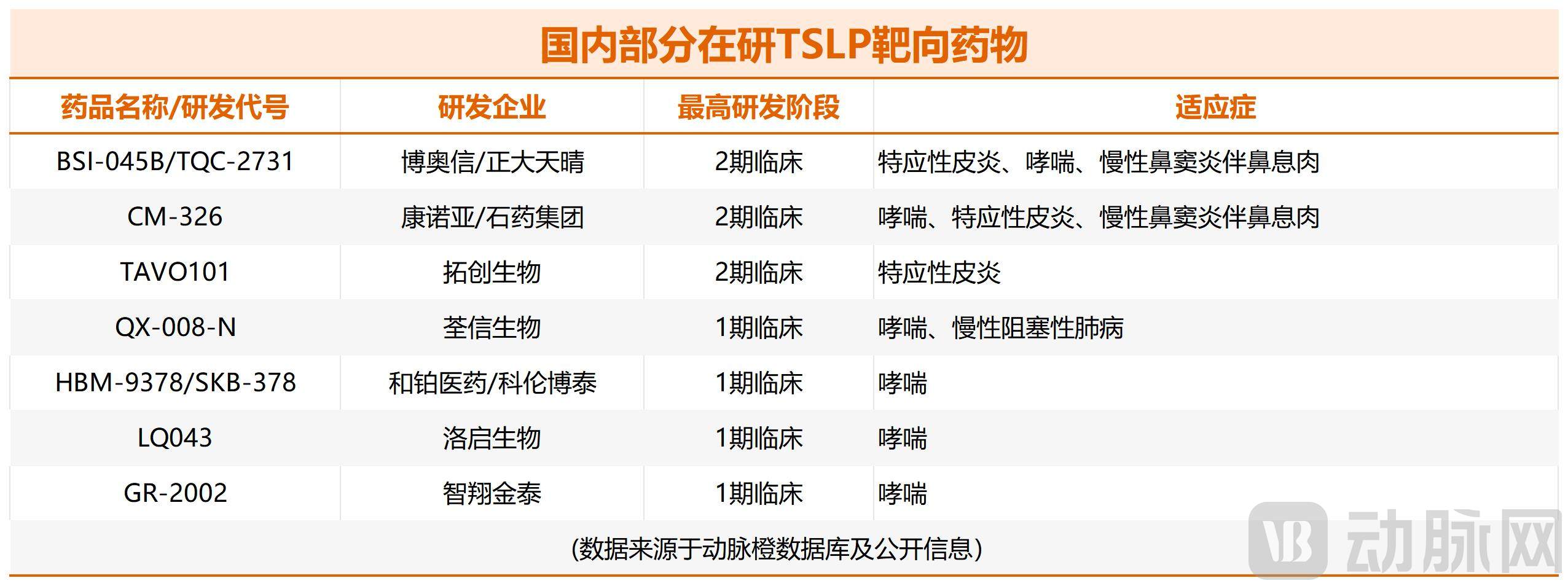
TSLP-targeted drugs under research in China - Chart by VCBeat
BioRay/CTTQ
Bosakitug (BSI-045B/TQC2731, anti-TSLP antibody) is the most advanced drug candidate in Biosion's innovative pipeline. In 2017, a cooperation and development agreement was signed with Chia Tai Tianqing, granting Chia Tai Tianqing the development and commercialization rights in Greater China, while Biosion retains global rights outside of Greater China.
Currently, Bosakitug is undergoing Phase II clinical trials for atopic dermatitis in the United States, conducted by Biosion. As the second TSLP monoclonal antibody to enter clinical trials abroad, Bosakitug is a molecule with the potential to become a first-in-class drug for this indication. Additionally, Phase II clinical trials for severe asthma and sinusitis, advanced by Zhengda Tianqing, are among the most progressive in China.
Based on Phase I clinical data, Biosion conducted a differentiated global Phase II clinical trial design. According to a relevant person in charge of Biosion, Bosakitug has shown significant effects in the treatment of atopic dermatitis.This indicates that the drug has potential in this area and may become one of the important new drugs for the treatment of atopic dermatitis.
Connoymab/SinoPharm Group
In May 2023, CSPC Pharmaceutical Group launched a "Randomized, Double-blind, Placebo-controlled Phase II Clinical Study to Evaluate the Efficacy and Safety of CM326 Recombinant Humanized Monoclonal Antibody Injection in Subjects with Moderate to Severe Asthma" across China.
Torch Biotech
In 2024, Tavot Bio conducted "a Phase 2A pilot study in the U.S. to evaluate the preliminary efficacy, safety, and pharmacokinetics of TAVO101 in patients with severe atopic dermatitis (AD)."
Quanxin Biotech
In June 2023, Quanxin Biotech conducted "A Randomized, Open-label, Parallel, Single-dose, Single-center, Phase I Clinical Study to Evaluate the Pharmacokinetic Characteristics, Safety, and Immunogenicity of Subcutaneous Injection and Intravenous Infusion of QX008N Injection in Healthy Subjects."
In addition, "A Multicenter, Randomized, Double-blind, Multiple-dose, Dose-escalation, Placebo-controlled Phase Ib Clinical Study to Evaluate the Efficacy, Safety, Tolerability, Pharmacokinetic Characteristics, and Immunogenicity of QX008N in Adult Patients with Moderate to Severe Asthma" has been registered and disclosed.
Harbour BioMed/Kelun-Biotech
In September 2022, a Phase I clinical study was conducted, titled "A Randomized, Double-blind, Placebo-controlled, Single Ascending Dose Study in Healthy Chinese Subjects to Evaluate the Safety, Tolerability, and Pharmacokinetics of HBM9378 (SKB378) Following Subcutaneous Administration."
Lokii Bio
In February 2023, Luoqi Biotech initiated a Phase Ia clinical study titled "Evaluation of the Tolerability, Safety, Pharmacokinetics, and Immunogenicity of LQ043H Single-Domain Antibody Nebulizer Solution in Healthy Chinese Subjects Following a Single Dose Administration".
ZhiXiang JinTai
In December 2023, Zhi Xiang Jin Tai conducted a "Phase Ib Clinical Trial of GR2002 Injection in Moderate to Severe Atopic Dermatitis Patients: A Randomized, Double-blind, Placebo-controlled Study on Tolerability, Safety, Pharmacokinetics, Immunogenicity, and Preliminary Efficacy with Multiple Subcutaneous Injections."
In a broader research context, the study of the TSLP target has gone beyond the autoimmune field, exploring its potential in treating obesity, cancer, fibrotic diseases, and extending to potential applications in the broader health sector, such as post-chemotherapy hair loss.
In July 2021, a research team from the University of Pennsylvania School of Medicine published an article in the journal *Science* indicating that TSLP can stimulate T cells to induce selective white fat loss, reduce weight and visceral fat, improve glucose metabolism, and alleviate non-alcoholic steatohepatitis by stimulating sebaceous glands to secrete oil and expel fat.
During the experiment, while both groups of mice consumed high-fat diets, the control group's weight continued to increase. In contrast, the mice with elevated TSLP levels saw their average weight drop from 45g to 25g within 28 days, a reduction of over 40%. Based on this, researchers proposed a paradigm: fat loss can be achieved through excessive secretion of sebum (excessive lipid loss) via the skin.
TSLP does not directly induce lipolysis in white adipose tissue but rather regulates sebum release and the expression of sebum-associated antimicrobial peptides in conjunction with T cells under steady-state conditions, subsequently activating adipose tissue to promote reduction and loss.
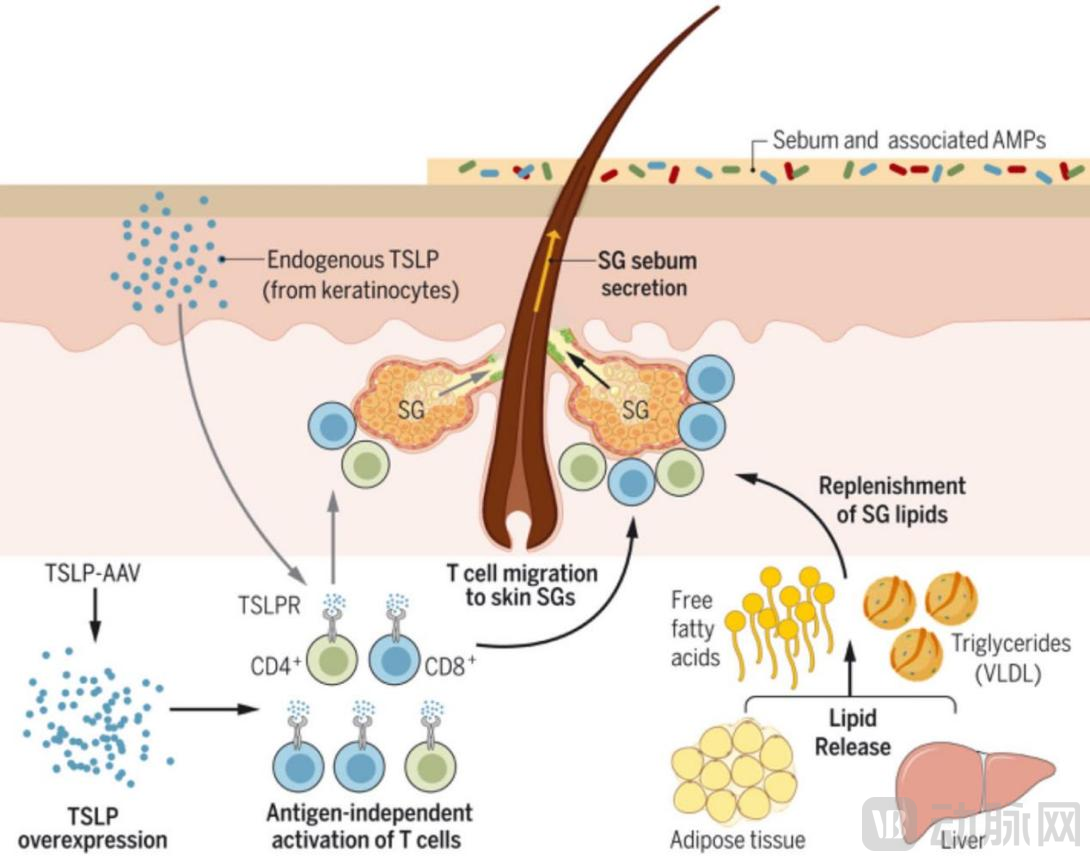
TSLP Stimulates T Cell Expression, Inducing Selective White Fat Loss
In December 2023, a research team from the University of Pennsylvania published further research on the mechanism of TSLP stimulating sebum secretion and fat loss in the Journal of Allergy and Clinical Immunology.Studies show that TSLP stimulates T cells to deliver IL-4 and IL-13 to sebaceous glands, thereby enhancing sebaceous gland function, renewal, and promoting subsequent fat loss.
In 2022, Duke University immunologist Jessica Shannon discovered that TSLP is an effective inducer of hair growth after skin injury. This research finding was published in *Stem Cell Reports*. The study shows that TSLP is produced during the initial stages of skin injury and hair growth, promoting transport and cell proliferation, and has a new function in regulating follicle activity in both homeostasis and wound healing.
In addition, TSLP may promote the transition of hair follicles from the resting phase to the growth phase, while blocking TSLPR may inhibit this transition, thereby protecting hair follicles during chemotherapy. Perseus Therapeutics has collaborated with Duke University to translate this scientific research achievement into a solution for protecting hair follicles from chemotherapy-induced damage. If successfully developed, this would be the first drug capable of preventing severe hair loss during chemotherapy.
The study also shows that intradermal injection of exogenous TSLP can promote hair growth (WIHG). In the future, this technology may also be applied to stimulate hair growth in other scenarios, such as alopecia.
Changes in TSLP levels have been identified by researchers in the induction and progression of various tumors. TSLP influences the growth, progression, and metastatic potential of tumors, including both solid tumors (such as breast, colon, and pancreatic cancers) and hematological malignancies (such as B-cell acute lymphoblastic leukemia). Additionally, TSLP signaling has been shown to have a protective role in skin-derived tumors, indicating its function in tumor biology is context-dependent.
A major focus in the field of oncology is the role of TSLP in cancer models and how to modulate TSLP to effectively suppress tumors.
In a study published in 2018 in *Nature Immunology*, Dr. Emma L. Kuan and Dr. Steven F. Ziegler showed that when TSLP is absent, the growth and metastasis capabilities of tumors are significantly reduced. Moreover, the mortality rate of breast cancer cells is higher in tumors without TSLP compared to those with TSLP.
The study proposes that the working mechanism of TSLP in breast cancer progression is — tumors recruit immune cells by expressing the IL-1a factor, inducing them to produce TSLP. Subsequently, TSLP induces tumor cells to express the BCL-2 protein, which protects the tumor from death. Therefore, TSLP is crucial for tumor survival.
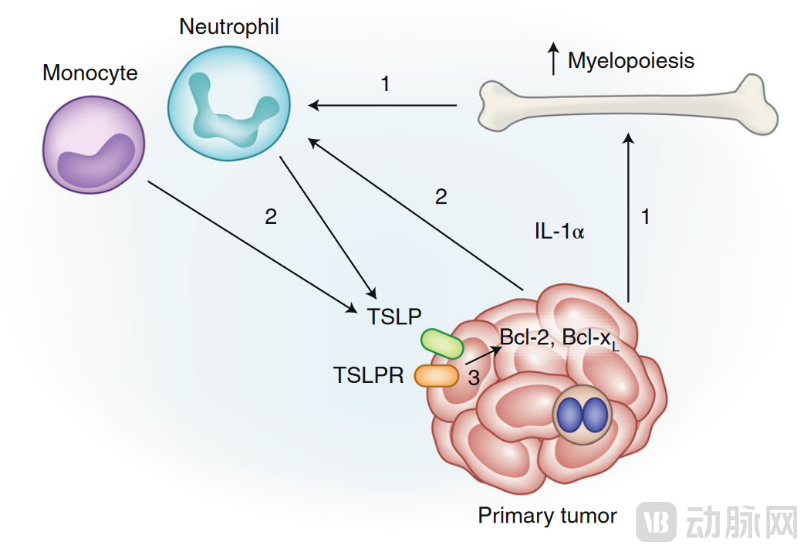
The Role of the IL-1α-TSLP Axis in Breast Cancer
In further in vivo experiments, Dr. Kuan and Dr. Ziegler used antibodies to block TSLP and found that: even after breast cancer tumors had begun to grow, this method could still halt their progression. Within two weeks, the tumors had significantly shrunk, more cells had died, and the spread to the lungs had ceased. This indicates that blocking TSLP (anti-TSLP therapy) in the model can markedly suppress the growth of breast tumors and prevent their lung metastasis, making it potentially applicable for patients with human breast cancer tumors.
A study published in Int Immunopharmacol indicated that TSLP/TSLPR is highly expressed in hydronephrosis tissues of both humans and mice, and promotes renal fibrosis by activating STAT3 in renal fibroblasts. Knocking out TSLPR in the UUO model (a rat model of renal interstitial fibrosis) can reduce the severity of renal fibrosis. Notably, blockade with an anti-TSLP antibody decreased the level of fibrosis in the UUO model.
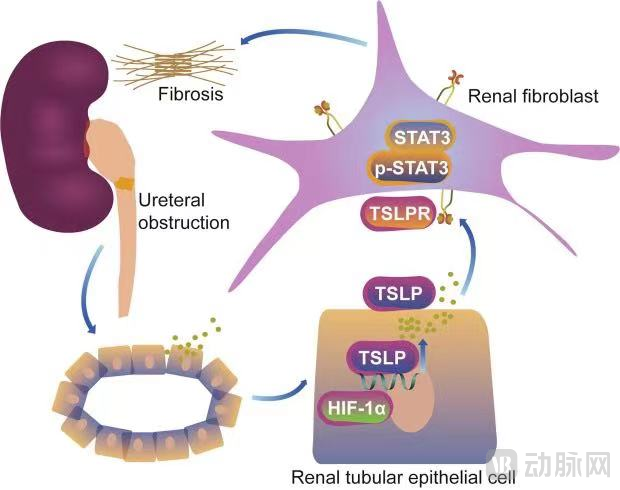
Schematic Representation of the Biological Role of the HIF-1α/TSLP/TSLPR/STAT3 Axis in Promoting Renal Fibrosis Formation
Functional analysis indicates that hypoxia exposure can induce the overexpression of TSLP in renal tubular cells via HIF-1α. TSLP derived from renal tubular cells can bind to TSLPR on fibroblasts to activate them. The HIF-1α/TSLP/TSLPR axis can activate fibroblasts through the STAT3 signaling pathway. Therefore, these pathways are potential therapeutic targets for renal fibrosis.
As multiple pipelines accelerate into clinical trials, the battle for TSLP drugs is on the verge of igniting. Overall, the global layout of TSLP antibody drugs is mostly concentrated in the indication of asthma. China's innovative pharmaceutical companies are expected to capture the global market for TSLP in the entirely new indication of atopic dermatitis. Meanwhile, the parallel advancement of TSLP antibody drugs in multiple indications within the autoimmune disease field is also worth industry attention.
In a broader sense, biotech companies like Perseus Therapeutics have begun to validate more possibilities for TSLP. Looking back at the history of global innovative drug development, legends were born from the exploration of the unknown. In today’s increasingly homogeneous target competition and ever more integrated global market, the path to uncovering "First-in-class" opportunities from scientific research achievements remains as relevant as ever.
References:
TSLP: from allergy to cancer
https://www.nature.com/articles/s41590-019-0524-9
TSLP/TSLPR promotes renal fibrosis by activating STAT3 in renal fibroblasts
https://www.sciencedirect.com/science/article/pii/S1567576923007531?via%3Dihub
Thymic stromal lymphopoietin controls hair growth
https://doi.org/10.1016/j.stemcr.2022.01.017
Thymic stromal lymphopoietin induces adipose loss through sebum hypersecretion
https://doi.org/10.1126/science.abd2893