

Iaso Bio's Eque-cel (CT103A) Receives NMPA Approval for Phase II/III Clinical Trial in Relapsed/Refractory Multiple Myeloma Patients After 1–2 Prior Lines of Therapy

IASO Biotechnology
Cancer Treatment New Drug Developer
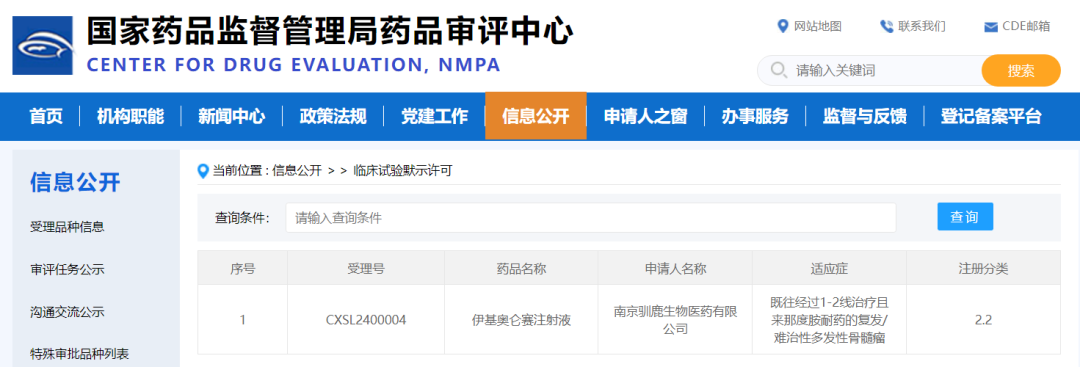
Led by Professor Qiu Lugui from the Blood Disease Hospital of the Chinese Academy of Medical Sciences (Institute of Hematology, Chinese Academy of Medical Sciences)IASO Bio's fully human BCMA-targeted chimeric antigen receptor autologous T-cell injection (Idecabtagene Vicleucel Injection, R&D code CT103A) has received approval from the China National Medical Products Administration (NMPA) for a new drug clinical trial application (IND). The trial aims to expand its indications to treat patients with relapsed/refractory multiple myeloma who have previously undergone 1-2 lines of therapy and are lenalidomide-resistant.
March 28, 2024, Nanjing, Shanghai, China, San Jose, California, USA — IASO Bio, a biopharmaceutical company dedicated to the research, development, manufacturing, and commercialization of innovative cell therapies, announced that the companyThe Investigational New Drug (IND) application for the self-developed fully human BCMA-targeted chimeric antigen receptor autologous T-cell injection (Irelcilimab Injection, R&D code CT103A) has been approved by the China National Medical Products Administration (NMPA). The proposed expanded indication is for the treatment of relapsed/refractory multiple myeloma patients who have previously received 1-2 lines of therapy and are lenalidomide-resistant.
Equecabtagene Autoleucel Injection (Trade Name: Focuxin)®) was launched in China on June 30, 2023, with the approved indication for adult patients with relapsed or refractory multiple myeloma who have progressed after at least three prior lines of therapy (including at least one proteasome inhibitor and one immunomodulatory agent). The approval of this last-line treatment indication was based on a Chinese multicenter Phase I/II registrational clinical trial (CTR20192510, NCT05066646) evaluating Ixazomib Injection for the treatment of relapsed/refractory multiple myeloma, FUMANBA-1. According to the latest long-term follow-up data from this study presented at the 2023 International Myeloma Society (IMS) Annual Meeting, as of December 31, 2022, among 103 evaluable subjects, the overall response rate (ORR) was 96.1%, and the stringent complete response/complete response (sCR/CR) rate was 77.7%.Among 91 subjects without a history of prior CAR-T treatment, the ORR reached 98.9%, with sCR/CR rates reaching 82.4%. The 12-month progression-free survival (PFS) rate was 85.5%; 94.2% (97/103) of subjects achieved MRD negativity, and all CR/sCR subjects reached MRD negativity. Among 105 treated subjects, only one experienced ≥Grade 3 CRS, with no instances of ≥Grade 3 ICANS. Pharmacokinetic data showed that IASO Bio's injectable drug persisted in the body for an extended period, with 40% of subjects still detectable for gene copy number at 24 months.
About Multiple Myeloma (MM)
Multiple Myeloma (MM) is one of the most common hematologic tumors, a malignant disease characterized by the clonal proliferation of abnormal plasma cells. For newly diagnosed multiple myeloma patients, first-line treatments often include induction therapy, consolidation therapy, and maintenance therapy with various drug combinations, as well as autologous hematopoietic stem cell transplantation (ASCT), among others. For the majority of patients, disease remission will inevitably lead to a treatment dilemma of relapse and refractory conditions.
According to the relevant research results published in The New England Journal of Medicine: Compared with the standard treatment regimen, patients with relapsed/refractory multiple myeloma who had previously received 2-4 lines of therapy and were treated with CAR-T showed significantly prolonged progression-free survival and a markedly improved clinical response rate.1In patients with relapsed and refractory multiple myeloma who were previously treated with 1-3 lines of therapy and are lenalidomide-resistant, those receiving CAR-T therapy had a lower risk of disease progression or death compared to those receiving standard therapy.2。
According to Globocan forecast data: The annual number of new MM cases in China increased from 20,066 in 2018 to 30,300 in 2022, and is expected to grow to 37,082 by 2030. In the United States, the annual number of new MM cases rose from 25,962 in 2018 to 32,258 in 2022, and is projected to reach 38,000 by 2030. Globally, the annual number of new MM cases grew from 159,985 in 2018 to 187,952 in 2022, and is anticipated to increase to 231,284 by 2030.
Ms. Zhang Jinhua, Founder, Chairwoman, and Chief Executive Officer of IASO Bio"This approval of the IND for the 2-3 line indication in relapsed/refractory multiple myeloma marks another significant milestone in the clinical development progress of Icarus Injection. Relevant studies indicate that earlier use of CAR-T therapy in RRMM patients leads to better survival benefits. Based on the excellent efficacy and safety demonstrated in previous clinical trials, we believe that Icarus Injection has the potential to address a significant unmet clinical need in the early treatment stage of multiple myeloma. We will initiate the clinical enrollment process as soon as possible, allowing more patients with early relapse to benefit from this therapy."
”