Source: Heart Future; Editor: Li Yuanming
Reprint Requirements: If the source of the article is indicated at the beginning of the text, it can be reprinted directly.
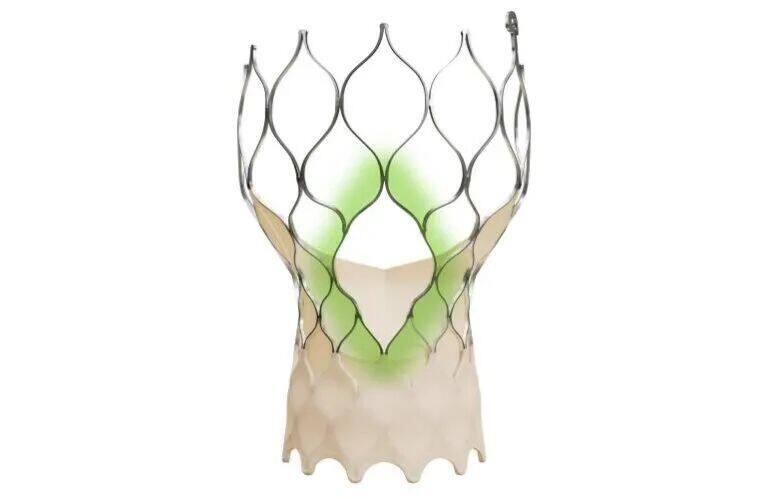
Recently,Medtronic(NYSE: MDT) announced,FDA has approvedEvolut FX+ Transcatheter Aortic Valve Replacement (TAVR) SystemUsed forTreatmentAll risk categories (extreme, high, medium, and low) in the United States andPatients with symptomatic severe aortic stenosis。The LatestEvolut FX+ TAVR SystemRetaining the valve performance advantages of the traditional Evolut TAVR, designed to optimize coronary access.Evolut FX+ TAVR System Approved in ChinaImproved Diamond Framework Design, providing operability for the catheterMore Ample Space,Larger than the previous Evolut TAVR system4x,To facilitate access to different anatomical structures of the coronary arteries.In addition, the new system continues to maintainMarket-leading valve performance, excellent hemodynamics, and radial support strength。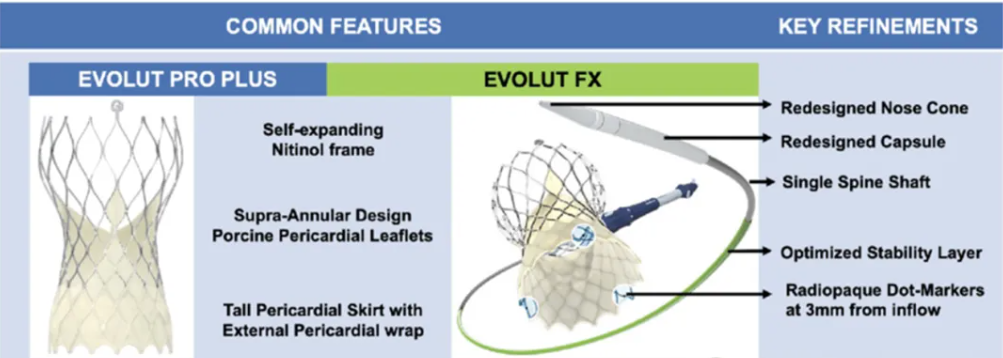 ▲Comparison of the Two Systems
Vice President and Chief Medical Officer of Coronary and Renal Denervation, and Structural Heart and Aortic businessesDr. Jeffrey Popma"We are committed to continuously developing and advancing minimally invasive surgery, making TAVR procedures easier, more visualizable, and more predictable for the cardiac team, thereby helping to treat patients with aortic stenosis."The Evolut FX+ TAVR system is designed to enhance coronary intervention for various patient anatomies without compromising valve performance.”
Jeffrey Popma said at a news conference: "Our continued innovation with the Evolut TAVR platform reinforces this, as it has provided proven valve performance and durability for physicians and patients over the years."# Coronary Intervention Market SizeCoronary heart disease is a heart disease caused by coronary atherosclerosis, which leads to narrowing or blockage of the lumen, resulting in myocardial ischemia, hypoxia, or necrosis.。When the aortic valve leaflets become stiff, thickened, and difficult to open or close, it can easily lead to severe aortic stenosis, forcing the heart to work harder to pump blood to other parts of the body. Severe aortic stenosis affects the patient's quality of life and limits daily activities.If not treated in time, 50% of patients with symptomatic severe aortic stenosis will die of heart failure within two years.According toFrost & Sullivan predicts,In 2023, the number of patients with coronary heart disease worldwide will reach 247 million.。In recent years, the prevalence of cardiovascular disease in China has continued to rise. The "Report on Cardiovascular Health and Disease in China 2022" shows,The number of people suffering from cardiovascular diseases in China has reached 330 million, including 11.39 million with coronary heart disease.The "China Health Statistics Yearbook 2021" shows that the mortality rate of coronary heart disease among urban residents in China was 126.91 per 100,000 in 2020, and 135.88 per 100,000 in rural areas. Strengthening the prevention and treatment of coronary heart disease and improving clinical outcomes are crucial to enhancing the health level of the Chinese population.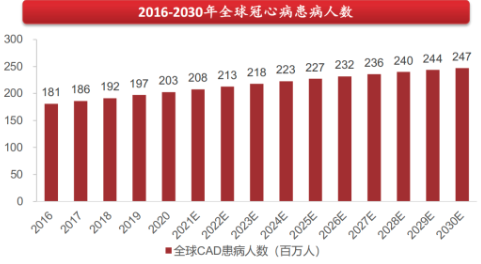
PCI refers to a treatment method that improves myocardial blood perfusion by clearing narrowed or even occluded coronary arteries through cardiac catheterization. It includes important steps such as radial/femoral artery puncture, coronary angiography, establishing access, and stent implantation, and has the advantages of minimal trauma, good efficacy, fast postoperative recovery, and short operation time.PCI is widely used in clinical applications, with technology and products that have matured over long-term development, making it the mainstream procedure in cardiology for coronary artery disease.。Driven by an aging population, supportive policies, and increased accessibility of interventional cardiovascular procedures, the volume of PCI surgeries in China and globally is expected to continue growing. According to Frost & Sullivan,The number of PCI procedures in China is expected to increase from 11.64 million in 2021 to 36.98 million in 2030., with a compound annual growth rate of approximately 13.7%;The global number of PCI procedures will increase from 4.881 million in 2021 to 9.874 million in 2030., with a compound annual growth rate of approximately 8.1%.Against the above background,The penetration rate of coronary interventional medical device products will continue to increase, driving the rapid growth of the overall cardiovascular interventional medical device market.In addition, with the introduction of the "intervention without implant" treatment concept, it is expected that innovative products such as drug-coated balloons and embolectomy balloons will, to a certain extent, represent the future direction of coronary intervention treatments. The market for coronary interventional consumables still has enormous development potential and will, to a certain extent, drive the growth of the cardiovascular intervention market.It is estimated that by 2024, the market size of coronary interventional medical devices in China will reach 10.36 billion yuan.,At the same time,The scale of cardiovascular interventional medical devices will reach 30 billion yuan。With the reduction in surgical costs brought by centralized procurement and the improvement in the safety and effectiveness of interventional consumables, residents' willingness and ability to pay for PCI surgery have increased.China's PCI market still has significant room for penetration.。The size of China's coronary intervention market is expected to reach 6.4 billion yuan in 2023.. It is expected that the penetration rate of high-value new products such as biodegradable stents and drug-coated balloons will continue to increase.Coronary Interventional Treatment Market Expected to Reach 16.7 Billion Yuan by 2030。# Previous Generation Evolut FX TAVR SystemEvolut FX+ is an upgrade based on Medtronic's fourth-generation TAVR — Evolut FX, with its key highlight being the resolution of coronary access issues.。Before the launch of Evolut FX+, Medtronic designed three radiopaque markers for Evolut FX to help doctors confirm commissural alignment during the TAVR procedure.According to a large number of clinical studies,Whether the suture is alignedDirectly affect coronary access, valve hemodynamics, and the durability of artificial valves, etc.However, due to the different physiological structures of each patient, commissural alignment may not perfectly avoid the coronary ostium. Therefore, Medtronic has designed the Evolut FX+ based on clinical needs. The Evolut FX+ retains the three radiopaque markers of the Evolut FX while...Provide a larger coronary artery access window。This opening size is four times that of the previous Evolut series.. This design of the Evolut FX+ provides more space for catheter maneuverability, facilitating access to coronary arteries with different patient anatomies.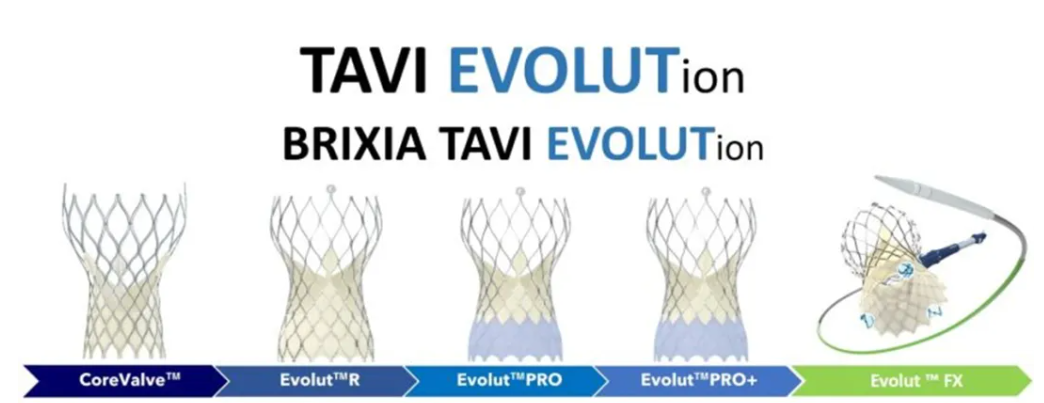
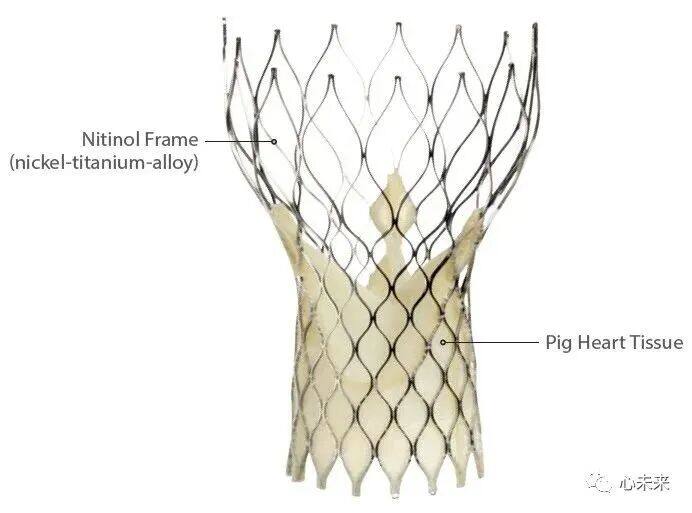
According to Medtronic, the valve stent of the Evolut FX TAVR system isNickel Titanium AlloyManufactured, which allows the stent to be shaped according to the anatomical structure.In addition, below the outer packaging of the valve stent, there isGolden Marker, making it easier for doctors to see during the surgery.ThisSystemAimed at enhancing ease of use, and provide clinicians treating severe aortic stenosis patients with greater precision and enhanced control throughout the procedure.Redesigned Delivery SystemEnhances the flexibility of a 360° range of motion and improves anatomical compliance., tracking force is reduced by 50% in challenging anatomical structures. These are indicators of successful TAVR procedures and the inspiration behind the Evolut FX Transcatheter Aortic Valve System.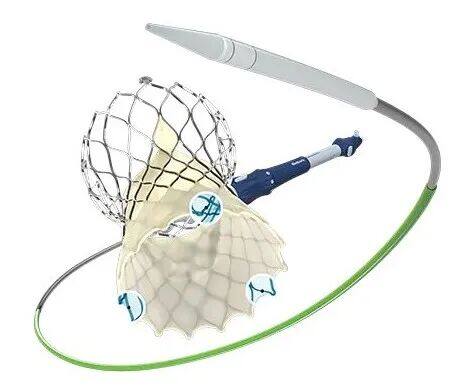
▲Image source: Company's official websiteThe fourth-generation Evolut system is equipped withBuilt-in Metal Markers, providing direct visualization of depth and valve leaflet orientation during the implantation process, can help doctors accurately position TAVR catheters or valve implantation devices, ensuring they are precisely placed at the patient's aortic valve position.Position and Shape of Metal MarkersCan provide important reference information to assist doctors in surgical procedures and evaluations.In addition, Evolut FXTAVR SystemThe catheter has been redesigned,Enables smoother insertion and provides a more flexible delivery system., enabling stable and predictable implantation.Interventional Cardiologist at Shaare Zedek HospitalDr. Danny DvirSaid, "Evolut FXTAVR System"Enhancing the precision, control, and predictability for doctors performing transcatheter aortic valve replacement in patients with severe aortic stenosis. The system provides physicians with an innovative solution to meet the needs of patients who wish to resume an active lifestyle as soon as possible."
# Clinical Trial Results
The Evolut platform isThe Only OneIn randomized trials,Showed superiority over SAVR within 5 and 10 yearsThe Durability Advantage of TAVR Platforms over Surgical Aortic Valve Replacement.Medtronic announced on October 24, 2023Evolut TAVR System LowRisk TestFour Years of Positive Results.
The results showed,The Evolut TAVR system demonstrated excellent outcomes and sustained valve performance, withHemodynamics is significantly better than surgical aortic valve replacement (SAVR).
The Evolut TAVR system reports that, compared with the most advanced surgery,Patients treated with the Evolut TAVR system consistently showed low rates of four-year mortality or disabling stroke.。
The data were presented at the 35th Transcatheter Cardiovascular Therapeutics (TCT) conference (the Cardiovascular Research Foundation’s annual scientific symposium) and simultaneously published in the Journal of the American College of Cardiology.
The Evolut Low Risk Trial is a prospective, randomized, multicenter study designed toEvaluate the safety and effectiveness of the Evolut TAVR system compared to surgical aortic valve replacement (SAVR) in low-risk patients.Low-risk patients in the trial were defined as those with a predicted risk of 30-day mortality <3%, and these patients were randomly assigned to undergo TAVR using Medtronic's self-expanding supra-annular Evolut R, PRO, or CoreValve.Bioprosthetic vs. SAVR.A total of 1,414 patients attempted implantation (730 TAVR; 684 SAVR).。 The study shows that, compared with SAVR,Over 4 years, Evolut TAVR has continued to achieve positive outcomes in the primary endpoint of all-cause mortality or disabling stroke.。In the 4th year, the study foundThe risk of death or disabling stroke with TAVR was reduced by 26% (10.7%) relatively.In contrast, the SAVR group was 14.1%.。Over time, the absolute difference between the primary endpoint treatment groups continued to increase. The absolute difference between the treatment groups persisted in increasing over time, indicating that,Compared with surgery, patients who received Evolut TAVR had greater benefits four years after clinical treatment.
The research results also showed that,The composite rate of all-cause mortality, disabling stroke, or aortic valve rehospitalization in the TAVR group was 18.0%, compared to 22.4% in the SAVR group.。
Allison Family Distinguished Chair in Cardiovascular Research, Professor of Cardiothoracic Surgery at Houston Methodist HospitalMichael Reardon, the Chief Investigator of the TrialSaid: "Since TAVR was approved for low-risk surgical patients, we have needed evidence to better understand the mid-term and long-term durability of TAVR devices with different designs.
He also believes that, "Compared with surgery, the continuous positive outcomes and sustained valve performance we've observed in patients in the Evolut Low Risk Trial help us build midterm evidence for the Evolut TAVR system and contribute to determining the long-term situation. These results are not only encouraging but also critical for treatment decisions regarding low-risk patients with severe aortic stenosis symptoms. We see patients treated with the Evolut TAVR system achievingContinuous, Excellent Valve Performance, which will ultimately translate into improved treatment outcomes, including reduced mortality and the incidence of disabling strokes."
Medtronic (Medtronic, NYSE: MDT) was founded in 1949, with its headquarters in Minneapolis, Minnesota, USA. It is a global leading medical technology company, employing over 95,000 people.
Medtronic's innovative solutions have expanded to more than 70 key disease areas, committed to providing lifelong treatment options for patients with chronic conditions. Every second, two patients worldwide benefit from Medtronic's medical technologies or therapies.
Medtronic's main businesses includeCardiovascular, Medical Surgical, Neuroscience, and DiabetesFour business blocks, includingThe highest proportion is cardiovascular.。What Does Medtronic Sell? A Comprehensive Overview of the Cardiovascular Product Line
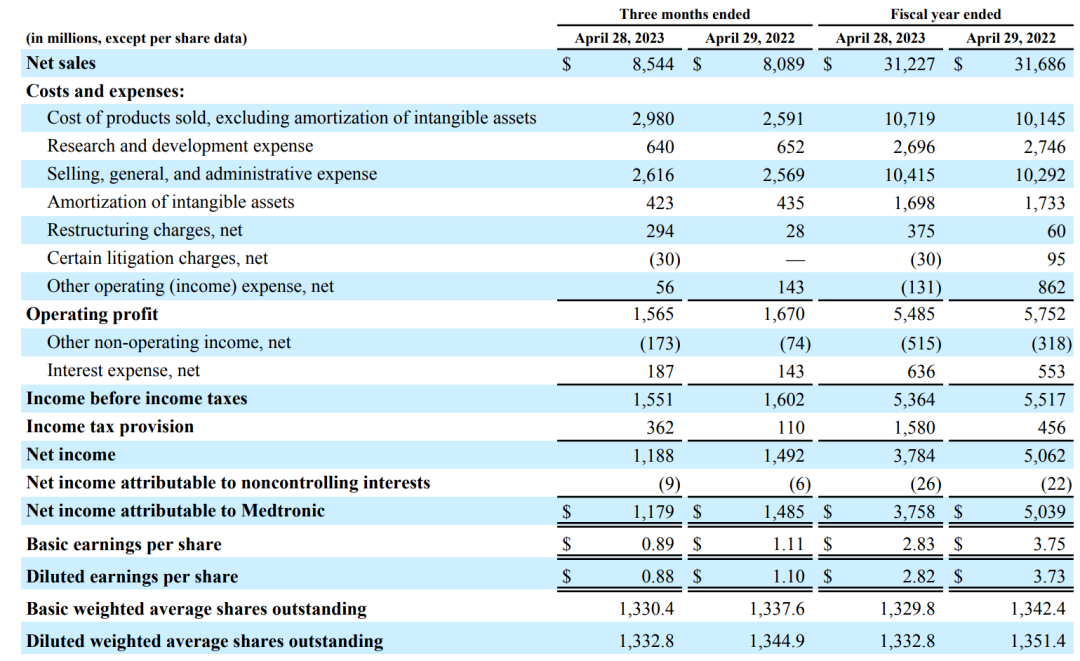
Taking the 2023 financial report as an example, the total revenue was $31.227 billion, ranking first in the global medical device enterprise revenue. Among this, the cardiovascular business revenue was $11.573 billion, accounting for 37.06%, includingCardiac Rhythm and Heart Failure (CRHF), Structural Heart and Aorta (SHA), and Coronary and Peripheral Vascular (CPV)Three departments.
▲2023 Annual Report (Source: Company Official Website)