

[Exclusive] World's first in-ear EEG headphones! Naoyun secures tens of millions in angel round

NAOYUN
Developer of Wearable EEG Headphones
Brain-computer interface is regarded as the next generation of revolutionary human-computer interaction. Whether it's the recent invasive brain-computer interface product launched by Apple in collaboration with Synchron, helping Amyotrophic Lateral Sclerosis (ALS) patients control an iPad with their "thoughts", or the earlier invasive brain-computer interface from Musk's Neuralink, enabling paralyzed patients to successfully operate computer games, these revolutionary innovations demonstrate that regardless of the technological approach, brain-computer interfaces are poised to become the ultimate form of human-computer interaction.
Against this backdrop, Shanghai Naoyun Technology Co., Ltd. (referred to as Naoyun), a leading global enterprise in the field of non-invasive brain-computer interface wearable AI devices, announced the completion of a multi-million-yuan angel round of financing. This round of investment was led by Viomi Technology, Banfei Brain Science Incubator, and the family office of a listed company. Shanyun Capital serves as the company's long-term financial advisor.

In daily life, directly acting onInvasive or non-invasive brain-computer interface technologies, due to their cutting-edge nature and broad application prospects, seem to be more frequently discussed. However, ear electroencephalography (EEG) technology also boasts a deep technical foundation, with its developmental history tracing back to the inception of EEG itself, and it has extensive applications in the fields of neural monitoring and modulation.
Naoyun is an innovative technology company that spans the fields of brain-computer interface and consumer electronics. The company focuses on "in-ear brain-computer” technology as the core, dedicated to creating the world's leading AI wearable devices for brain. The core team is composed of smart hardware experts from renowned technology companies such as Bosch Siemens, Haier, and Viomi, as well as scientists acclaimed in the field of brain-computer interfaces. Leveraging their diverse experience, Brain Rhythm has successfully integrated brain-computer interfaces, artificial intelligence, and consumer electronics to the world's first in-ear EEG headphones.
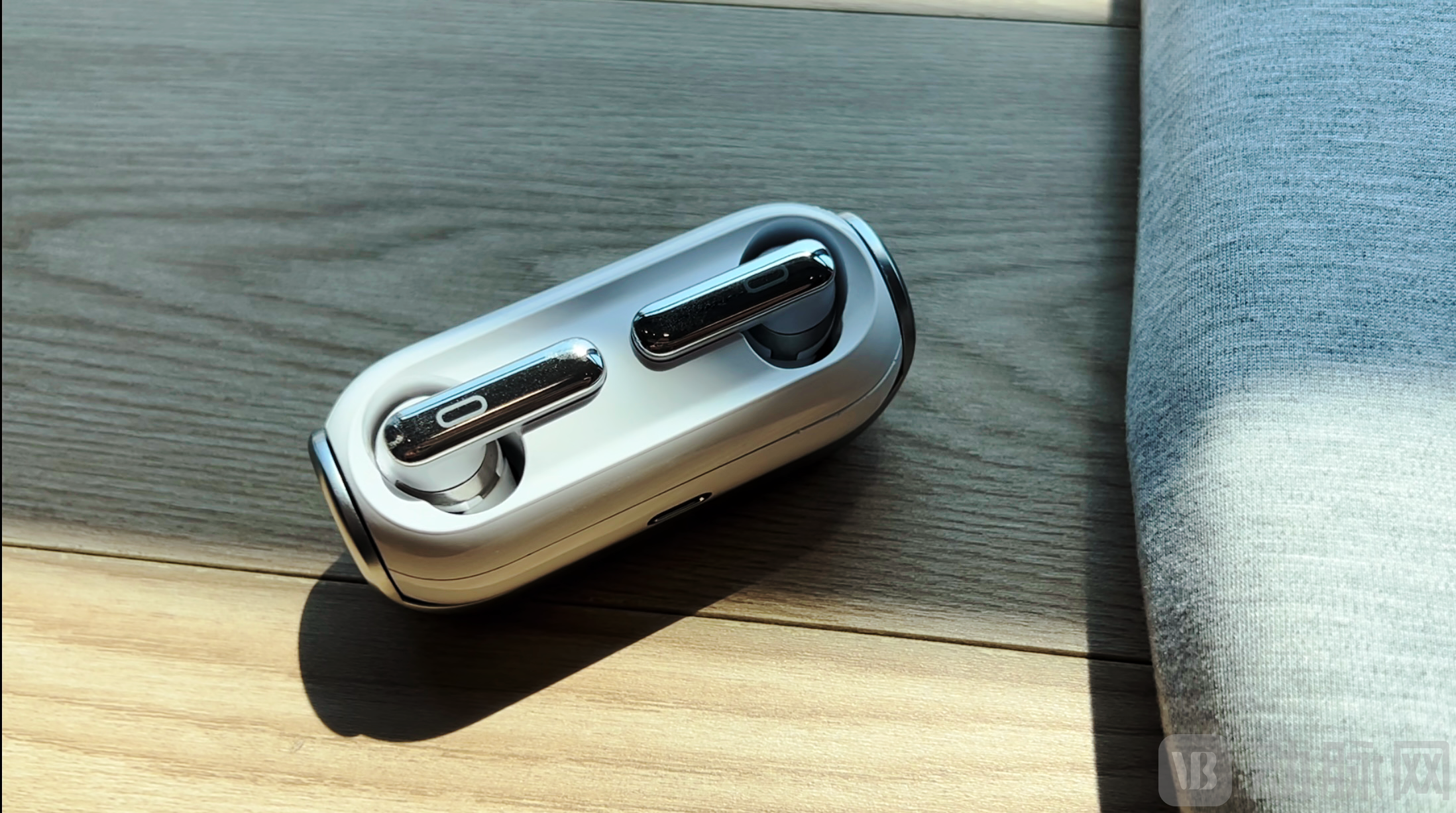
It is reported that the product weighs no more than 6 grams, making it the world's lightest consumer-grade EEG device. Its monitoring performance is comparable to that of professional brain-computer interface equipment worth millions. The product is set to launch globally soon, offering personalized brain health management solutions to users worldwide.
When discussing why they develop in-ear EEG headphones, Wang Chaoyang, founder of Naoyun, explained, "the biological signals from the ear are a rich goldmine, containing not only EEG but also EMG and ECG signals, offering a wealth of interesting data to explore. Moreover, the ear is inherently a sound sensor, allowing for integration with speech and semantics. Additionally, numerous scientific studies have discovered that certain types of functional music can modulate various brainwave states, achieving many unexpected benefits. In this way, headphones are not only capable of sensing various signals but also performing closed-loop regulation of brainwaves, making them an ideal location. Moreover, wearing headphones is socially unobtrusive and allows for long-term, unnoticeable use, offering a convenience that far exceeds that of any other current brainwave sensing products by more than tenfold.”
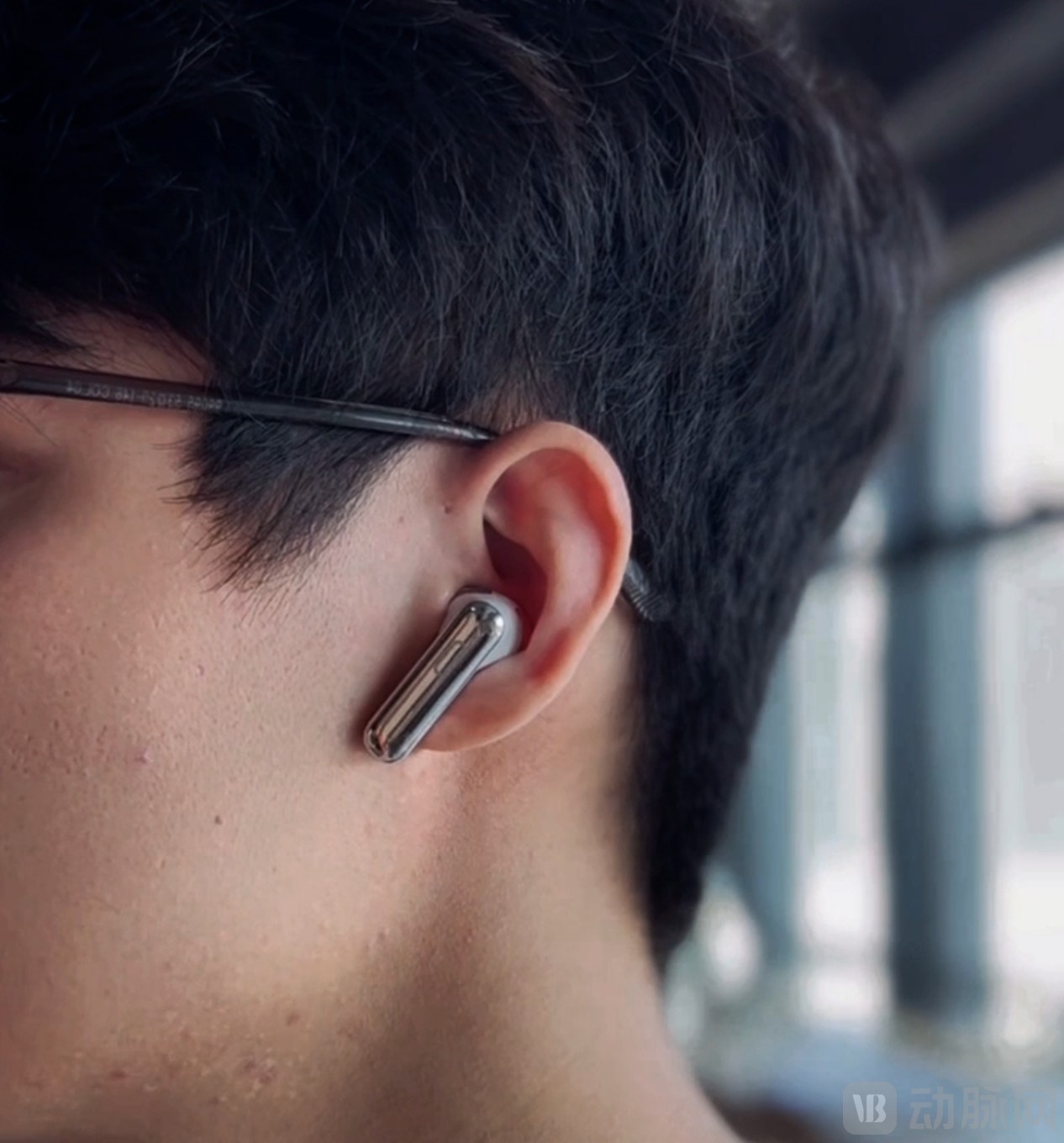
Currently, the brain-computer interface (BCI) industry, regarded as a future industry, may be on the verge of a breakthrough. However, it is undeniable that its commercialization faces multiple challenges: invasive BCIs are constrained by surgical complexity, medical risks, and R&D costs, and are currently accelerating efforts to push the boundaries of clinical applications. Traditional non-invasive devices, on the other hand, struggle to meet user needs due to insufficient signal accuracy, cumbersome wearability, or limited. In contrast, Naoyun has developed the world's first in-ear EEG headphones. With their convenient wearability and high-precision data collection capabilities, these headphones offer a wide range of application scenarios and are expected to gradually integrate into various aspects of people's lives.
First, for brain-computer interface technology, the most easily perceived function for consumers is mind control. Naoyun has already achieved the use of EEG headsets to control wheelchair, helping people with disabilities independently control the forward, backward, left, and right movements of wheelchairs. Building on this, the company has further developed brain-computer interface custom remote control. Users can independently configure the "brainwave" switches for various smart hardware, thereby expanding more innovative applications for brainwave scenarios.
Next, Naoyun plans to advance AI emotion regulation based on EEG. Wang Chaoyang pointed out, "AI can interpret vast amounts of EEG signals, more accurately capture users' emotions, and then use functional music to soothe or enhance these emotions. Taking meditation practitioners as an example, after wearing an EEG headset, users can not only score their own meditation state but also use the headset to discover ways to help themselves find the music that make them enter a flow state more quickly. The global meditation community numbers in the tens of millions, with several million practitioners domestically. In the past, EEG headbands have already reached sales of one hundred thousand units annually. The EEG headphones developed by Naoyun are not only more convenient to wear but can also assist in enhancing 'flow state', which promises a broader market space.
The sleep scenario is another important application area for EEG regulation. Currently, nearly 500 million people in China suffer from sleep disorders, and music therapy is one of the important methods to aid sleep. For example, some rely on the sound of rain, while others depend on white noise from televisions. Essentially, these sounds help to stabilize the user's alpha waves, thereby promoting sleep. Based on this, when users wear the EEG headset for a while, the system can provide a more comfortable experience for users' midday rest and sleep improvement through personalized music configuration. Brain wave headphones can monitor users through a period of wear and match them with personalized music best suited for them. Wearing headphones at noon can help you relax more when falling asleep, while listening to a system-customized playlist at night makes it easier to fall asleep.
Moreover, EEG headsets can be integrated with AI to become AI companion robots equipped with proactive care functions. In today's fast-paced work and life, the application scenarios of functional music are extensive. Beyond aiding sleep, they also include overcoming fears and alleviating anxiety, addressing a wide range of diverse user needs. EEG headphones can gain a deeper understanding of users to provide personalized recommendations, and even achieve proactive care. When poor user emotion is detected, the system can send a signal to the companion robot, providing users with a proactive care experience. To support this function, Naoyun has also incorporated an "EEG Lab" module in the accompanying app, aiming to develop more specialized scenario applications through co-creation with users.
In the B-end market, EEG headphones also have broad application potential. EEG headphones can serve as "sensors" to address previously challenging issues in various B2B scenarios, for instance, music publishing companies can use test subjects' EEG signals as a new evaluation metric when sifting through vast amounts of newly created music, thereby improving the accuracy of identifying high-quality tracks. Game development studios can rely on EEG data during beta testing to assess user excitement levels at payment stages. Currently, there are even partners developing "lie detection" products based on EEG + EMG technology.
Currently, AI technology is advancing at an astonishing pace, and its ability to interpret EEG information is continuously improving. This will further catalyze the emergence of more EEG application scenarios. At the same time, as more applications are implemented, they will drive the widespread adoption of EEG headsets, thereby accumulating vast amounts of EEG data. When the three achieve mutual cyclical empowerment, they will form a continuously evolving "flywheel" to enhance the level of human health.andQuality of life brings more possibilities.
Currently, the in-ear EEG headset has completed small-batch prototype trial production and is in the testing, verification, and optimization phase. According to the plan, Naoyun is expected to commence trial production of several hundred improved prototype units by the end of this year. These prototypes will primarily be used for user internal testing and will also be provided to select industry experts for preliminary testing. Additionally, the company has confirmed its participation in CES 2026 in Las Vegas, USA, and plans to launch this groundbreaking global product on the crowdfunding platform Kickstarter. The preliminary testing phase on Kickstarter is currently progressing in an orderly manner.
In terms of financing,following the successful completion of its angel round funding and the upcoming global launch of its product, Naoyun plans to initiate a new round of financing. Wang Chaoyang stated, "we are acutely aware that the consumer electronics sector is highly competitive, and precise control over market timing is a critical factor determining product success and market share. Based on this understanding, the company aims to engage in deep collaboration with investors and partners who have long followed the brain-computer interface technology field and recognize its commercial potential. Through resource synergy and complementary strengths, we seek to jointly accelerate the market adoption of this cutting-edge technology, exploring and unlocking its commercial value across multiple”.