

Global First CLDN18.2-Targeted Therapy Approved, MSD’s Pulmonary Arterial Hypertension Drug Gains FDA Approval, and Zai Lab’s Two In-Licensed Therapies Hit Phase 3 Primary Endpoints | Weekly Pipeline Review

Johnson & Johnson
Medical Device R&D and Manufacturer

Haisco
New Drug Research and Development, Production, and Sales
Welcome to follow Asymchem Pharma News
(Collection period: 3.25-3.29, domestic part includedFirst application for listing,First Application for Clinical TrialsInnovative drugs; Global section includes newly approved drugs for the first time, latest Phase III clinical progress)
Summary of NDA for Innovative Drugs in China
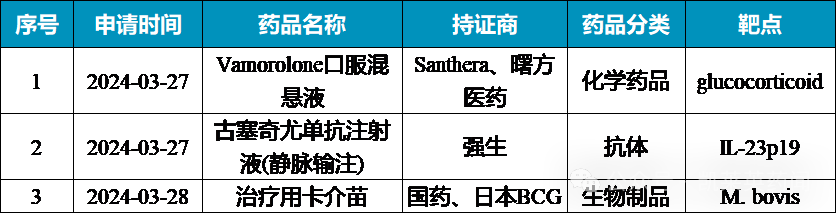
1. Santhera/Shufang: Vamorolone Oral Suspension
Mechanism of Action: Glucocorticoid Analog
Indications: Duchenne Muscular Dystrophy
On March 27, the New Drug Application (NDA) for the oral suspension of vamorolone, co-developed by Santhera and Sperogenix Therapeutics, was accepted by the CDE. Vamorolone is a non-prednisolone derivative steroid and the first drug for Duchenne Muscular Dystrophy (DMD) to receive full approval in both the United States and the European Union. It binds to the same receptor as glucocorticoids but alters its downstream activity. Compared with traditional corticosteroid treatments, vamorolone not only demonstrates equivalent efficacy but also offers significant clinical safety advantages in maintaining normal bone metabolism, bone density, and growth.
In the pivotal clinical trial VISION-DMD, the vamorolone group achieved the primary endpoint at week 24 compared with placebo: the time to stand from supine (TTSTAND) showed a statistically significant difference compared with the placebo group (p=0.002). Meanwhile, vamorolone demonstrated good safety and tolerability. The most common adverse events compared with the placebo group were Cushingoid features, vomiting, weight gain, and irritability. Adverse events were generally mild to moderate.
In January 2022, Sperogenix Therapeutics obtained the rights for the development and commercialization of vamorolone in Greater China (including mainland China, the Hong Kong Special Administrative Region, the Macao Special Administrative Region, and Taiwan, China) for DMD and other rare disease indications.
2. Johnson & Johnson: Guselkumab Injection
Mechanism of Action: IL-23 Monoclonal Antibody
Indications: Autoimmune Diseases
On March 27, the marketing application for Johnson & Johnson's Guselkumab Injection was accepted by the CDE. Guselkumab is the world's first approved interleukin-23 (IL-23) inhibitor, which can block IL-23, a cytokine that plays a key role in autoimmune diseases, by binding to the p19 subunit of IL-23. Guselkumab has been successively approved in the United States and China for adult patients with moderate to severe plaque psoriasis. It is also actively expanding to other indications and has been approved for multiple indications in other countries, including palmoplantar pustulosis and psoriatic arthritis. The intravenous injection formulation submitted in this application is a modified formulation type.
Summary of IND for Innovative Drugs in China
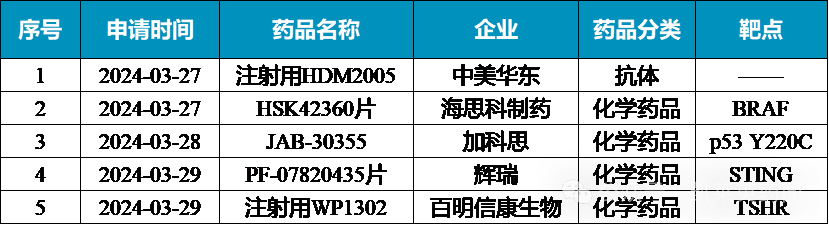
1. Haisco: HSK42360 Tablets
Mechanism of Action: BRAF Inhibitor
Indications: Tumor
On March 27, the Investigational New Drug (IND) application for Haisco's HSK42360 tablets was accepted by the CDE. HSK42360 is a small molecule inhibitor independently developed by the company that targets BRAF and is intended for the treatment of advanced solid tumors. Preclinical studies have shown that HSK42360 significantly inhibits tumor cell proliferation and demonstrates excellent anti-tumor efficacy in multiple solid tumor models. It also exhibits good tolerability and a wide safety margin, making it a highly promising small molecule anti-cancer drug with the potential to offer a new treatment option for patients with advanced solid tumors.
2. JACOBIO: JAB-30355
Mechanism of Action: p53-Y220C Activator
Indications: Tumor
On March 28, the IND for JAB-30355 developed by Jacobio was accepted by the CDE. JAB-30355 is a potent, selective, and orally bioavailable p53-Y220C activator. Under physiological conditions, p53 precisely regulates cellular events such as cell cycle arrest, apoptosis, senescence, and DNA repair. The TP53 gene is mutated in 50-60% of human cancers. TP53 Y220C is a hotspot loss-of-function mutation occurring in approximately 1% of solid tumors. The application of a p53-Y220C activator to restore p53 function represents a promising therapeutic strategy for patients with this mutation.
In vivo PK-PD studies demonstrated a good correlation between JAB-30355 exposure and the activation of p53 target genes. Furthermore, JAB-30355 exhibited dose-dependent anti-tumor activity, inhibiting tumor cell growth in multiple CDX and PDX models of ovarian cancer, pancreatic cancer, gastric cancer, and small cell lung cancer, with overall good tolerability.
3. Biomayson Biotech: Injectable WP1302
Mechanism of Action: TSHR Inhibitor
Indications: Graves' Disease
On March 29, the IND for Baoming Xinkang Biotech's injectable WP1302 was accepted by the CDE. WP1302 is a thyroid-stimulating hormone receptor (TSHR) inhibitor currently under development for Graves' disease. This is the first and only innovative therapy in this treatment area in 70 years. The results of its Phase 1 clinical trial completed in Europe have preliminarily demonstrated significant therapeutic effects on the majority of patients, with good safety. As one of the most common autoimmune diseases, Graves' disease affects a large number of patients worldwide, with approximately 10 million in Europe and the United States alone. The disease mainly manifests as the immune system mistakenly attacking the thyroid gland, leading to excessive secretion of thyroid hormones, which causes symptoms of hyperthyroidism such as weight loss and exophthalmos.
Global New Drug Approvals
1. Astellas: Zolbetuximab
Mechanism of Action: CLDN18.2-targeted monoclonal antibody
Indications: Gastric cancer or adenocarcinoma of the gastroesophageal junction
On March 26, zolbetuximab, developed by Astellas, received approval from Japan's Ministry of Health, Labour and Welfare (MHLW) for the treatment of CLDN18.2-positive, unresectable, advanced or recurrent gastric cancer patients. Zolbetuximab is the first CLDN18.2-targeted therapy to gain approval from a global regulatory agency and can bind to the transmembrane protein CLDN18.2. Preclinical studies have shown that this binding effect induces cancer cell death by activating two different immune system pathways—antibody-dependent cellular cytotoxicity (ADCC) and complement-dependent cytotoxicity (CDC). In August 2023, the Center for Drug Evaluation (CDE) accepted the marketing application for zolbetuximab (injection, generic name: zolbetuximab) for the first-line treatment of CLDN18.2-positive, HER2-negative locally advanced unresectable or metastatic gastric or gastroesophageal junction (GEJ) adenocarcinoma patients.
This approval is mainly based on the positive results of the SPOTLIGHT and GLOW Phase 3 clinical trials.
On November 16, 2022, Astellas announced positive topline results from the Phase 3 SPOTLIGHT clinical trial, which evaluated the efficacy and safety of zolbetuximab in combination with mFOLFOX6 (a regimen including oxaliplatin, leucovorin, and fluorouracil).
The study showed: It reached its primary endpoint, meaning that compared with placebo + mFOLFOX6, the progression-free survival (PFS) of patients treated with zolbetuximab + mFOLFOX6 was statistically significant; in addition, the study also met the secondary endpoint, meaning that compared with placebo + mFOLFOX6, the overall survival (OS) of patients treated with zolbetuximab + mFOLFOX6 was statistically significant. Among patients treated with zolbetuximab combined with mFOLFOX6, the most common treatment-emergent adverse events were nausea, vomiting, and decreased appetite.
In March 2023, Astellas announced the detailed results of the GLOW Phase III clinical trial, which aimed to evaluate the safety and efficacy of zolbetuximab in combination with CAPOX (a chemotherapy regimen including capecitabine and oxaliplatin) as a first-line treatment for Claudin 18.2 (CLDN18.2)-positive, HER2-negative locally advanced unresectable or metastatic gastric cancer or gastroesophageal junction adenocarcinoma patients, compared to placebo plus CAPOX. The results showed:
The primary endpoint was met: the combination of zolbetuximab and CAPOX reduced the risk of disease progression or death by 31.3% (n=507; hazard ratio [HR]=0.687; [95% confidence interval [CI]: (0.544-0.866)]; P value=0.0007). The median progression-free survival was 8.21 months (95% CI: 7.46–8.84) in the treatment group and 6.80 months (95% CI: 6.14–8.08) in the placebo group.
Reached the key secondary endpoint: The combination of zolbetuximab and CAPOX significantly extended overall survival (OS), reducing the risk of death by 22.9% (hazard ratio=0.771; 95% CI: 0.615-0.965; P-value=0.0118). The median overall survival was 14.39 months (95% CI: 12.29-16.49) in the treatment group and 12.16 months (95% CI: 10.28-13.67) in the placebo group.
In terms of safety: The incidence of serious adverse events (TEAE) in the two groups was similar, consistent with previous studies, with 47.2% in the zolbetuximab treatment group versus 49.8% in the placebo group. During the GLOW study, the most common serious adverse events in the treatment group versus the placebo group were nausea (68.5% vs. 50.2%), vomiting (66.1% vs. 30.9%), and decreased appetite (41.3% vs. 33.7%), respectively.
Astellas' internal forecast predicts that Zolbetuximab's sales peak will reach between 100 billion yen and 200 billion yen by 2030.
2. Merck: Sotatercept
Mechanism of Action: ACVR2A-Fc Fusion Protein
Indications: Pulmonary Arterial Hypertension
On March 26, Merck announced that the company's ACVR2A-Fc fusion protein sotatercept had been approved by the FDA for the treatment of pulmonary arterial hypertension (PAH). Sotatercept was initially developed by Acceleron Pharma. In September 2021, Merck acquired Acceleron for $11.5 billion, incorporating sotatercept and another marketed anemia drug, Reblozyl, into its own pipeline. Sotatercept is a fusion of the extracellular domain of human Activin receptor IIA with the Fc domain of IgG1, which can bind and capture TGF-β family ligands (TGF-β ligand trap), restoring the balance between pro-proliferative and anti-proliferative signaling pathways associated with pulmonary artery wall and right ventricular remodeling, thereby inhibiting cell proliferation, reversing vascular remodeling, and promoting vascular patency.
The approval for marketing is based on the positive data from the Phase III STELLAR study. The results showed that at week 24 of treatment, the 6-minute walking distance (6MWD) of patients in the Sotatercept group increased by 34.4 meters from baseline, compared to 1.0 meter in the placebo group. According to the Hodges-Lehmann test, the intergroup difference was 41 meters (P<0.001). Additionally, the study successfully achieved eight secondary endpoints, including NT-proBNP levels, time to first reported death or clinical worsening event, and PAH-SYMPACT physical impact domain scores.
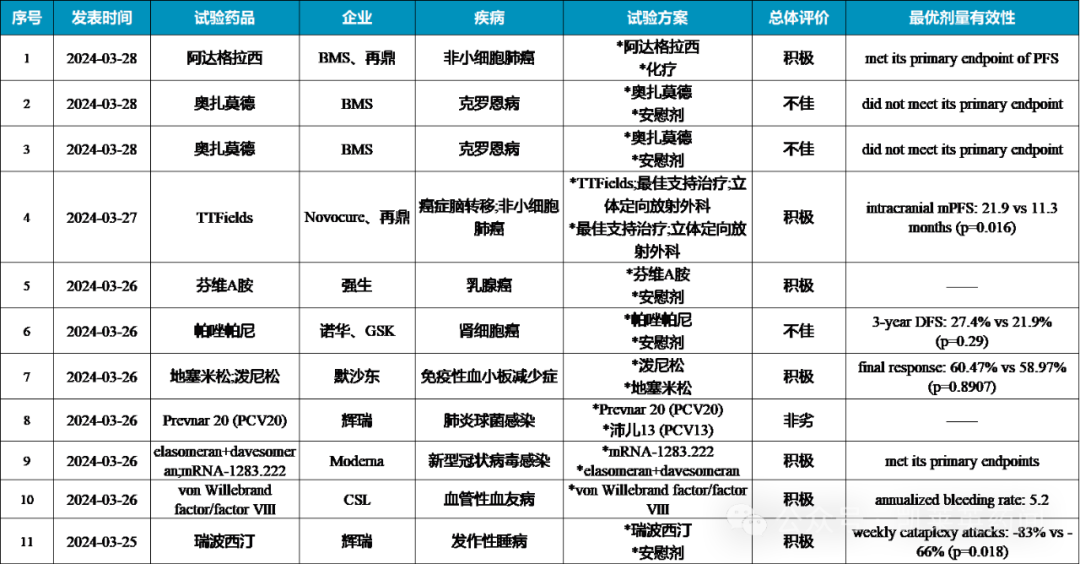
Global Phase III Clinical Summary




"Views"Click once