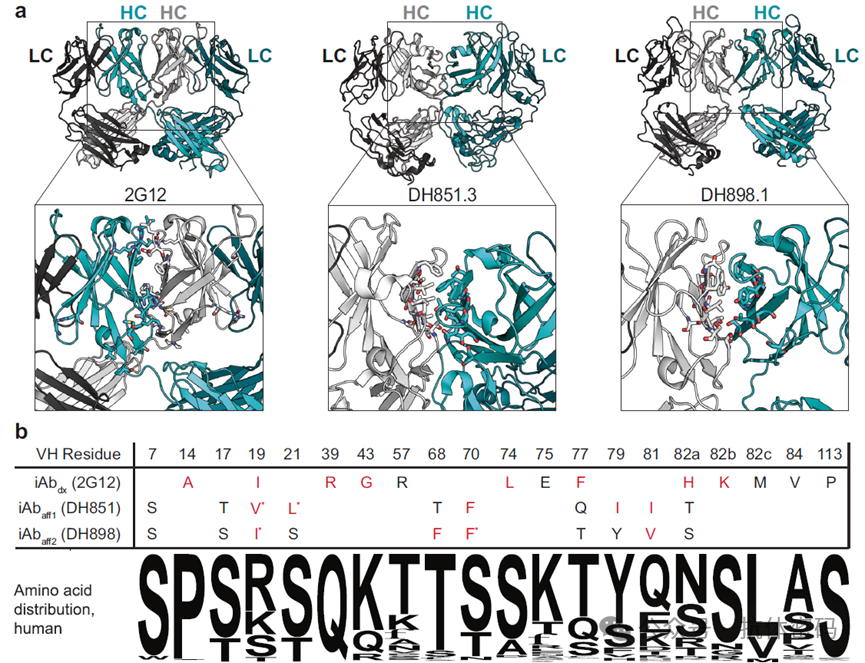
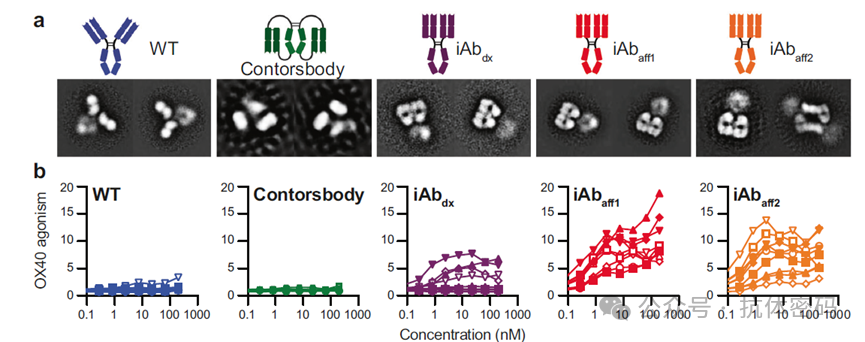
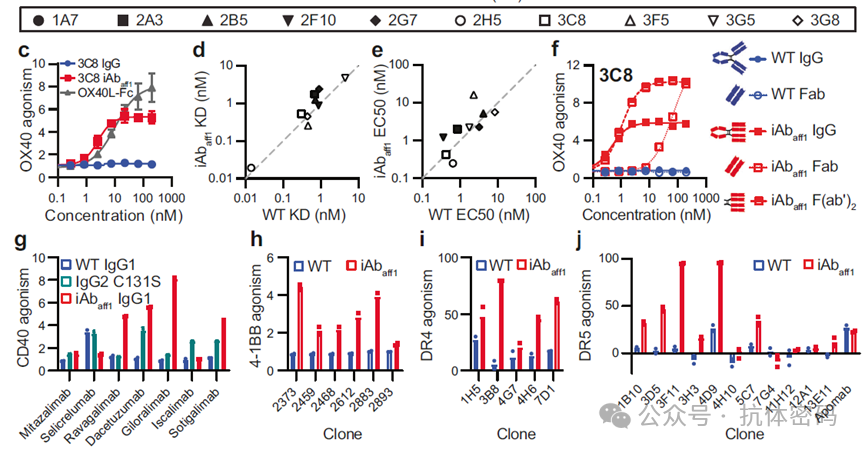
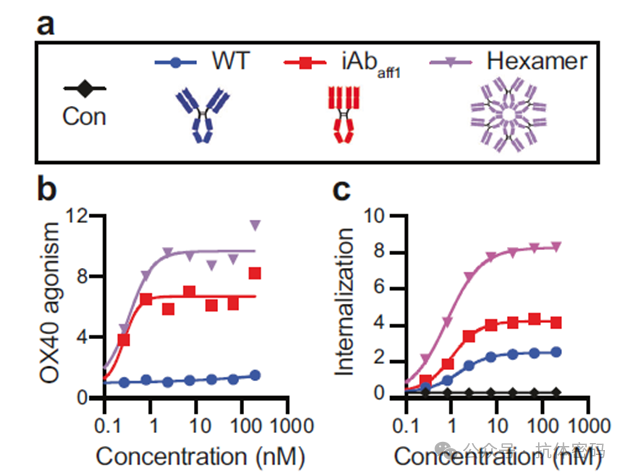
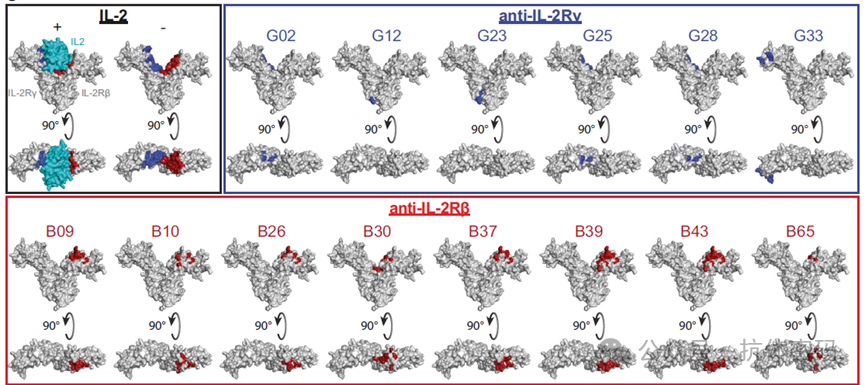
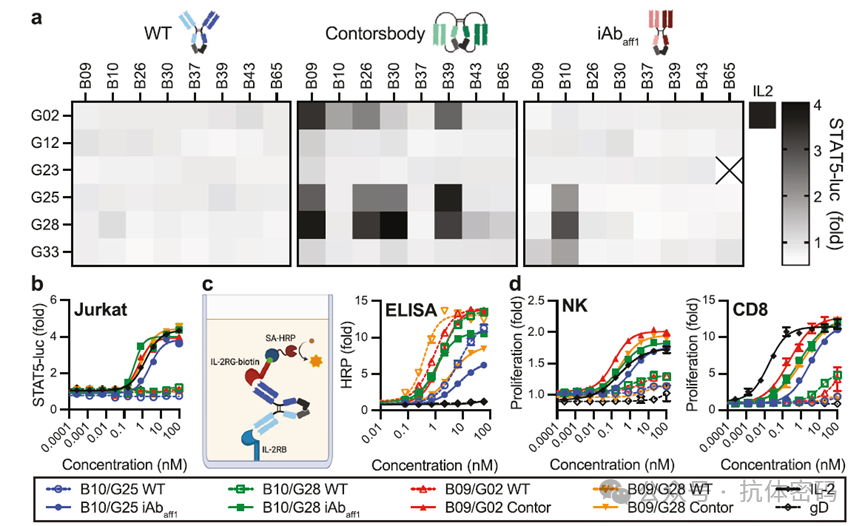
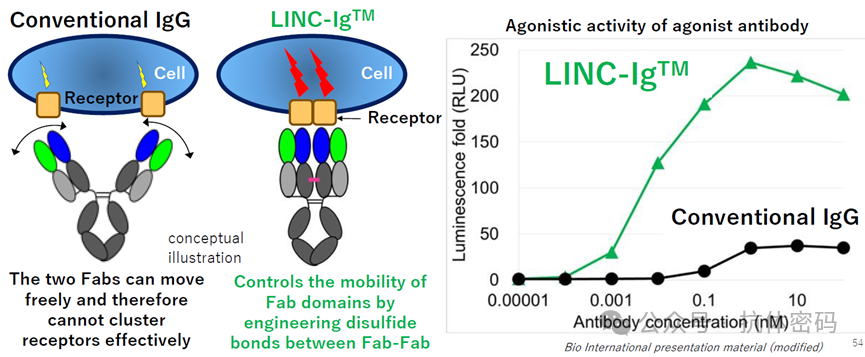
As we all know,IgGAntibodies are naturallyYType structure, but some researchers have found parts originating fromHIVThe broad-spectrum neutralizing antibodies can presentiType structure, these antibodies through the heavy chain variable regionVHThe relevant effects, which make the twoFabSide by side, thus distinct from the traditionalYType. FromGenentechResearchers further studying this type of antibody have found that, through genetic engineering modifications, ordinary agonistic antibodies can exhibit stronger agonistic activity without relying onFcCrosslinking. Additionally, the bispecific antibody constructed with the modified antibody can mimic the function of cytokines, such asIL-2And effectively activate relevant immune cells.First, for those naturally occurringiStructural and sequence analysis of type antibodies revealed that these antibodies primarily function throughVHThe interaction forms a side-by-side structure. Subsequently, an analysis of the interacting regions of these antibodies revealed that the amino acids involved in these interactions do not participate in the binding of the antibody to the antigen, and through interaction with humansgermlineAmino Acid Comparison: Some Amino Acids Are Not Conventional in HumansgermlineEncoding, so these amino acids may have been introduced through hypermutation during the affinity maturation process.According to the sequences of the three different antibodies above, forOX40Antibody mutation modification ((iAbdx, iAbaffAnd iAbaff2), because each antibody has different mutation sites, so the modifiedOX40There will be various sequences with differences.i-shapeAntibodies, under negative staining electron microscopy, these antibodies are present.i-type structure, while the wild-type antibody andcontorsbody(Developed by Roche, there is noCH2Antibodies, which have greater flexibility, are similar toYType structure. In terms of activity, these modified antibodies can be more strongly agonistic compared to the wild-type antibody.Affinity analysis of the modified antibody revealed that its affinity did not change significantly compared to the wild-type antibody, andEC50There was also no significant change, indicating that the stronger agonistic activity of the antibody was mainly due to changes in the antibody structure. Additionally, the researchers also studied the individual components after modification.FabWhether it can also form side by side and have an exciting type, the result found that, separatelyFabAlthoughEC50Higher, but its agonistic effect at high concentrations is stronger than that of the intact antibody (see figure below).f), withoutFcTheF(ab)2ItsEC50Comparable to full-length antibodies, but with even stronger agonistic activity, which indirectly suggests that the engineered antibodies may have intermolecular interactions. Subsequent researchers also exploredTNFRSFOther antibodies in the family, such asCD40, 4-1BB, DR4And DR5etc., these antibodies, after modification, basically possess stronger agonistic properties (see figure below).g-j)。TNFRSFFamily agonists require cross-linking to effectively activate related pathways, and some previous technologies have been used for antibody cross-linking, such as through antibodies.FcModification prompts antibody formation into hexamers. Compared with antibodies in hexamer form,i-shapeAlthough the antibody is slightly inferior in agonism, it has lower endocytosis, which may result in more persistent activation (see figure below).a-b)。Sincei-shapeTypes of antibodies can be excited side by side.TNFRSFFamily-related pathways, so can this type of antibody simulate the binding of cytokines to receptors side by side?GenentechThe researchers selectedIL-2As the research object. It was screened through a phage library, respectively.IL-2Rγ andIL-2RAntibodies against β, these antibodies have different affinities and different epitopes, among whichIL-2Rβ's8The antibodies have similar epitopes, andIL-2RThe epitope differences of γ antibodies are significant.TargetingIL-2Rγ andIL-2Rβ antibodies are paired to construct bispecific antibodies: wild-type bispecific antibodies,contorsbodyAndi-shapeType bispecific antibody. Wild-type bispecific antibodies basically lack activation capability, andcontorsbodyAndi-shapeDifferent combinations of bispecific antibodies have different activation capabilities and can activate.NKCells andTCell. Buti-shapeType bispecific antibody is similar in both activation ability and quantity.contorsbodyDouble antibody, this may be becauseIL-2The binding to the receptor requires a specific angle, andi-shapeDual-type antibodies are less flexible thancontorsbodyDual antibodies, so their activation ability is slightly inferior, but this is sufficient to prove,i-shapeBispecific antibodies can functionally replace more difficult-to-drug cytokines and are used in drug development.Actuallyi-shapeAntibodies of this class can also be modified through another type of engineering approach.—InFabIntroducing disulfide bonds. Previously, Chugai Pharmaceutical announced its agonistic antibody platformPlatformLINC-Ig™(LINCed-Immunoglobulin)。LINC-Ig™ is on the two heavy chains of the antibodyCH1Introduce disulfide bonds into, thereby linking the twoFabFixed, this design is mainly intended to enhance the efficacy of agonistic antibodies. Traditional antibodies areYFont structure, due to the presence of the hinge region, the twoFabRelatively more flexible, thus it can freely bind to antigens. However, for agonistic antibodies, their function requires dimerization or multimerization of the donor or receptor, so the relatively flexible structure of the antibody can, to a certain extent, hinder receptor dimerization or multimerization.In in vitro efficacy experiments,LINC-Ig™ Compared with traditional monoclonal antibody agonists, it can more effectively promote receptor dimerization or multimerization and effectively stimulate immune responses.There are multiple strategies for developing agonistic antibodies, such as using multivalent antibodies, promoting antibody cross-linking into multimers through Fc, utilizing IgM with multivalent binding capabilities, and fusing receptors in multimeric forms. Genentech's i-shaped antibody allows the two Fab regions of the antibody to come infinitely close, thereby bringing their binding epitopes closer together, further promoting the aggregation of related targets and exerting an agonistic function.References:MatthewG.Romei,Brandon Leonard, Zachary B. Katz et al.i-shaped antibody engineering enables conformational tuning of biotherapeutic receptor agonists.Nature Communications 2024Scan the WeChat QR code to add the editor of the Antibody Circle.Those who meet the requirements can join the Antibody Circle WeChat group!Please indicate: Name + Research Direction! All reproduced articles in this official account are intended to convey more information, with the source and author clearly indicated. Media or individuals who do not wish to be reproduced can contact us at cbplib@163.com, and we will delete the content immediately. All articles represent the views of the author and do not represent the position of this website.