Sinobioway Biotech Secures RMB 200 Million in Series A+ Financing to Advance Next-Generation Allogeneic Cell Therapies

Simnova
Innovative Cell Therapy Product Developer
▎Edited by the WuXi AppTec content team
Recently, Simnova, a rising innovative pharmaceutical company, has achieved significant progress: In March this year, the company announcedCompleted A+ Round Financing of 200 Million RMB; In February this year, Simnova's firstUniversal CAR-NK Therapy for Systemic Lupus ErythematosusClinical trial application approved in China; this January, the company's self-developedTargeting multiple tumor antigens and simultaneously secreting trispecific antibody moleculesDual-target CAR-TCell TherapySNC109 Injection Granted Orphan Drug Designation by U.S. FDA for the Treatment of Malignant Glioma, While Its Clinical Application for the Treatment of Glioblastoma Was Approved by China's NMPA in December Last Year. These Developments Have Also Drawn Industry Attention to Simnova, a Rising Star in the Cell Therapy Field.
Simnova was founded in 2019 and focuses on the field of cell therapy. Its current research and development areas cover CAR-NK cell therapy.Multi-target CAR-T Cell Therapy, as well as next-generation universal in vivo cell therapy products based on circular mRNA and targeted delivery platforms through cooperative layout.
Cell therapy is undoubtedly one of the most highly regarded forms of new drug development today. So, what are the characteristics and advantages of Simnova's R&D pipeline? What challenges in current disease treatment does it have the potential to address? And how does the company view the future potential and opportunities of cell therapy? With these questions in mind, the content team from WuXi AppTec interviewedDr. Cao Zhuoxiao, CEO of SimnovaDr. Cao Zhuoxiao has been responsible for and involved in the development of nearly 40 different types of drug formulations, possessing extensive experience in innovative drug research and development.
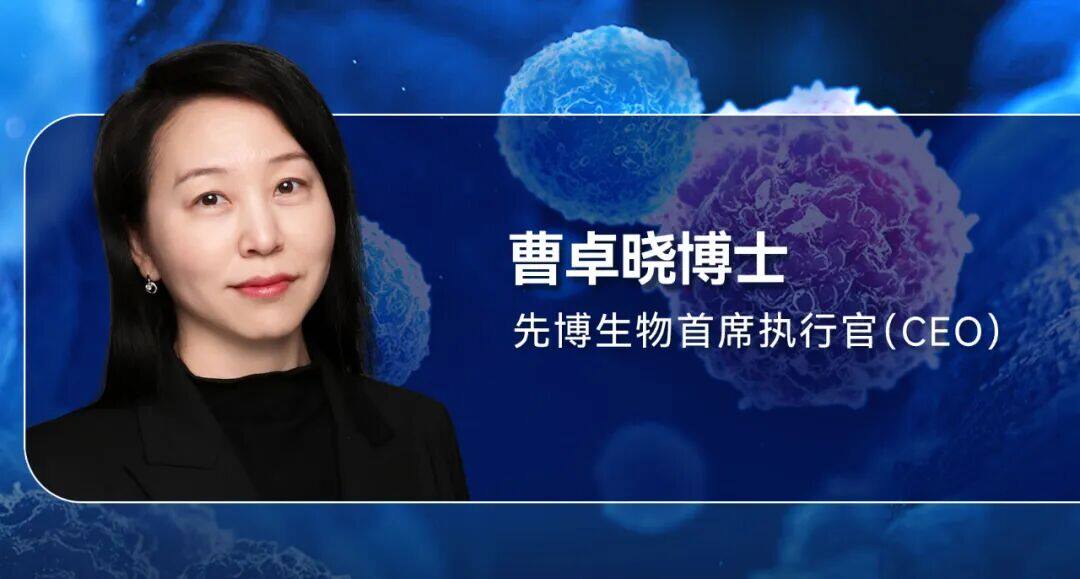 Image Source: Provided by Simnova, Produced by the WuXi AppTec Content Team
WuXi AppTec Content Team: In the field of oncology that Simnova focuses on, what are the key challenges currently faced by treatment methods or clinical solutions?
Dr. Cao Zhuoxiao:Tumors can generally be divided into two categories: hematological tumors and solid tumors. In recent years, significant progress has been made in the field of hematological tumors, especially in the area of cell and gene therapies (CGT), where clinical treatment options are already relatively abundant. One of the main challenges faced by these patients is the risk of recurrence, particularly for those undergoing last-line treatments who often require new approaches to extend survival. In contrast, the challenge in the field of solid tumors lies in the fewer breakthroughs achieved in recent years. Aside from rapid advancements in antibody-drug conjugates (ADC), other types of new drug developments remain limited to certain specific indications. Many indications still face the dilemma of having no effective drugs available, representing a significant unmet clinical need.
WuXi AppTec Content Team: What are the advantages of Simnova's technology and product pipeline? What challenges in current disease treatment do they have the potential to address?
Dr. Cao Zhuoxiao:One of Simnova's research directions isUniversal Cell Therapy DrugsThe emergence of autologous CAR-T cell therapy has undoubtedly brought new hope to patients, but the extremely high cost has also limited its widespread clinical application. I believe that the development of universal cell therapy drugs is certainly a future trend and an essential path to enabling cell therapy to benefit more patients.In the development of universal cell therapies, Simnova has chosen CAR-NK therapy. This type of therapy is not only expected to be readily available, but also benefits from the significant safety advantages of NK cells.。
Simnova's first CAR-NK product pipeline, SNC103, has received multiple IND approvals in China, targeting large B-cell lymphoma, B-cell acute lymphoblastic leukemia, and systemic lupus erythematosus. Unlike cancer patients, autoimmune disease patients have more treatment options, so they have higher requirements for the cost and safety of an innovative therapy. Compared with autologous CAR-T products, universal CAR-NK products with higher safety are more likely to be favored by autoimmune disease patients and will open up a broader market. Additionally,In the more challenging field of solid tumors, we are also actively exploring combination therapies such as CAR-NK therapy with targeted therapy., hoping to achieve a breakthrough in solid tumor indications in the future.
Another research direction of ours isApplication of Autologous Cell Therapy in the Field of Solid TumorsEarlier, the FDA had already approved the first tumor-infiltrating lymphocyte (TIL) therapy for the treatment of melanoma, but cell therapy has yet to achieve widespread breakthroughs in the field of solid tumors. In this regard, we have chosen indications with significant clinical demand and high R&D difficulty, such as glioblastoma, a field where very few new drugs have been approved in the past two decades, and current clinical treatment options remain very limited.
In terms of expanding the product pipeline, Simnova's standard is to clarify the product design from the outset.Product Differentiation, hoping that the differentiated products will ultimately reflect in the improvement of clinical efficacy.。For example, the multi-target CAR-T cell therapy SNC109 injection we are developing carries two CAR molecules on the surface of the CAR-T cells, targeting IL13Rα2 and HER2, which are expressed in glioblastoma. Additionally, this therapy can secrete a bispecific antibody (BiTE) targeting EGFR and EGFRvIII.Capable of simultaneously activating both CAR-positive and CAR-negative T cells to exert tumor cell-killing effects.. AlsoThat is to say,We have uniquely designed four targets based on the characteristics of glioblastoma, giving this product a differentiated advantage.。
While independently developing, Simnova is also collaborating to lay out the next generation of universal in vivo cell therapy products. In January 2023, Simnova reached a collaboration with Orna Therapeutics (referred to as Orna) to develop in vivo cell therapy products using the breakthrough circular mRNA technology (oRNA).Circular RNA has a longer half-life than linear mRNABetterStability Advantage: By introducing circular RNA that can express CAR in immune cells, CAR immune cells can be directly generated in the human body.,Thereby achieving the effect of identifying and killing tumor cells. Such innovative technology can avoidFrom the patient or healthy donor's bodyThe cumbersome process of isolating cells and engineering them in vitro,Improving the accessibility of CAR-T cell therapy for patients and further reducing costs holds great promise as a new drug form for the next generation of universal cell therapies.。

WuXi AppTec Content Team: What are the key challenges to fully realizing the potential of Simnova's products under research? And what are the potential solutions?
Dr. Cao Zhuoxiao:Simnova Targets Cutting-edge Innovative Projects on an International ScaleEye, such projects often lack reference to prior experience., every step requires exploration and experimentation,From R&D to Process Development,Every step forward in production is filled with challenges. Our two current products have advanced to Phase 1 clinical research, and the challenge that urgently needs to be considered and resolved now is...The clinical stage finalizes the optimal clinical dosing regimen. Each product has its own characteristics, and the clinical trial design of similar drugs cannot be directly copied in the clinical setting. It is necessary to explore based on the design features and clinical performance of the product itself, gradually clarifying the clinical use strategy and identifying the patient population with better responses, among other factors.。
WuXi AppTec Content Team: In the next few years, what milestone developments are expected in Simnova's R&D pipeline?
Dr. Cao Zhuoxiao:In the short term, there are a few key developments: First, Simnova's CAR-NK product pipeline SNC103 and dual CAR-T cell therapy SNC109 have completed multiple Phase 1 clinical research projects and entered the critical clinical research stage; secondly, our in situ chimeric antigen receptor (isCAR) T-cell technology project ORN-101, developed in collaboration with Orna, has advanced to the investigator-initiated clinical research (IIT) or Phase 1 clinical research stage.
WuXi AppTec Content Team: How do you view the current innovation trends in the biopharmaceutical industry? Where are the opportunities for innovation? What is your prediction for the next few years?
Dr. Cao Zhuoxiao:As a member of the innovative drug research and development field, my intuitive feeling is that technological iteration has become increasingly rapid in recent years, with various new drug types constantly emerging and innovation cycles getting shorter. This is undoubtedly exciting for us who work in new drug development. New technologies and products, to varying degrees, resolve bottlenecks and issues of existing products, allowing us to find the next breakthrough direction from these new technologies. Ultimately, the beneficiaries are the patient populations. Against the backdrop of such “flourishing diversity,” I believe the trend and opportunity for innovation lie in whether a company’s technical accumulation is strong enough and whether it has the capability to address challenges posed by current therapies, ultimately translating into clinical benefits for patients. Additionally, I am optimistic about the combination or integration of new technologies and products with those already available in clinical practice.
In addition, targeted delivery technology is very important in the innovative drug field. Currently, there are many different technical forms that ultimately aim to maximize targeted delivery, enhance drug efficacy, and reduce safety risks. Specifically, in the cell therapy field, I am optimistic about the PanCAR technology that we are developing with our partner Orna. This technology can directly generate therapeutic CAR immune cells within the human body, completely eliminating the need for any ex vivo preparation process. Existing cell therapies, whether autologous or allogeneic, require ex vivo preparation before being infused back into patients. Moreover, this type of drug does not require lymphodepletion pretreatment, effectively avoiding clinical risks associated with such pretreatment. Therefore, I predict that once this technology is clinically validated, it will have a significant impact on the traditional cell therapy field.
WuXi AppTec Content Team: How do you view the role of collaboration in new drug development? Specifically, in the cell and gene therapy field where Simnova operates, what kind of collaboration do you think is needed to accelerate the emergence of innovative therapies?
Dr. Cao Zhuoxiao:The field of new drug research and development inevitably involves cooperation at various levels and in various forms. For Biotech companies, I believe the level of collaboration can, to a certain extent, represent the advantages and value of the company's products, technology, or clinical development.Collaboration can leverage the respective strengths of the partners, accelerating the development process of truly innovative and valuable drugs.Ultimately benefit patients earlier.
Specifically, cell therapy has certain particularities. The clinical development of such therapies is challenging.、CMC RiskCompared with large molecule drugs, small molecule drugs are higher.Therefore, in addition to requiring very close internal collaboration,For example, clinical needs require efficient and默契 cooperation with CMC, as well as effective external collaboration.Such as international clinical development and commercialization of products, etc.
Moreover, I have a more extended understanding of collaboration, such as exploring preclinical research for innovative drugs with external partners, discussing the design of differentiated clinical research plans for innovative drugs with clinical experts, and even communicating more with regulatory authorities to enhance the understanding of various types of innovative drugs. These broader forms of collaboration could potentially accelerate the development process of valuable innovative drugs.
WuXi AppTec Content Team: If we gather here again 10 years from now, what changes do you think will occur in the field of cell and gene therapies? Could you paint a picture of what the landscape might look like in 10 years?
Dr. Cao Zhuoxiao:I believe that in 10 years, cell therapy will have already become a reality in terms of being widely accessible and breaking through solid tumor indications. Beyond oncology, it may also see broader applications in other conditions such as autoimmune diseases, chronic illnesses, and even the larger field of overall health. By then, I believe cell therapy will no longer be a "niche" form of medication but will become an important branch of clinical treatment, just like small-molecule and large-molecule drugs today. For Simnova, I look forward to the approval and market launch of multiple innovative cell therapy drugs, truly benefiting patients.
This article is from the content team of WuXi AppTec. Individuals are welcome to share it on their social media feeds, but unauthorized reproduction by media or institutions in any form on other platforms is prohibited. For authorization to reproduce, please contact us via a message on the "Pharma Observer" WeChat Official Account. For other collaboration inquiries, please contact wuxi_media@wuxiapptec.com.
Disclaimer: The content team of WuXi AppTec focuses on introducing the research progress in global biopharmaceuticals and health. This article is for information exchange only, and the views expressed in the article do not represent the position of WuXi AppTec, nor does it indicate that WuXi AppTec supports or opposes these views. This article is not a recommendation for treatment plans. For guidance on treatment options, please visit a正规 hospital.