Iaso Bio Submits IND Application for GPRC5D-Targeted CAR-T Therapy RD118 in Relapsed/Refractory Multiple Myeloma

IASO Biotechnology
Cancer Treatment New Drug Developer
On April 10, according to the CDE official website, the clinical trial application for RD118 Injection, a Class 1 new drug developed by Nanjing IASO Biotherapeutics Co., Ltd. (hereinafter referred to as "IASO Bio"), was accepted. According to the IASO Bio official website, this drug is a CAR-T therapy targeting the GPRC5D antigen.

Source of the image: CDE official website
GPRC5D
Targeting Multiple Myeloma
GPRC5D is a structurally complex class C 7-transmembrane receptor protein with no known ligand or function in humans, referred to as an orphan receptor. GPRC5D exhibits low expression in normal human tissues but is specifically overexpressed on the surface of multiple myeloma plasma cells.
Multiple Myeloma (MM) is one of the common malignant plasma cell disorders, where cancerous plasma cells rapidly spread in the bone marrow and replace normal cells, often causing symptoms such as fractures and pain. Although some drugs can alleviate the symptoms of multiple myeloma, there remains a significant unmet need in clinical practice. GPRC5D has emerged as an important potential target for treating multiple myeloma.
RD118 is a GPRC5D CAR-T therapy from IASO Bio's research pipeline, and its clinical trial application has been accepted by the CDE today. In 2022, IASO Bio registered a Phase I clinical trial for the GPRC5D CAR-T therapy on the ClinicalTrials website, targeting multiple myeloma or lymphoma.
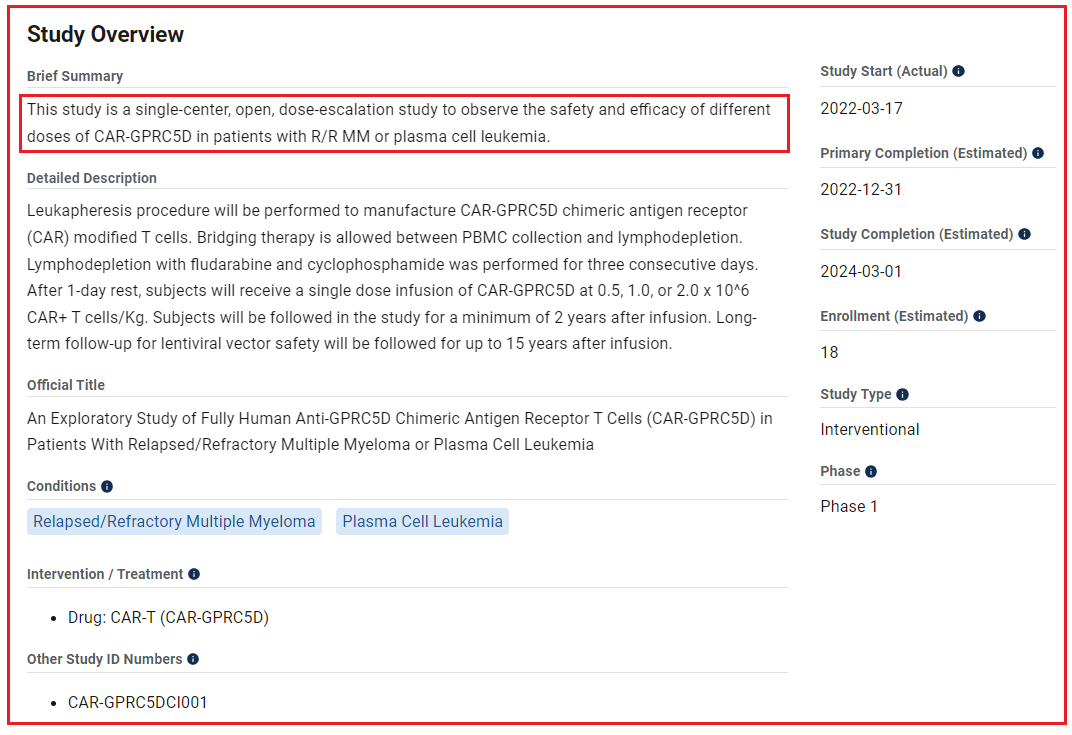
Image Source: clinicaltrials.gov
The acceptance of the clinical trial application for RD118 will further accelerate the drug development process, potentially bringing new therapies to patients with multiple myeloma and other diseases.
Deeply Cultivate the Field of Hematological Oncology
Cell Therapy, Antibody
IASO Bio focuses on the development of innovative cell therapies and has built a rich pipeline of candidates. In recent years, significant progress has been made in the research and development of cell-based drugs for hematological tumors and antibody drugs.
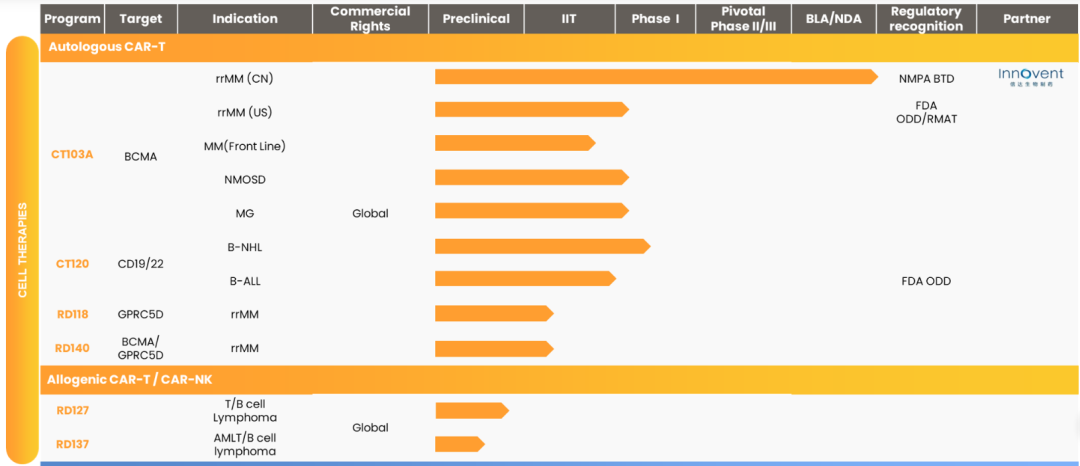

Image Source: IASO Bio
CT103A
CT103A (Equecabtagene Autoleucel Injection), a fully human BCMA CAR-T product developed by IASO Bio, received conditional approval from the National Medical Products Administration (NMPA) in June 2023 for the treatment of multiple myeloma. On March 28, IASO Bio announced that the Investigational New Drug (IND) application for CT103A had been approved by the NMPA, aiming to expand its indications to treat relapsed/refractory multiple myeloma patients who have undergone 1-2 prior lines of therapy and are lenalidomide-resistant, potentially further addressing the unmet clinical needs in multiple myeloma. Additionally, CT103A has been approved for registration clinical trials by the U.S. FDA.
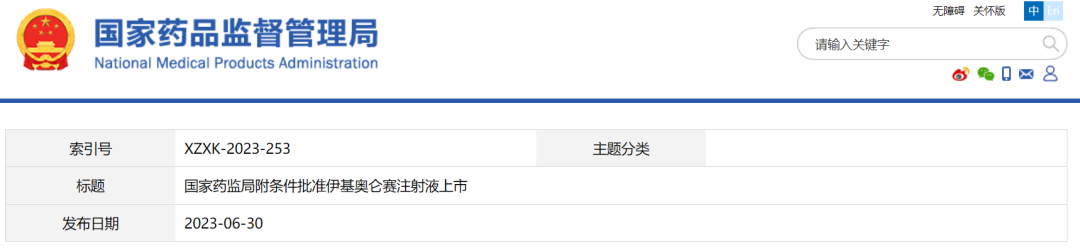
Source of the image: NMPA official website
CT120
CT120 is a CD19/CD22 dual-target CAR-T currently undergoing clinical trials for B-cell lymphoblastic leukemia. According to publicly available data from IASO Bio, CT120 can reduce tumor cell escape caused by target antigen loss in existing CAR-T therapies, while alleviating ADA production to enhance the persistence of CAR-T cells in vivo, thereby continuously exerting anti-tumor effects.
RD129
In addition to cell therapy, IASO Bio also has an antibody drug—RD129. RD129 is a fully human monoclonal antibody targeting CD19, which is currently being studied for autoimmune diseases such as neuromyelitis optica spectrum disorder (NMOSD) and has not yet entered the clinical stage.
IASO Bio's product pipeline mainly focuses on cell therapy. In addition to the projects mentioned earlier, several other projects are still in the early stages of research, such as a CAR-T therapy targeting the dual targets of BCMA/GPRC5D and two CAR-T/CAR-NK therapies intended for the treatment of lymphoma.
Conclusion
In the "Guidance Catalogue for Industrial Structure Adjustment (2024 Edition)", cell therapy drugs have been included in the encouraged industry category, marking a significant recognition of cell therapy.
As an emerging treatment approach, cell therapy is expected to bring new hope for various difficult-to-cure diseases in the future.

Editor: Mu Mian
Disclaimer: The views expressed in this article are solely those of the author and do not represent the position of Pharmcube. We welcome discussions and additional insights in the comment section; for reprints, please be sure to credit the author and source. If there are any issues regarding the content, copyright, or other aspects of the work, please leave a message on this platform, and we will address it promptly.