VCBeat Health
Contact Us
Home
China Healthcare Select
Insights
MNC China Lens
Vertical Industries
Services
Partnership Development
Market Entry Advisory
Ecosystem Engagement Advisory
About VCBeat
Why VCBeat
Log In
Home
AstraZeneca's IL-5Rα Monoclonal Antibody Fasenra Receives FDA Approval for Expanded Use in Children Aged 6–11 with Severe Eosinophilic Asthma
Apr 12, 2024 09:08 CST Updated 09:08

Share:
AstraZeneca
Biopharmaceutical Manufacturer

On April 11, AstraZeneca
IL-5Rα Monoclonal Antibody
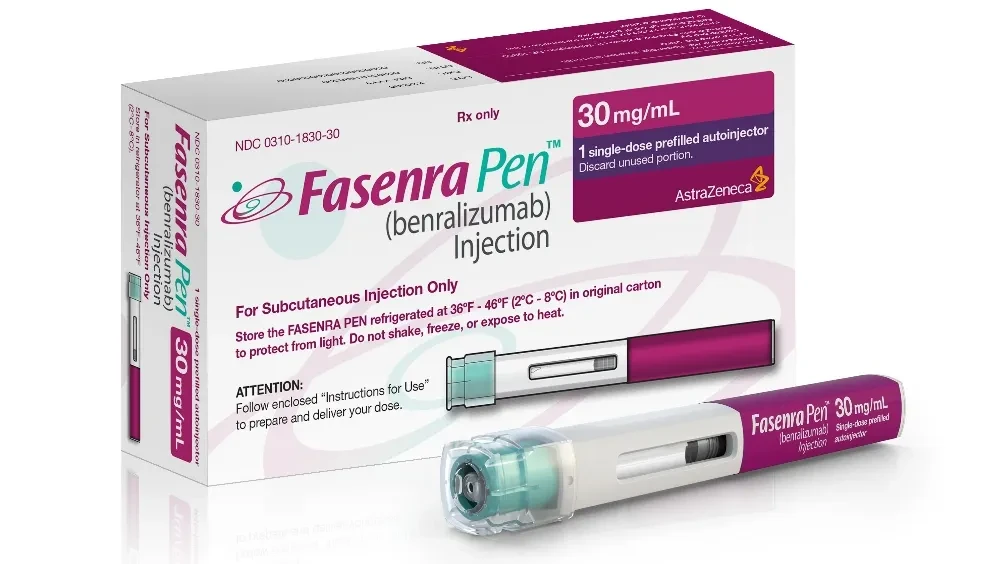
Fasenra (benralizumab) Receives FDA Approval for Expanded Use in the U.S. as Add-On Maintenance Treatment for Severe Asthma with Eosinophilic Phenotype in Patients Aged 6 to 11.
Benralizumab was initially developed by Kyowa Kirin. In December 2006, MedImmune reached an agreement with Kyowa Kirin to obtain the commercialization rights of benralizumab in the United States, Europe, and other countries. In April 2007, AstraZeneca acquired MedImmune for $15.6 billion, bringing 45 pipeline products under its umbrella. In October 2016, AstraZeneca expanded the commercialization rights of benralizumab to Japan. In March 2019, AstraZeneca entered into a new licensing agreement with Kyowa Kirin to obtain the development and commercialization rights of benralizumab in Asia as well as global commercialization rights.
Benralizumab can directly bind to the IL-5 receptor α on eosinophils and attract natural killer cells to induce rapid and nearly complete depletion of eosinophils through apoptosis (programmed cell death). In November 2017, benralizumab was approved for the first time in the United States and marketed under the brand name Fasenra for add-on maintenance treatment of severe eosinophilic asthma in patients aged 12 years and older.
This approval to expand the eligible population was supported by evidence from an open-label, multi-national, non-randomized, parallel-group Phase III TATE trial, as well as adequately controlled trials conducted in adult and adolescent populations. In the TATE study, Fasenra met the primary endpoint, with pharmacokinetics (PK) and pharmacodynamics (PD) in children aged 6 to 11 with SEA consistent with previous trials.
Fasenr
a
The safety and tolerability were consistent with the known profile of this drug. For patients aged 6 years and above, weighing ≥35 kg,
Fasenr
a's
The recommended dose is 30mg. For patients aged 6 to 11 years weighing less than 35kg, a new 10mg dose will be provided.
Fa
Senra is administered subcutaneously once every 4 weeks for the first 3 doses, then once every 8 weeks thereafter.
Asthma is the most common chronic disease in children, causing serious symptoms such as coughing, wheezing, and shortness of breath. Children with severe asthma and their families face a heavy burden, including impaired academic performance, significantly increased use of healthcare resources, and reduced quality of life. Severe asthma is a debilitating type of asthma that is more complex to treat and presents significant challenges.
Liz Bodin, Vice President of AstraZeneca US Respiratory and Immunology, said: "We are proud
Fa
senra
So far, it has helped more than 100,000 patients in the United States.
Fa
Senra will
"Providing more options for children whose quality of life is severely affected by eosinophilic asthma is an exciting step toward revolutionizing asthma treatment."
Copyright © 2024 PHARMCUBE. All Rights Reserved.
Welcome to forward, share, and reasonably cite. When citing, please clearly indicate the source of the article in a prominent position;
For reprint, please leave a message or send a message to the WeChat Official Account backend, and indicate the name and ID of the official account.
Disclaimer: The information in this WeChat article is for general reference only and should not be directly used as decision-making content. PharmaCube assumes no responsibility for any loss incurred by any party due to the use of the content herein.