The 2024 American Association for Cancer Research (AACR) Annual Meeting was held from April 5 to 10 in San Diego, USA.As a significant global platform for showcasing the latest achievements in cancer research, promoting scientific exchange, and facilitating technical collaboration, this year's AACR Annual Meeting attracted approximately 22,000 attendees from biopharmaceutical companies, medical device providers, academic institutions, and media worldwide, reaching a record high.Zhi Pharmacy Bureau has found the presence of multiple AI pharmaceutical companies, includingInsilico Medicine, XtalPi, Crown Bioscience, Tempus, Owkin, Deepcelletc.What Are the Latest Advances in AI-Driven Drug Development for Cancer, the Top Killer of Human Health? What Exciting Results Have Been Achieved? We Highlight Several Companies.Insilico Medicine
"Best-in-class" developed using a generative AI platform
Insilico Medicine showcased five preclinical study results at this conference, including:WRN Inhibitor ISM9342A under Synthetic Lethality Strategy,Potential "Best-in-Class" Pan-TEAD Inhibitor ISM6331HPK1 inhibitors under tumor immunotherapy strategies, FGFR2/3 inhibitors for "tumor-agnostic" solid tumor treatment, and KIF18A inhibitors targeting mitotic driver proteins.Among them, the "best-in-class" pan-TEAD inhibitor ISM6331 features a novel molecular scaffold designed by Insilico Medicine's proprietary generative chemistry platform, Chemistry42. Its novelty and best-in-class potential further validate the capabilities of Insilico Medicine's AI platform.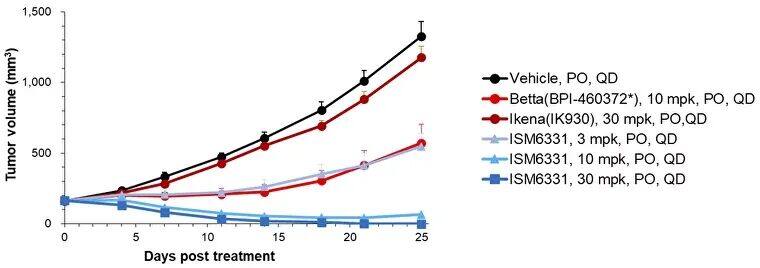
Promising anti-tumor efficacy in a dose-dependent manner without body weight loss in the MSTO-211H CDX mouse modelXtalPi
AI Cancer Vaccine Design Platform Makes Stunning Debut
As a company driven by artificial intelligence (AI) and robotics innovation, XtalPi showcased the latest advancements in its AI cancer vaccine design platform at the AACR conference.
This platform stems from a 2022 research and development collaboration between XtalPi and CK Life Sciences, a subsidiary of Li Ka-shing's Cheung Kong Holdings. After two years of development, this cancer vaccine design platform has disclosed its first set of data, focusing on the MHC (major histocompatibility complex).In the poster, the AI model significantly improved the design of neoantigen peptide vaccines, capable ofMore accurately predict immune antigens and design more effective cancer vaccines.
Especially inMHC-IAndMHC-II AntigenThe performance on presentation exceeds NetMHCpan and MixMHCpred, two of the world's leading prediction algorithms.Crown Bioscience
CROs in Head Tumor Also Start to Engage in AI
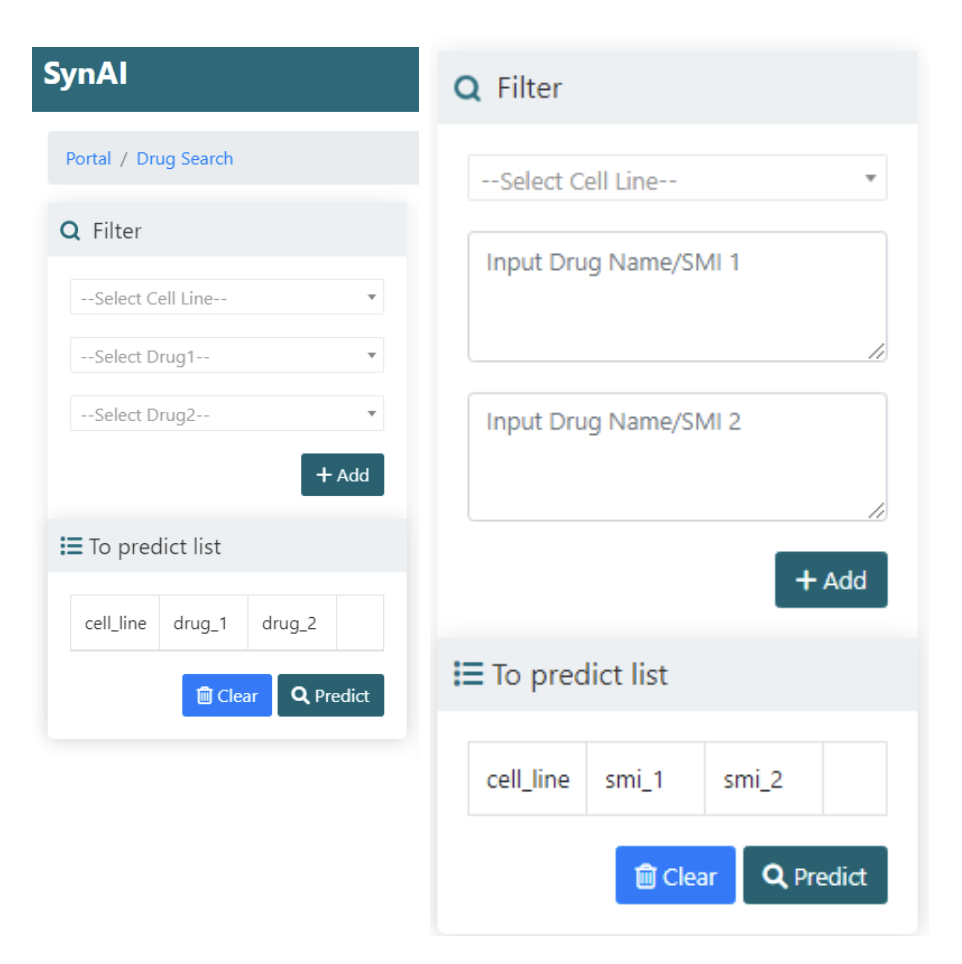
In the wave of medical technology innovation and digitalization, artificial intelligence is increasingly highlighting its importance, becoming a significant force driving the innovative development in the CRO field.Crown Bioscience, a CRO specializing in head and neck tumors, presented an adaptive AI-driven computational drug co-screening platform at this conference.SynAI。SynAI Interface Example
The platform does not rely on actual drug combinations or specific cell lines. Instead, it utilizes the Simplified Molecular Input Line Entry System (SMILES) sequences of compounds to optimize the exploration of compound interactions in the early stages of cancer drug development, which is expected to fundamentally transform the way cancer treatments are discovered and evaluated.Tempus
Pharmaceutical Giants Eye AI-Driven Drug Discovery Companies
This year, Tempus, a leading company in the fields of artificial intelligence and precision medicine, has prepared 18 abstracts for the AACR conference, showcasing astonishing breadth and depth of research that covers multiple aspects such as cancer biology, treatment response, and patient prognosis.
Notably, a piece of news related to the strategic partner, a pharmaceutical giantPfizerJointly presented research.
TempusAnalysis of HER2 Prevalence in Solid Tumors via RNA Expression Using Artificial Intelligence Tools May Open Potential Therapeutic Avenues for HER2-Directed Antibody-Drug Conjugates Across Multiple Tumor Types.
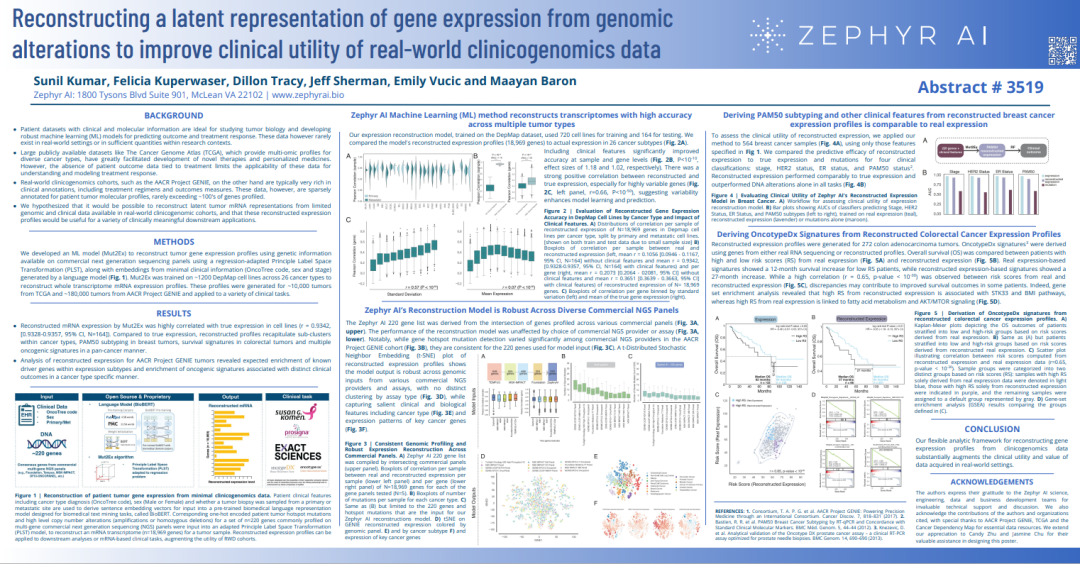
Zephyr AI
Harnessing Real-World Patient Data with AI
Zephyr AI, which just completed a $111 million Series A financing in March, has two abstracts published this time.respectively showcasing the advantages of their platforms in representation learning and differentiated technologies:Harnessing Real-World Patient Data Complexity with Artificial Intelligence。Reconstructing mRNA from clinicogenomics dataThis ML model, named Mut2Ex, reconstructs tumor gene expression profiles using the principle label space transformation (PLST) for adaptive regression problems and embeddings of clinical information (OncoTree codes, gender, and stage) generated by language models, leveraging genetic information available on commercial next-generation sequencing panels.
Gritstone
AI Antigen Prediction Platform
Gritstone bio, which focuses on cancer vaccines and infectious disease vaccines, presented the latest data on its antigen prediction platform EDGE™ at AACR 2024.HLA Class I Epitope Prediction Accuracy > 80%。
The EDGE-II model under development demonstrates better predictive performance in HLA class II presentation and CD4+ immunogenicity, showing potential in identifying neoantigens capable of triggering T-cell immune responses.
Auron Therapeutics
Single-Cell Omics Atlas + AI
Auron Therapeutics, which focuses on targeting dysregulated cell differentiation and plasticity processes, presented two abstracts introducing the proprietary AURIGIN™ platform and the first preclinical data of its lead program.Among them, the proprietary machine learning platform named AURIGIN™, byComprehensive Human DevelopmentSingle-Cell Multi-Omics AtlasAndAI/ML FrameworkCombined, identify the most relevant genetic targets in cancer cell plasticity.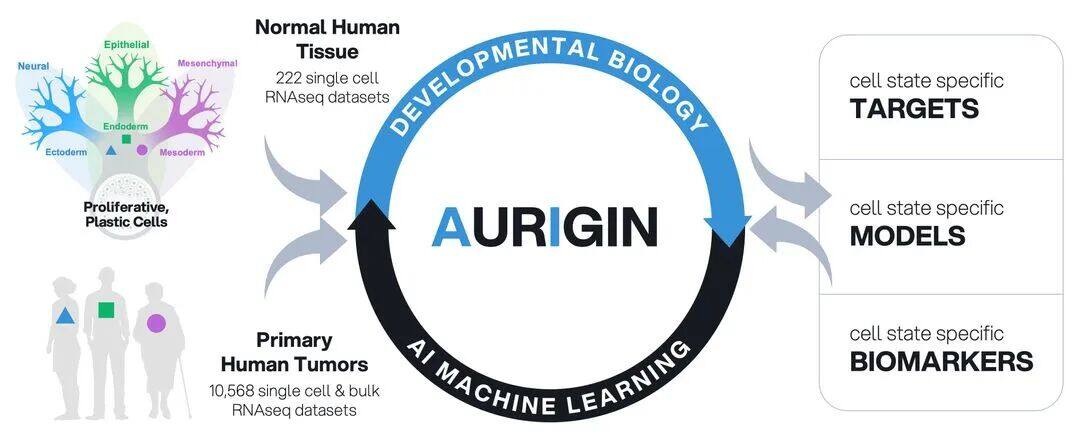
The platform amplifies the value of multi-omics tumor data in cellular state and plasticity target discovery by mapping the data to ML frameworks in developmental biology.
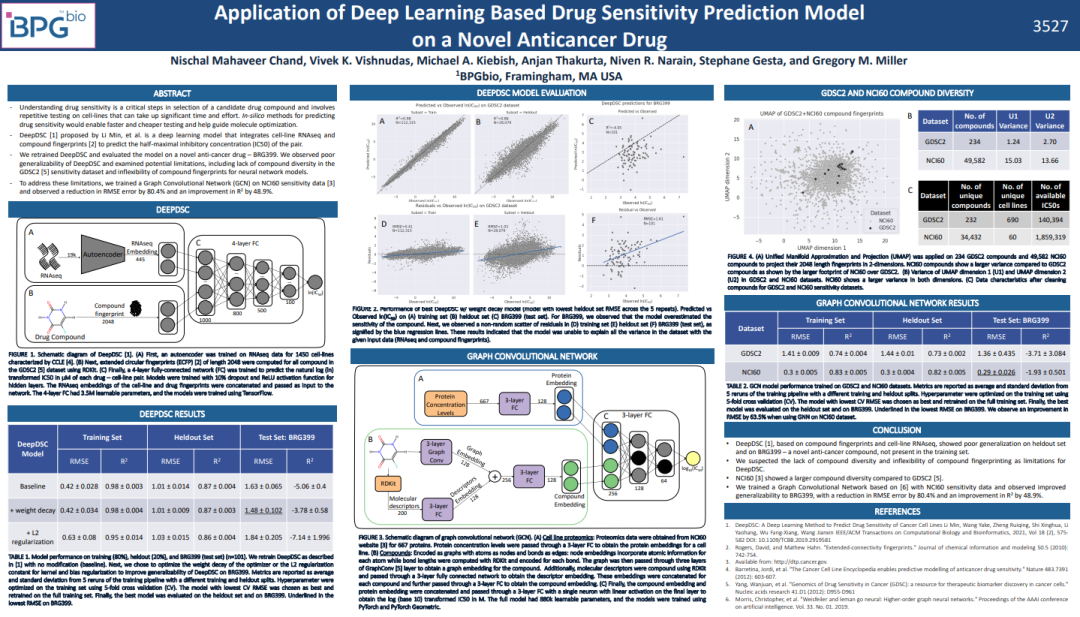
BPGbio
DL Drug Susceptibility Testing Model
AI Biopharmaceutical Company BPGbio Unveils Deep Learning-Based Drug Sensitivity Prediction Model at 2024 AACR.Application of Deep Learning Based Drug Sensitivity Prediction Model
on a Novel Anticancer DrugThis is calledDeepDSCThe deep learning (DL) model can predict the half-maximal inhibitory concentration (IC50) of a given drug for a specific CL by integrating publicly available data from large-scale drug screening and high-throughput RNAseq analysis.
In terms of application scope, the use of AI at the 2024 AACR Annual Meeting is not limited to early cancer detection but also encompasses multiple fields such as cancer diagnosis, personalized treatment, and new drug development.In terms of quantity, this conference has witnessed an explosive growth in AI applications. The four major venues covering AI and deep learning in machinery span four days from the 7th to the 10th, with a total of 142 research projects selected for poster presentations, and two related studies selected for the plenary session.Moreover, artificial intelligence is helping scientists uncover more unknown aspects of cancer cells.For example, using deep learning models to interpret the organization of mitochondria, or developing a new imaging technique to examine the location of mitochondria in lung cancer to differentiate between highly invasive tumors and less invasive ones, etc.It is not difficult to find that AI technology is providing new perspectives and tools for cancer research and treatment, and will undoubtedly exhibit strong growth potential in the future of cancer science.