

CB307: A PSMA-Dependent, Half-Life Extended Bispecific Humabody VH Agonist Targeting CD137 for Selective T Cell Activation in PSMA-Positive Tumors
Crescendo Biologics
Pharmaceutical R&D Developer
DespiteCD137Agonist Monoclonal AntibodyThe body shows early signs of attractive functional characteristics and clinical activity, but the therapeutic window is limited by targeting.-Limitations of non-tumor treatment-related hepatotoxicity. To date, by reducing the use of more potentCD137Reduced exposure or efficacy of agonist antibodiesCD137Attempts to use stimulant antibodies to avoid this toxicity have had minimal success.
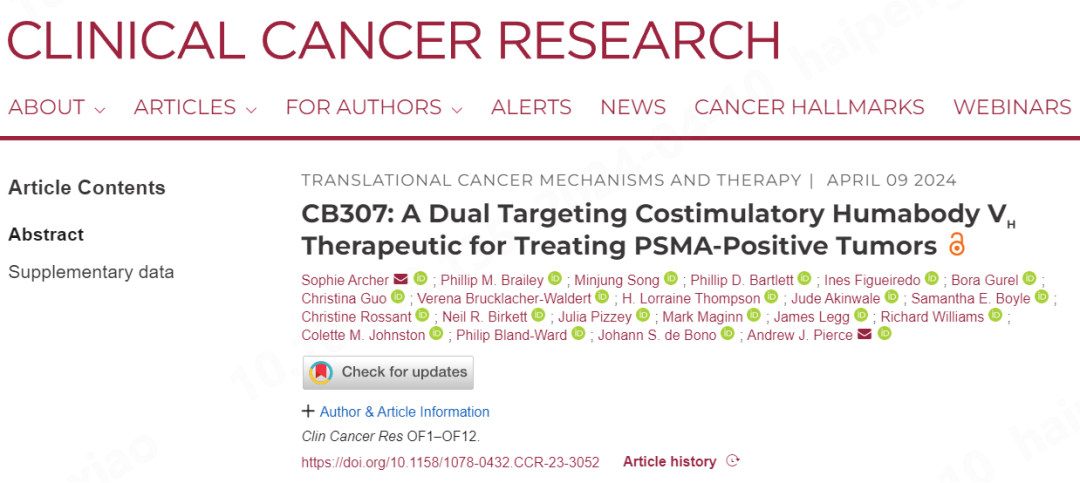
Recently, researchers from Crescendo Biologics in the UK published a research paper titled "CB307: A Dual Targeting Costimulatory Humabody VH Therapeutic for Treating PSMA-Positive Tumors" in the Clinical Cancer Research journal.Design and research of CB307, a novel bispecific costimulatory Humabody VH therapeutic with extended half-life, specifically triggering CD137 agonism within the PSMA-high tumor microenvironment (TME). Nonclinical pharmacology, toxicokinetics, and toxicology of CB307 are described, demonstrating that CB307 overcomes the therapeutic limitations of earlier-generation CD137 agonists by restricting CD137 agonism to PSMA-expressing regions, inducing effective targeted T-cell activation in PSMA+ tumors while maintaining acceptable systemic tolerability.
The developed CB307 is a Humabody single-chain composed of three peptide-linked fully human heavy chain variable (VH) domains derived from Crescendo transgenic mice, where the individual VH domains of CB307 monovalently target PSMA, CD137, and human serum albumin (HSA), respectively. Compared to traditional mAbs, the smaller molecular weight (46kDa) of CB307 can enhance tumor penetration, while binding to HSA extends serum half-life and further improves biodistribution. Experiments have shown,CB307 is designed to bridge tumor cells expressing PSMA and T cells expressing CD137, inducing PSMA-dependent CD137 clustering on T cells.
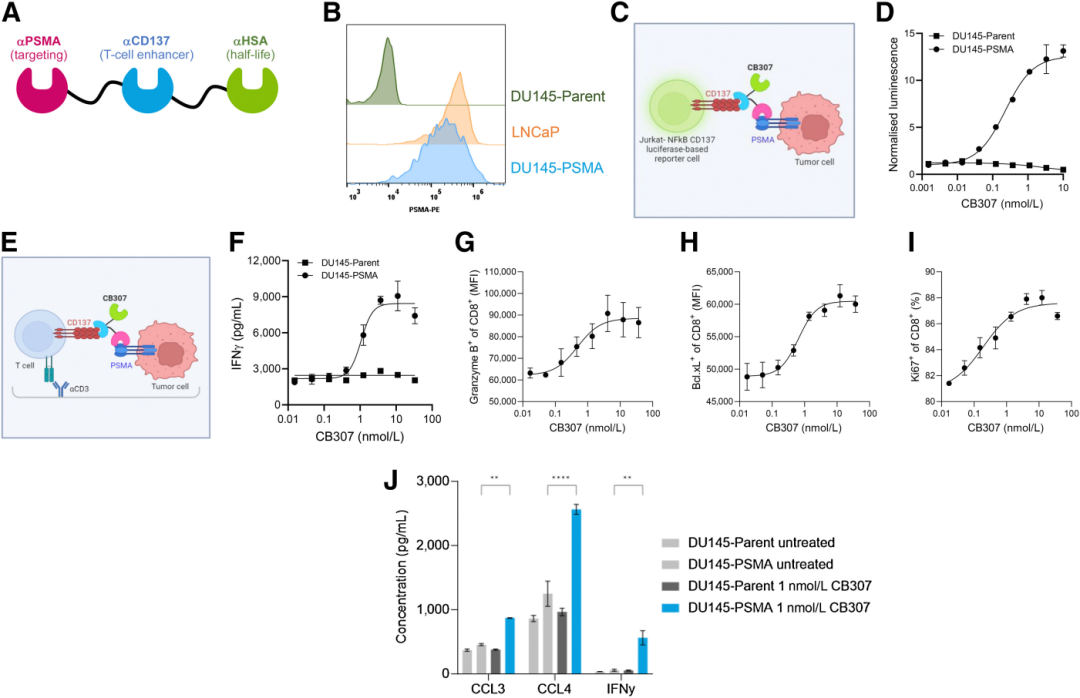
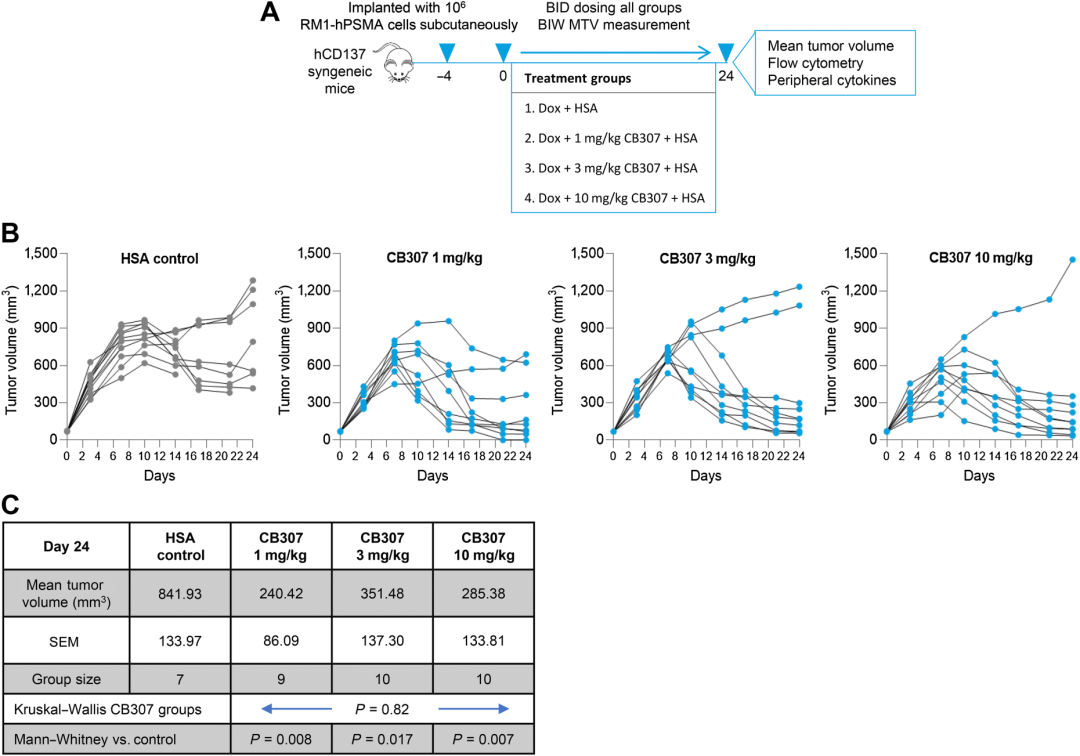
Based on cell assays and syngeneic mouse anti-tumor pharmacology studies, CB307 provides potent CD137 agonist activity in a PSMA-dependent manner, demonstrating anti-tumor activity both in vitro and in vivo, with additional activity when combined with checkpoint inhibitors. PSMA/CD137 IHC assays show higher CD137-positive cells in human mCRPC TME expressing PSMA compared to primary lesions.
In a GLP-compliant cynomolgus monkey study, the non-clinical toxicology and toxicokinetic properties of CB307 were evaluated.The results showed that CB307 did not exhibit substantial toxicity in non-human primates and demonstrated a plasma half-life supportive of weekly clinical dosing.
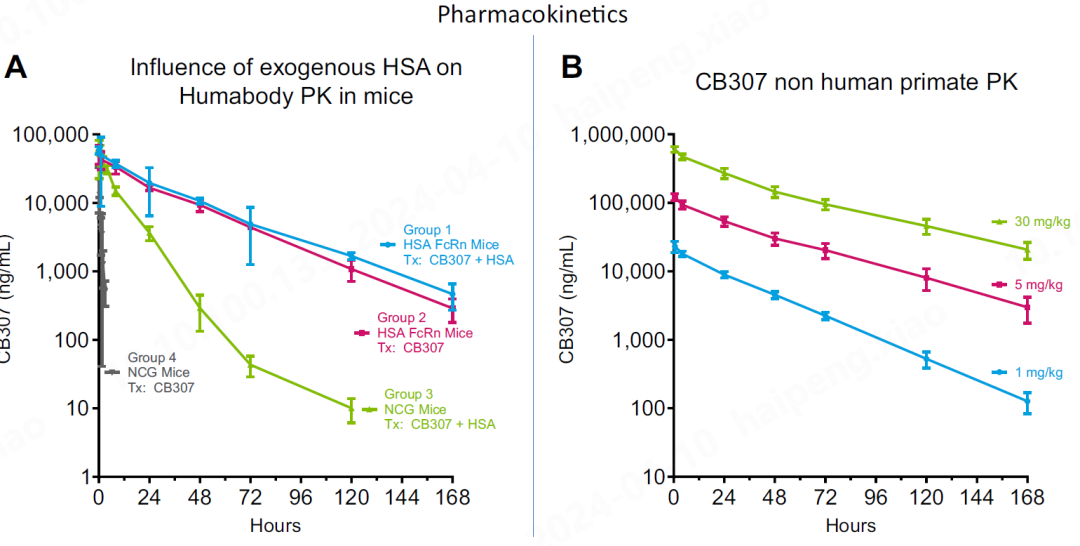
Indicating that CB307 can trigger robust PSMA-dependent T-cell activation, thereby alleviating toxicological concerns associated with unrestricted CD137 agonists.
Thinking
In summary, CB307 is a potent and PSMA-dependent T-cell engager with an extended half-life, representing a bispecific Humabody with promising therapeutic potential in PSMA-positive tumors. Clinical studies exploring CB307 as a monotherapy and in combination with the PD-1 inhibitor pembrolizumab for the treatment of solid tumors (NCT04839991), as well as a radiolabeled CB307 drug biodistribution study (NCT05836623), are currently underway.
Although the T cell-enhancing CD137 agonist activity of CB307 is localized to PSMA-positive microenvironment regions, polyclonally stimulated T cells retain specificity for their cognate tumor antigens, which may or may not include PSMA itself.Due to the common heterogeneity of PSMA expression in CRPC, the ability of CB307 to stimulate polyclonal T-cell mediated anti-tumor responses, including responses against PSMA-negative cells,Mechanisms of resistance to PSMA-directed bispecific T-cell engager (BiTE) therapy can be overcome.
Reference:CB307: A Dual Targeting Costimulatory Humabody VH Therapeutic for Treating PSMA-Positive Tumors. Clin Cancer Res. 2024 Apr 9:OF1-OF12. doi: 10.1158/1078-0432.CCR-23-3052.