

MNC Global Revenue TOP20: Pfizer Slips as J&J Surges Ahead of Roche by $20B; Lilly and Novo Nordisk Break Through on GLP-1 Boom

Johnson & Johnson
Medical Device R&D and Manufacturer

BioNTech
Developer of Novel Biologics
As major multinational pharmaceutical companies have successively released their annual reports, the list of the top 20 MNCs by global revenue for 2023 has been unveiled.
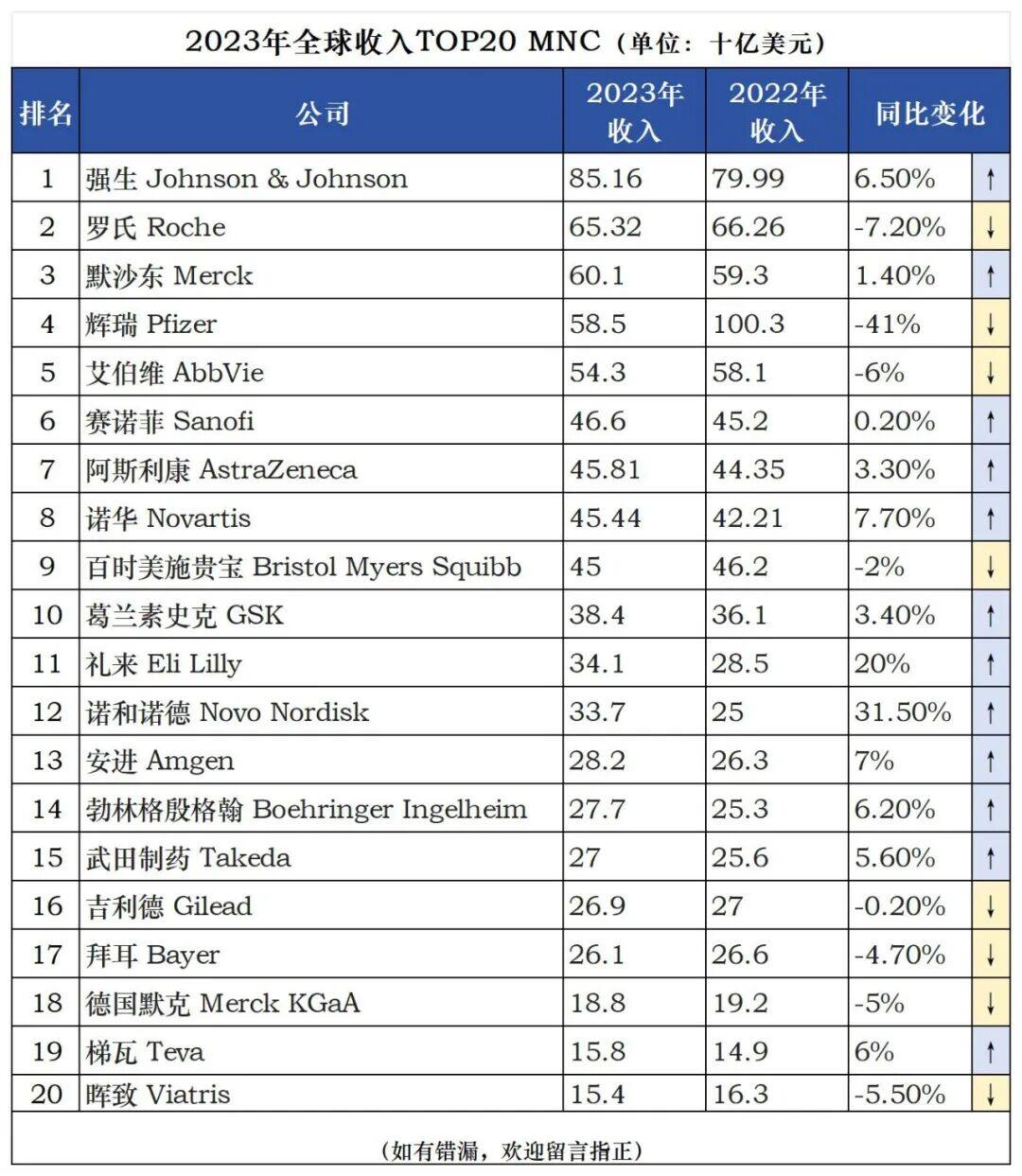
Obviously, with the dissipation of the COVID-19 pandemic and the rapid development of the popular new weight-loss drugs, the revenue situation of the global pharmaceutical giants has entered a new round of reshuffle: Pfizer failed to continue the $100 billion revenue glory achieved in 2022, yielding the top position to Johnson & Johnson. Meanwhile, Johnson & Johnson surpassed the second-place Roche by more than $20 billion; Teva and Viatris entered the list with strong momentum; Eli Lilly and Novo Nordisk were neck and neck, achieving significant leaps due to the soaring sales of weight-loss drugs.

Pfizer's Drop is the Largest
Moderna, BioNTech Out
Due to seizing market opportunities in both COVID-19 vaccines and oral medications, Pfizer's revenue has significantly increased in recent years; however, as the global pandemic situation has stabilized, the revenue generated from COVID-19 related products also faces a high level of uncertainty.
According to Pfizer's Q4 and full-year performance in 2023, Pfizer's total revenue for the year was $58.496 billion, a year-on-year decrease of 42%, including Q4 revenue of $14.249 billion, a year-on-year decrease of 41%. In 2023, Pfizer achieved a net profit of $2.119 billion, a year-on-year decrease of 93%, including a net loss of $3.369 billion in Q4, leading to a sharp decline in overall performance for the year.
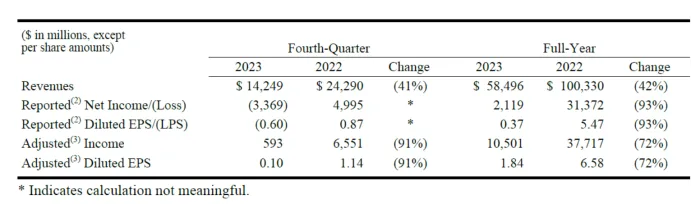
According to Pfizer's official explanation, the main reason for the decline in performance is a 41% sharp drop in sales of the COVID-19 vaccine Comirnaty and the anti-COVID-19 drug Paxlovid. Excluding these two products, revenue actually increased by 7% year-over-year.
Moreover, COVID-19 vaccine sellers Moderna and BioNTech ranked 18th and 20th respectively in the 2022 global revenue list, with sales of $19.3 billion and €17.3 billion ($18.2 billion) respectively. However, in 2023, their revenues fell to $6.8 billion and €3.8 billion ($4.1 billion) respectively.
In the latest top 20, replacing Moderna and BioNTech are Israeli generics company Teva and U.S. generics company Viatris, with the former achieving sales of $15.8 billion last year and the latter reaching $15.4 billion. Notably, Teva and Viatris have consistently ranked as the top two global generic drug companies.
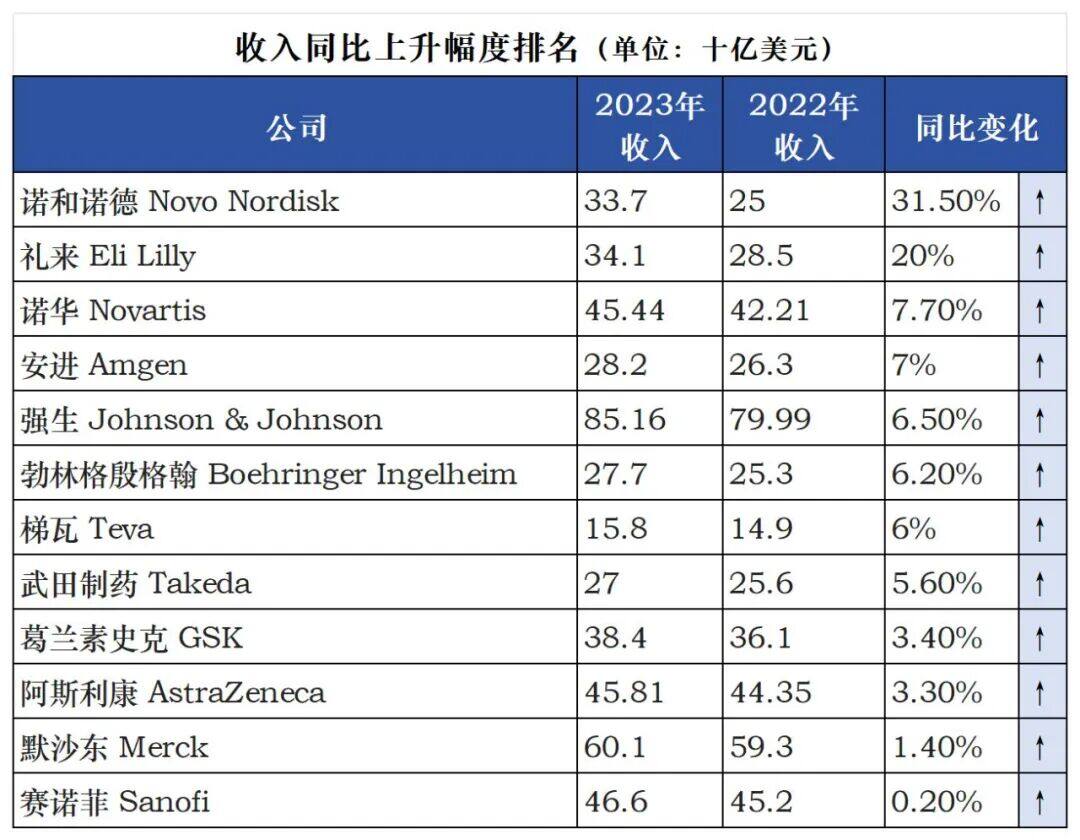
In 2023, Teva's total annual revenue reached $15.846 billion, representing a year-on-year increase of 6.2%. The cost of sales was $8.2 billion, with a gross profit margin of 48%, which has remained stable over the past three years. Research and development investment amounted to $953 million, accounting for 6% of revenue, consistent with the previous two years. Marketing and general administrative expenses accounted for approximately 7.3% of sales.
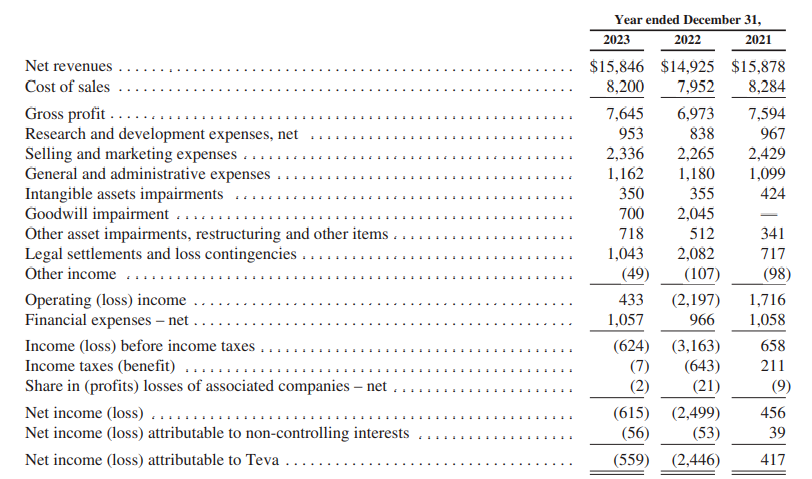
In terms of generic drug business, Teva's annual revenue reached 8.733 billion US dollars, increasing by 130 million US dollars compared to the same period last year. This marks the first time in many years that Teva has achieved growth in generic drug sales.
At the same time, plagued by the sword of Damocles that is the patent cliff, the annual revenue growth of MNCs such as BMS and AbbVie has slowed down. They hope to find new blockbuster products to make up for the declining sales or weak growth of mature products and further boost the company's performance.
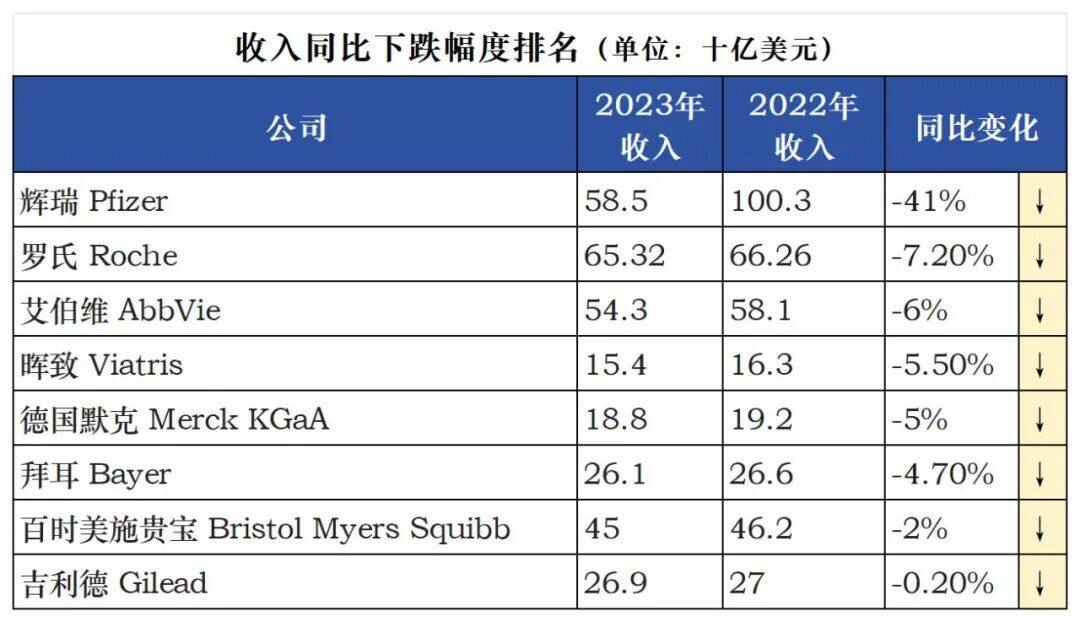
In the list, apart from Pfizer showing noticeable changes, the annual revenues of companies like Roche, Bayer, and Gilead also experienced certain fluctuations within an acceptable range. From a macro perspective, these all fall within the normal operational state of pharmaceutical enterprises.

Johnson & Johnson Returns to the Top
Pharmaceutical companies return to normal
After the impact of the pandemic on business gradually fades,Pharmaceutical companies have also returned to a normal pace of development.。
Johnson & Johnson topped the list again with a revenue of $85.16 billion (pharmaceuticals and medical devices businesses), leading the second-place Roche by nearly $20 billion. Notably, this figure does not include Kenvue — Johnson & Johnson's consumer health business data.
In September 2022, Johnson & Johnson officially spun off its consumer health business, which was independently listed under the name Kenvue. It is reported that Kenvue's revenue in 2023 totaled $15.4 billion. Therefore, including the revenue contributed by Kenvue, Johnson & Johnson’s actual income in 2023 has exceeded $100 billion, making it the second pharmaceutical company to achieve an annual revenue surpassing $100 billion after Pfizer.
According to Johnson & Johnson's announcement, its revenue is expected to maintain an annual growth rate of 5% to 7% between 2025 and 2030, with steady growth in pharmaceutical business revenue, which is expected to contribute $57 billion in income in 2024. Industry insiders analyzed that, barring any unforeseen circumstances, Johnson & Johnson will likely top the list of pharmaceutical company revenues again next year.
Roche and Merck followed closely.
Roche's pharmaceutical business also achieved remarkable results in 2023, generating revenue of $65.627 billion, a year-on-year increase of 1%. Roche's pharmaceutical business mainly focuses on disease areas such as oncology, immunology, neurology, hemophilia, infectious diseases, and ophthalmology. Among these, the oncology segment contributed $2.16 billion in revenue in 2023 (+4%), marking its first growth after years of consecutive decline.
Specifically, key products from Roche Pharmaceuticals such as Vabysmo (Faricimab), Ocrevus (Ocrelizumab), Hemlibra (Emicizumab), Polivy (Polatuzumab Vedotin), and Phesgo (Pertuzumab) played a crucial role in revenue generation. Particularly noteworthy is Vabysmo, the world's first innovative VEGF-A/Ang2 bispecific antibody specifically designed for intravitreal injection. In 2023, Vabysmo achieved sales of $2.634 billion, marking an impressive growth of 324%. Its ability to enhance vascular stability and reduce retinal leakage has gained widespread market recognition.
Merck's revenue in 2023 reached $60.115 billion, a year-on-year increase of 1%. In this report card, the pharmaceutical business performed outstandingly, achieving a revenue of $53.583 billion, a year-on-year increase of 3%. Notably, the star product Keytruda (Pembrolizumab, abbreviated as "K drug") achieved a full-year revenue of $25.011 billion, a year-on-year increase of 19%, successfully winning the championship in 2023.
Keytruda's outstanding performance is mainly due to its widespread application among the global population of early-stage cancer patients. At the same time, it continues to maintain strong demand among patients with metastatic cancer worldwide, further solidifying its leadership position in the market.
In addition to Keytruda, Merck's nine-valent HPV vaccine Gardasil/Gardasil 9 also performed well. In 2023, its sales reached $8.886 billion, a year-on-year increase of 29%. These two products together accounted for 56.4% of Merck's total revenue.

Novo Nordisk Soars
Key to Success: Heavyweight Products
ChinaPre-revenue20Name ListRelease,Not only has it brought a new competitive landscape and highlights to the global pharmaceutical market, but it also reveals the future development trends of the pharmaceutical industry. In this fierce competition,The advantageous sectors of major pharmaceutical companies have emerged one after another.
There is no doubt that Eli Lilly and Novo Nordisk have broken through with their GLP-1 products, becoming two dark horses on the list.
In 2023, the sales of Novo Nordisk's semaglutide (including Ozempic/Rybelsus/Wegovy) reached an astonishing $21.201 billion. Its success is mainly due to its widespread application in the fields of type 2 diabetes and obesity treatment. The sales of Ozempic (injectable hypoglycemic drug) were $13.917 billion, increasing by 60% year-on-year; Rybelsus (oral hypoglycemic drug) sales were $2.726 billion, increasing by 66% year-on-year; Wegovy (injectable weight-loss drug) sales were $4.557 billion, increasing by 407% year-on-year.
On the other hand, Eli Lilly's money-making powerhouse — the GLP-1 drug tirzepatide — quickly generated nearly $500 million in revenue in its first year of approval, showcasing its strong market potential and patient demand. As the diabetes market gradually penetrates, tirzepatide's sales reached $5.163 billion in 2023, with a staggering year-on-year increase of 970%.
Notably, at the end of last year, tirzepatide once again successfully obtained approval for its weight loss indication based on its outstanding weight reduction data. Within less than two months of its market launch, it generated revenue of $175.8 million, further demonstrating its broad prospects across different therapeutic areas.
Based on the sales growth of core products from these two companies, Novo Nordisk and Eli Lilly are expected to see further performance growth, and their entry into the global top 10 pharmaceutical companies is imminent.
It can be seen that blockbuster products remain the key to success, and the revenue changes of pharmaceutical giants are closely related to their products.

Hillhouse Capital "Infuses" MicroPort Medical! Can a 1 Billion USD "Wager" Fill the Funding Gap?



www.yyjjb.com.cn
Insight into Industry Trends

Pharmaceutical Economy Herald
Academic Official Account
Focusing on the Frontiers of Oncology Academia

Terminal Official Account