

Amgen/Kyowa Kirin's Blockbuster Faces New Challenge: Qilu Launches First Domestic Romiplostim, with Kelun-Biotech, Tide Pharmaceutical Entering the Fray

Qilu Pharmaceutical
Specialty Formulations and Active Pharmaceutical Ingredients (API) Developer
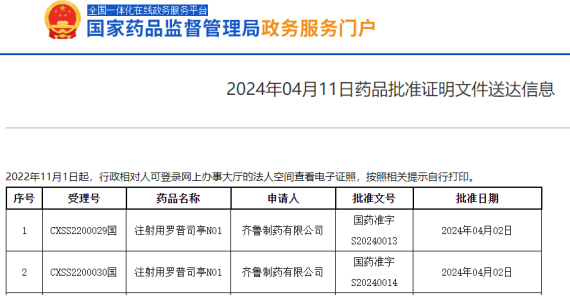
Romiplostim is the world's first approved second-generation long-acting TPO receptor agonist. Its mechanism of action is similar to that of endogenous TPO, as it can bind to the extracellular domain of the TPO receptor and induce the activation of the JAK-STAT and MAPK signaling pathways, stimulating the proliferation and maturation of megakaryocytes to achieve an increase in platelet count. In 2009, Romiplostim was awarded "Best Biotechnology Product" by the Galien Award.
In recent years, a group of leading domestic pharmaceutical companies, including Qilu Pharmaceutical and Zhengda Tianqing, have excelled in the research, development, and production of first-to-market generic drugs. The recent approval and market launch of Qilu Pharmaceutical's Rilisheng may potentially disrupt the competitive market landscape of the blockbuster drug, Romiplostim.
Securing the "Pass" to the Romiplostim Market
Facing Direct Competition from Amgen/Kyowa Hakko Kirin's Original Research
Immune Thrombocytopenia (ITP) is a serious acquired autoimmune disease characterized by a low platelet count in the blood, which can lead to severe bleeding events and may result in serious complications or even death. The clinical manifestations of ITP are mainly mucocutaneous bleeding, and severe cases may involve internal bleeding, including intracranial hemorrhage, posing a life-threatening risk. The elderly population aged 60 years and above is the high-risk group for this disease. Maintaining the patient's platelet count at a safe level is currently the primary goal of treatment.
TPO is the primary regulator of platelet production, a signaling peptide synthesized and secreted by the liver and released into the bloodstream to exert its effects. It plays a role in regulating megakaryocyte differentiation and platelet production. Thrombopoietic agents include two main categories: recombinant human thrombopoietin (rhTPO) and thrombopoietin receptor agonists (TPO-RA). Both can specifically bind to the TPO receptor, regulating megakaryocyte proliferation, differentiation, and maturation, thereby promoting platelet production. In recent years, thrombopoietic agents have been widely used to treat thrombocytopenia caused by various reasons, effectively reducing the risk of bleeding in patients, decreasing the need for platelet transfusions, and avoiding adverse reactions associated with blood product transfusions.
The romiplostim, originally developed by Amgen and recently succeeded by Qilu Pharmaceutical, was approved for marketing by the U.S. FDA in August 2008 and by the European EMA in February 2009. Moreover, Kyowa Hakko Kirin holds the rights to romiplostim in Japan and Asia, and the drug was approved for marketing in Japan in April 2011.
According to the financial report, Romiplostim generated $1.477 billion in revenue for Amgen throughout the year, including $996 million in sales revenue and $481 million in pipeline pass-through revenue, representing a 13% year-over-year sales increase. In Kyowa Hakko Kirin's 2023 financial report, Romiplostim’s sales reached 12 billion yen, second only to its main products G-Lasta (31.9 billion yen) and Nesp+Nesp-AG (17.1 billion yen). Additionally, Kyowa Hakko Kirin forecasts that Romiplostim sales will reach 13.2 billion yen in the 2024 fiscal year, marking a 10% year-over-year growth.
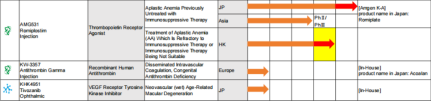
For the exploration of the clinical potential of Romiplostim, both Amgen and Kyowa Hakko Kirin have made continuous investments. Currently, Amgen is conducting a Phase III clinical study on the treatment of chemotherapy-induced thrombocytopenia in gastrointestinal, pancreatic, or colorectal cancers with Romiplostim, with clinical data expected to be released in the second half of 2024. Kyowa Hakko Kirin is also actively expanding the market scale of Romiplostim. In September 2023, Japan updated the approved indication for Romiplostim from "aplastic anemia in patients who are inadequately responsive to conventional treatment" to "aplastic anemia."
Moreover, the development of Romiplostim for aplastic anemia indications in the Asian region has progressed to Phase II/III clinical trials. Additionally, Kyowa Hakko Kirin China Pharmaceutical Co., Ltd. is conducting clinical research on Romiplostim for the treatment of aplastic anemia that is either refractory to or unsuitable for immunosuppressive therapy in Hong Kong, China, and it is currently in Phase III clinical trials.
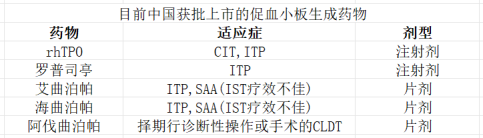
According to statistics, there are currently five thrombopoietin receptor agonists approved for clinical use worldwide, including rhTPO, eltrombopag, hetrombopag, avatrombopag, and lusutrombopag, in addition to romiplostim. Except for lusutrombopag, the other five thrombopoietin receptor agonists have already been approved for marketing in China.
RiceData from internal networks shows that the market sales of hemostatic drugs in China's public medical institutions (referred to as China Public Medical Institutions, including urban public hospitals, county-level public hospitals, urban community centers, and township health centers) have been growing rapidly. After exceeding 10 billion yuan in 2017, it surged to over 19.4 billion yuan in 2022. In the first half of 2023, growth reached 14.44%, indicating significant market potential.
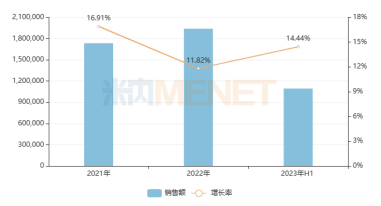
Sales of Hemostatic Drugs (Unit: Ten Thousand Yuan)
Eltrombopag Ethanolamine Tablets, a non-peptide TPO receptor agonist developed by Novartis, are used to treat chronic immune (idiopathic) thrombocytopenia that has previously shown poor response to treatments such as glucocorticoids and immunoglobulins. It was approved for marketing in China in 2017. Data from the MiNe Network shows that Eltrombopag Ethanolamine Tablets achieved sales exceeding 700 million yuan across the three major terminals and six key markets in 2022. Among these, the hospital market is the primary sales channel for Eltrombopag Ethanolamine Tablets, accounting for over 60% of the market share, with retail pharmacy terminals following closely behind.
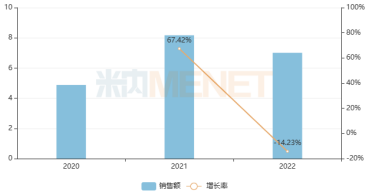
Sales of Eltrombopag Ethanolamine Tablets in the Three Major Terminals and Six Markets (Unit: Billion Yuan)
Hengrui Medicine's Hetrombopag Ethanolamine Tablets are the first orally administered small-molecule non-peptide TPO receptor agonist independently developed in China. As a highly selective TPOR agonist, Hetrombopag Ethanolamine Tablets were first approved for marketing in June 2021 and were included in the Class B Catalogue of the National Medical Insurance through negotiation in the same year. Data from Menet shows that the sales revenue of Hetrombopag Ethanolamine Tablets at public medical institution terminals in China exceeded 400 million yuan in the first half of 2023, with a year-on-year increase of approximately 167%.
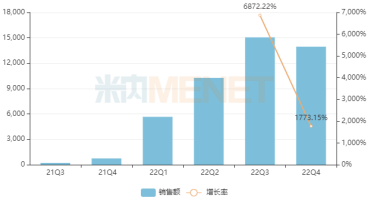
Sales of Hetrombopag Ethanolamine Tablets in Chinese Public Medical Institutions
Eisai's Avatrombopag is a small molecule TPO receptor agonist that mimics the effect of TPO, stimulating the proliferation and differentiation of megakaryocytes from bone marrow progenitor cells, thereby increasing platelet production. In 2018, the U.S. FDA approved the drug for the treatment of chronic liver disease (CLD)-related thrombocytopenia (CIT) in adult patients undergoing elective diagnostic procedures or surgery. In April 2020, the drug was launched in China, becoming the first treatment for CLD-related thrombocytopenia in the country. Data from Menet shows that in recent years, the sales scale of Avatrombopag Maleate Tablets at China’s public medical institution terminals has grown rapidly, exceeding 600 million yuan in 2022, a year-on-year increase of 166.42%, and growing by over 60% again in the first half of 2023, making it the top product in the hemostatic drug field.
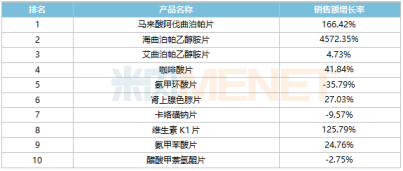
Top 10 Oral Hemostatic Drug Products in Chinese Public Medical Institutions, 2022
Fierce Competition in the Thrombocytopenia Market
Is 3SBio's "Top Dog" Status in Jeopardy?
In clinical practice, the first-line treatment for ITP mainly includes glucocorticoids and immunoglobulins. If the first-line treatment fails or relapses, second-line treatment is required. In recent years, with in-depth research into the pathogenesis of ITP, thrombopoietic agents have rapidly developed and been applied in clinical settings to address reduced or ineffective platelet production. Before the advent of second-generation TPO receptor agonists, first-generation TPO drugs, including pegylated human megakaryocyte growth and development factor (PEG-rhMGDF) and recombinant human thrombopoietin (rhTPO), had already played a certain role.
Public information shows that the PEG-rhMGDF development project led by Amgen initially progressed smoothly, but due to structural issues, a significant number of patients developed neutralizing antibodies during subsequent clinical trials, leading to the trial's failure. Currently, the only first-generation TPO-stimulating drug used clinically in China is rhTPO.
rhTPO is a drug produced using recombinant gene technology, expressed by Chinese hamster ovary cells and purified. It has a pharmacological effect similar to endogenous thrombopoietin in increasing platelet count. This drug can be used for thrombocytopenia (<50*10^9/L) caused by chemotherapy for solid tumors and for emergency and second-line treatment of ITP (applicable to patients with platelet counts <20*10^9/L who are unresponsive to corticosteroid treatment and have not undergone splenectomy). Currently, the representative rhTPO drug is 特比澳 from 三生制药.
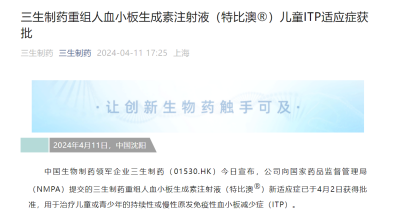
It is reported that Tebiao is the world's only commercially available rhTPO product, mainly used for treating severe chemotherapy-induced thrombocytopenia in patients with solid tumors (approved in 2005) and immune thrombocytopenia (approved in 2010). Recently, the new indication of Tebiao for treating persistent or chronic primary immune thrombocytopenia (ITP) in children or adolescents submitted by 3SBio has been approved. In addition, new indications for Tebiao are also continuously advancing, such as thrombocytopenia caused by chronic liver disease and pediatric ITP.
Tebiao also contributed significantly to 3SBio's performance. In 2023, 3SBio achieved revenue of 7.816 billion yuan (+13.8%), gross profit of 6.642 billion yuan (+17.1%), and a gross margin increase to 85.0% (+2.4pct); net profit attributable to shareholders was 1.549 billion yuan (-19.1%), while adjusted operating net profit attributable to shareholders reached 1.952 billion yuan (+17.7%). Notably, 3SBio’s biopharmaceutical segment performed exceptionally well, with Tebiao achieving annual sales of 4.205 billion yuan (+23.8%), reflecting rapid sales growth.
It is reported that Tebibo holds a 65% market share in China's thrombocytopenia market, ranking first in its category. Moreover, Tebibo is also the top-selling large molecule drug in China in terms of revenue. With the continuous replacement of traditional interleukin-based platelet-increasing drugs, the growing number of hospitals covered by Tebibo, and the expanding range of new indications, 3SBio predicts that the sales of Tebibo will continue to grow.
It is worth mentioning that in the clinical study of rhTPO, the response rate of danazol alone was 36.5%, while the PLT response rate of rhTPO combined with danazol was 60%. Still, 40% of patients showed no response to the treatment. Moreover, a portion of ITP patients responded poorly to all treatment drugs, with persistently low platelet counts and inability to achieve disease remission. From the perspective of disease research, the pathogenesis of ITP is complex, and the targets of existing drugs do not fully cover all pathogenic targets. Precision treatment has not been achieved clinically, and most patients cannot maintain long-term efficacy. Based on the pathogenesis of ITP, developing drugs with more action targets and exploring the effectiveness of combination therapies with drugs of different mechanisms might help more patients achieve long-term responses.
It is foreseeable that the golden blockbuster status of 3SBio's drug will face increasing market challenges from a new generation of drugs. Taking second-generation TPO receptor agonists as an example, which reveal huge market potential and unmet clinical needs in this field, a large number of local companies are also accelerating their strategic layout. In addition to Qilu Pharmaceutical Co., Ltd., Taihe Pharmaceutical and Kelun Botai are also conducting clinical research on biosimilars of romiplostim.
In November 2023, Nanjing Chia Tai Tianqing Pharmaceutical obtained the first generic production approval and passed the quality evaluation for Avatrombopag Maleate Tablets. Additionally, 18 other companies, including Shandong Liangfu Pharmaceutical, Chengdu Better Life Pharmaceutical, and Sichuan Kelun Pharmaceutical, have submitted applications under the new classification and are currently under review; once approved, they will be considered as having passed the quality evaluation. In the competition for Eltrombopag Ethanolamine Tablets, in June 2023, Shandong Jingwei Pharmaceutical’s Eltrombopag Ethanolamine Tablets received acceptance for a Category 4 generic application. Prior to this, seven other companies, including Jiangsu Aosaikang Pharmaceutical, Chia Tai Tianqing Pharmaceutical Group, Qilu Pharmaceutical, and Sichuan Kelun Pharmaceutical, had already submitted applications and were under review.
As a field heavily focused on by most domestic pharmaceutical companies, the generic drug market in China remains in fierce competition. With the continuous expansion of volume-based procurement, the market for thrombocytopenia may not be spared, and who will achieve the next breakthrough remains to be seen.

Hillhouse Capital "Infuses" MicroPort Medical! Can a 1 Billion "Wager" Fill the Funding Gap?


www.yyjjb.com.cn
Insight into Industry Trends

"Pharmaceutical Economy Newspaper"
Academic Official Account
Focusing on the Frontiers of Oncology Academia

Terminal Official Account