

Firefly Bio Files IPO Prospectus: Nobel Laureate-Led Startup Pioneering DAC Platform with $94M Series A
Firefly Bio
Cancer Treatment Platform Developer

Versant Ventures
Healthcare Investment Institutions
Decheng Capital
Life Sciences Investment Firms

Seagen
Monoclonal Antibody Developer
Bristol-Myers Squibb
Biopharmaceutical and Nutritional Product R&D and Sales

MSD
Pharmaceutical R&D and Manufacturer
MPM BioImpact
Healthcare Investment Institutions

Eli Lilly
Global Pharmaceutical R&D and Production Company
How Much Does It Cost to Run a Biotech Startup? From budgeting for laboratory rent to compensating experts and scholars, it seems difficult to find data on the early-stage costs of biotechnology. There is no universal figure or formula. After all, each company varies significantly in terms of development stage, product type, market size, competitive landscape, and partnerships.
How much budget is required for R&D tasks? How much funding should be set aside for establishing a Scientific Advisory Board (SAB)? What is the investment needed to attract top talent? Should operations be outsourced or kept in-house for R&D? How will rent and legal fees be addressed? These questions require detailed analysis and evaluation based on the specific circumstances of the company.
For a startup Biotech, securing nearly $100 million in Series A financing is undoubtedly a huge success. This usually means the company already has a relatively mature product model, a large potential market, an excellent founding team, and a clear business vision.
In February this year,Firefly Bio(hereinafter referred to as "Firefly") announced the completion of a $94 million Series A financing round.The financing was co-led by founding investor Versant Ventures, MPM BioImpact, and Decheng Capital, with Eli Lilly also participating in the follow-up investment.
The reason Firefly was able to secure nearly 100 million US dollars in financing is precisely because it demonstrated many of the aforementioned advantages.
Dr. Carolyn Bertozzi, co-founder of Firefly Bio, was awarded the 2022 Nobel Prize in Chemistry for her outstanding contributions to the field of bioorthogonal chemistry, and is a globally recognized expert in the ADC field.
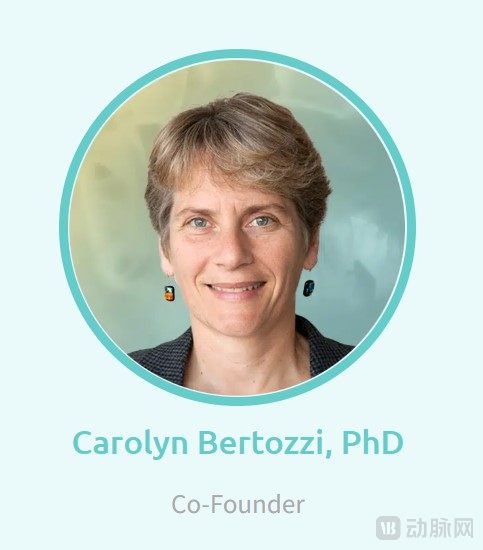
Source: Firefly Bio Official Website
Bertozzi was born into an academic family; her father is a physics professor at MIT, and her mother is a French scholar who graduated from Boston University. Although she inadvertently received a great deal of scientific education under her parents' influence, after being admitted to Harvard University, she once developed a strong interest in studying music. However, this decision did not receive her parents' support, and she ultimately chose to comply with their wishes, planning to become a pre-med student.
According to the school's requirements, Bertozzi needed to take some math and science courses, which also sparked an inseparable bond with chemistry. At first, she wasn't particularly interested in chemistry and even mentioned in an interview that she didn't like those general chemistry courses. Rather than being driven by interest, it was more about getting through the required classes. However, at the end of her freshman year, she made an unexpected decision – to major in biology.
Surprisingly, organic chemistry, known for its complexity and difficulty, unexpectedly struck a chord with Bertozzi. While her classmates complained about having to memorize too much in organic chemistry, Bertozzi found a unique kind of enjoyment in it. A year later, she switched her major from biology to chemistry.
After graduating from Harvard, she went to the University of California, Berkeley to pursue a Ph.D. under the guidance of Professor Mark Bednarski. However, fate presented her with a significant challenge. In the third year of her doctoral studies, Professor Bednarski was unfortunately diagnosed with colon cancer and had to leave the laboratory to focus on the medical field. The sudden departure of a supervisor midway through a Ph.D. program is a major blow to any student. Fortunately, the department provided her and her peers with special support, allowing them to remain in the lab without a supervisor and independently advance their research. Over the next two years, these young individuals not only concentrated on their research but also took on responsibilities such as managing laboratory operations, submitting papers to academic journals, and even addressing reviewers' comments.
After earning her Ph.D., Bertozzi entered a postdoctoral training program in an immunology lab and subsequently returned to her alma mater, the University of California, Berkeley, as a faculty member. It was here that she pioneered the entirely new field of bioorthogonal chemistry. This technology provides scientists with a method to track and study biochemical reactions within living organisms with extremely high precision while minimizing the impact on biological systems.Bioorthogonal chemistry not only plays a crucial role in the visualization or quantification of antibodies but also provides strong support for the preparation of active ingredients in ADCs/DACs.
In 2000, Professor Bertozzi focused on researching site-specific conjugation technology and founded the ADC biotechnology company Redwood Bioscience based on this. In 2019, Professor Bertozzi established Lycia Therapeutics, which specializes in the emerging field of pathogenic protein degradation. Additionally, she founded Acepodia and serves as the company's chief scientific advisor. Acepodia is dedicated to developing antibody-cell conjugate (ACC) technology, pairing antibody conjugates with immune cells, which has the potential to expand the application scope of off-the-shelf cell therapies and benefit more patients.
"When the world is in crisis, let chemistry save everything." She said in the Nobel Prize interview.
Throughout her career, she has participated in the creation of more than a dozen biotechnology companies, among which Firefly Bio was launched in 2022 by Versant Ventures' Ridgeline Discovery Engine division. The founding team of Firefly Bio is known in the industry as a "dream team," bringing together many outstanding individuals with deep historical backgrounds and expertise in biotechnology innovation, ADC development, and degradation chemistry.
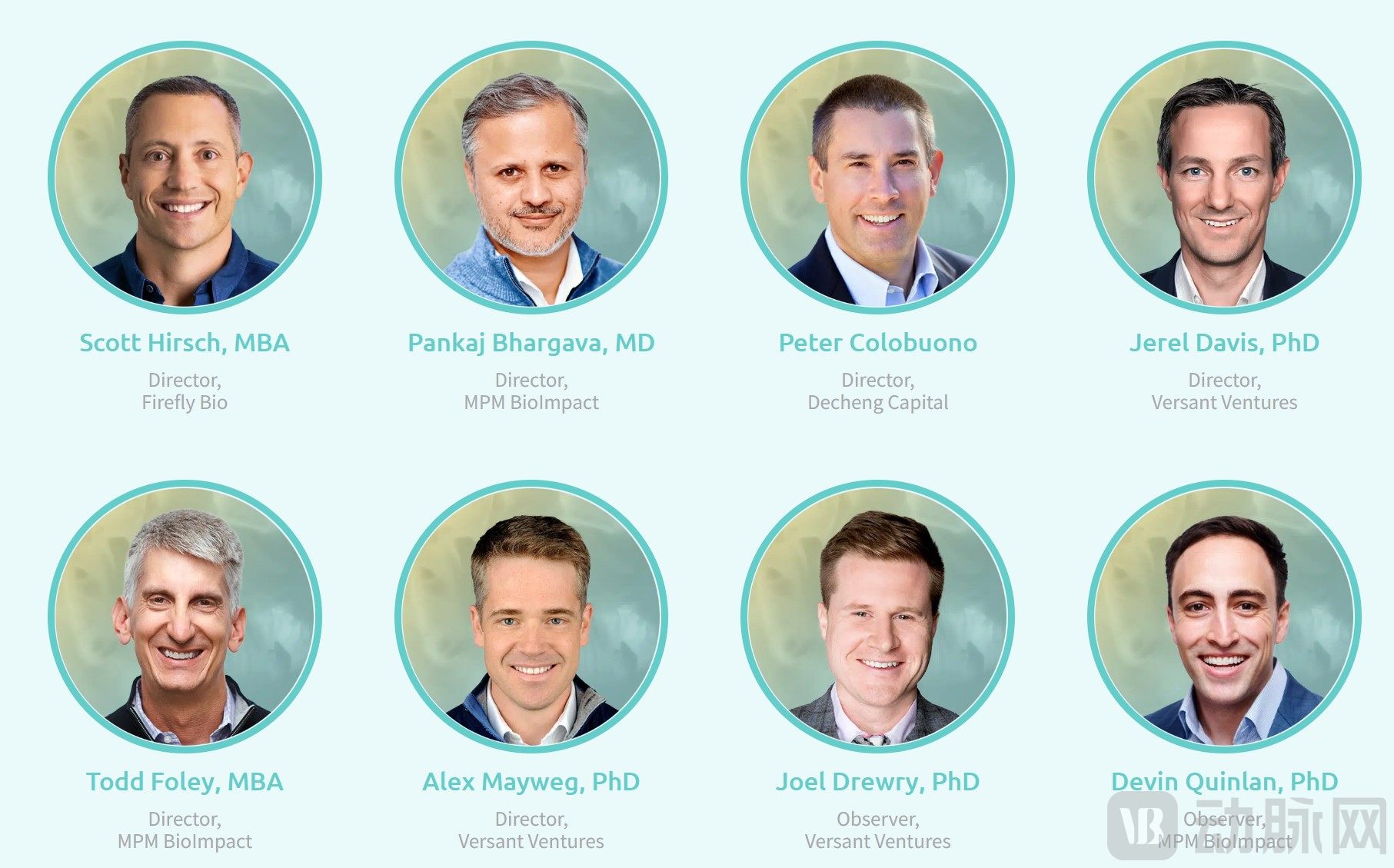
Source: Firefly Bio official website
The team is led by CEO Scott Hirsch, who previously served as the Chief Operating Officer of Allakos. He not only oversees multiple early- and late-stage ADC projects but also directly manages the commercial, portfolio, and operations teams. Co-founder and CSO Dr. John Flygare led antibody-drug conjugate research programs at Merck and Genentech for over 15 years and was a pioneer in advancing ADCs and degraders into clinical applications. Another co-founder and CTO, Dr. Bernhard Geiertanger, is a biologics expert who has worked at Merck and the Novartis Research Foundation (GNF) Genomics Institute, leading teams to develop innovative biotherapies for various diseases.
In the massive wave of "everything can be conjugated," DAC (degrader-drug conjugates) also appears to be showing a rapid development momentum.
DAC Represents the Convergence of Two Technologies – Antibody-Drug Conjugates (ADC) and Protein Degraders. This technological fusion combines the strengths of both to overcome their respective limitations.
Traditional ADCs have good bioavailability and the ability to target cells, but their widely present cytotoxic payloads limit their therapeutic index; meanwhile, ADCs also lack the ability to knock out proteins within specific cells. On the other hand, protein degraders are just the opposite, possessing characteristics such as intracellular selectivity, protein knockout, and high catalytic activity, but they struggle to achieve bioavailability and lack cell-specific targeting capabilities.
Firefly CEO Scott Hirsch stated: "DAC represents a new paradigm for cancer treatment, enabling us to target biologically validated sites with minimal collateral damage. Firefly's platform facilitates large-scale DAC production and significantly increases the payload capacity of ADCs."
Firefly's platform utilizes powerful catalytic protein degraders as payloads for ADCs, combined with the company's proprietary Firelink conjugation technology. According to its official website, this innovative technology reduces free payload circulation, minimizing uptake by healthy cells and thereby lowering the dose required for optimal efficacy. In preclinical studies targeting solid and liquid tumors, Firefly's DACs demonstrated significant tumor volume reduction at extremely low doses with a single administration. However, as of now, Firefly has not disclosed any pipeline development information.
At present, DAC is still in the emerging and preliminary development stage, which has not been fully validated, but relevant research is emerging endlessly.
Genentech was one of the earliest research institutions to begin studying DAC drugs. As early as 2017, Genentech filed a patent titled "Protac antibody conjugates and methods of use" for DAC, and subsequently published the first paper in the DAC field in 2020. The most comprehensive and thorough review in the DAC field to date was authored by Peter S. Dragovich, a senior researcher at Genentech, who published a review article titled "Degrader-antibody conjugates" in Chem. Soc. Rev. in 2022.
In addition, in terms of R&D, the DAC field has also made considerable progress. In June 2021, Debiopharm and South Korea's Ubix Therapeutics announced a research collaboration agreement. The two parties will jointly develop DAC drugs based on Debiopharm's Multilin linker platform and Ubix's Degradaucer molecular technology.
In October 2022, Orum Therapeutics announced that its antibody-GSPT1 degrader conjugate ORM-5029 had completed the first dosing in its Phase 1 clinical trial, making ORM-5029 the first DAC drug to enter the clinical stage.
In September 2023, Nurix Therapeutics announced a multi-year, multi-target strategic collaboration agreement with Seagen to advance the development of DAC drugs. Under the terms of the agreement, Nurix will receive a $60 million upfront payment and is eligible to receive up to approximately $3.4 billion in research, development, regulatory, and commercial milestone payments across multiple programs.
In October of the same year, AbbVie released clinical trial information for ABBV-787. This DAC drug, based on CD33 and BRD4 PROTAC, became the second DAC to enter the clinical stage after ORM-5029. Just one month later, Bristol-Myers Squibb (BMS) reached a final agreement with Orum Therapeutics to acquire Orum's CD33-GSPT1 DAC drug ORM-6151 for an upfront payment of $100 million, with potential milestone payments that could bring the total transaction value to approximately $180 million in the future.
In December, C4 Therapeutics entered into an exclusive collaboration agreement with MSD to co-develop DAC. C4T is responsible for developing the payload, while MSD will handle antibody conjugation and the advancement of the DAC product. Under the agreement, C4T will receive a $10 million upfront payment and is eligible for up to $600 million in milestone payments and sales royalties. Additionally, MSD holds an expanded option for three collaborative projects, and if exercised, C4T could be entitled to receive up to approximately $2.5 billion in potential payments throughout the collaboration.
In China, UBO Biopharma has demonstrated impressive capabilities. Based on its self-developed TED platform, UBO Biopharma is actively advancing the development of PROTAC drugs, focusing on addressing issues related to poor molecular drug-likeness. According to its official website, UBO Biopharma has achieved phased results, providing differentiated and widely applicable solutions for the translation of protein degradation technology into therapeutics.
With the development of the DAC field, more and more companies have entered this track. Against this backdrop, it remains to be seen whether Firefly Bio can shine like a "firefly" as we anticipate.
References:
1. WuXi AppTec "Doctoral Career Almost Cut Short, Earned Living Expenses by Singing Rock... An Article to Understand Newly Minted Nobel Laureate Professor Carolyn Bertozzi"
2. PharmaTimes "How Did a Startup Biotech Secure Nearly $100 Million in Series A Funding?"