Can Chinese CAR-T Companies Withstand the $35,000-per-dose 'Floor Price' Onslaught?
Legend Biotech
Tumor Cell Immunotherapy Developer

CARsgen Therapeutics
Developer of CAR-T Cell Immunotherapy Drugs

Juventas
Innovative Cell Therapy Drug Developer
Fosun Kairos
Developer of Tumor Immune Cell Therapy Technologies and Products
ImmunoACT
Cell and Gene Therapy Product Developer
Next city!
On April 22, U.S. time, Legend Biotech announced that the European Commission has approved CARVYKTI (ciltacabtagene autoleucel) for the treatment of adult patients with relapsed and refractory multiple myeloma who have received at least one prior therapy (including a proteasome inhibitor (PI) and an immunomodulatory agent (IMiD)), experienced disease progression after their last therapy, and are lenalidomide-refractory.
Previously, on April 5, the U.S. Food and Drug Administration (FDA) approved CARVYKTI for the treatment of adult patients with relapsed or refractory multiple myeloma who have previously received at least one therapy (including a PI and an IMiD) and are lenalidomide-resistant.
From last year's performance, Carvykti's total sales reached 500 million US dollars, with a year-on-year growth rate of 273%, becoming the biggest dark horse in the global CAR-T market.
Excellent performance has also driven the financial growth of its parent company, Genscript. According to Genscript's 2023 annual earnings report, its total revenue increased to $840 million, a year-over-year growth of 34.2%. Considering last year’s CXO downturn, Genscript's performance is nothing short of outstanding.
Not long after the first quarter of this year, Legend Biotech has once again quickly secured approvals in the two major global markets of the U.S. and the EU. The company’s performance in 2024 is expected to be strong. Market analysts widely predict that Carvykti’s sales could exceed $1 billion in 2024.
Despite the smooth development, Legend Biotech may face two major challenges if it gets approved in China.
One is the "involution." With CARsgen Therapeutics, Ltd.'s CAR-T therapy, Zevor-cel (Sai Kai Ze), officially approved for marketing in China this past March, the number of CAR-T therapies available globally has reached 11. Currently, within China alone, there are five competing CAR-T products, making the domestic competitive landscape extremely intense.
Second is "price" competition, which, in essence, is also a result of involution. In November last year, Juventas' Najiolumab was approved for marketing, priced at 999,000 yuan, breaking the "million-yuan price threshold." This not only sparked market discussions about the price reduction of CAR-T therapies but also invisibly squeezed the pricing space for later entrants.
Earlier this year, Fosun Kite also announced the launch of a "Pay-for-Performance Plan," starting to explore a "pay-for-efficacy" model: eligible patients who use Yikaida for treatment and do not achieve complete remission (CR) will receive a refund of up to 600,000 yuan.
Although the competition among Chinese pharmaceutical companies is fierce, it is at least still within a controllable range. More frightening is the "rock-bottom priced" CAR-T from countries like the United States, India, and Brazil.
In March this year, Caring Cross, a U.S.-based non-profit organization, announced a collaboration with Fundação Oswaldo Cruz (Fiocruz), a foundation funded by the Brazilian Ministry of Health, to jointly develop CAR-T cell therapies for leukemia, lymphoma, and AIDS-related conditions. The first CAR-T therapy project is expected to cost only $35,000 per dose, which translates to just over 250,000 yuan.
India, known for its generic drugs, is faster. As early as October last year, the Indian company ImmunoACT launched its first CAR-T product targeting CD19, NexCAR19. According to foreign media reports, the cost of a single treatment with NexCAR19 is also only around 30,000 to 40,000 US dollars.
In contrast, in China, due to the high pricing and insufficient market education, the sales growth of CAR-T products still falls short of expectations. The inability to scale up has resulted in the lack of economies of scale for imported equipment and materials such as vectors, keeping prices high and creating a vicious cycle of mutual influence.
"Internal and External Challenges" Lead to China's First CAR-T Company Bankruptcy Case: On April 9, the National Enterprise Bankruptcy Reorganization Case Information Network published a notice showing that Nanjing Landun Biotechnology Co., Ltd. ("Landun Bio" for short) was unable to repay its due debts. On January 15, 2024, the Qixia District People’s Court of Nanjing City issued Civil Ruling No. (2024) Su 0113 Po 14, deciding to accept the bankruptcy liquidation case of the debtor Landun Bio.
This company, established in 2018, once secured the first CAR-T product approved in China for clinical treatment of relapsed and refractory ovarian cancer. Its current fate inevitably evokes deep sighs within the industry.
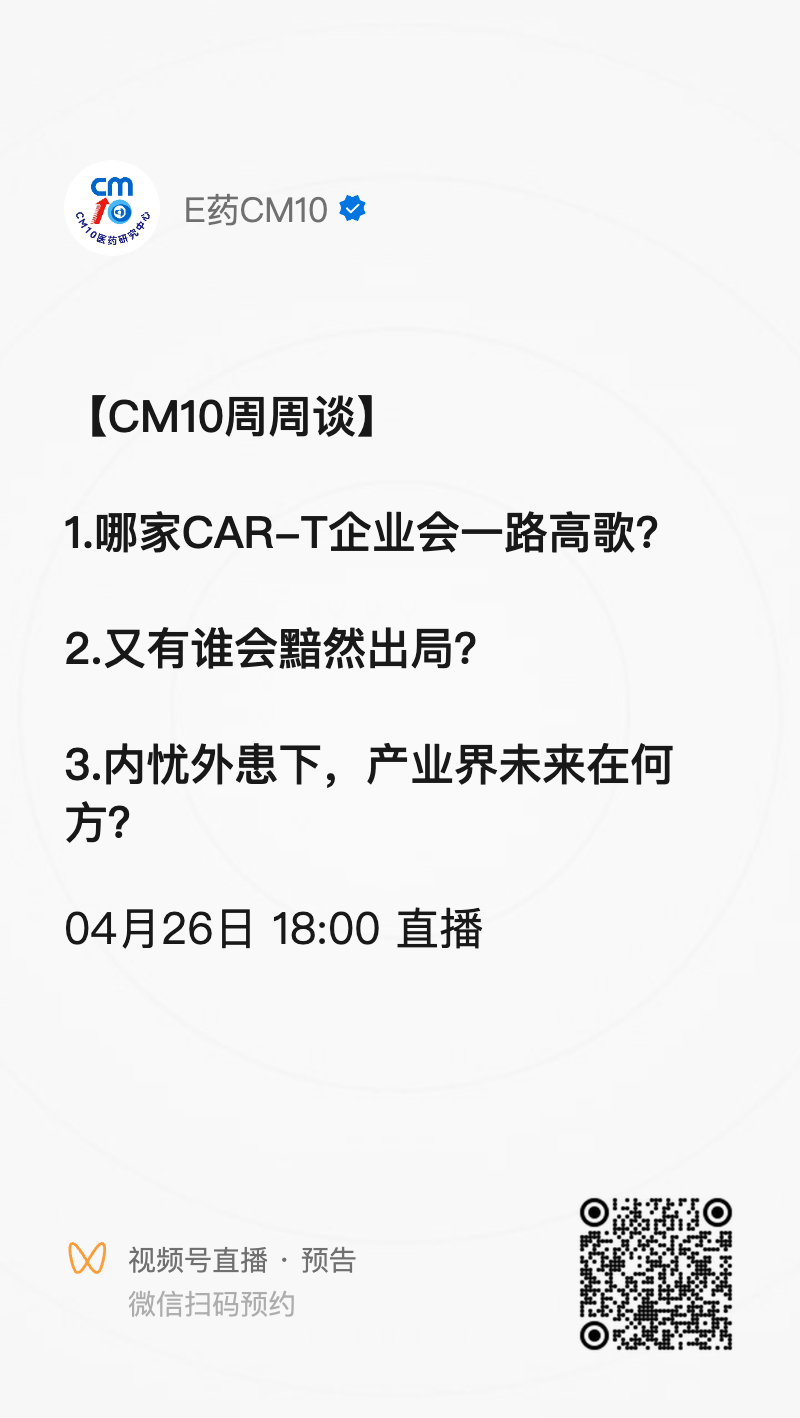
Nowadays, the pharmaceutical winter hasn't passed yet,ProductionIndustryThe polarized trend of "half sea water, half flame" in the industry has become increasingly evident. Moving forward, who will continue to rise? And who will fade away? Where does the future of CAR-T lie? Welcome to follow the live broadcast of 【CM10 Weekly Talk】 jointly presented by E Pharma Manager and Northeast Securities at 18:00 on April 12th (this Friday).