

Roche Reports Strong Q1 2024 Results Driven by Vabysmo’s 108% Sales Surge
Roche
Oncology Drug Research, Development, and Manufacturing
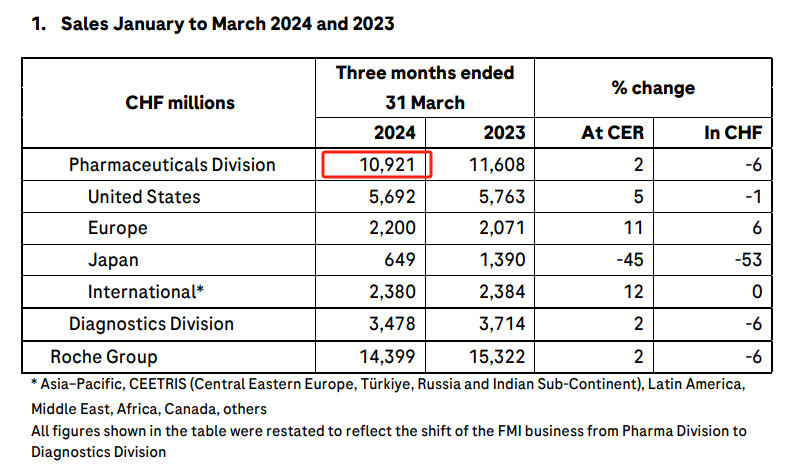
On April 24, Roche released its Q1 2024 performance.Total revenue of 14.399 billion Swiss francs(Approximately 15.695 billion USD), calculated at constant exchange rates (CER),Growth of 2%Excluding COVID-19 related products, sales increased by 7%.(This article's exchange rate calculation is based on 1 Swiss Franc =$1.09)
Looking ahead,Roche Reports Decline in Sales of COVID-19 ProductsNo.Further impact on the company's performance,Sales growth in the mid-single digits (CER) is expected for 2024.
01
Q1 Performance Details
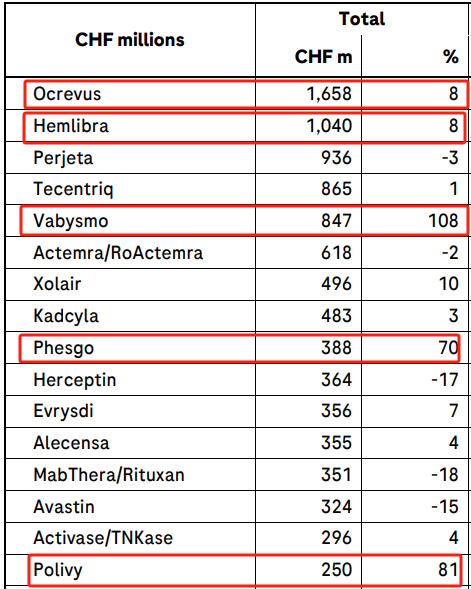
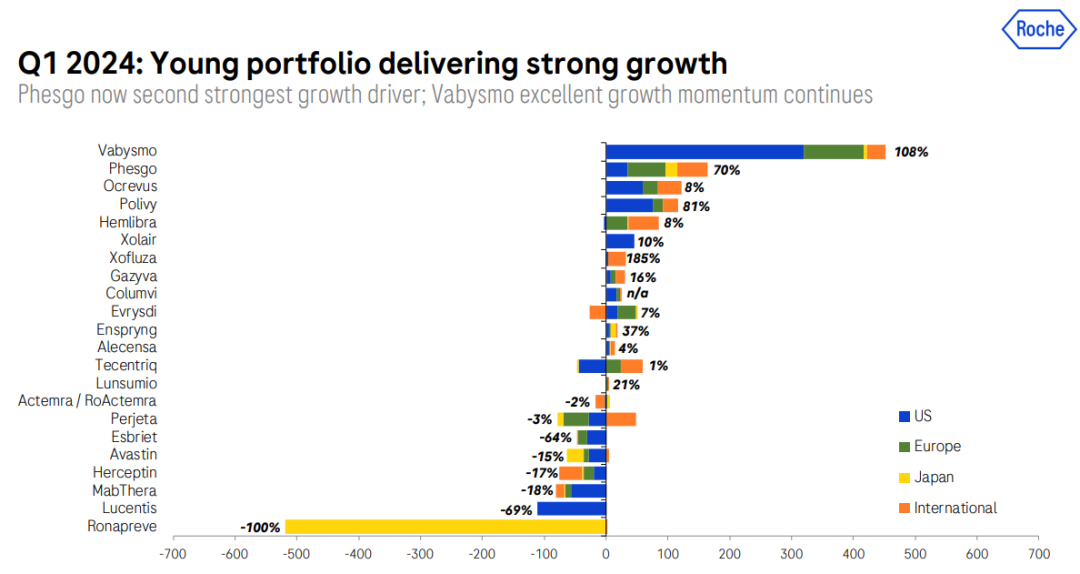
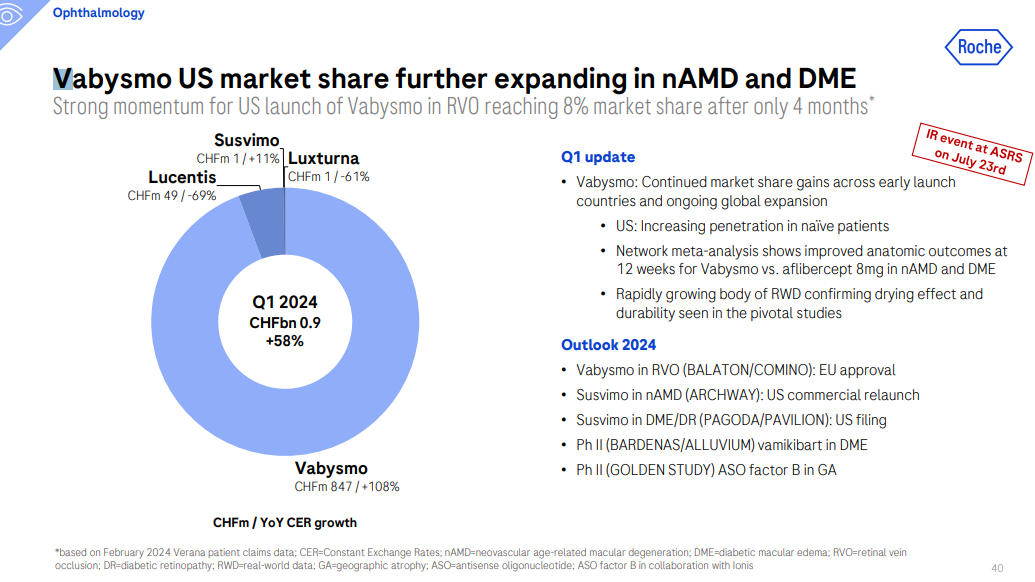
Vabysmo(Ophthalmology|Dual Antibody):Sales847 million Swiss francs,An increase of 108% year-on-year
Phesgo (Breast Cancer | Trastuzumab + Pertuzumab):Sales 3.88100 million Swiss francs, Growth70%
Ocrevus (New Drug for Multiple Sclerosis):Sales16.58Million Swiss Francs,Increase by 8%
Polivy (Blood Cancer |CD79b ADC): Sales Revenue2.5Million Swiss Francs,Growth81%
Hemlibra(Hemophilia A): Sales Revenue10.4Million Swiss Francs,GrowthIncrease by 8%
02
Ophthalmology Bispecific Antibody Vabysmo
03
Abandon 5 Early Assets
For its product pipeline, Roche announced that it has halted the development of five early-stage assets:
1. RG6185 Belvarafenib:Is an oral RAF kinase inhibitor, currentlyCorrectConducting two clinical studies targeting various cancers.Roche's Genentech acquired the license from Hanmi Pharmaceutical in 2016 with an $80 million upfront payment. At that time, the drug was in Phase I. In 2017, Hanmi initiated a Phase 1b study to test belvarafenib in combination with cobimetinib or cetuximab. Hanmi retained the rights to its assets in Korea, published data from the Phase 1 trial and extension study in 2019, and continued to follow patients in the Phase 1b study to evaluate the effects of belvarafenib in combination with MEK or EGFR inhibitors.
2. RG6526 camonsertinib:A potential first-in-class oral small-molecule ataxia telangiectasia and Rad3-related protein kinase (ATR) inhibitor. Phase I study results showed that Camonsertib monotherapy had a modest therapeutic effect on solid tumors, with a clinical benefit rate (CBR) of 13% and a molecular response rate of 43% in 99 treated patients, where ovarian cancer patients exhibited a relatively better response, achieving a CBR of 75%. On February 12, Repare announced that Roche decided to terminate the collaboration agreement for Camonsertib (RP-3500), effective May 7, 2024, due to pipeline adjustments and external factors.
3. RG6286: It is a bispecific antibody that can bind to the colorectal cancer antigen LY6G6D and CD3 on T cells. Roche initiated testing of this candidate drug (also known as BLYG8824A) in colorectal cancer patients in 2020. The estimated primary completion date for the Phase 1 clinical trial is early 2026.
4. RG6163: New candidate molecular drugs for psychiatric disorders, not publicly disclosed.
Since the third quarter of last year, Roche has removed 20% of new molecules from its pipeline.The Termination of Some Pipelines This TimeIs part of a broad realignment.AndIndicates,The focus of the removal is on those assets with "lower chances of success."Schinecker stated that Roche needs to terminate some projects to free up cash for investing in and accelerating "projects that are highly likely to succeed and have a significant impact on patients."
04
Looking Forward to 2024
Looking ahead to the remainder of 2024,Roche Expects Mid-Single-Digit (CER) Sales Growth。


Repost | Join the Communication Group