

SicaGene Files IPO Prospectus to Advance Next-Generation ASO Therapeutics in Neurological, Metabolic, and Ophthalmic Diseases
SicaGene
Oligonucleotide Drug Developer
In recent years, oligonucleotide drugs have expanded from the treatment of rare diseases to the field of common disease treatment, thanks to their advantages such as a large number of druggable targets, high R&D success rates, broad therapeutic areas, long-lasting efficacy, and low drug resistance rates.
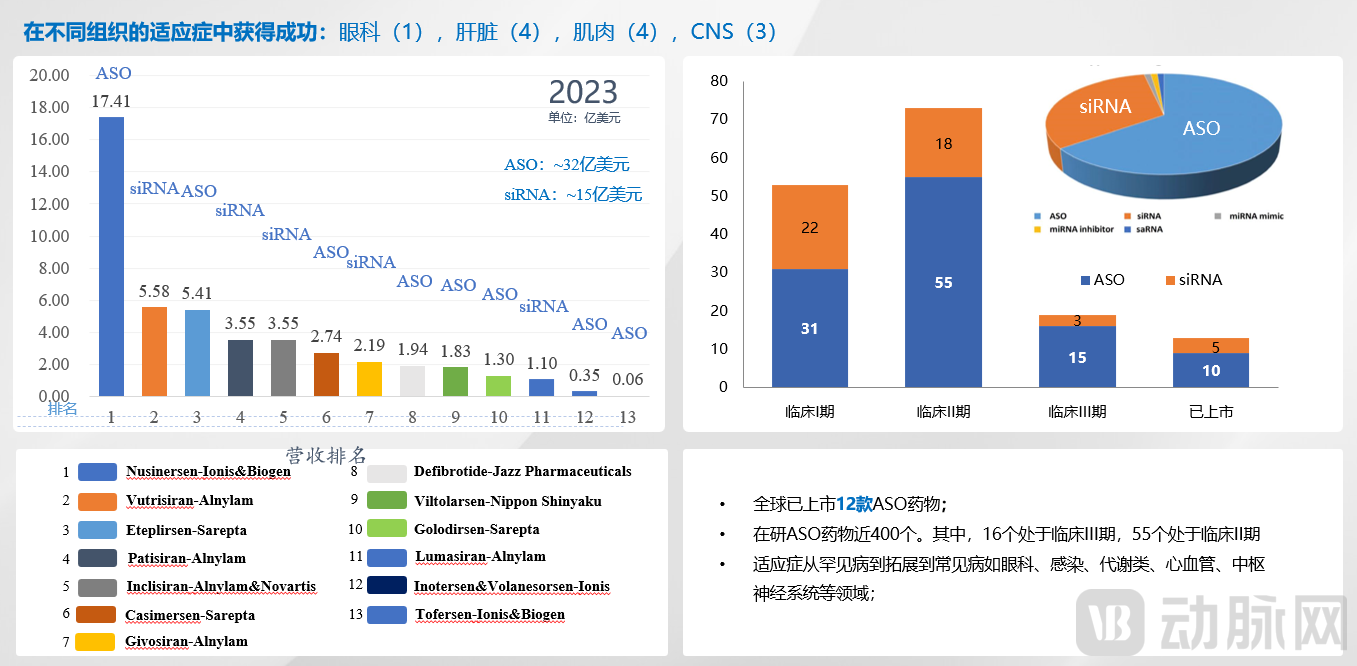
Especially since 2023, with continuous technological advancements and breakthroughs, the pace of small nucleic acid drugs reaching the market has accelerated, driving them to become another highly favored field following ADCs and GLP-1.Currently, there are 20 small nucleic acid drugs approved for marketing globally (3 early drugs have been withdrawn), including 12 ASO drugs, 6 siRNA drugs, and 2 nucleic acid aptamers.
ASO is an important pillar in the field of nucleic acid drugs.
ASO, as the earliest discovered and most approved drug category in the field of small nucleic acid drugs, is one of the important directions for research and development in this field. In the past two years, ASO drugs have made significant clinical progress in the fields of neurology, metabolism, and cardiovascular diseases, while maintaining their differentiated therapeutic advantages in HBV and ophthalmology.
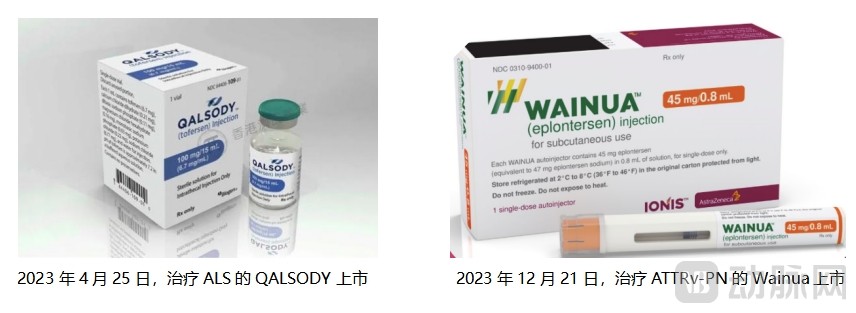
From an international perspective, in 2023, two ASO drugs were approved for marketing by the FDA globally. In 2024, two ASO products have successfully completed Phase III clinical trials and submitted their first application for marketing. Significant breakthroughs in clinical progress have been achieved in the global development of ASO drugs, with substantial transactions occurring continuously among multinational corporations (MNCs).
In March 2024, Novo Nordisk acquired Cardior for $1.1 billion. Its lead product, CDR132L, is an ASO candidate drug currently in Phase II clinical development for the treatment of heart failure. It aims to halt and partially reverse cellular pathology by selectively blocking abnormal levels of the microRNA molecule miR-132, which may lead to long-term improvement in cardiac function.
This news instantly ignited industry enthusiasm. In response, Dr. HaiSheng Wang, founder and CEO of SicaGene, stated that the transaction information demonstrates the important mechanism of action of ASO drugs, which is the ability to regulate microRNA and apply to multiple indications, representing one of the unique advantages of ASO drug molecules.
In China, a group of emerging biotechnology companies have also invested in the ASO drug research and development field, but most are in the fast follow stage, and the industry needs differentiated innovation.
SicaGene, as one of the first innovative companies in China to enter the ASO drug research and development field, has a core team composed of senior drug development experts and executives from leading ASO companies such as BeiGene and Ionis.With the team's extensive experience in the industrial transformation of oligonucleotide drug research and development, clinical trials, registration, and commercialization, SicaGene has built a new generation of ASO drug development platform, hoping to accelerate the development of China's entire oligonucleotide drug industry chain.
ASO Special Mechanism Brings Three Major Advantages, Broader Indications
ASO drugs have seen broader expansion in their indications after 2016, with relatively mature commercial development. In 2023, the sales of ASO drugs reached approximately $3.2 billion, becoming a significant pillar in the nucleic acid drug field, accounting for nearly 70%.
Among them, Ionis' Nusinersen has experienced explosive sales growth since its market launch in 2016, with global sales reaching $1.741 billion in 2023, making it the highest-selling small nucleic acid drug currently available, fully demonstrating the market potential of ASO drugs.
Dr. HaiSheng Wang, Founder and CEO of SicaGene, is a Ph.D. in Medicinal Chemistry from Peking University, a postdoctoral fellow from UMSL and Auburn University in the United States, and an EMBA from CEIBS. Dr. Wang has served as the R&D head in well-known pharmaceutical companies such as BioDuro, BeiGene, Yangtze River Pharmaceutical Group, and Hayao Group; with over 20 years of experience in new drug R&D, he is familiar with new drug development regulations and enterprise management.
Based on extensive experience in medicinal chemistry and R&D management, Dr. Hai-Sheng Wang was the first to recognize the potential of ASO drugs and the significant clinical demand behind them. He joined forces with three experts, each possessing substantial experience in target screening, sequence design, mechanism validation, bioinformatics, and modification delivery, to form the core founding team.
Not long after, SicaGene (Beijing) Biotechnology Co., Ltd. (hereinafter referred to as SicaGene) was officially established in the Beilun Industrial Park in Beijing. Positioned as a biotech company focused on the development of globally leading antisense oligonucleotide (ASO) drugs, SicaGene is committed to overcoming key technical barriers in self-developed ASO drugs, such as chemical modifications and biological sequence design and screening. Currently, the company has over ten core pipelines under research and development.
According to Dr. Wang Haisheng, ASO drugs have three major advantages. First, ASO is a single-stranded nucleic acid molecule with a relatively small molecular weight, which can enter cells through self-delivery endocytosis, showing less dependence on delivery systems.
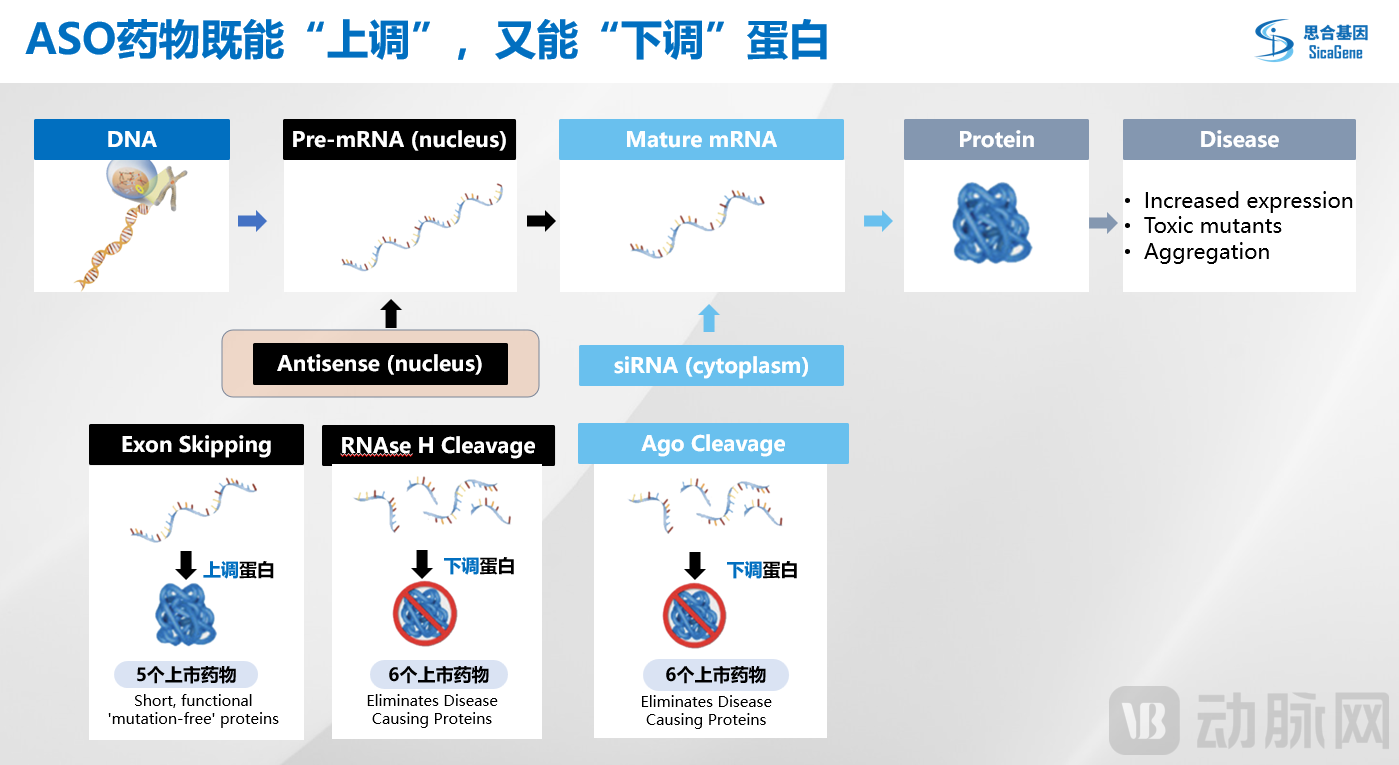
Secondly, in terms of mechanism of action, ASO drugs can upregulate protein function through splicing modulation and downregulate protein expression by degrading mRNA via the RNAse H enzyme, making their indications more extensive.
Finally, based on the information from Novo Nordisk's acquisition of Cardior in March this year, its ASO candidate drug CDR132L is in Phase 2 clinical development for the treatment of heart failure. It aims to stop and partially reverse cellular pathology by selectively blocking abnormal levels of the microRNA molecule miR-132, for the long-term improvement of cardiac function. It can be seen that another important mechanism of action of ASO drugs is the ability to regulate microRNA and apply it to various indications, which is also one of its prominent advantages.
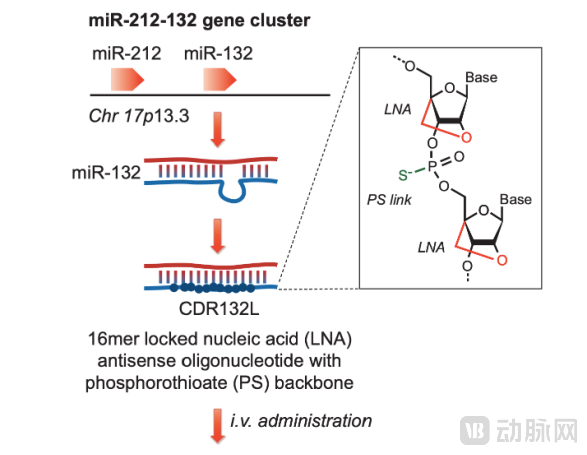
Mechanism of Action of CDR132L in the Treatment of Heart Failure (Batkai S, et al. Eur Heart J. 2021 Oct 14)
Targeting Sequence Design, Modification, and Delivery Challenges to Build a Comprehensive ASO Drug Development Platform
Although ASO drugs have multiple advantages, their development also faces various technical challenges, such as low efficiency in effective target screening, limitations in chemical modifications, and restricted delivery to tissues.
In response to the aforementioned technical challenges, SicaGene independently developed the globally original SicaGene Oligonucleotide Drug Development Platform, through SicaScreen.TMSequence Efficient Design Platform, SicaChemistryTMNucleic Acid Combination Modification Platform, SicaDeliveryTMInnovative Multi-Organ Delivery System Enables Efficient Screening of Drug Targets, Reduces Development Complexity and Cost, and Facilitates Scalable and Programmable Oligonucleotide Drug Development.
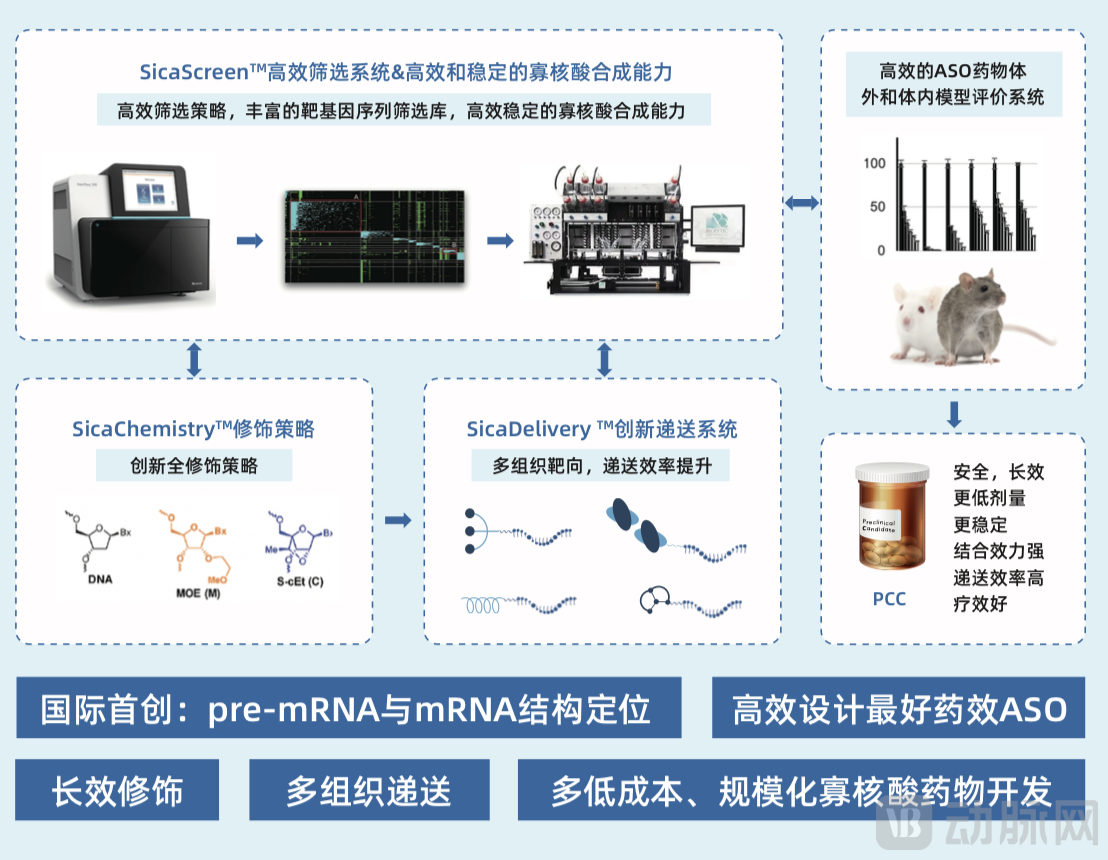 SicaGene's Self-Developed Oligonucleotide Drug Design and Development Platform
Firstly, in terms of sequence design, ASO is a single-stranded oligonucleotide. After entering the cell, its activity directly interacting with mRNA is sequence-dependent. Therefore, how to design the ASO sequence to achieve better activity is the primary challenge that needs to be overcome in ASO drug design.
Dr. Wang Haisheng said that in the past, people usually solved this problem by high-throughput screening. With the development of structural biology, people have gained more understanding of protein structures. Combining the difficulties in ASO drug sequence design and the team's experience, SicaGene adopted a "dry-wet combination" approach to build SicaScreen.TMEfficient Design Screening System. Based on machine learning, a rich target gene sequence screening library has been efficiently constructed, which can greatly improve the efficiency and success rate of ASO drug sequence design. Compared with traditional high-throughput screening, the screening efficiency can be increased by more than 20-100 times, shortening the R&D cycle.
Secondly, due to the easy degradation of small nucleic acid drugs by blood nucleases in the human circulatory system and their poor stability, chemical modification and delivery have been technical challenges for small nucleic acid drugs. Based on long-term research and understanding of nucleic acid structure and biochemistry, the backbone and ribose modifications of ASOs are key areas that require attention.
SicaGene Established SicaChemistryTMInnovative Combination Modification Platform: By performing combination modifications on the base, ribose, and phosphate groups, the stability of ASO molecules in the body is greatly enhanced, which can improve drug binding efficacy and stability to a certain extent, reduce off-target effects, and lower the dosage and frequency of administration.
Finally, in terms of delivery, SicaGene has developed a new SicaDelivery for the treatment of fundus diseases.TMInnovative Multi-Organ Delivery System: Currently, in model animals, it has achieved the direct delivery of ASO drugs to the retinal area at the back of the eye through non-invasive or minimally invasive methods.
"In terms of treating fundus diseases, this is a revolutionary breakthrough. The company is currently further optimizing the delivery system, hoping to achieve non-invasive or minimally invasive methods in the future to replace the original invasive drug delivery method that required intravitreal injection, thereby better treating fundus diseases," said Dr. Wang Haisheng.
Focusing on Three Key ASO Advantage Areas, Core Products in Preclinical Research Stage
Based on a globally original ASO drug development platform, SicaGene focuses on three major fields: the liver, ophthalmology, and CNS. Currently, it has over 10 ASO drug pipelines under research, with the most advanced antiviral drug project having entered the preclinical stage.
Dr. Wang Haisheng stated that the choice to focus on the liver, ophthalmology, and CNS fields is based on two factors: one is to fully leverage the unique mechanism advantages of ASO molecules, and the other is driven by unmet clinical needs within these areas.
On one hand, there is already a significant body of research evidence worldwide supporting the potential role of ASO drugs in HBV drug development. ASO drugs have shown excellent efficacy in hepatitis B treatment and possess a relatively wide safety window. Given the characteristic of localized administration in ophthalmology and CNS fields, ASO drugs also demonstrate strong advantages due to their unique mechanism of directly targeting the production process of pathogenic proteins through cellular endocytosis.
On the other hand, from the perspective of unmet clinical needs, there are significant unmet clinical needs in ophthalmology and CNS. In the field of ophthalmology, existing anti-VEGF drugs such as ranibizumab and aflibercept are biological macromolecules that can only be administered through invasive intravitreal injections. Moreover, approximately 40% of patients exhibit poor response or drug resistance, highlighting a prominent unmet clinical need. ASO drugs can enter cells via endocytosis, offering more diverse target options. Additionally, since ASO drugs can directly inhibit the production of pathogenic proteins, they have the potential to fundamentally treat some primary diseases. For populations who are non-responsive or resistant to anti-VEGF therapies, ASO drugs also hold broad application prospects.
In addition, ASOs have the ability to suppress the production of pathogenic proteins or non-coding RNAs at the gene level, showing great potential for treating CNS diseases. From the perspective of global R&D progress in the CNS field, many MNCs have developed innovative ASO therapies.
Currently, there are nearly 400 ASO drugs under development globally, with 16 in Phase III clinical trials and 55 in Phase II clinical trials. From these candidate drugs, the indications for ASO are gradually expanding from rare diseases to common diseases, such as ophthalmology, infectious diseases, metabolic disorders, cardiovascular conditions, and central nervous system disorders.
With continuous technological breakthroughs, ASO drugs, as a core component of small nucleic acid drugs, are gradually moving from the fields of rare and genetic diseases to a broader range of common diseases, and are expected to become a key force in humanity's fight against diseases in the future.
"We hope that both investment institutions and pharmaceutical companies can focus more on ASO drugs as a powerful therapeutic modality based on unmet clinical needs, pushing more ASO drug molecules into clinical trials to meet the demands of more patients," Dr. Hai-Sheng Wang concluded.
Looking to the future, SicaGene will continue to solidify its core technological advantages in the field of oligonucleotide drug development, actively advance its product pipeline into clinical stages, and strengthen hospital collaborations. To address unmet clinical needs, SicaGene aims to expand into more indications, providing additional treatment options for difficult-to-treat diseases.