On April 22, the 2024 Radiopharmaceutical Innovation and Development Conference, hosted by the China Isotope and Radiation Association, was held in Beijing. Representatives from research institutes, universities, medical institutions, and enterprises in the field of radiopharmaceuticals in China gathered to exchange and communicate on cutting-edge topics such as medical isotopes and the industrialization of radiopharmaceuticals, with the aim of promoting the improvement of radiopharmaceutical R&D, commercialization capabilities, and innovation levels, and fostering high-quality development of the industry.During the conference, the Radiopharmaceuticals Branch of the China Isotopes and Radiation Industry Association was established, and the first meeting of the First Council was held. In addition to common domestic nuclear medicine companies, multinational pharmaceutical enterprises also appeared in the newly established branch and the conference. As the Vice Chairman of the Radiopharmaceuticals Branch and Co-Chair of the conference, Ms. Luo Ya, Vice President of Novartis China and Head of Value Access, attended the meeting. Moreover, Ms. Wang Ziwen, Head of New Product Planning at Novartis China, delivered a keynote report titled **"Core Innovation, Commitment to China"** at the conference. Novartis stated that it will fully utilize its industry advantages, innovative R&D layout, and leading production and supply capabilities in the field of radioligand therapy to work with industry partners to jointly promote the development of China's radiopharmaceuticals industry and advance the clinical application of drugs.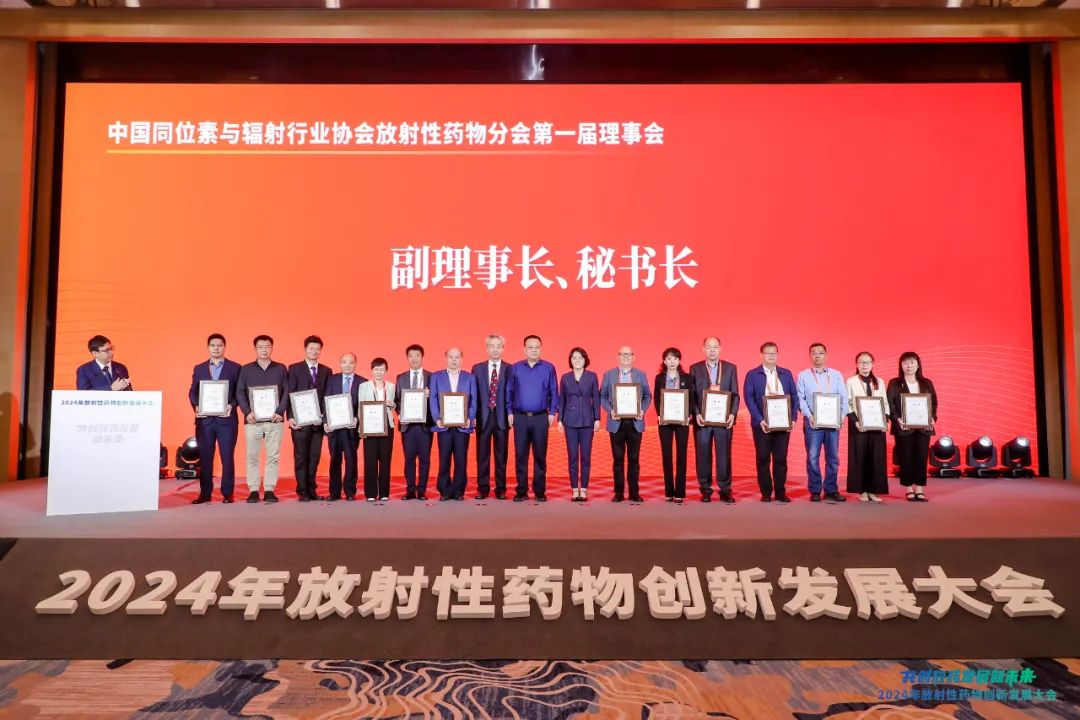 Group photo of the first council of the Radiopharmaceuticals Branch of the China Isotope and Radiation Association, including the vice chairman and secretary-general (Provided by the China Isotope and Radiation Association)
Radioligand Therapy: A Promising New Pillar in Cancer Treatment
Since Becquerel first discovered radioactive materials in 1896, the exploration of radionuclide applications in the medical field has spanned over a century: In 1931, the advent of the world's first cyclotron promoted the research and clinical application of radionuclides in medicine. Entering the 21st century, traditional radiopharmaceuticals such as iodine-131 (sodium iodide) and radium-223 (radium chloride) began to be widely used in clinical treatments. In recent years, innovative radioligand therapies (RLT) represented by lutetium-177 have brought new hope to cancer patients, with their efficacy and safety already confirmed in the treatment of gastroenteropancreatic neuroendocrine tumors and prostate cancer.
Radioligand Therapy: A Precision "Tumor-Targeting Missile" for Cancer TreatmentUnlike traditional radiopharmaceuticals such as iodine-131 (sodium iodide) and radium-223 (radium chloride), the high targeting capability of radioligand therapy allows it to safely, precisely, and efficiently attack tumor cells throughout the body without harming normal cells, earning it the reputation as a "black technology" in cancer treatment. Additionally, radioligand therapy, like antibody-drug conjugates (ADC), belongs to the category of conjugated drugs. However, due to its use of radionuclides as payloads, peptides as carriers, and a connection method that does not require hydrolysis, it has demonstrated lower immunogenicity, better penetration, and optimized in vivo metabolism in clinical applications, offering stronger efficacy and higher safety.Experts and industry insiders attending the Radiopharmaceutical Innovation and Development Conference believe that radiopharmaceuticals, represented by radioligand therapy, are highly promising to become a new pillar in cancer treatment and transform the future of cancer care.
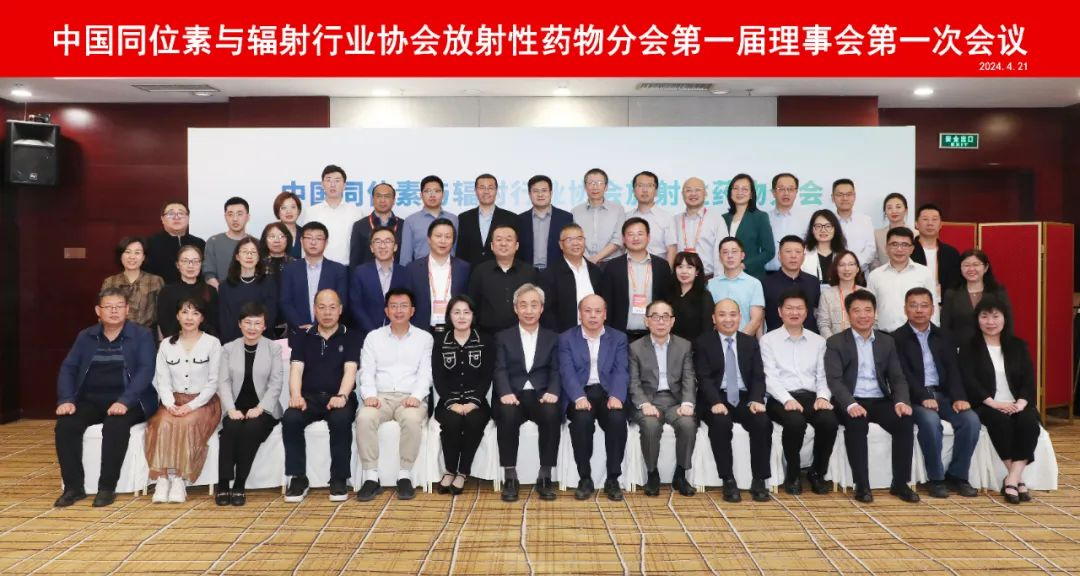 Group Photo of the Representatives of the Radiopharmaceuticals Branch of the China Isotope and Radiation Industry Association(Provided by the China Isotope and Radiation Association)
Novartis Remains Committed to and Continues to Expand Radioactive Ligand Therapy
As early as 2017, while global pharmaceutical companies were competing in the PD-1, PD-L1, and ADC fields, Novartis seized strategic opportunities and took a unique path by deeply cultivating radioligand therapy (RLT). First, it acquired Advanced Accelerator Applications for $3.7 billion, gaining access to its RLT and related technology platforms. In 2018, Novartis further enriched its RLT pipeline by acquiring Endocyte for $2.1 billion. In March 2023, Novartis entered into a collaboration worth over $1.7 billion with Bicycle Therapeutics to develop peptide-based radiolabeled conjugates. In April 2023, Novartis reached another collaboration agreement worth over $400 million with 3B Pharmaceuticals GmbH, securing global development and commercialization rights for peptide-targeted radiopharmaceuticals.Novartis CEO Vas Narasimhan, M.D., clearly expressed recognition and long-term commitment to the value of radioligand therapy at this year's J.P. Morgan Healthcare Conference (JPM 2024), "Part of Novartis' key strategy is to focus on areas where we believe we can create long-term, sustainable leadership, and that is radioligand therapy."The continuous investment from 2017 to the present has also yielded two highly influential products in the field of radioligand therapy (RLT). These products are respectively used for treating patients with somatostatin receptor-positive gastrointestinal pancreatic neuroendocrine tumors and patients with castration-resistant prostate cancer who remain PSMA-positive after specific treatments, showing "blockbuster" market potential. The excellent performance of these two products has not only driven the prosperity of the RLT sector but also sparked widespread attention and competitive positioning in the RLT field among major pharmaceutical companies globally.Facing the rapid advancement of RLT research and industrialization, Novartis not only continuously strengthens its existing "leader" advantage but also is committed to constantly enhancing its R&D layout, production capacity, and building efficient transportation operational capabilities as well as comprehensive patient-physician service abilities.In terms of R&D, apart from the two marketed drugs, Novartis is also developing more than ten RLT drugs, covering a series of tumor diseases such as breast cancer, glioma, colon cancer, lung cancer, and pancreatic cancer. In production capacity, in addition to the existing three production bases, Novartis has decided to expand its advanced RLT production base in Indiana and establish new plants in China and Japan to strengthen the global production system. Regarding the supply system, due to the decay characteristics of radionuclides, radiopharmaceuticals often have very limited shelf lives and need to reach patients within a few days after production. Therefore, Novartis has set up a dedicated logistics team that is working on improving and enhancing the supply chain logistics system for radioligand therapies.In order to provide better services to medical and health institutions, doctors, and patients, Novartis has launched a series of comprehensive customer service systems and products worldwide, including assistance in healthcare system construction, drug reservation, logistics tracking, RLT technical support, and medical education training, committing to offer all-around services for both doctors and patients.While Novartis is globally deploying RLT, it is also continuously and extensively developing and exploring in China, its most strategically significant market.Novartis RLT has embarked on its commitment to China.
Novartis, which means "Promise to China". From the progress of Novartis' radioligand therapy (RLT) project in China, Novartis RLT has embarked on the promised path to China.According to information from the CDE official website, Novartis China has initiated multiple registration clinical studies involving RLT therapy. These include an RLT product for later-line metastatic prostate cancer that has already been marketed in Europe and the U.S., as well as front-line prostate cancer indications under global synchronized development and several other RLT pipeline products in the early stages of development.
In addition to the introduction of innovative drugs, Novartis is also actively establishing a radioligand therapy (RLT) production base in China. On December 1, 2023, Novartis and the Haiyan government of Zhejiang Province announced the establishment of a new production base in Zhejiang, with an expected start of operations by the end of 2026, to ensure the production capacity and supply of RLT drugs in China.
Moreover, Novartis is actively promoting the development of China's radiopharmaceuticals industry and the implementation of relevant policies. At the recently concluded 2024 China Development Forum, Dr. Vas Narasimhan shared Novartis’ insights and practices, submitting policy recommendations titled "Building a Competitive Innovation Ecosystem to Benefit Chinese Patients," and actively advocating for the acceleration of the research, development, and application of advanced radioligand therapies in China. During the 6th China International Import Expo held in 2023, Novartis, together with experts and scholars from China’s urology and nuclear medicine fields as well as partners from the Yangtze River Delta nuclear healthcare industry, co-hosted the "Integrated Development Forum on PSMA-targeted Diagnosis and Treatment for Prostate Cancer" and announced the establishment of the Yangtze River Delta Nuclear Medicine Technology Application Alliance.
Ms. Luo Ya stated: "Novartis China has always adhered to the mission of 'Commitment to China,' dedicating itself to introducing innovative drugs with high clinical value for Chinese patients, while comprehensively expanding its presence in R&D, manufacturing, and market development in China. Radioligand therapy is one of Novartis' five key global technology platforms, where we have accumulated highly specialized expertise in R&D, production, and clinical applications of precision-targeted drugs and therapies containing radioactive components, as well as interdisciplinary and cross-industry collaboration. We look forward to collaborating with industry associations, medical institutions, and partners to bring Novartis' experience in advancing the standardization of the nuclear medicine industry to China, supporting the high-quality development of China's nuclear medicine and nuclear healthcare sectors, and enhancing the accessibility of advanced integrated oncology diagnosis and treatment solutions—ultimately helping patients improve their quality of life and extend survival."Copyright © 2024 PHARMCUBE. All Rights Reserved.
Welcome to forward, share, and reasonably cite. When citing, please clearly indicate the source of the article.For reprinting, please leave a message or send a message to the WeChat Official Account backend, and indicate the name and ID of the official account.
Disclaimer: The information in this WeChat article is for general reference only and should not be directly used as decision-making content. PharmaCube assumes no responsibility for any loss incurred by any party due to the use of the content herein.