Science Corporation Acquires Pixium Vision’s Prima System to Advance Bionic Vision Technology

Pixium Vision
Bionic Vision System and Device Developer

Science
Medical Device Developer

On April 26, 2024, brain-computer interface developer Science Corporation announced today that itAcquired Pixium Vision's Prima ImplantIntellectual Property and Related Assets。
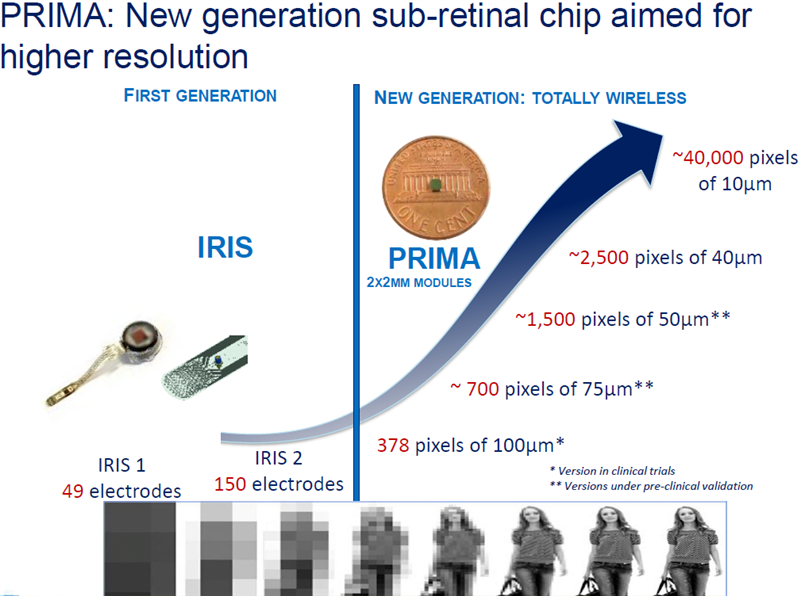
# AcquiredRetinal Implant Technology:Prima System

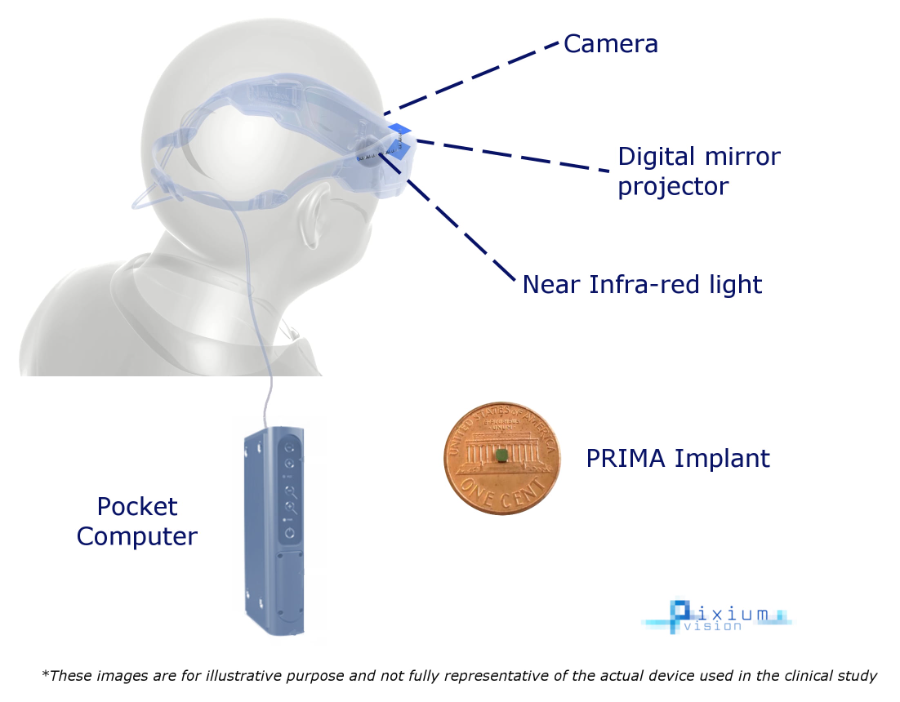
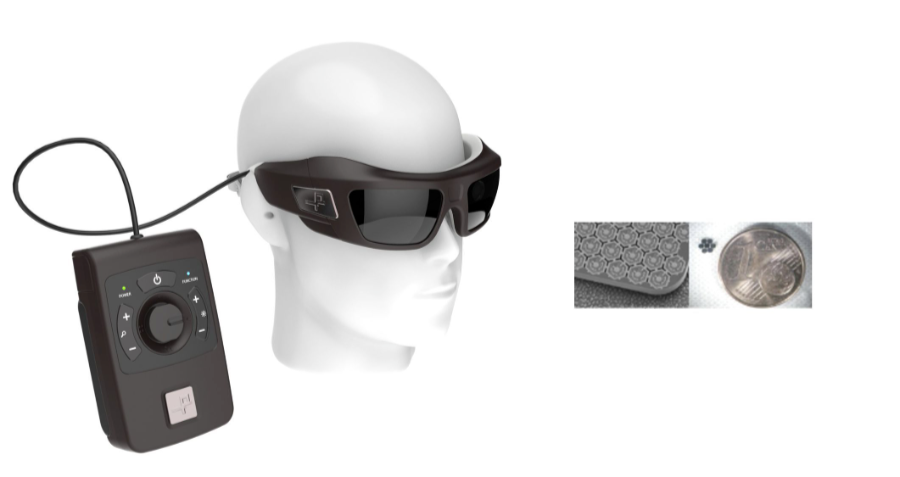
On GlassesMicro-camera captures visual scenes,Artificial Intelligence AlgorithmPocket ElectricityThe brain processes and simplifies visual scenes., extract useful information. The images are sent back to the glasses, where a miniature digital projector beams the processed images through the pupil using near-infrared light pulses.Projected onto the Prima wireless photovoltaic subretinal implant at the back of the eye, below the retina。 Photovoltaic cells convert thisOptical Information Converted to Electrical Stimulation, stimulating the bipolar nerve cells in the inner layer of the retina, followed byInducing Visual Perception in the Brain。
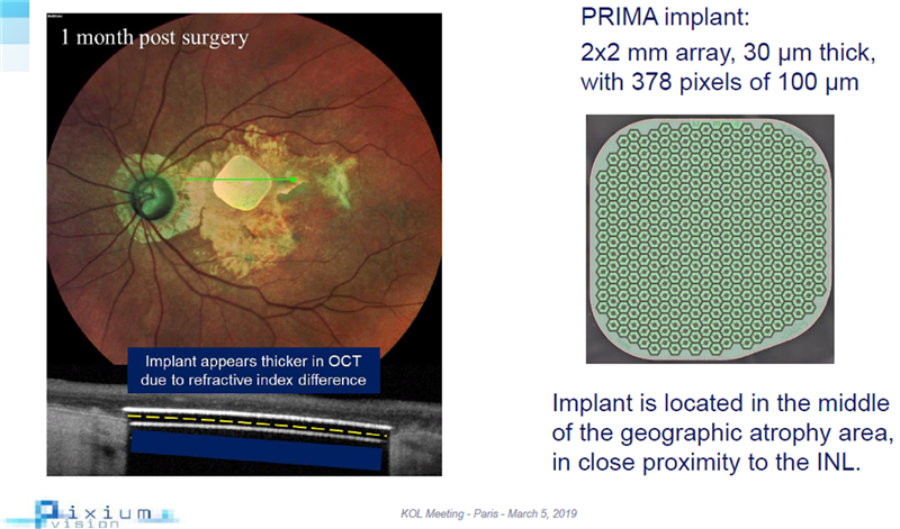
1. Minimally Invasive Design:Prima Implant Used in Feasibility Clinical StudiesChiDimensions: 2x2 millimeters, thickness: 30 micrometers(Equivalent to one-third the size of a human hair).
This is aMiniature, Passive, Fully WirelessThe subretinal implant,Powered by pulsed near-infrared light through a miniature digital projector integrated into glasses worn by the implanted subject.
The small size and wireless design of the Prima system implant enableMinimally Invasive Surgery, which can be performed under local or general anesthesia.

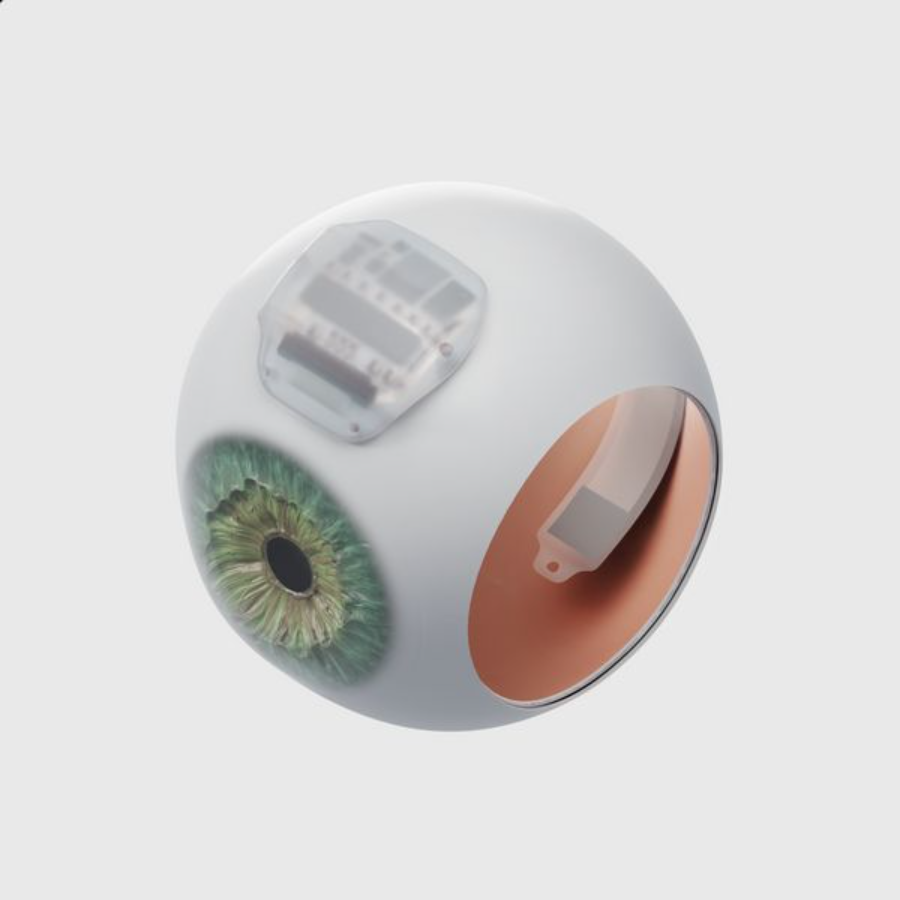
The working principle of Science Eye is based on the natural process of the human visual system. First, the retina is responsible for converting light into neural signals, which are then sent to the brain for processing. In this process, photoreceptors play a key role as light-sensitive cells that can absorb light and convert it into information. Once the light is converted into information, it is transmitted through interneurons to the retinal ganglion cells. Finally, these retinal ganglion cells transmit the information to the brain via the optic nerve.
To restore vision in patients who have lost photoreceptor cells, Science Eye employs two innovative therapies:
Optogenetic Gene Therapy: This method utilizes a special protein nanoparticle to deliver genes into retinal ganglion (optic nerve) cells. These genes enable the cells to become sensitive to specific wavelengths. Notably, the proteins used in the experiment are not sensitive to normal daylight but only to light emitted by implanted flexible micro-light-emitting diodes.
High-Resolution Display Film:A tiny and flexible high-resolution display film is precisely placed on the retina through surgery. This device can interact with genetically modified ganglion cells, enabling fine control over light.
The combination of these two technologies brings hope of regaining vision to patients who have gone blind due to damaged rod and cone cells. More importantly, the electronic device of Science Eye is compact, similar in size to the widely used glaucoma shunt today. This allows it to be inserted without general anesthesia, and patients will hardly feel its presence.
The installation process is as follows:
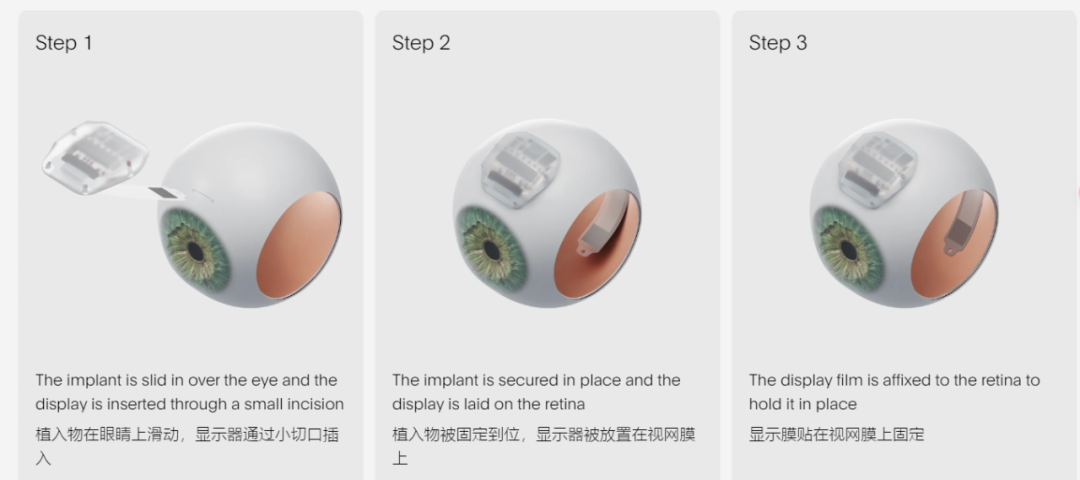
Currently, the experimenters have implanted the Eye of Science into rabbits, but careful observation of tissue imaging is still needed to determine whether the gene therapy is effective.
2024 Global MedTech List:Call for Entries: Awards Evaluation
2023Global Medical TechnologyList:Global Top 100 Medical Technology Companies | Industry Contribution Award | Technological Innovation Award | Tech Innovation Award | Innovative Medical Device Award
Global Medical Technology Industry Map: International Leaders
Cardiovascular:Medtronic|Johnson & Johnson J&JMedTech|BD Medical|Boston Scientific|Edwards Lifesciences|Abbott|Orthopedics:Medtronic|Johnson & Johnson J&JMedTech|Stryker|Smith & Nephew S&N|Zimmer Biomet Ophthalmology:ESSILOR|Alcon|Carl Zeiss Medical |Topcon|Cooper Medical Image:Siemens Healthineers|Philips Medical|GE Healthcare|Olympus
Global Medical Technology Industry Map: Chinese Listed Companies
Mindray Medical|Nine An Medical |Weigao Co., Ltd.|DAAN Gene|Lepu Medical|Mingde Biotech |Shinva Medical|United Imaging Healthcare|Oriental Biotech|Yuwell Medical|Kehua Bio-engineeringIntco Medical|Saintgene Biotech|Guo Ke Heng Tai|DAAN Gene|Ying Tai Medical
Global Medical Technology Industry Map: Industrial Clusters
Medical Alley, Minnesota, USA | Wausau, Indiana, USA | Massachusetts, USA | Costa Rica | NetherlandsEindhoven | US Route 128 Tech Corridor | Japan | United StatesPuerto Rico | Ireland | ItalyMilandola | Erlangen, Germany | GermanyTuttlingen | Tonglu
Editor-in-Chief | Zhao Qing Reviewed by | Yi He