First domestically produced, Jiangsu Hengrui Medicine's EZH2 inhibitor approved for market launch

Hengrui Pharma
Innovative and High-Quality Pharmaceutical Developer

Zeste gene enhancer homolog 2(Enhancer of Zeste Homolog 2,EZH2)It is a histone methyltransferase that triggers and maintains transcriptional repression of chromosomes by catalyzing trimethylation of histone H3K27, thereby suppressing the expression of target genes. Its overexpression or excessive functional enhancement leads to excessive silencing of the above-mentioned genes, ultimately resulting in impaired multipotent differentiation potential of stem cells and tumorigenesis.
Dysfunction of EZH2 is associated with various cancers, including gastric cancer and non-small cell lung cancer, making it an ideal target for anticancer drugs. Studies have found that EZH2 dysregulation also occurs in multiple cancers such as follicular lymphoma and diffuse large B-cell lymphoma, and is related to poor clinical prognosis and treatment outcomes.
SHR2554 is developed by Jiangsu Hengrui Medicine Co., Ltd.A novel, highly efficient, and selective oral EZH2 inhibitor, which can selectively and potently inhibit the enzymatic activity of both wild-type and mutant EZH2.
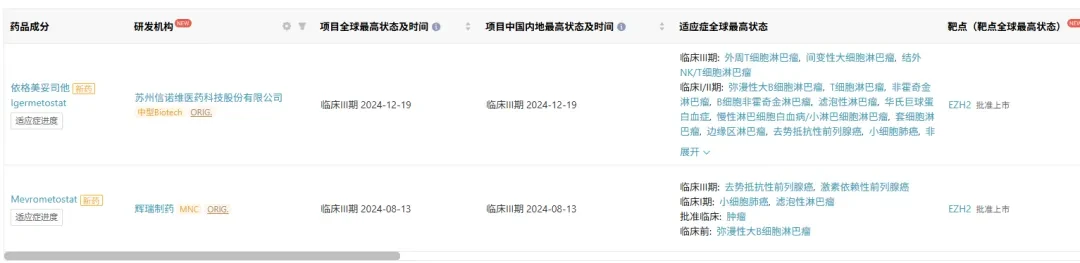
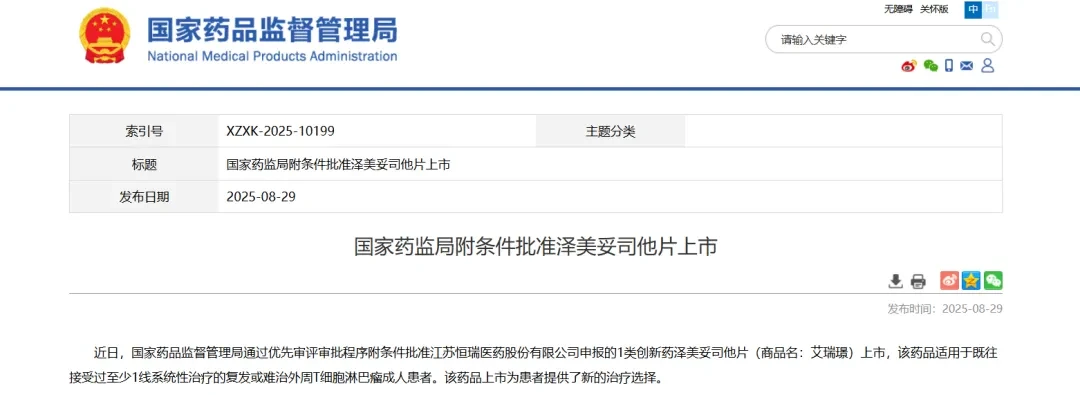
According to the Insight database, the drug initiated its first clinical trial in 2018, was submitted for market approval and accepted by the CDE in October 2024, underwent rapid review via the priority review pathway, and has finally been approved today.The first domestically developed EZH2 inhibitor。(*Hutchmed's savolitinib was previously approved in March 2025, but imported from Ipsen, not domestically produced)
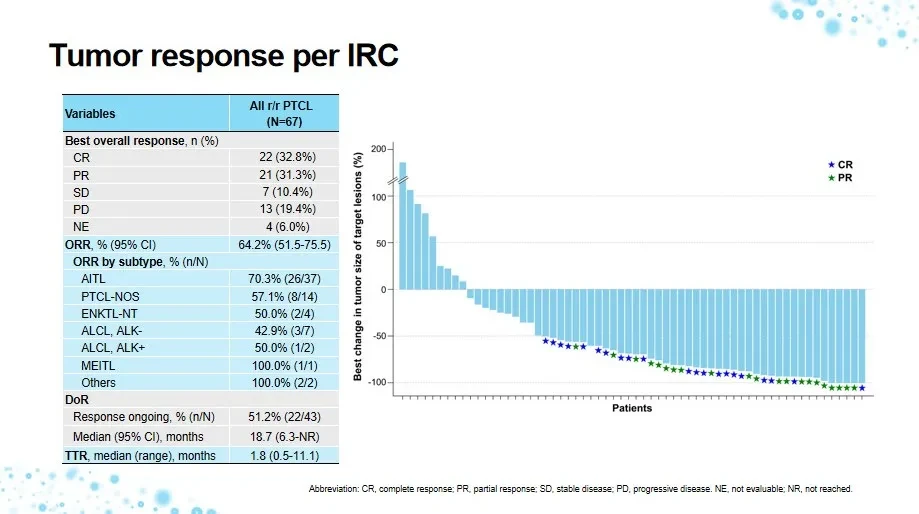
The study included a total of 67 patients, including 37 cases(55.2%)Angioimmunoblastic T-cell lymphoma(AITL), 14 cases(20.9%)Peripheral T-cell lymphoma-not otherwise specified(PTCL-NOS), 7 cases(10.4%)Anaplastic large cell lymphoma, anaplastic lymphoma kinase negative(ALCL,ALK-), 4 cases(6.0%)Extranodal NK/T-cell lymphoma, nasal type(ENKTL-NT), 2 cases(3.0%)ALCL-ALK positive(ALCL,ALK+), 1 case(1.5%)Monomorphic epitheliotropic intestinal T-cell lymphoma(MEITL), 2 cases(3.0%)Other subtypes.
The median number of prior lines of therapy was 2.(Range: 1-9)All patients had previously received chemotherapy regimens; in addition, all patients had been treated with chidamide or brentuximab vedotin.
The study met its primary endpoint, demonstrating that SHR2554 exhibited promising efficacy with manageable safety in patients with R/R PTCL, and has the potential to become a new treatment option for this population with high unmet medical needs.
Specifically,As of December 20, 2024,22 cases(32.8%)The patient achieved complete remission, 21 cases(31.3%)achieved partial remission,Objective response rate assessed by IRC(ORR)64.2%(95% CI:51.5-75.5)。
Benefit was observed across all subtypes. Among patients who showed remission, 51.2%(22/43)patients remain in remission, with an estimated median duration of response(DoR)for 18.7 months(95% CI: 6.3 - not reached [NR])。The median PFS was 10.0 months. (95% CI,3.7-15.7), median OS has not been reached.
Screenshot source: official company WeChat account
Currently, Hengrui is conducting a studySHR2554 versus chidamide for the treatment of T-cell lymphomaPhase III clinical study(NCT06122389). In addition to PTCL, SHR2554 has also developed several other specific cancer indications, such asProstate cancer, colorectal cancer, NSCLCare all currently in Phase II clinical development.