

Repertoire Immune Medicines Announces $1.8 Billion Collaboration with Bristol Myers Squibb to Develop Tolerizing Vaccines for Three Autoimmune Diseases
Bristol-Myers Squibb
Biopharmaceutical and Nutritional Product R&D and Sales

Repertoire Immune Medicines
Cellular Immunotherapy Developer
On April 29, biotech company Repertoire Immune Medicines (hereinafter referred to as "Repertoire") announced a collaboration agreement with Bristol Myers Squibb (BMS) to develop tolerizing vaccines for three autoimmune diseases.
According to the terms of the agreement,Repertoire will receive a $65 million upfront payment, up to $1.8 billion (approximately 13 billion RMB) in development, regulatory, and commercial milestone payments, as well as tiered royalties at a certain percentage.Repertoire will be responsible for leading all activities related to the vaccine up to the development nomination stage. Subsequently, BMS will take over the clinical development, regulatory affairs, and commercialization of the tolerogenic vaccine under a global exclusive license.
Repertoire is a biotechnology company developing programmable T-cell-targeting immunotherapeutics.Incubated by the globally renowned venture capital firm Flagship Pioneering and launched in 2020. At the outset of Repertoire's establishment, Flagship added a new investment of $220 million.
Repertoire Immune Medicines was formed by the merger of two startup biotechnology companies — Cogen Immune Medicine and Torque Therapeutics.Among them, Cogen is committed to developing T-cell analysis technology to interpret how the human immune system meets patient needs, and utilizing its proprietary Cogen engine to advance drug development efforts in clinical trials. Torque focuses on developing novel cellular immunotherapies, deeply modifying immune cells within cancer patients through its self-created Deep-Priming platform.
As early as before, the two companies intended to merge into a new company to innovate in immunotherapy research and development by combining different technologies. In the early discovery stage, Cogen's immune decoding platform is used to gain an in-depth understanding of cells; in the later development stage, Torque's immuno-oncology platform is utilized to specially manipulate T cells and develop novel immunotherapies.
Repertoire Immune Medicines was precisely chosen by Flagship to become the vehicle for their combination. Therefore,Repertoire Immune Medicines has built a T-cell receptor (TCR) epitope discovery platform DECODE and lipid nanoparticle (LNP) delivery technology.Among them, the DECODE platform includes four technologies, which enable researchers to conduct clinical trials in a completely different way.
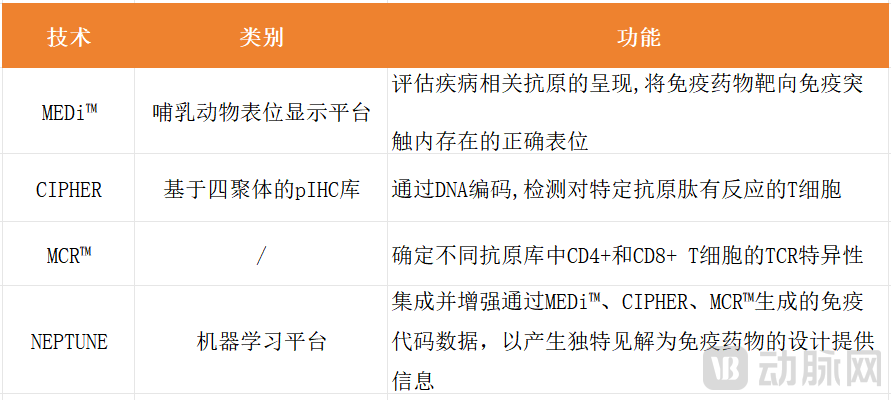
With the support of four major technologies, through the DECODE platform, Repertoire is able to decode the immunological synapse (the basis of antigen-specific cellular immunity), identify TCR and disease-related epitopes in human leukocyte antigen (HLA) molecules, discover immune codes that protect humans from diseases, and detect and isolate relevant T cells based on their response to specific pathogenic antigens, thereby designing novel immunotherapies for cancer, autoimmune diseases, and infectious diseases.
Among these, based on the identification of TCR epitopes on the DECODE platform, Repertoire is developing tolerogenic vaccines for autoimmune diseases by encoding corresponding mRNAs delivered via LNP technology. According to the company's official website, the mRNA tolerogenic vaccines under development consist of disease-related tissue-specific epitopes discovered by the DECODE platform and are encoded by mRNA. These vaccines can drive the expansion of antigen-specific regulatory T cells and induce non-responsiveness of CD4+ T effector cells in target tissues.Antigen-specific regulatory T cells can induce bystander suppression and ultimately restore immune homeostasis, thereby achieving durable disease remission without generalized immunosuppression.。
Currently, Repertoire is developing tolerance vaccines for the treatment of various autoimmune diseases, such as type 1 diabetes and multiple sclerosis. This is also the focus of the collaboration between Repertoire and BMS. In addition, Repertoire will deploy DECODE to monitor patients' immune responses to the tolerance vaccines during clinical development, providing key insights into the efficacy of the vaccines.
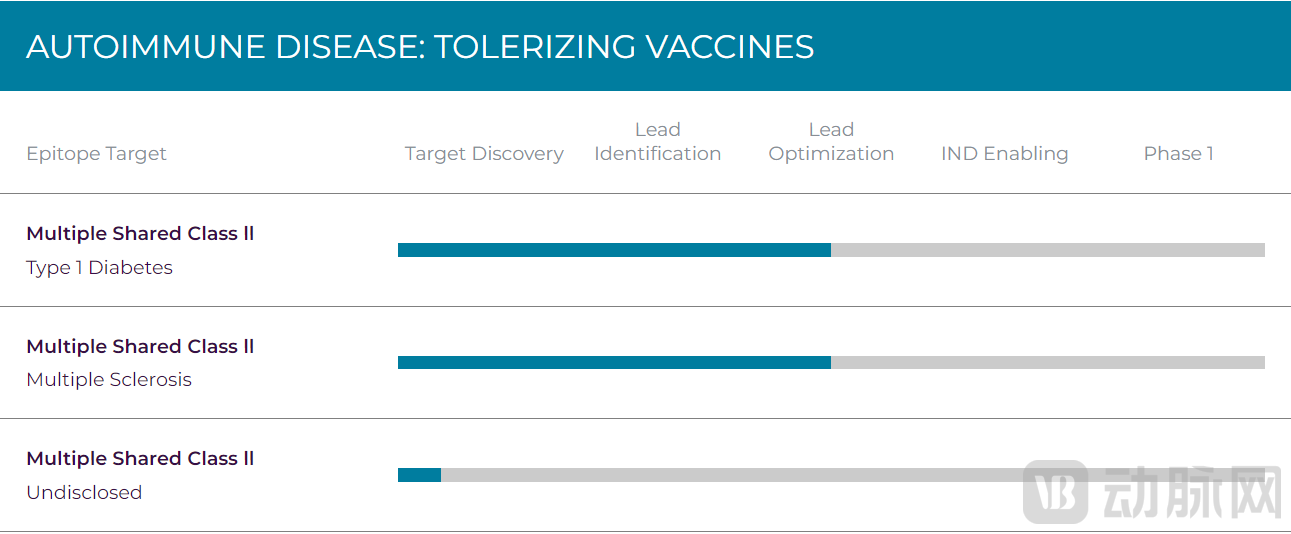 Repertoire Tolerance Vaccine R&D Pipeline Image Source: Repertoire Official Website
The collaboration between Repertoire Immune Medicines and Bristol-Myers Squibb can be seen as a "two-way journey."
First, it isRepertoire Immune Medicines' Urgency to Develop Innovative Therapies and Break Through a "Gloomy" StartDespite the "protection" provided by Flagship and its proprietary technology platform, Repertoire got off to a rocky start. In November 2022, Repertoire underwent a complete overhaul: cutting two key clinical assets, replacing the CEO, and laying off 45% of its workforce. To date, Repertoire has yet to advance any candidate product into the clinical trial stage.
In addition, four U.S.-listed biotech companies incubated by Flagship announced their closures one after another in 2023. Coupled with the cooling capital market and the "cutthroat" market competition, Flagship is seeking new industry breakthroughs to overcome the重重困境 brought by the "nine deaths, one life" law of innovative drug development.
Secondly, it isBMS Reinvests in the Development Needs of Potential Blockbuster DrugsOn April 25, Bristol-Myers Squibb (BMS) stated in its first-quarter 2024 earnings report that,A comprehensive "Strategic Productivity Program" will be implemented, which includes the restructuring and optimization of the organizational management structure and product pipeline. This initiative aims to save approximately $1.5 billion by the end of 2025, with an expected workforce reduction of 6%, affecting around 2,200 employees.。
In the April 25 conference call, BMS Chief Financial Officer David Elkins noted that "the vast majority" (two-thirds) of cost savings will come from BMS's traditional R&D business rather than synergistic assets recently acquired. BMS stated that, in terms of its investment pipeline, the saved funds would be reinvested into potential blockbuster drugs, with a particular focus on R&D projects with high returns on investment. Bristol Myers Chief Medical Officer Samit Hirawat revealed that, to date, BMS has either halted or outsourced the development of 12 projects, including follow-up versions of its immunotherapy Yervoy, SIRPα- and BET-targeted drugs, and will continue to review its pipeline throughout the remainder of the year.
BMS's "Strategic Productivity Program" is related to its performance in the first quarter of 2024. Amid BMS’s restructuring, sales of its cancer immunotherapy Opdivo (nivolumab) continued to decline by 6%. Due to "ongoing competitive pressures" and "unfavorable pricing pressures," sales of its CAR-T therapy Abecma (idecabtagene vicleucel) dropped by 44%, with Q1 global sales reaching only $82 million, compared to $147 million in the same period last year.
Despite Bristol-Myers Squibb's Q1 2024 sales reaching $11.9 billion, surpassing the previous expectation of $11.5 billion with a 5% increase,BMS reported a loss per share of $4.40, compared to earnings per share of $2.05 in the same period last year, turning from profit to loss. The market expectation was a loss per share of $4.44.In order to address the upcoming losses, Bristol-Myers Squibb (BMS) has been making acquisitions to restructure its assets.
In this context, BMS and Repertoire Immune Medicines "hit it off" and reached a collaboration. Dr. Francisco Ramírez-Valle, Senior Vice President and Head of the Immunology and Cardiovascular Therapeutic Research Unit at Bristol-Myers Squibb, stated in the press release, "The collaboration with Repertoire reflects a key component of our immunology research strategy, which we believe may yield long-term benefits."
Currently, BMS has deployed 11 assets in the field of immunology, including the orally administered TYK2 inhibitor Sotyktu (deucravacitinib) and the orally administered S1P receptor modulator Zeposia, both of which have been approved for marketing. Sotyktu and Zeposia achieved strong sales performance in 2023, with revenue reaching $170 million and $434 million, respectively.
The Field of Autoimmune Drugs Produces Blockbusters. In recent years, major pharmaceutical companies such as AbbVie, Johnson & Johnson, Roche, Sanofi, and Novartis have been focusing on this area. AbbVie, in particular, has retained the top position for 11 years with its blockbuster product Humira. This market, valued at hundreds of billions of dollars, attracts many companies to enter.For BMS, which is currently facing multiple challenges such as the patent cliff, an insufficient pipeline transition from old to new, the unfavorable competition of Opdivo (O药) against Keytruda (K药), and a slow transformation layout, this represents an undoubtedly promising blue ocean market full of development potential.。
Besides the autoimmune field, BMS is also making efforts in radiopharmaceuticals, bispecific antibodies, and cell therapy. In the past six months, BMS has completed multiple collaborations: acquiring Karuna Therapeutics for $14 billion; acquiring Mirati Therapeutics for $5.8 billion; acquiring radiopharmaceutical company RayzeBio for $4.1 billion; signing a $380 million CAR T-cell therapy manufacturing agreement with Cellares... in order to enhance its product pipeline portfolio and strengthen its long-term growth momentum.
Can BMS's aggressive M&A strategy and "Strategic Productivity Program" help it navigate risks like the patent cliff and usher in new growth opportunities? Let time be the judge.