Science Corporation's 'Science Eye' Ushers in a New Era of BCI-Enabled Vision Restoration Following Acquisition of Pixium Vision's PRIMA System

Pixium Vision
Bionic Vision System and Device Developer

Science
Medical Device Developer

Introduction: On April 26, 2024, brain-computer interface developer Science Corporation announced today the acquisition of the intellectual property and related assets of the Prima retinal implant from French bioelectronics company Pixium Vision. This acquisition expands Science Corporation's Scientific Eye product portfolio.

Pixium Vision is a bioelectronics and brain-computer interface technology company established in December 2011, focusing on the research and development of neuromodulation applications. The company's star product, Prima System, is an innovative retinal implant technology designed as a photovoltaic alternative to photoreceptors, helping patients with atrophic dry age-related macular degeneration (AMD) regain their vision.
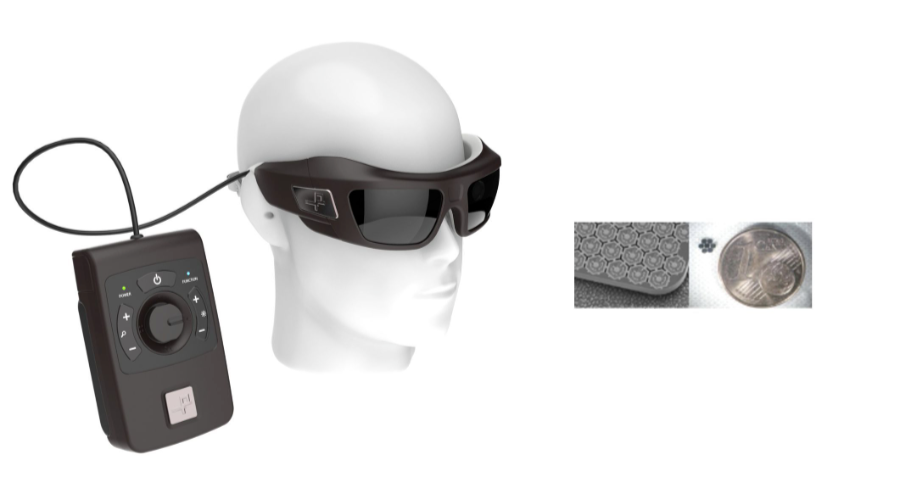
Pixium's PRIMA system features a miniature, wireless, subretinal implant (initially developed at Stanford University) paired with a pocket-sized computer and glasses.
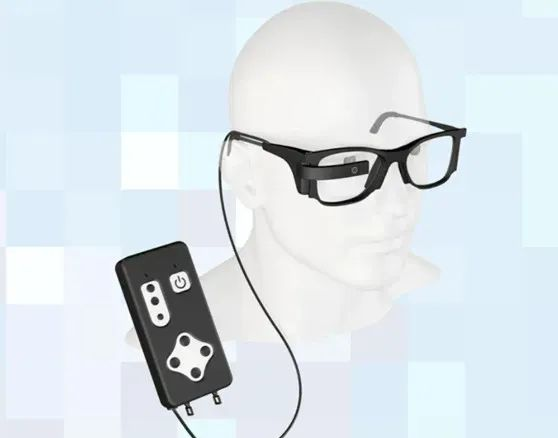
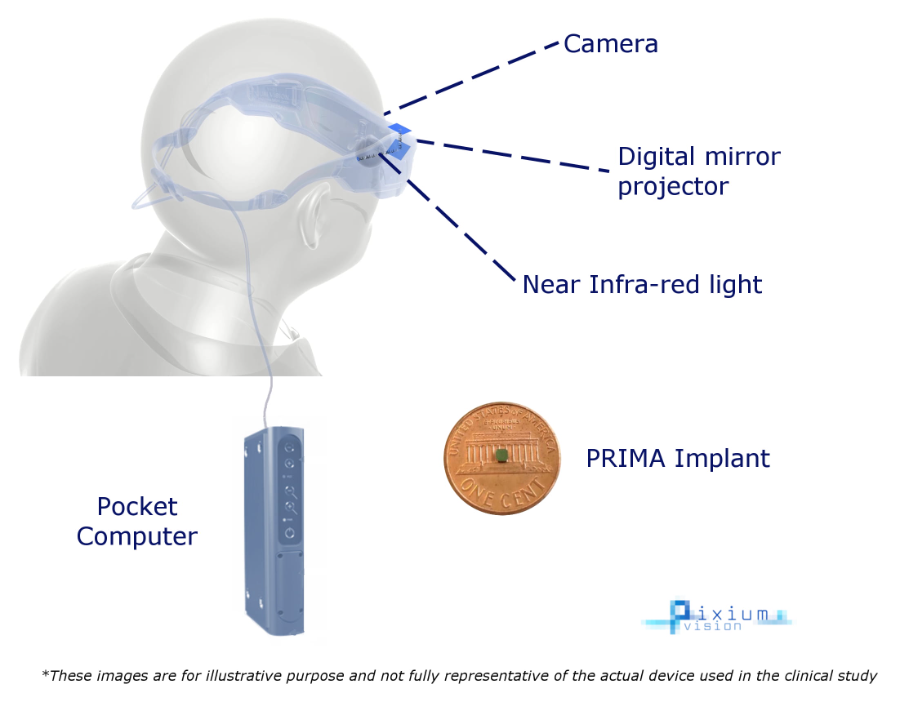
The core of the Prima System lies in its unique design, which includes a miniaturized and fully wireless subretinal Prima implant, a pair of glasses equipped with a camera and digital projector, and a pocket-sized computer with breakthrough algorithms.
These components work together to stimulate nerve cells within the retina through electrical impulses, simulating the normal physiological function of the eye's photoreceptor cells and transmitting visual information to the brain.
The patent rights for this technology were exclusively transferred from Stanford University to Pixium Vision for the development and commercialization of the Prima bionic vision system. However, in October 2023, unable to find a suitable financial investor within a short period, Pixium Vision initiated a bidding process to seek an appropriate buyer for the acquisition of its business.
The components of the Prima System include a wireless retinal implant, glasses equipped with a camera and digital projector, and a pocket-sized processor. These elements work together to achieve a complete process from visual capture, information processing, to visual perception, providing patients with an unprecedented visual experience.
(1) Working Principle:
The Prima system is designed to stimulate the inner retinal nerve cells through electrical stimulation; partially replace the normal physiological function of the eye's photoreceptor cells; and transmit visual information to the brain via the optic nerve.
A miniature camera on glasses captures the visual scene, and a pocket-sized computer with artificial intelligence algorithms processes and simplifies the visual scene to extract useful information.
The images are sent back to the glasses, where a mini digital projector uses near-infrared light pulses to project the processed images through the pupil onto the Prima wireless photovoltaic subretinal implant located beneath the retina at the back of the eye.
Photovoltaic cells convert this optical information into electrical stimulation, activating bipolar nerve cells in the inner retina, which then induce visual perception in the brain.
(II) System Features:
1. Minimally Invasive Design:
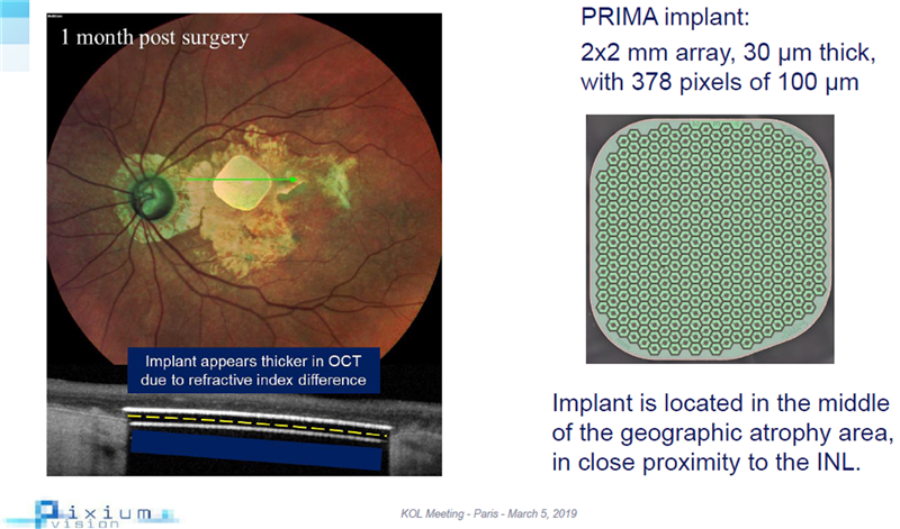
The Prima implant used in the feasibility clinical study measures 2x2 millimeters with a thickness of 30 micrometers (equivalent to one-third the size of a human hair).
This is a miniature passive, fully wireless subretinal implant powered by pulsed near-infrared light from a micro digital projector integrated into glasses worn by the implant recipient.
The small size and wireless design of the Prima system implant allow for minimally invasive surgery, which can be performed under local or general anesthesia.
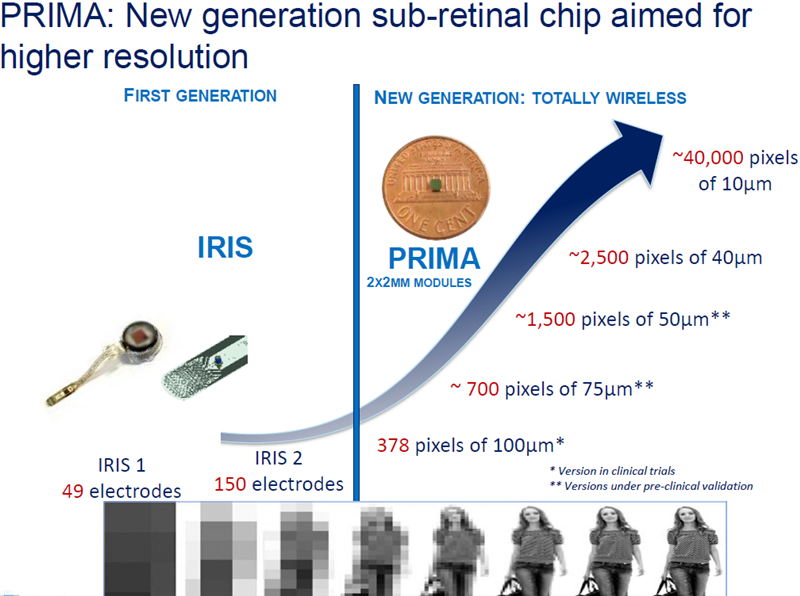
2. High resolution:
The Prima system enhances the resolution of prosthetic artificial vision perception by directly implanting at the level of degenerated photoreceptors. Subretinal implantation utilizes the inner layers of the retina.
The implant also includes378 electrodes, each pixel has its own local electrical return path, designed to provide more targeted electrical stimulation.
Pixium Vision Announces Completion of Implant in a Pivotal European Trial in December 2022, with Two Feasibility Clinical Trials Ongoing in France and the United States.
In March 2023, Pixium Vision's Prima system received FDA Breakthrough Device Designation, and the company plans to submit for European approval in the first half of 2024.
“Science Eye”
A New Era of Vision Restoration through Brain-Computer Interface Begins
In 2021, Max Hodak, the former co-founder of Neuralink, joined forces with a group of like-minded partners to establish Science Corp, a rising star in the brain-computer interface field, and successfully raised a total funding of up to 160 million US dollars, providing solid support for the company's R&D and market expansion.

The first core project of Science Corporation is the much-anticipated Science Eye. Although Science Eye is still in the animal testing phase and has not yet been officially applied to humans, its enormous potential and the wide range of application scenarios it may achieve in the future have already attracted the attention of many investors.
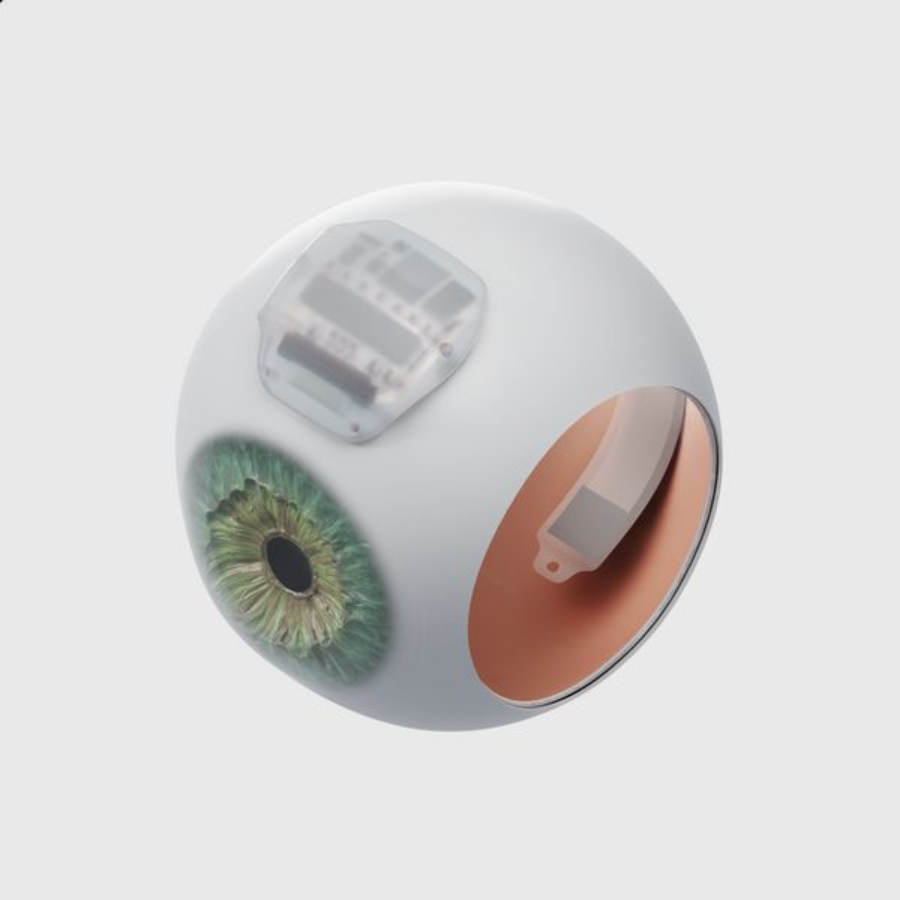
By 2022, Max Hodak and the scientific team's relentless efforts finally yielded interim results. They successfully launched this brain-computer platform — Science Eye, an innovative visual prosthesis. The advent of Science Eye has brought a glimmer of hope to those who have been plunged into darkness due to vision loss, marking a significant breakthrough in brain-computer interface technology within the field of vision restoration.
The Working Principle and Therapy of Science Eye:
The working principle of Science Eye is based on the natural process of the human visual system. First, the retina is responsible for converting light into neural signals, which are then sent to the brain for processing. In this process, photoreceptors play a key role as light-sensitive cells that can absorb light and convert it into information. Once the light is converted into information, it is transmitted through interneurons to the retinal ganglion cells. Finally, these retinal ganglion cells transmit the information to the brain via the optic nerve.
To restore vision in patients who have lost photoreceptor cells, Science Eye adopts two innovative therapies:
Optogenetic Gene Therapy:
This method utilizes a special protein nanoparticle to deliver genes into retinal ganglion (optic nerve) cells. These genes enable the cells to become sensitive to specific wavelengths. Notably, the proteins used in the experiment are not sensitive to normal daylight but only to light emitted by implanted flexible micro-light-emitting diodes.
High-Resolution Display Film:A tiny and flexible high-resolution display film is precisely placed on the retina through surgery. This device can interact with genetically modified ganglion cells, enabling fine control over light.
The combination of these two technologies brings hope of regaining vision to patients who have gone blind due to damage to rod and cone cells. More importantly, the electronic device of Science Eye is compact, similar in size to the widely used glaucoma shunt today. This allows it to be inserted without general anesthesia, and patients will hardly feel its presence.
Installation process is as follows:
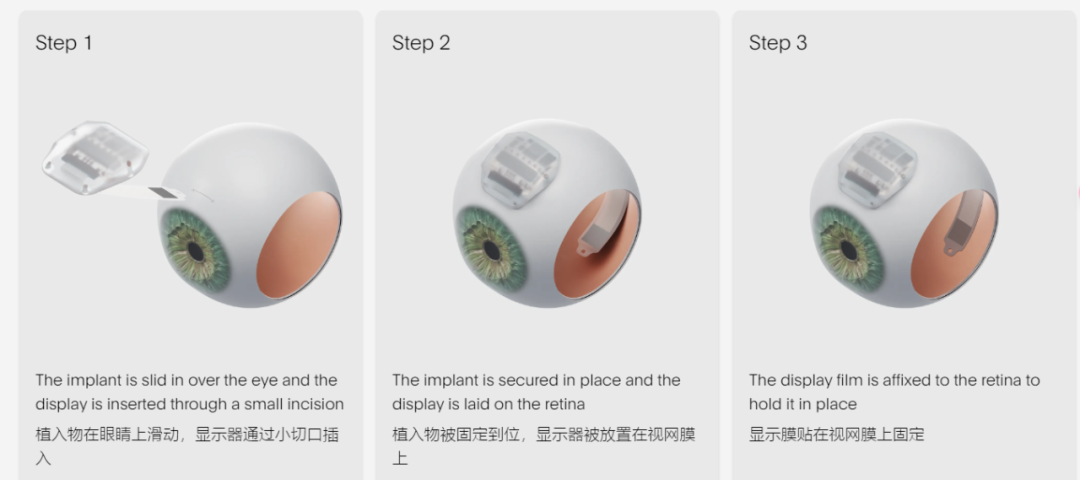
Currently, the experimenters have implanted the Eye of Science into rabbits, but careful observation of tissue imaging is still needed to determine whether gene therapy is effective.
—— End ——
For academic sharing only. If there is any infringement, please leave a message, and it will be deleted immediately!

Click to Submit:Submission Guidelines for Academic News in the Brain-Computer Interface Community
Join the Community
Welcome to join the Brain-Computer Interface Community Exchange Group,
Explore topics in the brain-computer interface field and track the cutting-edge developments in real time.
Add WeChat group:
Add WeChat: RoseBrain [Note: Name + Industry/Major].
Add QQ group: 913607986
Welcome to submit articles
1. Welcome to submit articles. For submission inquiries, please contact WeChat: RoseBrain
Click to Submit:Submission Guidelines for Academic News in the Brain-Computer Interface Community
2. To join the community as a part-time creator, please contact WeChat: RoseBrain