Sanofi and AstraZeneca Discontinue Multiple Early-Stage Pipeline Programs Following Q1 2024 Financial Reports

AstraZeneca
Biopharmaceutical Manufacturer

Sanofi
Pharmaceutical R&D Developer

On April 25 (recently), Sanofi and AstraZeneca each cut different numbers of early/mid-stage pipelines in their Q1 2024 earnings reports. This article will provide a brief analysis of the targets of these cut pipelines, hoping that the incomplete interpretation of these unclear targets will contribute to their future development.
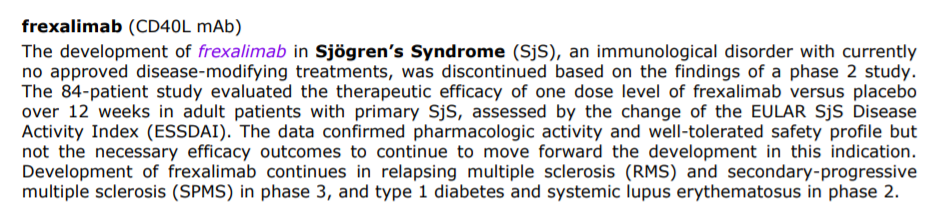
CD40L Antibody One Indication Suspended
After years of silence in the oncology field, the development of the CD40L antibody Frexalimab in the autoimmune space has shown promise at Sanofi. Its impressive data in multiple sclerosis has made Frexalimab a focal point in this area.
This time, the abandonment of one indication does not have a significant impact on Sanofi. It is just that the track for Sjögren's syndrome has been given up. Considering that the pathogenesis of Sjögren's syndrome itself is still unclear as an autoimmune disease. If the CD40L antibody succeeds, it might bring high returns due to the large number of patients with this disease; if it fails, it won't result in huge losses. Therefore, its abandonment is somewhat expected.
Ineffective Venglustat
Venglustat was designed to address specific types of glycolipid metabolic disorders by inhibiting glucosylceramide synthase (GCS) to reduce the accumulation of harmful sphingolipids in the body.
The cause of GM2 gangliosidosis is the deficiency of β-hexosaminidase (Hex) in lysosomes, leading to the ineffective degradation of GM2 gangliosides.
Therefore, even if the accumulation of harmful sphingolipids in the body is blocked, it still addresses the symptoms rather than the root cause. It can indeed be foreseen that the treatment will lack efficacy.

The Veto of RIPK1 Inhibitors in the ALS Field

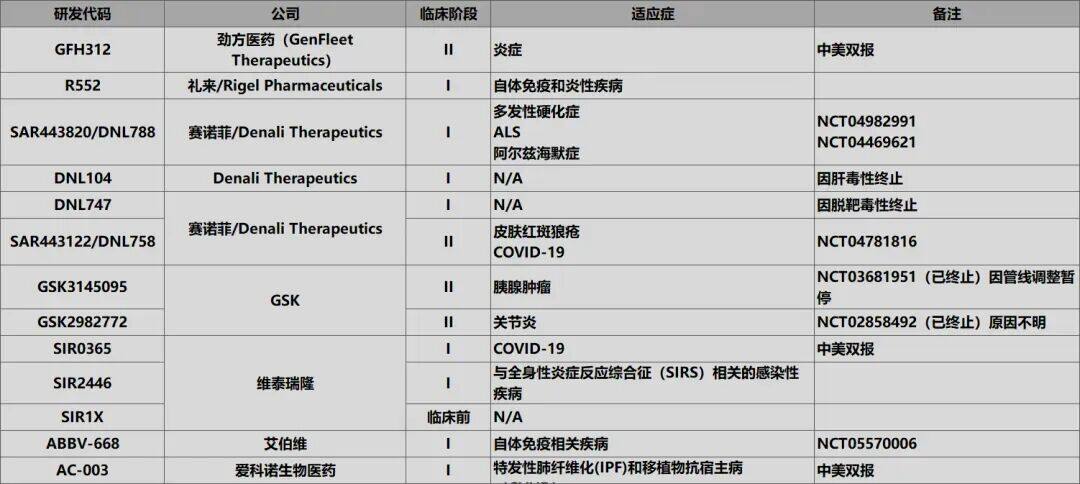
As a widely used cell apoptosis pathway, the development of RIPK1 inhibitors varies greatly. However, there have been notable failures in earlier developments, with both DNL747 and DNL104 being terminated due to toxicity issues.
Sanofi has chosen two paths in the iterative development of Denali's RIPK1 inhibitors: one in the autoimmune track and the other in neurodegenerative diseases. However, regardless of the development approach, both represent entirely new directions for RIPK1 inhibitors.
This failure in the ALS direction also serves as a warning to those who follow in this track.
MEDI6570 That Has Been Optimized Out
MEDI6570 is a LOX-1-targeting monoclonal antibody designed to block multiple ligands of the LOX-1 receptor, with its current indication being myocardial infarction. The LOX-1 pathway represents one of the additional cardiovascular therapeutic targets beyond PCSK9; however, this project, which has been pushed into Phase II clinical trials, has evidently undergone optimization.
From a mechanistic perspective, lectin-like oxidized low-density lipoprotein receptor 1 (LOX-1), as a scavenger receptor, can bind to various known pro-atherosclerotic ligands, including oxidized low-density lipoprotein, dysfunctional high-density lipoprotein, C-reactive protein, advanced glycation end products, activated platelets, and apoptotic cells.
Blockade of binding is considered to potentially prevent the formation of atherosclerotic plaques in coronary arteries and reduce inflammation within blood vessels.
But a very realistic problem was also demonstrated in the literature of the MEDI6570 study: although the soluble LOX-1 level decreased, aside from the non-significant regression correlation between MEDI6570 and non-calcified plaque volume, they were even unable to quantify vascular inflammatory markers.
At that time, the researchers used a new method to measure vascular inflammation, namely, perivascular FAI from CTA scans. Compared with CTA-derived plaque measurements, FAI was considered a more specific marker of vascular inflammation and a predictor of cardiovascular mortality. However, in the population of Phase I type 2 diabetes patients, nearly all patients had baseline FAI measurements within the normal range, making it impossible to evaluate the effect of MEDI6570 on coronary vessel-specific inflammation. Further research is needed to investigate whether the reduction in serum sLOX-1 levels will have downstream effects on coronary vascular inflammation and plaque volume.
Considering the actual effectiveness of clinical data is very limited, it is reasonable to cut the pipeline.
AZD7503: Or is the "brother pipeline" doing too well?
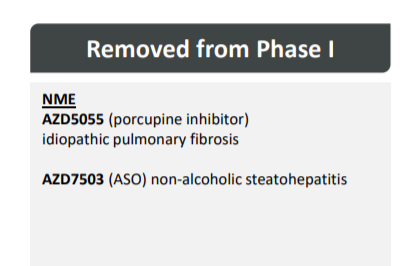
Another drug that AstraZeneca has cut is AZD7503 (ION455), a Ligand-Conjugated Antisense Oligonucleotide (LICA) drug obtained from Ionis. It aims to inhibit the production of 17β-Hydroxysteroid Dehydrogenase 13 (HSD17B13) protein, with the indication being Nonalcoholic Steatohepatitis (NASH).
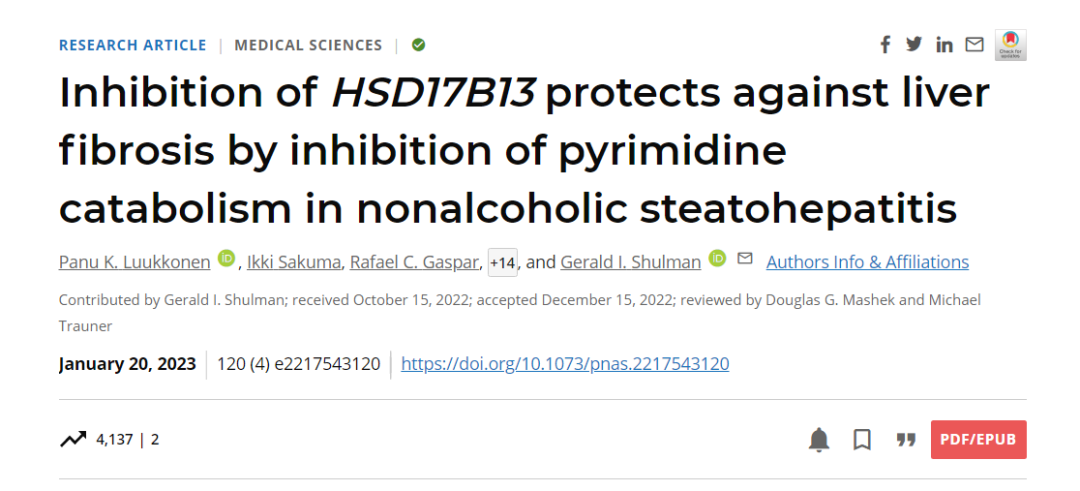
Previously, a research team from the University of Helsinki and Yale University discovered that inhibiting HSD17B13 could prevent liver fibrosis by suppressing pyrimidine catabolism in patients with non-alcoholic steatohepatitis (NASH). In mouse models, they used two types of AAVs for generating shRNA—AAV8-GFP-U6-m-HSD17B13-shRNA and AAV8-GFP-U6-scrmb-shRNA (control group)—to achieve comparative effects.
However, the early clinical project AZD7503 was abandoned early on...possibly because ION224, another "sibling pipeline" licensed to AstraZeneca by Ionis, also performed exceptionally well in non-alcoholic steatohepatitis (NASH):
Last month, the Phase II study of ION224 for Metabolic Dysfunction-Associated Steatohepatitis (MASH) met its primary endpoint, achieving histological improvement in the liver at both 120mg and 90mg doses.
Considering this situation, AstraZeneca and Ionis might have decided, after weighing the options, that it was unnecessary to invest excessive resources into AZD7503, which has yet to produce definitive results?
AZD5055
AZD5055 (RXC006), a product of the $370 million deal between Redx and AstraZeneca in August 2020, is now considered returned by AstraZeneca. The drug's mechanism targets porcupine (a component enzyme of the Wnt pathway, which is often associated with injury repair) for the treatment of fibrotic diseases.
The issue with this pipeline can be seen from a recent publication.
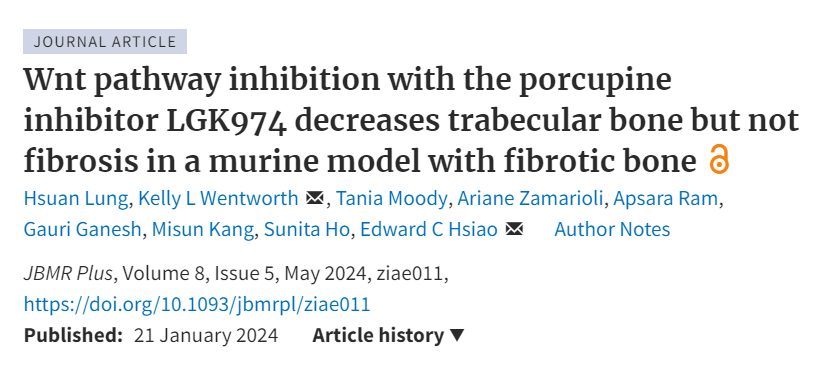
In the study, another porcupine inhibitor, LGK974, induced significant bone loss in control mice. Inhibition of the Wnt pathway reduced trabecular bone in a fibrotic bone mouse model but did not improve fibrosis.
It is unknown whether a similar situation occurs in pulmonary fibrosis.
But at least, the issue that porcupine inhibitors cause bone loss is quite fatal...
Overall, the elimination of these early pipelines may serve as a warning to companies involved in subsequent related pipelines, and it is worth careful consideration before establishing such pipelines.
Reference Source:
1.Manfrè V, Chatzis LG, Cafaro G, Fonzetti S, Calvacchi S, Fulvio G, Navarro Garcia IC, La Rocca G, Ferro F, Perricone C, Bartoloni E, Baldini C. Sjögren's syndrome: one year in review 2022. Clin Exp Rheumatol. 2022 Dec;40(12):2211-2224. doi: 10.55563/clinexprheumatol/43z8gu. Epub 2022 Dec 20.
2.Luukkonen PK, Sakuma I, Gaspar RC, Mooring M, Nasiri A, Kahn M, Zhang XM, Zhang D, Sammalkorpi H, Penttilä AK, Orho-Melander M, Arola J, Juuti A, Zhang X, Yimlamai D, Yki-Järvinen H, Petersen KF, Shulman GI. Inhibition of HSD17B13 protects against liver fibrosis by inhibition of pyrimidine catabolism in nonalcoholic steatohepatitis. Proc Natl Acad Sci U S A. 2023 Jan 24;120(4):e2217543120. doi: 10.1073/pnas.2217543120. Epub 2023 Jan 20.
3.Vavere AL, Sinsakul M, Ongstad EL, Yang Y, Varma V, Jones C, Goodman J, Dubois VFS, Quartino AL, Karathanasis SK, Abuhatzira L, Collén A, Antoniades C, Koren MJ, Gupta R, George RT. Lectin-Like Oxidized Low-Density Lipoprotein Receptor 1 Inhibition in Type 2 Diabetes: Phase 1 Results. J Am Heart Assoc. 2023 Feb 7;12(3):e027540. doi: 10.1161/JAHA.122.027540. Epub 2023 Jan 23. Erratum in: J Am Heart Assoc. 2023 Mar 21;12(6):e027644.
4.https://www.ionispharma.com/medicines/ion455/
5.https://www.redxpharma.com/wp-content/uploads/2018/12/Redx-signs-out-licensing-agreement-with-AstraZeneca.pdf
6.http://www.firstwordPharma.com/node/1604627#axzz5WvWo4v35