

$3 Billion Gene Editing Collaboration Collapses as Moderna Terminates Deal with Metagenomi

Metagenomi
Gene Technology Researcher
Recently, Moderna terminated its previous gene-editing collaboration agreement with Metagenomi, returning all rights to the Primary Hyperoxaluria Type 1 (PH1) project and gene-editing technology to Metagenomi.Affected by this news, Metagenomi's stock price fell nearly 20%.。
In 2021, Moderna and Metagenomi entered into a strategic R&D collaboration aimed at leveraging Metagenomi's CRISPR gene-editing tools and Moderna’s mRNA platform along with lipid nanoparticle (LNP) delivery technology to develop in vivo gene-editing therapies. At that time, the specific financial details of the deal were not disclosed.
But according to the documents submitted by Metagenomi to the U.S. Securities and Exchange Commission (SEC),Moderna prepaid $700 million in equity and cash, and Metagenomi could potentially earn nearly $3 billion (approximately 21.64 billion RMB) from this agreement.1As of December 31, 2023, Metagenomi has received $49.6 million through this collaboration.
Metagenomi is a biotechnology company that mines new editing tools through metagenomics. It was co-founded in 2018 by Brian Thomas and Jillian Banfield, metagenomics researchers at the University of California, Berkeley.
With its excellent R&D team and technical accumulation, Metagenomi has created a diversified gene editing toolbox, including the CRISPR gene editing system, ultra-compact base editing system, RNA-guided integration system (RIGS)/CRISPR-associated transposase (CAST) system, etc. Based on this, Metagenomi has developed multiple product pipelines to create in vivo gene editing therapeutics for indications such as Hemophilia A, Primary Hyperoxaluria Type 1 (PH1), and Transthyretin Amyloidosis (TTR).
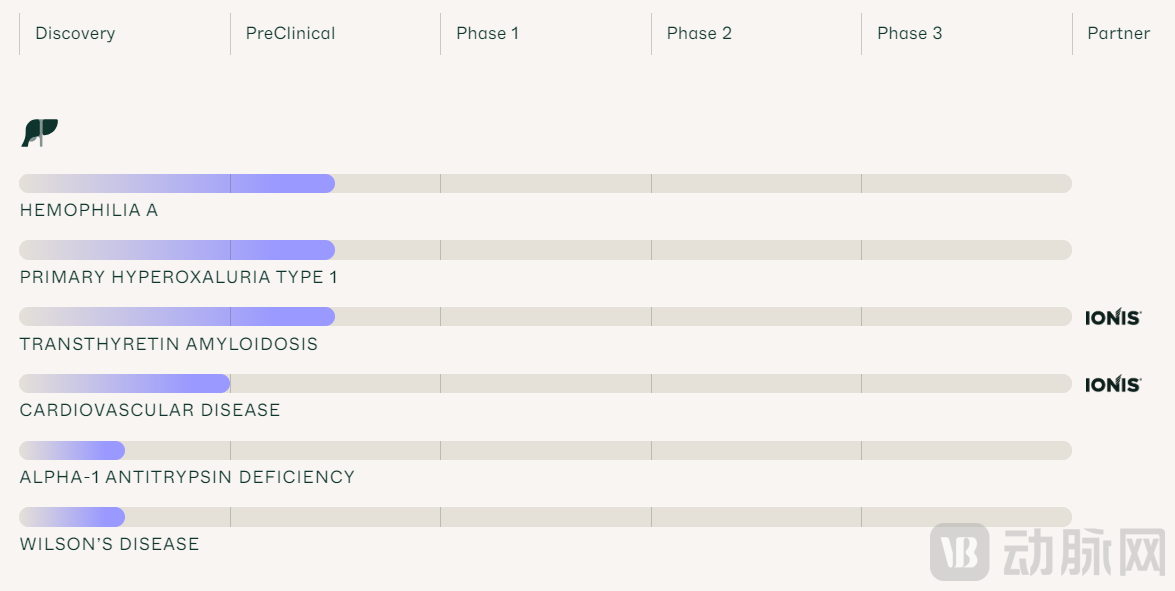 Metagenomi’s Partial R&D Pipeline Source: Metagenomi Official Website
Based on the aforementioned gene-editing tools and ongoing pipeline, Metagenomi has garnered support from numerous high-profile investors and companies.Completed 7 rounds of financing totaling $457 million in 5 years, with investors including Moderna, Bayer, Novo Holdings, etc.In addition, Metagenomi has established partnerships with biotechnology companies including Moderna, Ionis Pharmaceuticals, and Affini-T Therapeutics to jointly develop innovative therapies.
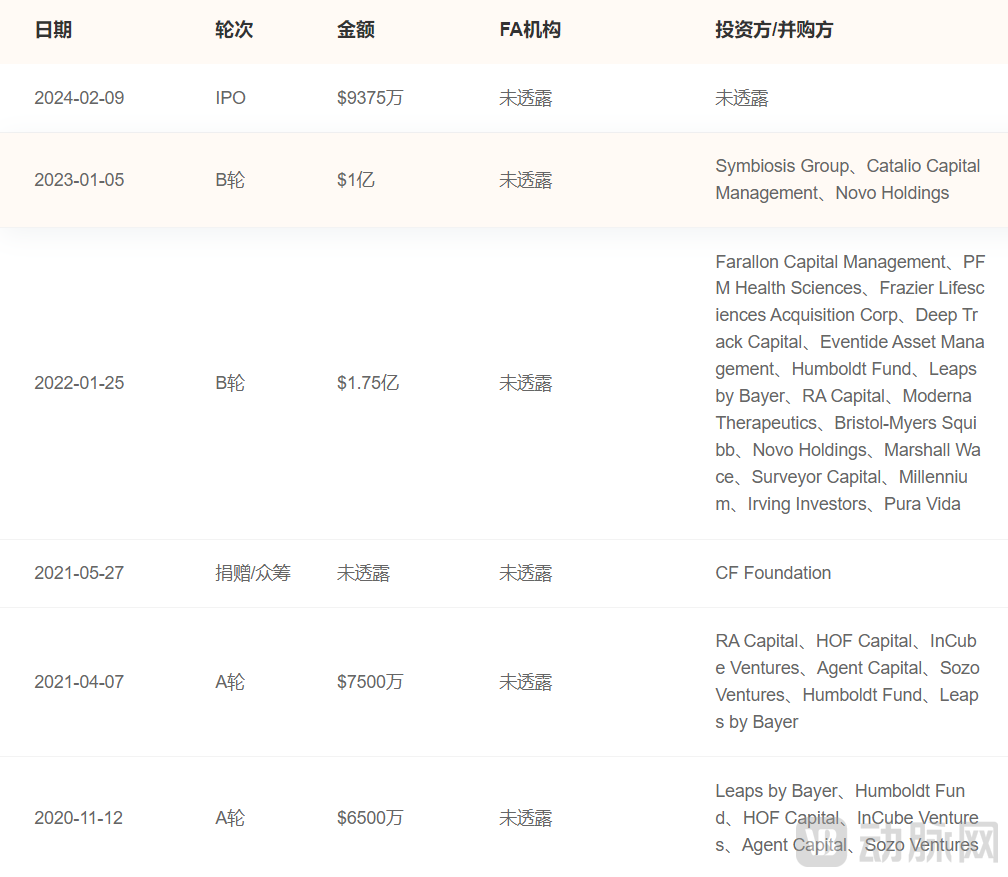 Metagenomi Financing History Source: VCBeat
On February 9, 2024, Metagenomi successfully went public on Nasdaq with an offering price of $15 per share, raising nearly $94 million.Unlike other biotech companies that had already completed their IPOs at the time, Metagenomi did not have any drug candidates enter the clinical trial stage., in terms of R&D speed, the company is far behind companies like Intellia and Verve that are developing in vivo gene editing therapies.
Precisely because of this,Metagenomi Did Not Gain Market Recognition, Stock Price Plunged 31% on the First Day of Trading, Market Value Dropped to $390 Million. In the following months, the stock price of Metagenomi steadily declined and is currently worth about one-third of its offering price.
The poor performance in the capital market and the slow progress of the R&D pipeline have expedited the termination of the collaboration between Moderna and Metagenomi.
Facing the termination of this cooperation, Chief Medical Officer of Metagenomi, Sarah Noonberg, stated, "There were no data issues in PH1 work that led to the termination of the collaboration; on the contrary, we demonstrated very strong preclinical proof of concept. The decision to terminate the collaboration was the result of Moderna's 'strategic priorities.'”2。
As the "King of Biotech IPOs," Moderna once brought thousands of times the return on investment to its major investor Flagship, and its successful development also brought infinite glory to Flagship. Moderna was founded in 2010, began formal operations in 2011, and was listed on the NASDAQ in the United States in 2018, with its market value breaking through the 100 billion US dollar mark. Importantly, since 2020, Moderna has gained tremendous attention by developing an mRNA COVID-19 vaccine and leveraging its mRNA technology platform, earning it a place among the world's three mRNA giants alongside BioNTech and CureVac.
Thus, with the abundant cash brought in by the sales of its mRNA COVID-19 vaccine, Moderna began investing in the then-emerging field of gene editing three years ago. To this end, Moderna created a new division named Moderna Genomics and subsequently reached cooperation agreements with companies such as Metagenomi and Life Edit Therapeutics to develop gene-editing tools and related drugs.
However, with the sharp decline in mRNA COVID-19 vaccine sales, Moderna's performance has been significantly impacted. According to Moderna's Q1 2024 financial report,As of March 31, 2024, the company's total revenue was $167 million, with a net loss of $1.2 billion, a significant decrease from $1.9 billion in the same period in 2023; compared to the first quarter of 2023, net product sales plummeted by 91%.。
This is not the first decline in Moderna's performance; its financial report for 2023 shows,Full-year revenue for 2023 was $6.848 billion, a year-on-year decrease of 64.45%; net profit was -$4.714 billion, a year-on-year decrease of 156.37%.Moderna's total market value in 2023 was approximately $33.97 billion, far lower than last year's market value of over $56 billion.
A sharp decline in revenue has forced Moderna to quickly find new points of business growth, for this reason,Moderna has developed a strategic plan, setting its sights on a series of new mRNA technology vaccines targeting respiratory, oncology, and infectious disease areas.。
From the pipeline perspective, Moderna, relying on mRNA technology, has laid out 48 products under research, with multiple candidate drugs entering the clinical trial stage. Among them, the RSV vaccine mRNA-1345 achieved two primary efficacy endpoints in Phase 3 clinical trials, and it is expected that the FDA will make an approval decision in April this year. Additionally, the company is collaborating with Merck to develop the mRNA-4157 cancer vaccine. Moderna previously announced positive results from the Phase 2b study of this therapy combined with Keytruda (K药) for melanoma treatment, and this year, the two companies will initiate clinical studies for other types of tumors.
In addition, Moderna is continuously increasing its foreign investment: In January 2023, it acquired Japanese biotechnology company OriCiro Genomics for $85 million; in February 2023, it signed a strategic collaboration and licensing agreement with Life Edit to develop in vivo mRNA gene-editing therapies; in May 2023, it established a subsidiary in Shanghai, China; in July 2023, it signed a strategic cooperation agreement with the Shanghai Municipal Commission of Economy and Informatization and the Minhang District Government in Shanghai...
However, Moderna's "rescue measures" failed to successfully pull it out of a difficult transition period, and instead, it gradually fell into a phase of confusion. Despite Moderna advancing numerous innovative pipelines, clinical data and effects from some pipelines fell below market expectations. Additionally, its investments and collaborations in various fields have not been particularly outstanding, and so far, no blockbuster products have emerged.
Can Moderna break through the difficulties and find new growth points in performance in the future? Let's wait and see!
References:
1. https://www.sec.gov/Archives/edgar/data/1785279/000095017024036838/mgx-10k-20231231.htm
2. https://www.biopharmadive.com/news/moderna-metagenomi-terminate-end-gene-editing-alliance/714981/