

ROS1-Positive Lung Cancer Market Heats Up: Chia Tai Tianqing Enters the Arena, Disrupting Pfizer and Roche's Duopoly

CHIATAI TIANQING
High-quality pharmaceuticals research, production, and sales provider

Sino Biopharm
Pharmaceutical R&D Developer

Roche
Oncology Drug Research, Development, and Manufacturing

Pfizer
Pharmaceutical R&D Developer

Novartis
Drug Development and Manufacturing
New Disruptor Emerges in the ROS1-Positive Non-Small Cell Lung Cancer (NSCLC) Field.
Recently, Sino Biopharmaceutical Co., Ltd. announced that CHIATAI TIANQING, a subsidiary company, had independently developedClass 1 innovative drug Anecortene (TQ-B3101/Unecritinib) has been approved for marketing by the National Medical Products Administration (NMPA), becoming the first domestically produced targeted drug approved for use in adult patients with ROS1-positive locally advanced or metastatic NSCLC.
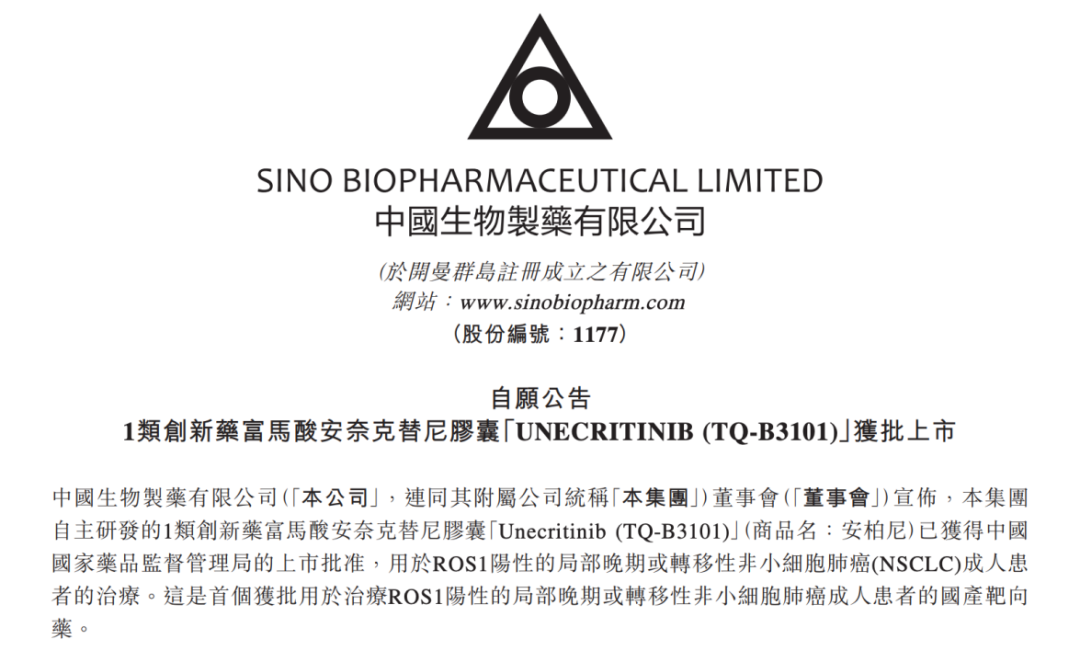
The field of lung cancer has always been a battleground for pharmaceutical companies. Anakitinib, developed by CHIATAI TIANQING, is a small-molecule tyrosine kinase inhibitor targeting ROS1/ALK/c-Met. It can selectively inhibit the in vitro proliferation of ROS1-positive, ALK-positive, and c-Met tumor cells, induce cell cycle arrest at the G1 phase, and trigger apoptosis, ultimately exerting effective anti-tumor effects and improving the survival prognosis of patients with NSCLC.
In recent years, many local pharmaceutical companies have seized the golden opportunity of favorable policies to rise strongly, continuously accelerating the pace of new drug launches. At present, innovative drug companies that have undergone trials and accumulation have demonstrated strong resilience. Leveraging this, they have navigated through the downturn to find an upward channel, completing self-evolution while bringing more truly groundbreaking innovative drugs to a wide range of Chinese patients. Pioneering companies such as CHIATAI TIANQING and Qilu Pharmaceutical are utilizing their core technological advantages and lean manufacturing experience accumulated over the years to compete alongside multinational giants like Pfizer and Novartis on popular tracks.
CHIATAI TIANQING Secures Market Entry Ticket
Change in the Dual-Oligopoly Pattern of ROS1+ Lung Cancer
ROS1 (c-ros Oncogene 1 Kinase) is a coding gene for receptor tyrosine kinase, first discovered in 1987 in glioblastoma tumor cell lines, and ROS1 fusions were first identified in NSCLC patient samples and cell lines in 2007, with a positivity rate of 1%-2%. Data shows that the incidence of ROS1 fusion-positive NSCLC in China is approximately 2%-3%, making it a rare target. However, due to the large number of new lung cancer patients in China each year, this population cannot be overlooked.
It is worth mentioning that ROS1 and ALK are known as the two major "diamond" mutations. They are highly homologous, with a similarity of up to 77% in the ATP-binding region sequence, and most of the differences occur in conserved regions. This may explain why the majority of ALK inhibitors can simultaneously suppress the proliferation of ROS1-positive cell lines and are effective in ROS1-positive lung cancer patients. Since the discovery and development of ALK preceded that of ROS1, most related marketed drugs were initially used in clinical practice as ALK inhibitors, and their efficacy against ROS1-mutated tumors was only gradually discovered during the development process.
However, as a driver gene for lung cancer, ROS1 has been confirmed to be a highly promising therapeutic target for NSCLC. But prior to the recent approval and market launch of CHIATAI TIANQING’s Anakitinib, the only drugs approved in China for treating ROS1 gene rearrangements were Pfizer's Crizotinib and Roche's Entrectinib.
Crizotinib, a multi-target protein kinase inhibitor developed by Pfizer that competitively inhibits ATP for Met/ALK/ROS, was first approved by the U.S. FDA for the treatment of ALK-positive advanced/metastatic NSCLC and ROS1-positive advanced/metastatic NSCLC. It received EMA approval in 2012 and gained NMPA special approval in China in 2013. According to data from the MiNe Network, the sales revenue of crizotinib in Chinese public medical institutions exceeded 1 billion yuan in 2020.
Entrectinib, a small-molecule inhibitor targeting ROS1/ALK/Trk developed by Roche, was first approved for marketing in Japan in June 2019 for the treatment of patients with advanced or recurrent solid tumors positive for NTRK gene fusion. In August 2019, entrectinib was approved in the United States for the treatment of adult patients with ROS1-positive metastatic NSCLC. Roche's 2022 financial report showed that the annual sales of entrectinib reached 75 million Swiss francs (approximately 528 million yuan).
In July 2022, Entrectinib was approved for marketing in China, and in August of the same year, it received its second indication in China for the treatment of adult patients with ROS1-positive metastatic NSCLC. In the National Reimbursement Drug List updated in December 2023, both indications of Entrectinib were included, achieving rapid market penetration.
Although the efficacy of the two aforementioned drugs is well-established, most patients will develop resistance after a period of treatment. The recent approval and market launch of CHIATAI TIANQING's Anakexinib is expected to break the current treatment bottleneck for ROS1-positive advanced NSCLC, helping patients achieve long-term survival.
Since entering the clinical stage in July 2017, the research results of Anacetinib have been successively accepted and published by various international conferences or journals. The indication for which Chia Tai Tianqing is now applying for marketing authorization is based on a Phase II single-arm, multi-center clinical study evaluating the efficacy and safety of Anacetinib monotherapy in ROS1-positive NSCLC subjects. The study results showed that among 111 patients, the objective response rate (ORR) assessed by the Independent Review Committee (IRC) reached 81.08%, with a median duration of response (DOR) reaching 20.3 months.
Currently, there are still many challenges in the field of ROS1-positive NSCLC, but every breakthrough represents a new starting point for practice and exploration. Statistics show that by 2024, the number of newly diagnosed NSCLC cases in China will reach 884,000, and the drug market size will reach 82.24 billion yuan. This also implies that not only CHIATAI TIANQING's Anacitinib but also other pharmaceutical companies’ products under development will have significant market potential.
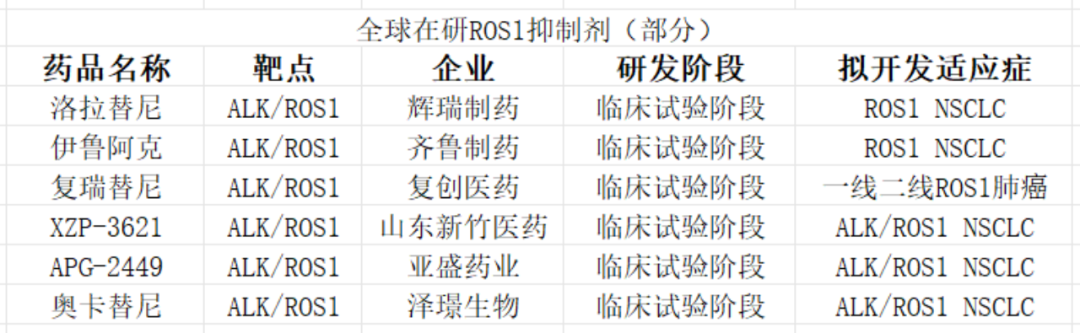
It is reported that Irulacta, which is under research by Qilu Pharmaceutical, is also a highly selective ALK-ROS1 inhibitor. Its marketing application was submitted to the NMPA in July 2021 for the treatment of NSCLC with ALK mutations. The Phase II clinical study targeting ROS1-positive NSCLC is still ongoing but has already achieved positive results. In addition, other related targeted drugs under development, such as Furostainib from Fochon Pharmaceuticals, XZP-3621 from Xinzhu Pharma, APG-2449 from Ascentage Pharma, and Okatinib from Zelgen Biopharmaceuticals, are mostly in the early clinical stages, with indications generally focused on ROS1/ALK-positive NSCLC.
c-Met Inhibitor Blockade
Major pharmaceutical companies are placing their bets
CHIATAI TIANQING's Anakitinib focuses on another noteworthy target, the mesenchymal-epithelial transition factor (c-Met).
c-Met is a transmembrane receptor with autonomous phosphorylation activity encoded by the MET gene. It belongs to the receptor tyrosine kinase superfamily and its ligand is hepatocyte growth factor. When c-Met is abnormally activated, such as through MET exon 14 skipping mutations, MET amplification, or MET protein overexpression, it may initiate the transformation of normal cells into tumor cells, promoting the proliferation, invasion, and metastasis of tumor cells.
Studies have confirmed that abnormal activation of the MET pathway occurs in many solid tumors, including brain cancer, breast cancer, colorectal cancer, gastric cancer, head and neck cancer, lung cancer, liver cancer, skin cancer, prostate cancer, and soft tissue cancer, among others. Currently, the mainstream development strategies targeting the c-Met pathway mainly include two categories: small-molecule TKIs (tyrosine kinase inhibitors) targeting the MET gene and large-molecule drugs.
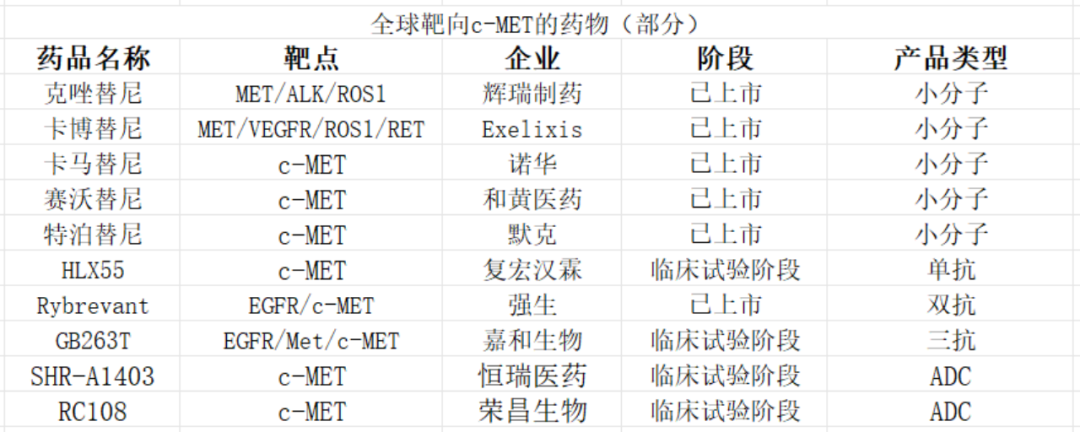
Among them, the already marketed small-molecule c-Met-TKIs can be divided into multi-kinase MET inhibitors and selective MET inhibitors. The former include Pfizer's Crizotinib and Exelixis' Cabozantinib, while the latter include Merck's Tepotinib, Hutchmed's Savolitinib, and Novartis' Capmatinib, among others. In terms of large-molecule drugs, Johnson & Johnson's EGFR×c-Met bispecific antibody drug Rybrevant was approved for marketing by the U.S. FDA in 2021. Henlius is deeply engaged in c-Met monoclonal antibodies, Genor Biopharma is betting on EGFR×cMet×cMet trispecific antibody drugs, and RemeGen and Hengrui Medicine’s ADC drugs targeting c-Met have entered the clinical stage.
In May 2020, the U.S. FDA approved Novartis' capmatinib for marketing, intended for NSCLC patients with MET exon 14 skipping mutations (MET exon14 mutations). This is also the first c-Met inhibitor to be approved for marketing by the U.S. FDA. According to Novartis’ annual report, capmatinib achieved sales of $130 million in 2022. Some analysts predict that the drug’s peak sales will exceed $1 billion. Currently, capmatinib has been included in the second batch of the directory for urgently needed imported drugs and medical devices from Hong Kong and Macao in mainland cities within the Guangdong-Hong Kong-Macao Greater Bay Area.
The clinical strength of China-produced c-Met small molecule inhibitors is no less impressive. Savolitinib, as an orally administered highly selective small molecule c-Met inhibitor, was initially developed by Hutchmed. In 2011, Hutchmed entered into a global licensing agreement with AstraZeneca to co-develop the drug and promote its commercialization. In June 2021, Savolitinib received conditional approval in China for the treatment of adult patients with locally advanced or metastatic NSCLC with MET exon 14 skipping mutations who have progressed or are intolerant to standard platinum-based chemotherapy. This March, the new indication application for Savolitinib was accepted by the CDE, intended for treating first-line and second-line MET exon 14 skipping mutation NSCLC patients.
In 2023, the sales of Savolitinib in China reached 46.1 million US dollars. In the 2023 financial report, Hutchmed also reported new progress in three other Phase III studies of Savolitinib. Relevant research data shows that about 30% of patients who develop resistance to the third-generation EGFR-TKI Osimertinib experience MET amplification, and the addition of Savolitinib to the treatment can reverse Osimertinib resistance. In the industry's view, this is clearly able to effectively increase the future sales peak of Savolitinib.
It is generally believed in the industry that although the sub-markets related to lung cancer are rising, the competitive atmosphere is also becoming increasingly fierce. Whether it is products under research or new players entering later, only by achieving differentiated innovation and focusing on overcoming drug resistance mutations, selectivity specificity, blood-brain barrier penetration, and low toxicity, can they successfully break through in this field. Who will stand out? The market waits with bated breath.




www.yyjjb.com.cn
Insight into Industry Trends

"Pharmaceutical Economy Herald"
Academic Official Account
Focusing on the Frontiers of Oncology Academia

Terminal Official Account