Biopharmaceutical and Nutritional Product R&D and Sales

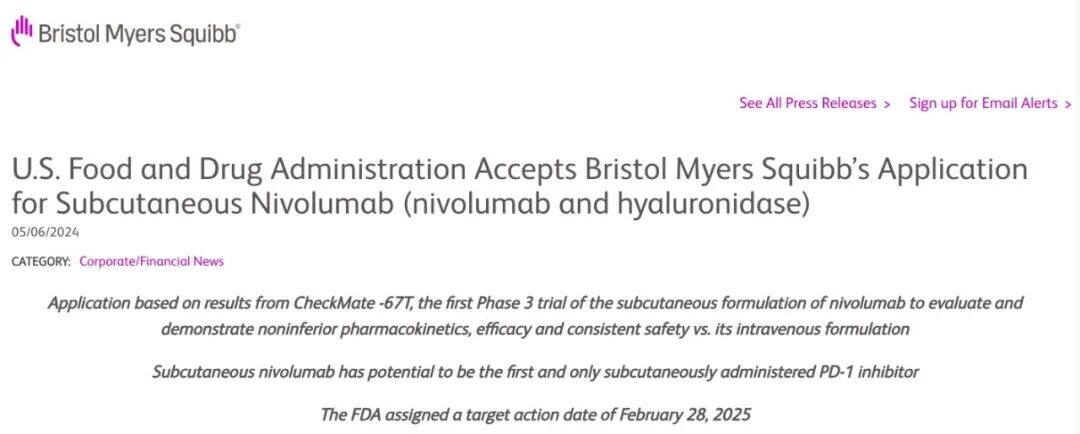
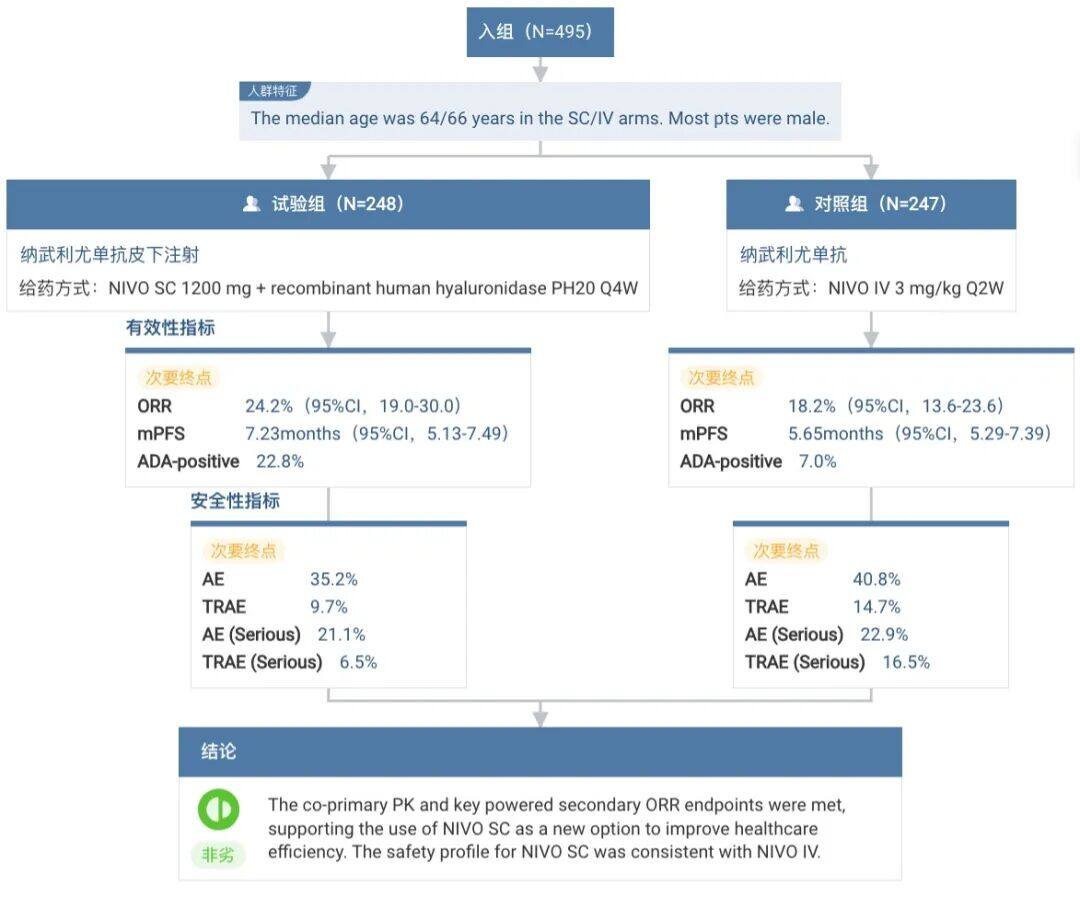
On May 6, BMS announcedO Subcutaneous Injection FormulationDoseBiologics License Application (BLA) Accepted by FDA,For all previously approved solid tumor indications of Opdivo,Including monotherapy, maintenance monotherapy after combination with ipilimumab, and use in combination with chemotherapy or cabozantinib.The PDUFA date is February 28, 2025. Source: BMS Official Website O Subcutaneous Injection Formulation Composed of Nivolumab and Halozyme's Proprietary Recombinant Human Hyaluronidase PH20 (rHuPH20). This marketing application is primarily based on Phase III clinical trials.CheckMate-67T Research data, the study aims to evaluate the efficacy of O-medicine subcutaneous injection compared with intravenous infusion in patients with advanced or metastatic clear cell renal cell carcinoma (ccRCC) who have previously received systemic therapy. The study enrolled a total of 495 subjects, and the results showed that, compared with intravenous infusion, the subcutaneous injection formulation demonstrated non-inferiority in terms of the average serum concentration over 28 days (Cavgd28) and the steady-state serum trough concentration (Cminss), achieving the co-primary endpoints. For the key secondary endpoint, subcutaneous injection of O medicine showed similar ORR compared to intravenous injection, with an ORR of 24.2% in the subcutaneous injection group and 18.2% in the intravenous infusion group. In terms of safety, there was no significant difference between subcutaneous injection and intravenous infusion. CheckMate-67T Study ResultsSource: Insight Database Web Version Compared with intravenous injection, subcutaneous injection formulations have unique compliance advantages, offering faster administration and high convenience, which can significantly reduce the administration time from several hours to just minutes. Since 2015, major multinational corporations (MNCs) have invested in the research and development of PD-(L)1 subcutaneous injections, especially companies that already have products targeting the same point on the market. Companies involved in this field include Bristol-Myers Squibb, Merck, Roche, etc. The world's first approved PD-L1 monoclonal antibody subcutaneous formulation is Envonli monoclonal antibody from Alphamab Oncology/3D Medicines/Simcere Pharmaceutical. However, in the overseas market, RocheAtezolizumab (SC)Approved for marketing in the UK in August last year and received EU approval in January this year; in the United States, the launch will be delayed until this year due to the need for updates in the production process. This submission for the approval of O Drug is expected to become the first subcutaneous formulation of PD-1 monoclonal antibody to be approved for marketing. Merck & Co.K DrugThe subcutaneous injection formulation has entered Phase III clinical trials. The Phase III MK-3475-A86 trial, which aims to evaluate the combination of subcutaneous administration with chemotherapy compared to intravenous administration with chemotherapy as a first-line treatment for both squamous and non-squamous NSCLC, has completed its primary endpoint last month. Meanwhile, Merck has also developed a compound subcutaneous injection formulation of Keytruda (K drug) + hyaluronidase. MK-3475A, the Phase III MK-3475A-D77 clinical trial for first-line treatment of NSCLC is currently underway and is expected to complete its primary endpoint in September this year. Sasanlimab, developed by Pfizer, is currently in Phase III trials for non-muscle-invasive bladder cancer, with primary endpoints expected to be completed in June this year. Chinese EnterprisesIn China, BeiGene, Hengrui, and Junshi are all making moves. The fastest progress isJunshi JS001sc, which is developed based on the already marketed product, Toripalimab Injection., which just registered and launched a Phase III clinical trial at the end of last month for first-line treatment of non-squamous NSCLC (Registration No.: CTR20241554), has become the first domestically produced PD-1 monoclonal antibody to enter Phase III clinical trials in China. Hengrui SHR-1901Belongs to the PD-1 subcutaneous injection. In August 2021, SHR-1901 was approved for clinical trials in China for the first time; Phase I clinical trials are currently underway.BeiGene TislelizumabSubcutaneous injections are also in Phase I clinical trials for first-line treatment of NSCLC (Registration No.: CTR20233814). Cover Source:ZCOOL Hello PlusDisclaimer:This article is for information sharing only, and does not represent the position or viewpoint of Insight. It does not recommend or introduce any treatment plans. If necessary, please consult and contact正规医疗机构. Editor:HebePR Article Collaboration: WeChat insightxbSubmissionWeChat: insightxb; Email: insight@dxy.cn Diversified functions, traceable data……Insight Database Web Version Awaits Your Experience Click to read the original text,ImmediatelyUnlock!