Source: Imaging Tech; Editor: SophiaReprint Requirements: Please indicate the source of the article at the beginning of the text, and it can be reprinted directly.On May 6, 2024, GE Healthcare (Nasdaq: GEHC) launched the Signa Magnus head Magnetic Resonance (MR) scanner for neuroscience applications. The product is currently under review for FDA 510(k) clearance.
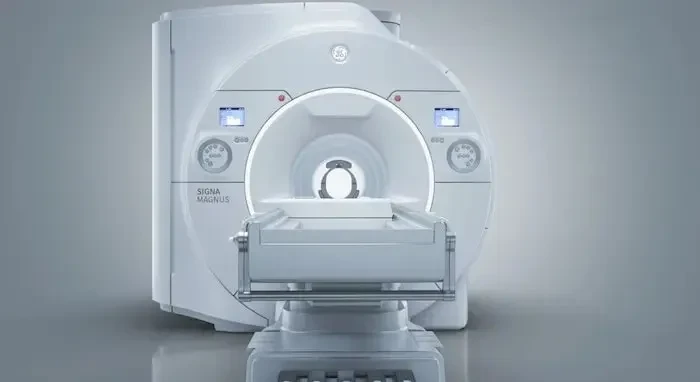
# Research and Development BackgroundThe gradient system is known as the "engine" of MRI equipment, and microbrain imaging has extremely high requirements for the gradient performance of the MRI platform. As imaging dimensions become more advanced,The design of whole-body MRI greatly restricts the rapid development of the "gradient engine" for micro-brain imaging.In order to achieve ultimate gradient performance, the concept of neuro-dedicated research MRI has been proposed. This design overturns the traditional approach of whole-body MRI systems, providing more physical space for the gradient coils to enhance performance while significantly reducing peripheral nerve stimulation for patients.However, innovative design means more challenges, such as balancing gradient performance with eddy currents, performance metrics of off-center designs, elimination of Lorentz force vibrations, and so on.Currently, there is no solution in the industry that can truly be implemented in clinical research.GE Healthcare, after years of design and testing practice, and with the support of the NIH cooperative project, has taken the lead in developing the first dedicated magnetic resonance platform for microbrain imaging. The all-new asymmetric neuro-specific gradient design lays the foundation for the implementation of ultimate gradient performance.# SIGNA MAGNUSMicrobrain Imaging Platform
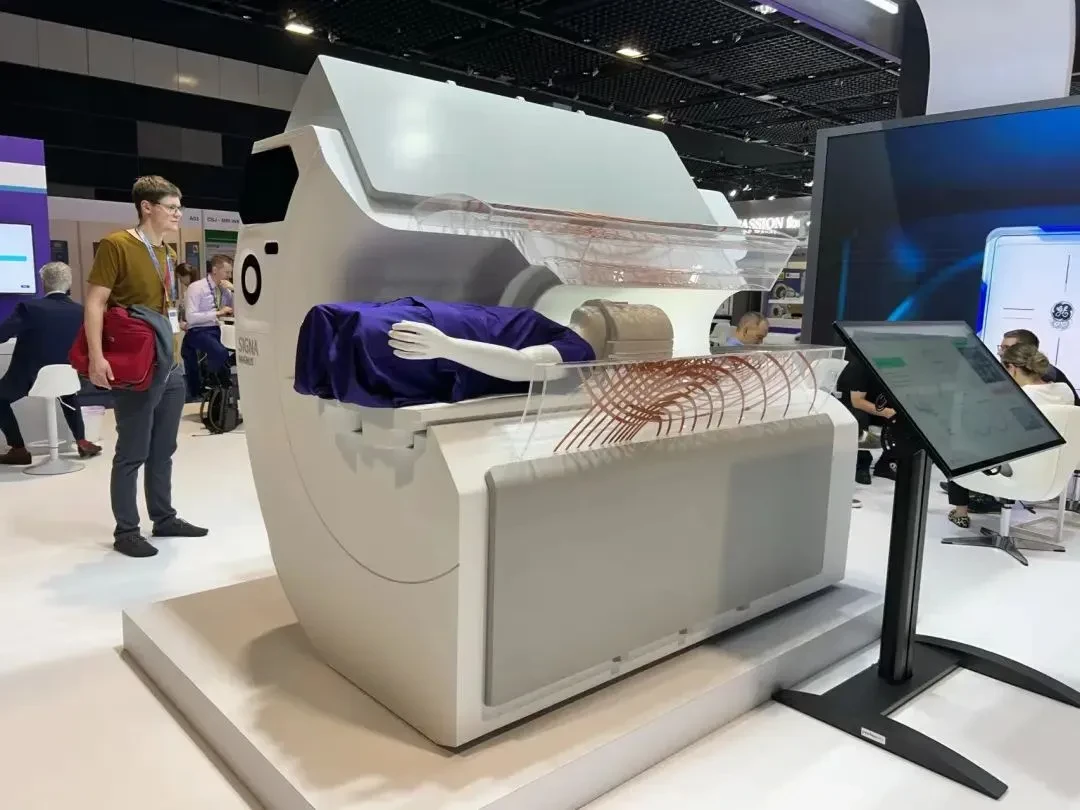
SIGNA MAGNUS is specifically designed for neuroscience and oncology research, dedicated to head imaging, delivering images with greater detail and clarity to enable deeper exploration of the brain’s microstructure, microvasculature, and functionality.Adopting a disruptive design for neuro-dedicated systems, achieved300/750 Ultimate Gradient Performance, isFour times the current whole-body MRI gradient performance。The system has already submitted an FDA application and will become the first dedicated platform for clinical micro-brain imaging in the future.SIGNA MAGNUS Exhibited at the 2024 ISMRM (International Society for Magnetic Resonance in Medicine) Annual Meeting in Singapore
1. Multi-layeredAsymmetric Gradient Design and HyperG Gradient Technology, with enhanced diffusion performance, reaching a gradient field strength of 300mT/m and a gradient switching rate of 750mT/m/s, achieving extremely high b-value diffusion and short echo times (TEs), detecting complex details of the brain that were previously undiscoverable.
2. AdoptedSelf-shielding gradient design,An additional self-shielding layer was added outside the main gradient coil to isolate magnetic field interference external to the gradient coil.3. Use 91cmFull-Length Magnetic Design, providing a large working space for the gradient coil while maintaining high magnetic field uniformity.4. All three axes adoptHollow Inner Cooling Design, adopting a completely new cooling circuit design, optimizing the characteristics of pressure and flow rate, and cooling the gradient coil.SIGNA MAGNUS has achieved a significant leap in gradient performance, achieving currentlyThe only one in the industryA gradient field strength of 300 mT/m and a slew rate of 750 T/m/s provide an important physical hardware foundation for micro-brain imaging.SIGNA MAGNUS is specifically designed for neuroscience and oncology research, dedicated to head imaging, delivering images with greater detail and clarity for an in-depth exploration of brain microstructures, microvasculature, and functionality.Researchers can make full use of SIGNA MAGNUS to break through the limitations in structural, diffusion, and functional technologies, and conduct further research with the latest deep learning algorithms provided by GE Healthcare, which helps in discovering new parameters and biomarkers.Moreover, many GE HealthCare 3.0T systems can be upgraded to Signa Magnus, helping customers save on capital costs.Brigham and Women's Hospital installed the research system in March, and GE Healthcare hopes to collaborate with the hospital on high-performance neuro MR research.# Practical Application
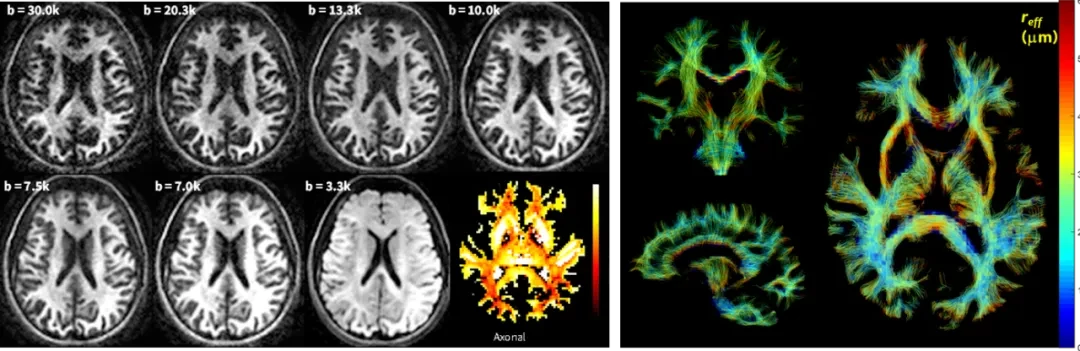
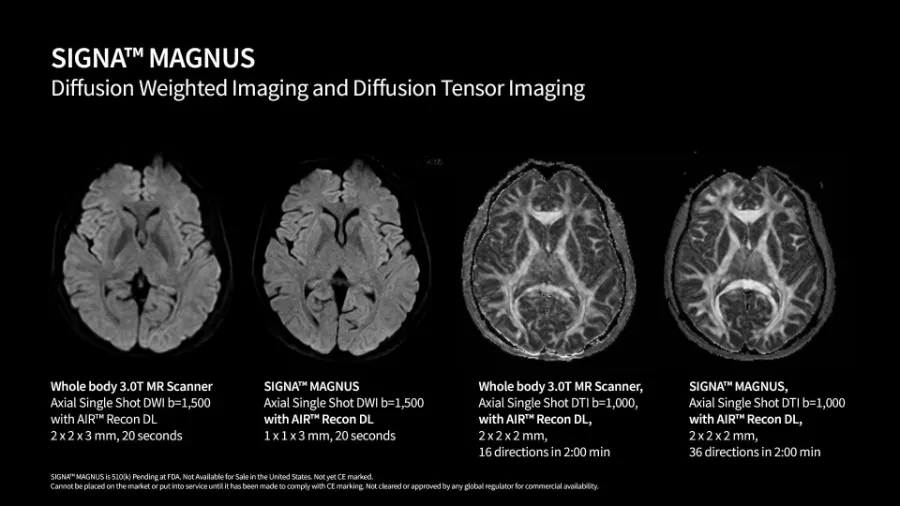
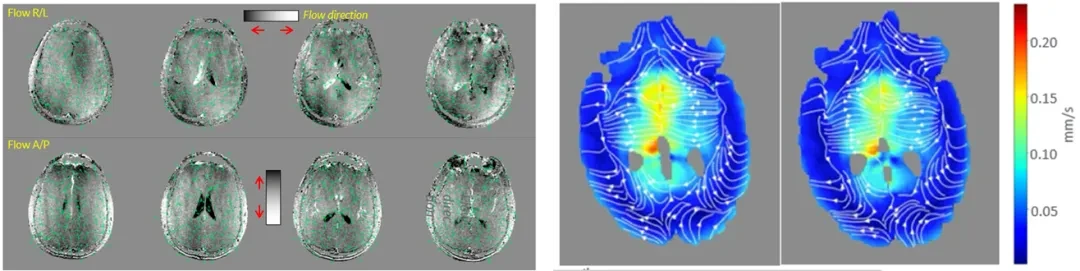
Microbrain Analysis:Based on the SIGNA MAGNUS platform, with high gradient field strength switching rate performance, the use of ultra-high 30000B value diffusion imaging significantly eliminated the influence of various artifact factors in small axon measurements, successfully enabling the resolution and display of axon diameters of 1μm and below in patients with microbrain injuries.Bring a new clinical research scale to the study of microbrain injury and its mechanisms.Visualization of the glymphatic system:Impaired clearance function of the brain's glymphatic system may lead to and exacerbate the deposition of pathological toxic proteins, inducing or aggravating symptoms of degenerative diseases such as AD and PD. The glymphatic system is similar to the microcirculation system, involving flow.The exchange rate is approximately 0.1-5mm/s.The flow rate is extremely slow, making it difficult to capture the signal.In the collaboration between GE Healthcare and Utah State University, SIGNA MAGNUS was utilized.Successfully mapped the glymphatic pathways of the entire brain,And confirmed the consistency of the results with electrophysiological findings in dementia, providing a novel approach for the study of microbrain diseases.According to information on the GE Healthcare website, Dr. Vincent Magnotta, Professor of Radiology and Director of the MR Research Center in the Department of Neuroradiology at the University of Iowa, USA, stated:"Using the MAGNUS gradient can increase the b-value to 30,000 or even higher. In addition, the SIGNA MAGNUS adopts a 91cm long magnet design, providing a larger working space for the gradient coil. Meanwhile, all three axes use hollow internal cooling, optimizing pressure and flow characteristics."
Kelly Londy, CEO of GE Healthcare MR:"With Signa Magnus, we are not only exploring the possibilities of providing this tool; we are setting a new benchmark for medical research and future clinical patient care."This innovation underscores our commitment to R&D and our collaboration with academia, pushing the boundaries of what's possible in MR imaging. The potential impact of Signa Magnus on patient outcomes and our understanding of the human brain is profound."
# About GE Healthcare
GE Healthcare is committed to becoming a global leader in medical technology, diagnostic drugs, and digital solutions innovation. By providing integrated solutions, services, and data analysis, it enables hospitals to operate more efficiently, clinical diagnoses to be more effective, treatment methods to be more precise, and patients to be healthier and happier.Over the more than 100 years of serving patients and healthcare institutions, GE Healthcare has continuously advanced personalized, interconnected, and more empathetic healthcare while simplifying the patient care process. GE Healthcare's businesses in medical imaging, ultrasound, life care solutions, and diagnostic pharmaceuticals cover every aspect of healthcare from diagnosis, treatment to monitoring.
GE Healthcare was listed on the NASDAQ stock exchange in the United States in January 2023. The company operates in more than 160 countries and regions, with annual revenue exceeding 19.6 billion US dollars and a global workforce of 51,000 employees.
International Medical Imaging Enterprises:Chinese Medical Imaging Companies:
Editor-in-Chief | Zhao Qing Reviewed by | Yi He