

AtaCor Medical Files for IPO Following $28M Series C Funding for Its Extravascular Pacing and ICD Platform

AtaCor Medical
Cardiac Pacemaker Developer
As the "number one killer" threatening human life and health, the incidence and mortality of cardiovascular diseases continue to increase.
"The Report on Cardiovascular Health and Diseases in China 2022" pointed out that due to the prevalence of unhealthy lifestyles among Chinese residents, the large population with risk factors for cardiovascular diseases, and the acceleration of aging, the incidence and mortality of cardiovascular disease (CVD) in China are still rising, and the turning point for the reduction of disease burden has not yet appeared. Among them, the increase in the prevalence of heart failure and arrhythmia has raised the demand for pacemakers.
Frost & Sullivan pointed out that the number of pacemaker implantation surgeries performed globally is expected to increase from 1.3 million in 2021 to 1.7 million in 2030, with a compound annual growth rate (CAGR) of 3.0%. China is expected to have the highest growth rate of pacemaker implantation surgeries, with an estimated CAGR of 7.6% from 2021 to 2030.
In terms of market size, the global pacemaker market is expected to increase from US$3,597.4 million in 2021 to US$4,224.9 million by 2030, with a compound annual growth rate (CAGR) of 1.8%. China is expected to become the fastest-growing pacemaker market, with an estimated CAGR of 5.7% from 2021 to 2030.
Although pacemaker technology plays a significant role in maintaining normal heart rhythm and improving pumping capacity, it also comes with corresponding complications. In particular, leads that need to be implanted through the venous system can cause issues such as venous thrombosis, severe tricuspid regurgitation, electrode damage, and infection.
AtaCor Medical, located in California, USA, is committed to addressing this issue by innovating and raising the medical standards for rhythm management. The company has developed a completely extracardiac, minimally invasive temporary pacing system, which has completed early clinical evaluations. This technology will offer an improved alternative treatment option for patients requiring bradycardia pacing support.
During traditional pacemaker therapy, pacing hardware is inserted into the patient's vein and attached inside the heart, a process that requires extensive X-ray imaging. Once implanted, this hardware can lead to severe complications such as infection, vascular or cardiac damage, device malfunction, and more. Additionally, the removal procedure is highly challenging, even for newer "leadless" pacemakers. Moreover, temporary pacing leads used in emergencies or planned surgeries often force patients to remain bedridden.
Recently, a subcutaneous ICD system has been introduced. However, due to the need for higher shock energy, this system requires a larger pulse generator and lacks other functions, such as bradycardia and anti-tachycardia pacing therapies.
Founded in 2014, AtaCor Medical is transforming the way cardiac pacing is delivered. By positioning leads outside the heart and venous structures, AtaCor aims to reduce reliance on transvenous ICD leads and avoid associated acute and long-term complications. AtaCor's novel EV-ICD lead is designed to deliver shock and antitachycardia pacing therapies for the treatment of tachyarrhythmias.
AtaCor's substernal pacing lead can be inserted without medical imaging, allowing for faster and less invasive treatment. The unique placement avoids the need to access the patient’s vascular system and does not come into contact with the heart at all. Additionally, the substernal lead can eliminate bed rest restrictions associated with temporary pacing, thereby improving patient mobility and postoperative recovery.
According to AtaCor Medical, the AtaCor EV Temporary Pacing Lead System is the first of its kind and the only implantable temporary pacing system that does not come into contact with the heart or vascular system.
AtaCor EV Temporary Pacing Lead System is designed to provide support for stable pacing of new-onset arrhythmias, helping guide treatment decisions and optimize patient care, while also assessing conduction disorders to determine the need for permanent pacing.
The AtaCor EV Temporary Pacing Lead System is designed with full consideration of the anatomical structure of the human chest, ensuring the accuracy of the pacing process and protecting the patient's vascular system from damage. As a new generation of cardiac pacing system, it provides temporary pacing without entering the heart, vascular system, or catheter lab, eliminating complications associated with transvenous leads and transcutaneous pacing, and reducing patient discomfort.
The system utilizes anatomical landmarks to enable the delivery of temporary pacing leads at the required time and location without fluoroscopic guidance. The system employs a proprietary parasternal approach, allowing customized pacing leads to be inserted through the intercostal space and implanted in the connective tissue between the ribs and pericardium, with all procedures completed through a 2 to 3 cm incision along the sternal edge.
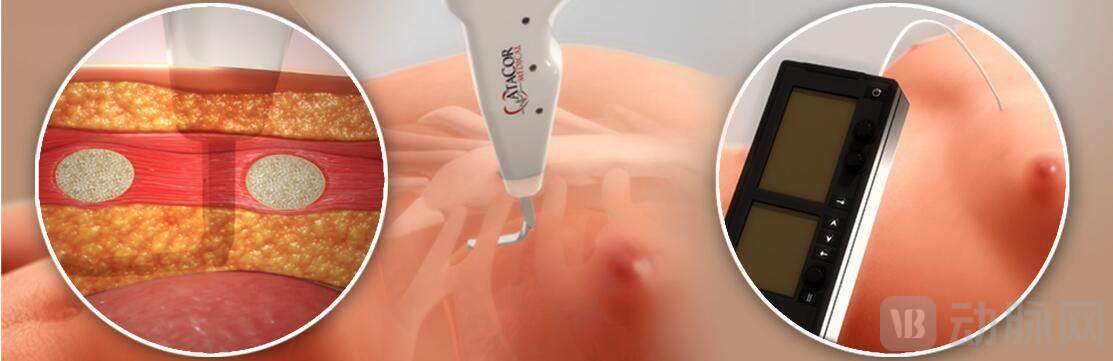
AtaCor EV Temporary Pacing Lead System Utilizes a Proprietary Parasternal Approach
The distal end of the pacing lead contains two electrodes, located in the extracardiac tissue near the left pulmonary cardiac notch area adjacent to the pericardium. The proximal end of the pacing lead includes electrical contacts that can be connected to a pacing system analyzer or a temporary pacemaker. Notably, this lead can be connected to any commercially available external temporary pacemaker.
In the AtaCor EV Temporary Pacing Lead System, the StealthTrac lead is the component used for cardiac pacemakers, capable of bipolar sensing and pacing. It can monitor the heart's electrical activity and deliver electrical impulses as needed to regulate the heartbeat, providing stable capture and sensing performance. The MACH I delivery tool is used to guide the pacemaker lead to the epicardial region. Through a small incision, the lead is placed in the anterior mediastinum, an area located behind the sternum, rather than inside the heart or on the pericardium.
In addition, it can be connected to a subcutaneous temporary pacemaker for short-term outpatient pacing, as well as a customized subcutaneous permanent pacemaker to meet chronic pacing needs.
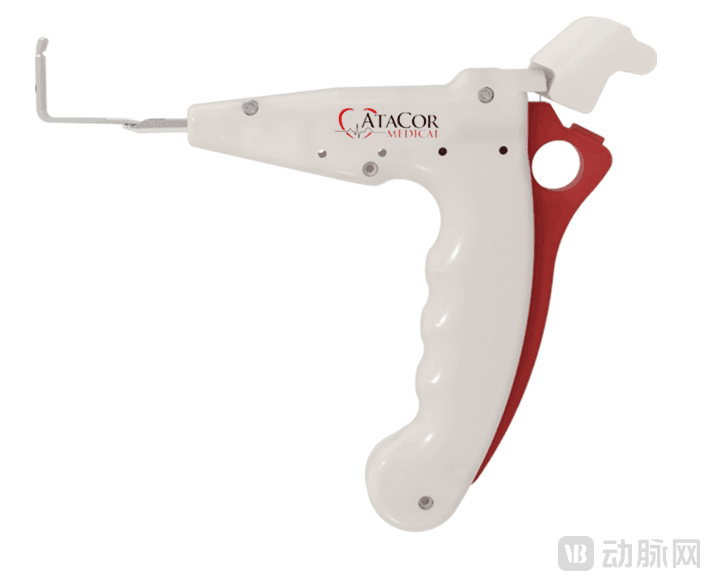
AtaCor EV Temporary Pacing Lead System
Specifically, the AtaCor EV Temporary Pacing Lead System has the following major advantages:
First, it has "extravascular safety." The use of an extravascular pacing system reduces the risks, costs, and limitations associated with traditional methods. Its potential clinical advantages avoid risks related to conventional temporary pacing, such as systemic infection, thromboembolism, cardiac perforation, pericardial effusion, and cardiac tamponade.
Second, it enables rapid delivery without imaging. The delivery of AtaCor EV temporary pacing leads eliminates the need for X-ray guidance required in traditional methods, allowing the leads to be directly inserted through the external vascular pathway, thereby reducing treatment time.
Third, reduce patient discomfort. Compared with traditional pacing methods via the jugular or femoral vein, this approach can quickly and reliably restore cardiac rhythm without causing patient discomfort or stimulating skeletal muscles.
Fourth, reduce bed rest restrictions. The design of external vascular implants aims to accelerate patient recovery and shorten hospital stays. It supports postoperative ambulation, reduces bed rest time, transfers patients to non-ICU beds for extended evaluation, decreases the need for ICU observation and related nursing resources, and lowers care costs.
Fifth, Simplified Patient Management During and After TAVI. With the increase in TAVI (Transcatheter Aortic Valve Implantation) procedures, the AtaCor EV Temporary Pacing Lead System is dedicated to providing stable extracorporeal and epicardial pacing support during aortic valve deployment and postoperative evaluation of cardiac conduction disorders.
AtaCor Medical's management team consists of veteran experts in the field of implantable cardiac devices and electrophysiology, with over 80 years of combined experience.
President and CEO Rick Sanghera has over 25 years of knowledge accumulation and experience in implantable cardiac devices, starting as an engineer at Guidant Corporation at the age of 21, and moving to frontline work with the company at 24. During this time, Rick Sanghera realized the potential for optimization and innovation in implantable cardiac devices.
"We always find ways to make better devices that allow doctors to treat patients more easily and help patients stop feeling like patients all the time." With this belief, he joined the Cameron Health team and developed the world’s first leadless/wireless subcutaneous ICD (S-ICD), which has saved tens of thousands of patients from the threat of sudden cardiac death so far. In 2012, the company was acquired by Boston Scientific. Subsequently, Rick Sanghera co-founded AtaCor Medical, continuing to focus on providing simpler and easier cardiac device therapies for doctors and patients.
Currently, the company is also applying the AtaCor EV temporary pacing lead system to a broader range of cardiac treatments. In addition to providing ATP pacing, AtaCor Medical is also utilizing this lead system for defibrillation, with all procedures performed without any contact with the heart.
This application is under development, aiming to provide reliable extracorporeal sensing and defibrillation functions through its unique directional leads. The system also employs a simplified parasternal approach. The Atical EV-ICD lead system utilizes a familiar lateral device pocket, featuring streamlined tunneling technology and compatibility with commercially available ICDs equipped with df4 connectors.
On April 24, 2024, AtaCor Medical announced the completion of a $28 million (approximately RMB 2.02 billion) Series C financing round. The round was led by Arboretum Ventures, with participation from existing investors Longview Ventures, Hatteras Venture Partners, Catalyst Health Ventures, and BayMed Venture Partners. The company plans to use the proceeds to support its FDA submission for the extravascular temporary pacing lead system and to complete the pilot study of the third-generation EV-ICD lead system.
In the future, AtaCor Medical will continue to revolutionize pacemaker and defibrillator lead technology by leveraging its proprietary extravascular cardiac rhythm management system. This innovation aims to deliver all the benefits of traditional transvenous implantable cardioverter-defibrillators (ICDs) and temporary pacemakers without the need to place leads or devices within the heart or vascular system, thereby preserving cardiac integrity and addressing new patient needs in cardiac care.