

Weekly Summary of Domestic Innovative Drug Approvals, NDAs, INDs and Global Phase III Clinical Trials (May 6–11, 2026)

Fineimmune
Developer of Immunotherapeutics for Solid Tumors
Hinova pharma
Clinical-Stage Innovative Drug Developer

Welcome to follow Asymchem Drug News
(Collection period: 5.6-5.11, domestic part includes the first clinical application,First Application for Market Launch, First Approval for Market Launch(Innovative drugs)
Summary of IND for Innovative Drugs in China
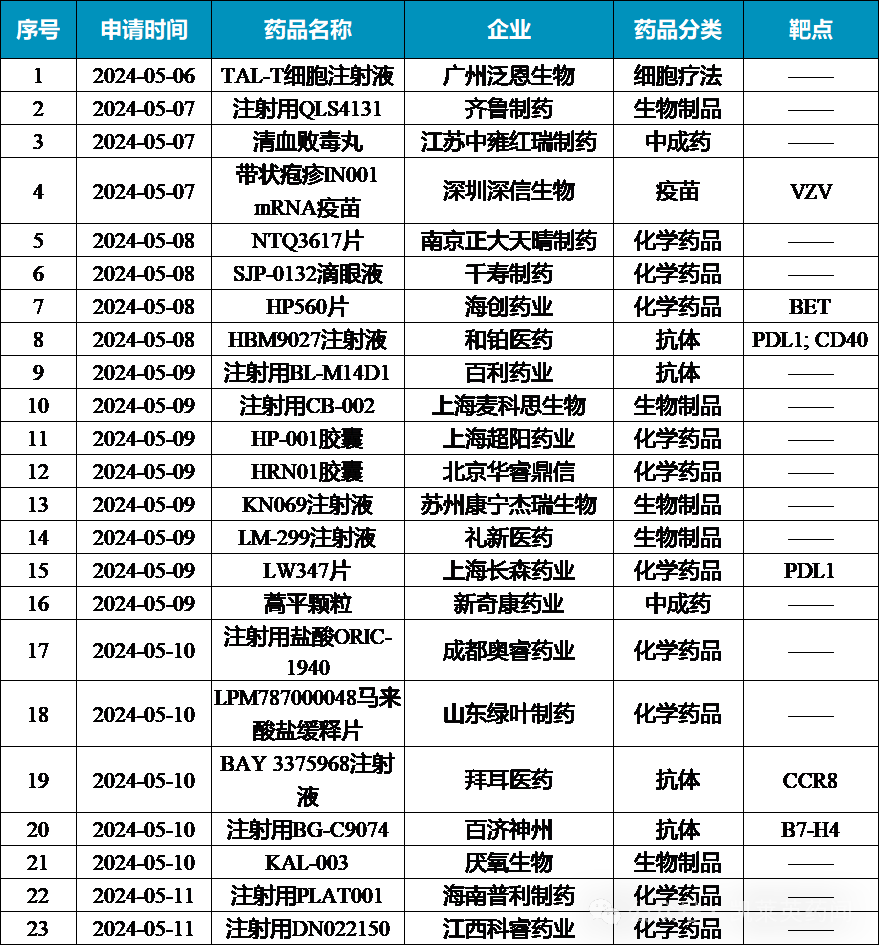
1. Fanen Bio: TAL-T Cell Injection
Mechanism of Action: ——
Indications: Solid Tumors
On May 6, the clinical application of Pan-E Bio's TAL-T Cell Injection was accepted by the CDE. TAL is Pan-E Bio’s non-genetically modified cell therapy product. Resected tumor tissues and tumor-associated lymph nodes contain a certain amount of anti-tumor T cells, significantly higher than in blood. Relying on its unique enrichment and culture technology for tumor antigen-specific T cells, Pan-E Bio gives growth advantages to these antigen-specific T cells during the culture process, significantly enhancing their cellular function and resulting in better tumor treatment effects. Its advantages are as follows: (1) Short culture time, simple process, low cost; (2) No genetic modification; (3) Culture success rate extremely high >90%.
2. INNORNA: Herpes Zoster IN001mRNA Vaccine
Mechanism of Action: ——
Indications: Herpes Zoster Infection
On May 7, the clinical trial application (IND) for IN001, a shingles mRNA vaccine developed by INNORNA, was accepted by the CDE. IN001 utilizes a self-designed and optimized mRNA sequence along with a proprietary lipid nanoparticle (Lipid Nanoparticles, LNP) delivery system. In September 2023, it received clinical trial approval from the U.S. FDA, making it the third shingles mRNA vaccine product globally to gain U.S. FDA approval for clinical trials after Moderna and Pfizer/BioNTech. Shingles is an infectious skin disease caused by the reactivation of the varicella-zoster virus (VZV), which lies dormant in the dorsal root ganglia of the spinal cord or cranial nerve ganglia for an extended period. It typically presents as a rash, with painful blisters appearing on the chest, abdomen, or face. Besides skin damage, it often comes with neuropathic pain, which may last for weeks or months, and in some patients, the pain can persist for years. The condition is more common among older individuals, those with immunosuppression, or those with immune deficiencies, significantly impacting the quality of life of patients. Vaccination against shingles is an effective measure to prevent the disease, suppressing VZV reactivation and thereby preventing shingles, PHN, and other complications. In recent years, global sales of shingles vaccines have been rapidly increasing, establishing them as top-selling products worldwide.
3. Hinova Pharma: HP560 Tablets
Mechanism of Action: BET Inhibitor
Indications: Myelofibrosis
On May 8, the IND for Hinova Pharma's HP560 tablets was accepted by the CDE. HP560 is a novel BET inhibitor being developed for the treatment of myelofibrosis. Studies have shown that HP560 exhibits high binding affinity for all BET proteins and has potent anti-proliferative activity. When used in combination with the JAK1/2 inhibitor ruxolitinib, it produces a synergistic anti-proliferative effect. In a mouse model of tumor xenografts (CDX) derived from MF cell lines, HP560 extended survival and improved splenomegaly and anemia, with enhanced effects observed when combined with ruxolitinib. Additionally, HP560 significantly and dose-dependently inhibited tumor growth in an AML CDX mouse model.
4. Harbour BioMed: HBM9027 Injection
Mechanism of Action: Targeting PD-L1/CD40 Bispecific Antibody
Indications: Tumor
On May 8, the IND of HBM9027 Injection by Harbour BioMed was accepted by the CDE. HBM9027 is a novel PD-L1xCD40 bispecific antibody developed based on the company’s HBICE® fully human antibody platform, capable of activating CD40 dependent on PD-L1 cross-linking. The drug has previously received FDA's Investigational New Drug (IND) application approval and initiated its first-in-human (FIH) clinical trial in the United States; this trial is a Phase I study evaluating the safety, tolerability, pharmacokinetics, and anti-tumor activity of HBM9027 in patients with advanced solid tumors.
5. ORIC Pharmaceuticals: ORIC-1940 Hydrochloride for Injection
Mechanism of Action: ——
Indications: Hemophagocytic Lymphohistiocytosis
On May 10, the IND for Hinova Pharma's ORIC-1940 Hydrochloride Injection was accepted by the CDE. ORIC-1940 is a small molecule inhibitor that effectively suppresses the secretion of multiple inflammatory factors, thereby controlling cytokine storms. It is intended for the treatment of Chinese patients with Hemophagocytic Lymphohistiocytosis (HLH). HLH, also known as Hemophagocytic Syndrome, is a pathological immune activation syndrome caused by hereditary or acquired immune dysregulation. It is characterized by the uncontrolled activation of cytotoxic T lymphocytes (CTL), natural killer (NK) cells, and macrophages, leading to cytokine storms and immune-mediated multi-organ system damage. In preclinical studies, ORIC-1940 has demonstrated a clear target, definite efficacy, and good safety, providing symptomatic treatment for symptoms caused by excessive cytokine release in HLH. This drug may become the first medication used for secondary HLH, giving patients more time to identify and treat the primary cause, thereby reducing mortality in patients with secondary HLH.
6. Bayer: BAY 3375968 Injection
Mechanism of Action: Anti-CCR8 Monoclonal Antibody
Indications: Tumor
On May 10, Bayer's BAY 3375968 injection clinical application was accepted by CDE. BAY 3375968 is a humanized monoclonal antibody targeting CCR8 developed by Bayer that relies on ADCC and ADCP. In vitro studies have shown that BAY-3375968 selectively depletes human CCR8-positive Tregs through antibody-dependent cellular cytotoxicity (ADCC) and antibody-dependent cellular phagocytosis (ADCP); in various mouse tumor models, BAY 3375968 monotherapy has demonstrated strong efficacy, significantly correlating with the depletion of intratumoral CCR8+ Tregs and an increase in CD8+ T cells.
7. BeiGene: BG-C9074 for Injection
Mechanism of Action: Targeted B7-H4 ADC
Indications: Tumor
On May 10, the IND application for BeiGene's injectable BG-C9074 was accepted. BG-C9074 is an ADC targeting B7-H4, utilizing a clinically validated linker, strong bystander killing effect, and DAR6 design. B7-H4 is a negative co-stimulatory molecule that is abnormally highly expressed in various tumor cells, antigen-presenting cells, and tumor-associated macrophages, and participates in tumor immune escape by inhibiting T cell-mediated immune responses. Recent studies on the mechanism of B7-H4 have confirmed that B7-H4 can enhance the proliferation, invasion, metastasis, and anti-apoptotic capabilities of tumor cells by participating in multiple cell signaling pathways, thereby promoting tumor progression. In July 2023, BeiGene partnered with DualityBio to jointly advance the development and commercialization of BG-C9074.
8. Prulife Pharma: Injectable PLAT001
Mechanism of Action: ——
Indications: Pancreatic Cancer
On May 11, the IND application for Prulifei Pharmaceutical's PLAT001 injection was accepted. PLAT001 is a polymer conjugate drug formed by γ-glutamyl transpeptidase (GGT) responsive polymer bonding with SN38. Due to the scale effect of the polymer, PLAT001 is not directly cleared through glomerular filtration, thereby achieving long circulation in the body. After reaching the tumor site via systemic blood circulation, GGT on the surface of tumor vascular endothelial cells hydrolyzes the γ-glutamyl groups on the PLAT001 polymer, generating positively charged primary amine groups, which promote rapid endocytosis of the cationized conjugate by vascular epithelial cells and tumor cells, triggering endocytosis and enabling transcellular transport within the tumor tissue, thereby achieving strong penetration of PLAT001 in solid tumor tissues. In various animal tumor models, PLAT001 has demonstrated excellent anti-tumor efficacy, with a tumor inhibition rate of over 90%.
Summary of NDA for Innovative Drugs in China
1. Alnylam/Sanofi: Fitusiran Injection
Mechanism of Action: ——
Indications: Hemophilia
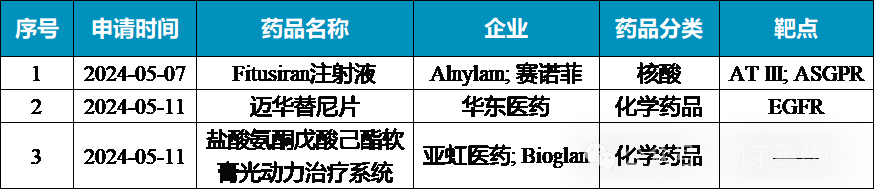
On May 7, the New Drug Application (NDA) for Fitusiran Injection, co-developed by Alnylam and Sanofi, was accepted by the Center for Drug Evaluation (CDE); this drug can treat patients with hemophilia A and B, regardless of whether they express inhibitors against exogenous clotting factors. Fitusiran is a siRNA targeting antithrombin jointly developed by Sanofi and Alnylam. By binding to RNA expressing antithrombin, it reduces the production of antithrombin, thereby restoring the balance between clotting factors and anticoagulant factors, achieving the effect of reducing bleeding events in hemophilia patients. This innovative therapy only requires subcutaneous injection once a month, providing much convenience for patients to control bleeding risks compared with conventional prophylactic clotting factor injections.
In the three completed Phase III clinical trials of fitusiran for adults and adolescents aged ≥12, ALNAT3SC-003 enrolled patients who produced inhibitors and required bypassing agent (BPA) to manage bleeding; ALN-AT3SC-004 included patients who did not produce inhibitors and were managed with clotting factor concentrates; ALN-AT3SC-009 targeted all patients, including those who produced or did not produce inhibitors. The treatment dose in each group was 80 mg monthly. Studies showed that fitusiran demonstrated good activity and statistically significant efficacy in reducing bleeding. In the ALN-AT3SC-003 trial, compared with patients requiring bypassing agents, the annualized bleeding rate (ABR) in patients using fitusiran decreased by approximately 89.2%; in the ALN-AT3SC-004 trial, compared with patients requiring clotting factor concentrates, the ABR in patients using fitusiran decreased by approximately 89.9%. The results of both trials showed that the median ABR in the subgroups using fitusiran was 0. In the three trials, ALN-AT3SC-003, ALN-AT3SC-004, and ALNAT3SC-009, the percentages of patients treated with fitusiran who did not experience any bleeding events during the drug's efficacy phase were 65.8%, 50.6%, and 63.1%, respectively.
2. Huadong Medicine: Miahuatinib Tablets
Mechanism of Action: EGFR Inhibitor
Indications: Non-Small Cell Lung Cancer
On May 11, the NDA for Huadong Medicine's Maitanib tablet was accepted by the CDE for the first-line treatment of advanced non-small cell lung cancer (NSCLC) patients with rare mutations in the epidermal growth factor receptor (EGFR) (S768I, L861Q, and G719X).MaiHua TiNi is a novel, second-generation, irreversible pan-EGFR inhibitor designed to irreversibly bind to the tyrosine kinase domain of EGFR and HER2 mutations.Previously, the drug was included in the breakthrough therapy drug program in May 2023, primarily based on data from a Phase II, open-label, single-arm, multicenter clinical trial for the treatment of advanced non-small cell lung cancer with rare EGFR mutations (S768I, L861Q, and G719X). The objective response rate (ORR) was 85.7%, the median progression-free survival (mPFS) was 20.6 months, and the median duration of response (mDOR) was 22.15 months, demonstrating good safety and tolerability.In addition, the company conducted a Phase III, randomized, parallel, double-blind, double-dummy, multicenter clinical trial of Maitinib versus Gefitinib as first-line treatment for advanced non-squamous non-small cell lung cancer with EGFR-sensitive mutations. The Phase III study completed the PFS event count in July 2023 and reached its primary endpoint in the third quarter of 2023.
Innovative Drug Approved for Marketing in China
1. BMS/Zai Lab: Ripretinib Capsules
Mechanism of Action: ROS1, pan-TRK, and ALK Inhibitor
Indications: Non-Small Cell Lung Cancer
On May 11, the NMPA approved the listing of Bristol-Myers Squibb's ("BMS") Class 1 innovative drug Repotrectinib Capsules (brand name: AUGTYRO) through the priority review and approval process. It is indicated for adult patients with ROS1-positive locally advanced or metastatic NSCLC. Repotrectinib is an inhibitor of the tyrosine protein kinase proto-oncogene ROS1 and tropomyosin receptor kinases (TRKs) TRKA, TRKB, and TRKC, offering multi-target broad-spectrum anticancer advantages with high potency against ROS1, TRKA-C, and ALK. Zai Lab holds the exclusive license for the development and commercialization of repotrectinib in Greater China. The drug was approved by the FDA in November 2023 for treating adult patients with ROS1-positive locally advanced or metastatic NSCLC, primarily based on an open-label Phase 1/2 study that evaluated the efficacy of repotrectinib in TKI-naïve and TKI-treated patients. Results showed: In TKI-naïve patients (n=71), the objective response rate (ORR) was 79%, progression-free survival (PFS) was 35.7 months, and median duration of response (mDOR) was 34.1 months. In patients previously treated with one ROS1 TKI but not chemotherapy (n=56), ORR was 38%, and mDOR was 14.8 months. Among patients with measurable brain metastases at baseline, intracranial responses were observed in 7 out of 8 TKI-naïve patients and in 5 out of 12 TKI-treated patients.
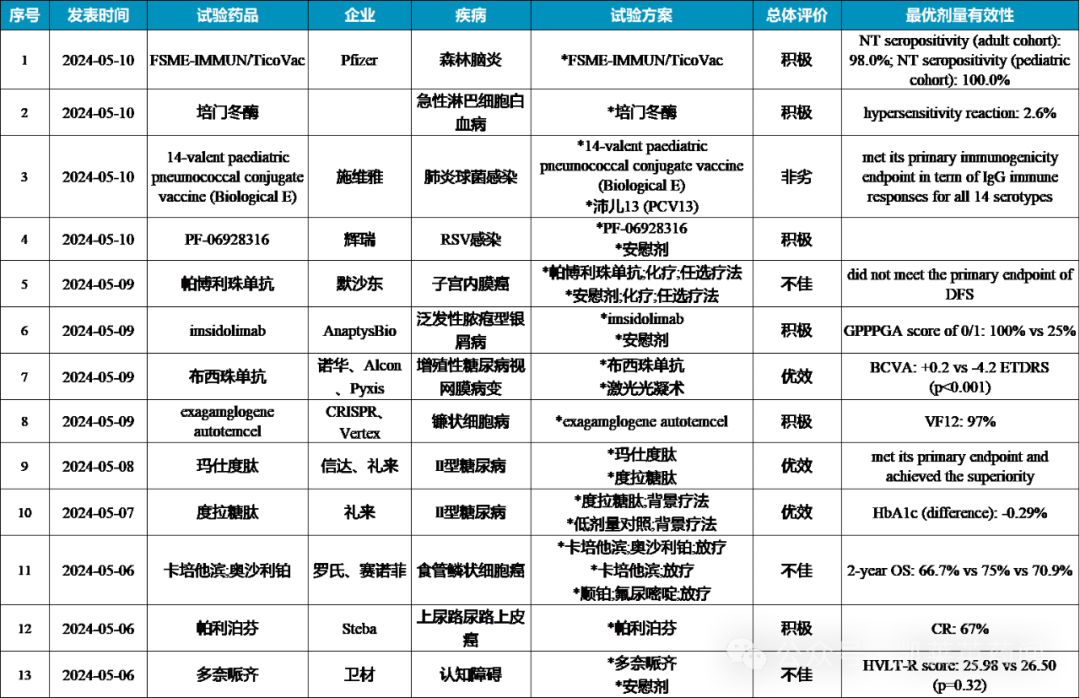
Global Phase III Clinical Summary


"Views"Click once