

12 Innovative Therapies Report Positive Early Clinical Data in Weekly Roundup

Freeline Therapeutics
Gene Therapy Developer

Atsena Therapeutics
Gene Therapy Developer for Blindness Treatment

Coave Therapeutics
Developer of Gene Therapies for Ophthalmic and Central Nervous System Diseases

eyeDNA
Gene Replacement Therapy Developer

Neurogene
Developer of Therapeutic Drugs for Neurological Disorders

Lineage Cell Therapeutics
Cell Therapy Developer

Fate Therapeutics
Cellular Immunotherapy Developer

Acepodia
Developer of Cell Therapies for Cancer Treatment

Boehringer Ingelheim
Developer of Innovative Drugs and Therapies

Kiora Pharmaceuticals
Pharmaceutical R&D Manufacturer
Cytokinetics
Developer of Muscle Activators and Muscle Inhibitors
▎WuXiEdited by Kant Content Team
Highlights of This Issue
1. Freeline Therapeutics Announces Early Efficacy Data for FLT201, an Investigational Gene Therapy for Gaucher Disease, Showing Significant Improvement in Fatigue and Enhancement of Daily Activity After a Single Treatment
2. Five Innovative Therapies for Treating Eye Diseases Announce Positive Early Clinical Data, Involving Gene Therapy, Cell Therapy, Monoclonal Antibody Therapy, and Small Molecule Photoswitch Drugs.
3. Regeneron Pharmaceuticals' investigational gene therapy DB-OTO for the treatment of hereditary deafness restored hearing to normal levels within 24 weeks in an 11-month-old patient.
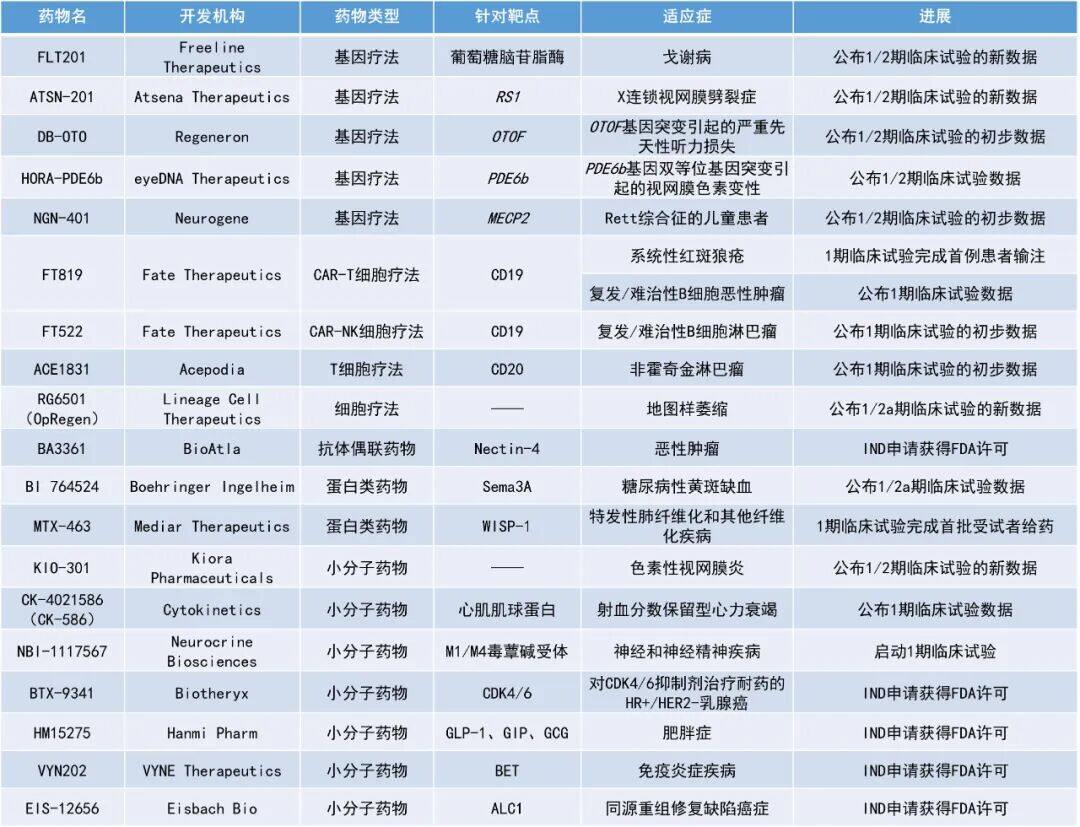
Image Source: 123RF
FLT201: Announcement of New Data from Phase 1/2 Clinical Trials

Freeline Therapeutics Announces Ongoing Phase 1/2 GALILEO-1 Trial of Investigational Gene Therapy FLT201Latest Clinical DataFLT201 is a potential “first-in-class” and “best-in-class” investigational adeno-associated virus (AAV) gene therapy for the treatment of adult patients with Type 1 Gaucher disease.This therapy aims to provide a one-time treatment to continuously increase GCase expression and reduce the accumulation of harmful substrates, halting disease progression, so that patients do not need lifelong treatment.FLT201 uses Freeline's AAVS3 capsid to introduce a novel gene into hepatocytes, producing a rationally designed GCase variant.In preclinical studies, the half-life of this GCase variant under lysosomal pH conditions was more than 20 times longer than that of wild-type human GCase.In preclinical studies, FLT201 led to high expression of GCase and reduced substrate levels in key tissues.
The results announced this time show,FLT201 significantly reduced lyso-Gb1 levels in Type 1 Gaucher disease patients who had previously been on long-term approved therapies and had persistently high glucosylsphingosine (lyso-Gb1) levels, which is one of the best predictors of clinical response.In addition, there are initial signs of improvement in patients' bone marrow burden and fatigue. In terms of safety, FLT201 has demonstrated good safety and tolerability, with no infusion reactions or serious adverse events reported. Some patients experienced mild elevations in alanine aminotransferase (ALT) levels, but these were managed with immunotherapy and did not impact efficacy.
ATSN-201: Announcement of New Data from Phase 1/2 Clinical Trials

Atsena Therapeutics Announces New Data from Phase 1/2 Clinical Trial of Investigational Gene Therapy ATSN-201 for X-Linked Retinoschisis (XLRS)The novel diffusive capsid AAV.SPR used in ATSN-201 can spread laterally beyond the subretinal injection site, enabling safe and effective gene delivery to the central retina.(In the retinas of XLRS patients, schisis cavities are mainly concentrated in the central retina area.) Previous studies have shown,AAV.SPR Can Effectively Deliver Payload to Cone Cells on the Central Fovea of the Retina at Clinical Doses Without Surgical Dissection and Without Inducing Inflammation.
The data released this time shows,Two of the three patients in the first cohort (low-dose group) began to show extensive improvement in retinoschisis 8 weeks after dosing. At week 24 (the latest time point currently available), the improvement was still continuing.Areas of improvement in splitting cavities were found both inside and outside the subretinal injection site, indicating that AAV.SPR is spreading laterally from the injection site, consistent with the expected characteristics of this novel lateral diffusion capsid. Functional improvements were also observed in the same locations where retinal structure improvements occurred. One patient showed a visual acuity improvement of up to 14 dB, with vision improvement exceeding 7 dB at 38 locations.dB. The U.S. FDA considers at least a 7-point improvement in ≥5 pre-specified locations.dBIt is clinically significant. All three XLRS patients in this group tolerated ATSN-201 well, with no serious adverse events reported.
DB-OTO: Announcement of Preliminary Data from Phase 1/2 Clinical Trials

Regeneron Announces Phase 1/2 Clinical Trial Results for Investigational Gene Therapy DB-OTO for the Treatment of Hereditary DeafnessPreliminary Positive Results。DB-OTO is an investigational cell-selective AAV gene therapy designed to deliver via an AAV vectorOTOFA healthy copy of the gene is delivered to the cochlear hair cells, for the purpose ofOTOFPatients with congenital profound hearing loss caused by genetic mutations are provided with lasting physiological hearing.Previously, DB-OTO has been granted Orphan Drug Designation, Rare Pediatric Disease Designation, and Fast Track Designation by the FDA.
One patient received DB-OTO treatment at 11 months old and their hearing recovered to normal levels within 24 weeks, while another patient who received the therapy at age 4 also showed initial improvement in hearing 6 weeks after treatment.Both children were hospitalized due toOTOFChildren with severe hereditary deafness caused by genetic mutations, including an 11-month-old child who received treatment, are among the world's earliest patients to receive gene therapy for hereditary deafness.
HORA-PDE6b: Announcement of Phase 1/2 Clinical Trial Data
eyeDNA Therapeutics, a newly established subsidiary of Coave Therapeutics, announced positive 24-month follow-up results from the Phase 1/2 clinical trial evaluating HORA-PDE6b.HORA-PDE6b is an AAV5 vector-based gene therapy for the treatment ofPDE6bRetinitis Pigmentosa Caused by Biallelic Gene Mutations.
The results published this time show that, in the subgroup of patients who received high-dose treatment and had milder symptoms, positive efficacy was reported at 24 months in terms of best-corrected visual acuity (BCVA) and Goldmann visual field (GVF) outcomes.The BCVA of untreated eyes increased by 0.09 LogMAR compared to baseline, while the vision of treated eyes remained stable (+0.02 LogMAR).From baseline, the mean GVF of untreated eyes decreased by more than 300 deg², while treated eyes remained relatively stable.
Long-term data over a five-year period for the low-dose group (n=7) showed a continued decline in BCVA in untreated eyes (increasing by 0.05 to 0.08 LogMAR annually from the second year onward)., which is consistent with the natural course of the disease. Meanwhile,BCVA in the treated eyes within the same group remained stable compared to baseline., while in the same follow-up period, it only increased by 0.03 to 0.06 LogMAR). At year 5, the difference in mean BCVA change from baseline between treated and untreated eyes was 0.25 LogMAR (12 letters). Additionally, the blue light full-field stimulus test (FFST), used to assess rod photoreceptor function, consistently showed a trend of improvement in light sensitivity thresholds for treated eyes, which was clinically significant. The positive retinal anatomical assessment trends observed at 12 months in the clinically relevant subgroup were maintained through 24 months of follow-up.
After a 24-month study period, patients tolerated both high and low doses of HORA-PDE6b well. There were five ocular serious adverse events (SAEs), including two resolved SAEs potentially related to HORA-PDE6b (one case of chorioretinitis and one case of decreased visual acuity). These patients did not receive prophylactic oral corticosteroids.
NGN-401: Announcement of Preliminary Data from Phase 1/2 Clinical Trials

Neurogene, Inc. announced preliminary safety and tolerability data from the Phase 1/2 clinical trial of its gene therapy NGN-401 for the treatment of Rett syndrome. NGN-401 is an investigational AAV gene therapy delivering a transgene expressing full-length human methyl-CpG binding protein 2 (MeCP2).NGN-401 Utilizes Neurogene's Proprietary Gene Regulation Technology to Provide Highly Controlled and Consistent MeCP2 Expression, Thereby Avoiding Overexpression-Related Toxicity Associated with Conventional Gene Therapy.In non-clinical studies of NGN-401 at clinically relevant doses, the main characteristics of Rett syndrome were improved, and no overexpression toxicity was observed.
The results published this time show that during follow-ups approximately 9 months, 6 months, and 3 months after receiving treatment,3Patients generally tolerated NGN-401 well.All adverse events related to NGN-401 were mild or grade 1, and were transient or reversible. Most adverse events are known potential risks of AAV.No signs or symptoms of MeCP2 overexpression toxicity have been reported.
RG6501 (OpRegen): New Data from Phase 1/2a Clinical Trial Released

Lineage Cell Therapeutics Announces 24-Month Data from Phase 1/2a Clinical Trial of Allogeneic Retinal Pigment Epithelium (RPE) Cell Therapy RG6501 (OpRegen) for the Treatment of Geographic Atrophy (GA) Secondary to Age-Related Macular Degeneration (AMD)
The results showed,AcceptPatients' retinal outer layer structure and visual function showed sustained improvement for at least two years after OpRegen cell treatment. OpRegen cells can support the remaining retinal cells within the GA area by counteracting host RPE cell dysfunction and loss.Compared with the baseline, the BCVA of 10 patients in cohort 4 increased by an average of 5.5 letters at 24 months after treatment. Among them, five patients with broader OpRegen coverage of GA lesions showed better therapeutic effects, with an average increase of 7.4 letters in BCVA. Optical coherence tomography (OCT) examination revealed,OpRegen Continues to Show Improvement in Outer Retinal Structure in Patients with Larger GA Lesions.
FT819, FT522: Preliminary Data from Phase 1 Clinical Trial Announced

Fate Therapeutics announced that the first patient has been dosed in a Phase 1 clinical trial of its off-the-shelf CD19-targeted chimeric antigen receptor (CAR) T-cell therapy, FT819, for the treatment of systemic lupus erythematosus. Additionally, the company presented Phase 1 study data of FT819 in relapsed/refractory B-cell malignancies (BCM), as well as preliminary clinical observations from a Phase 1 study of its off-the-shelf CD19-targeted CAR natural killer (NK) cell therapy, FT522, for relapsed/refractory B-cell lymphoma (BCL). The results showed,FT819 and FT522 both induce rapid, deep, and sustained CD19+ B-cell depletion.
ACE1831: Announcement of Preliminary Data from Phase 1 Clinical Trial

Acepodia, Inc. announced preliminary data from the Phase 1 dose-escalation trial of its off-the-shelf CD20-targeted antibody conjugated allogeneic γδ2 T cell therapy, ACE1831, for the treatment of non-Hodgkin lymphoma.ACE1831 utilizes NK cell activation receptors highly expressed on γδ T cells to eliminate malignant blood cells, demonstrating enhanced cytotoxicity against cancer cells in both in vitro and in vivo models.
The results announced this time show,After a single administration of ACE1831 (lowest dose), one out of five patients achieved complete remission (CR), and three reached stable disease (SD).Among these patients, one with CR and two with SD had previously received CD19-targeted CAR-T cell therapy.Continuous clinical remission was observed within three months after a single dose of ACE1831.The lowest dose of ACE1831 was well-tolerated, with no serious adverse events related to ACE1831, including graft-versus-host disease (GVHD), neurotoxicity, high-grade cytokine release syndrome (CRS), or dose-limiting toxicity.
BI 764524: Announcement of Phase 1/2a Clinical Trial Data

Boehringer Ingelheim announced positive Phase 1/2a clinical trial data for its humanized monoclonal antibody BI 764524 targeting Sema3A. The press release noted that this study is the first to explore a potential therapy for diabetic macular ischemia (DMI).BI 764524 aims to reconstruct blood vessels in ischemic areas and reduce retinal leakage, offering a potential solution to the issue of retinal non-perfusion in retinal diseases.
The study found that BI 764524 was well-tolerated after single and multiple intravitreal doses, met the primary safety endpoint, and showed early signs of potential efficacy.The study met the pre-specified early efficacy criterion at week 16, which was stabilization of the FAZ area (p<0.2) compared to the sham procedure.No relevant changes were observed in other secondary efficacy endpoints during the short-term trial period.
KIO-301: New Data from Phase 1/2 Clinical Trial Released

Kiora Pharmaceuticals Announces New Data from Phase 1/2 Clinical Trial of KIO-301, a Small Molecule Photoswitch for the Treatment of Retinitis PigmentosaKIO-301 can selectively confer photoreceptive ability to retinal ganglion cells (RGCs), aiming to bypass degenerated photoreceptors and transmit neural signals to the brain.
Previous patient-reported outcomes indicated improvements in the ability to perceive light, distinguish contrasts between light and dark, and overall visual function after receiving an injection of KIO-301. No adverse events were reported during the study, including ocular adverse events. The results announced this time show,At all assessed time points, neural activity in the visual processing centers of the brain in treated patients showed a statistically significant increase from baseline, with a more pronounced increase observed in patients with better baseline vision.Consistent with previously reported improvements in visual field, visual acuity, and functional vision, this increase in brain activity is time-dependent.
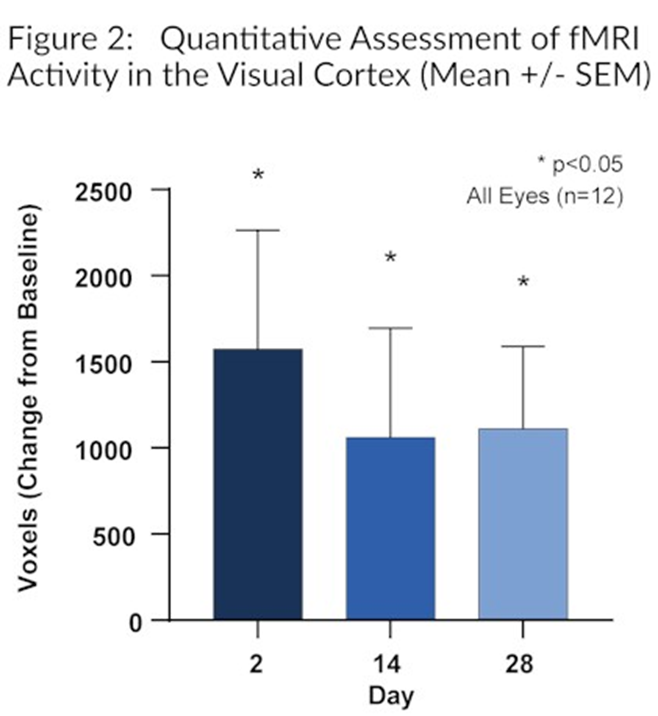
▲Neural activity in the patient's brain visual processing center significantly increased from baseline (Image source: Reference [8]).
CK-4021586 (CK-586): Phase 1 Clinical Trial Data Released

Cytokinetics, Inc. announced preliminary data from the Phase 1 clinical trial of CK-4021586 (CK-586), a cardiac myosin inhibitor for the treatment of heart failure with preserved ejection fraction (HFpEF). CK-4021586 is a novel, selective, orally administered small-molecule cardiac enzyme inhibitor designed to reduce excessive myocardial contraction caused by HFpEF.In preclinical models, CK-586 reduced the number of active myosin cross-bridges during cardiac contraction, thereby decreasing contractility and alleviating excessive heart contraction.
This Phase 1 study met the primary endpoint,CK-586 demonstrated good safety and tolerability in healthy subjects, with linear pharmacokinetic characteristics. The pharmacodynamic results assessed by echocardiography were consistent with expectations.No serious adverse events were observed in the study, and the discontinuation criteria have not been met. These data support CK-586 advancing into Phase 2 clinical trials, which are expected to commence in the fourth quarter of 2024.

▲To learn more about the application of cutting-edge technologies in the biopharmaceuticals industry, please long-press and scan the QR code above to access "WuXi Live Studio" and watch live discussions and exciting replays on related topics.


Share,PointLike,In SightFocusing on Global Biomedical Health Innovation