Orphan No More: How Pfizer, AstraZeneca, Johnson & Johnson, and Novartis Are Transforming Rare Disease Treatment

Pfizer
Pharmaceutical R&D Developer

AstraZeneca
Biopharmaceutical Manufacturer

Johnson & Johnson
Healthcare Product Manufacturers, Health Service Providers

Novartis
Drug Development and Manufacturing

Author|Freelance Translator Isabelle
4Month27On [Date], FDA ApprovedBeqvez(fidanacogene elaparvovec-dzkt)Used forTreatmentAdultHemorrhagic DiseasesType BHemophilia。This is Pfizer.The FirstObtainFDA-approvedGene Therapy, making it the second drug for this indication after CSL and uniQure's Hemgenix. Hemgenix was approved in 2022 and earned the title of the world's most expensive drug at the time, with a unit price of $3.5 million.
Pfizer had the opportunity to price Beqvez lower than Hemgenix but ultimately decidedMaintain 3.5 millionUnit price in USDHowever, the price of 3.5 million is no longer the most expensive drug in the world — In March, Lenmeldy, a gene therapy developed by Kyowa Kirin and Orchard Therapeutics for the treatment of the rare genetic disease metachromatic leukodystrophy, was launched with a price tag of $4.25 million, becoming the new king of costly drugs.
Regarding the pricing of Beqvez, Pfizer stated, "Considering the potential long-term benefits that can offset the current treatment costs of chronic diseases, Beqvez can save costs for the health system, and the proposed value proposition is compelling."
In 2014, Pfizer launched a gene therapy project, paying Spark a $20 million upfront payment and $260 million in potential milestone payments. Under the agreement, Spark was responsible for Phase I and II development, after which Pfizer took over.
But the FDA was not the first agency to approve Beqvez.January`, Canada`Approval for the application of BeqvezBased on Adeno-Associated Virus(AAV)Vector Therapy.Both approvals authorize the use of Beqvez for treating patients with moderate to severe Hemophilia B who have variations.Adeno-Associated Virus (AAV)The neutralizing antibody for serotype Rh74 is negative.
Hemophilia B is a rare genetic disorder where patients are unable to produce the protein Factor IX (FIX), causing blood to fail to clot properly. According to the World Federation of Hemophilia, the number of patients worldwide is only 38,000.
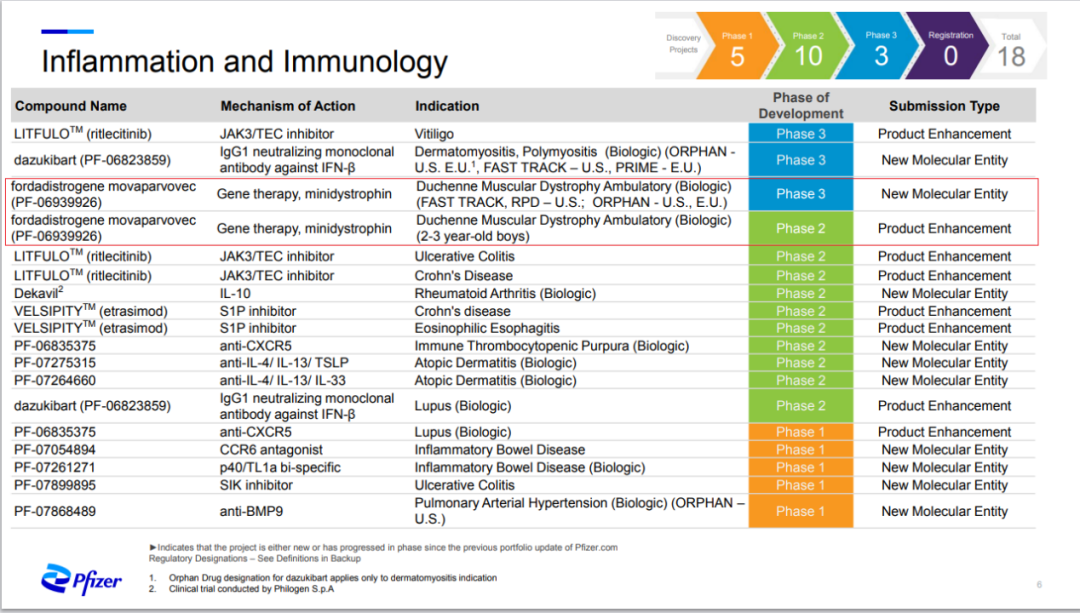
Rare diseases are one of Pfizer's six key focus areas (the other five being internal medicine, inflammation and immunology, vaccines, oncology, and anti-infectives),Pfizer currently has 8 rare disease pipelines, respectively:
a. Fordadistrogene movaparvovec for the treatment of Duchenne muscular dystrophy, in phase II clinical trials;
b. Fordadistrogene movaparvovec for the treatment of Duchenne muscular dystrophy in boys aged 2-3 is in Phase III clinical trials;
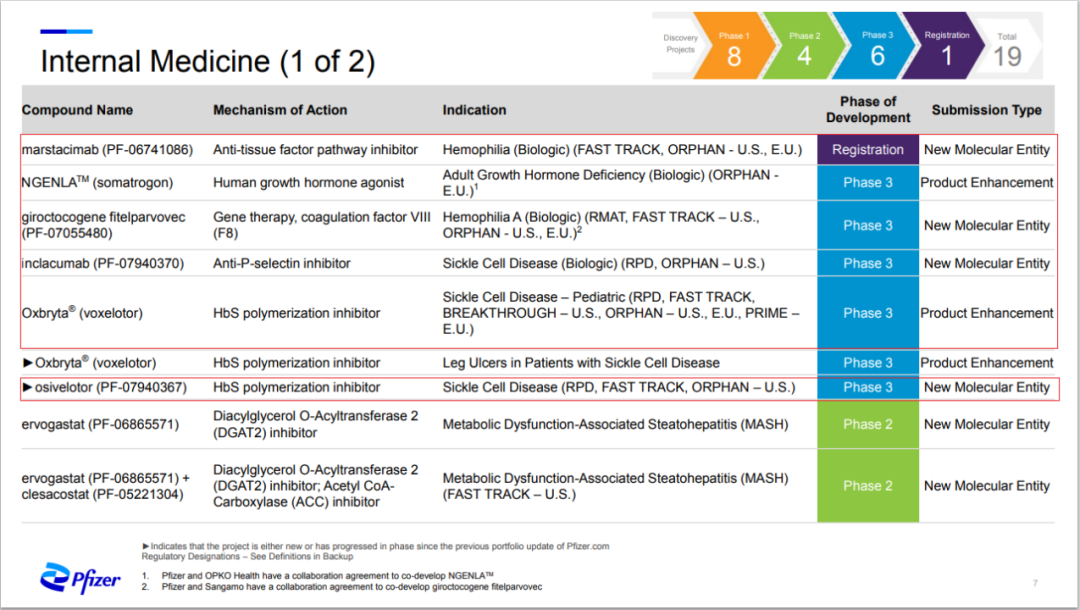
c. Marstacimab for the treatment of hemophilia A and B has now reached the registration stage;
d. Giroctocogene fitelparvovec for the treatment of Hemophilia A is currently in Phase III clinical trials:
e. NGENLA for the treatment of adult growth hormone deficiencyTM, currently in phase three of clinical trials:
f. Inclacumab and ►Osivelotor for the treatment of sickle cell anemia are currently in phase III clinical trials;
g. Oxbryta®, a treatment for pediatric sickle cell anemia, is currently in Phase III clinical trials.
01
AstraZeneca: Market Drug Shortage,M&A ZhengAt that time
In March, AstraZeneca purchased a French pharmaceutical companyAmolyt Pharma, in order to obtaineneboparatide, a drug for treating hypoparathyroidism, is currently in phase three of clinical trials.
Hypoparathyroidism refers to the inability of the parathyroid glands to secrete sufficient parathyroid hormone. This hormone is crucial for regulating calcium and phosphate levels in the blood. The condition particularly affects women severely. It can be treated with calcium and vitamin D supplements, but high doses of calcium may cause gastrointestinal issues such as constipation.
The treatment provided by Amolyt is different. Eneboparatide is a peptide drug that targets and binds to the parathyroid hormone type 1 receptor, which is also the receptor that natural parathyroid hormone binds to. Amolyt stated,This drug may restore normal blood calcium levels without the need for daily calcium and vitamin D supplements, and can maintain bone density., which is important for patients at higher risk of bone problems such as osteoporosis. Amolyt said preliminary phase III data could be available by the end of this year at the latest.
AstraZeneca this timeTake actionTimingJust right, becauseThe Only FDA-Approved Drug Is About to Be Discontinued, and the Market Urgently Needs a New Treatment for Hypoparathyroidism。
Takeda's Natpara Has Had a Rocky Commercial Path Since Its FDA Approval in 2015. In 2019, the FDA Requested Takeda to Recall Natpara Due to Rubber Particles from the Natpara Cartridge Potentially Contaminating the Injectable Drug. For the Following Three Years, Takeda Attempted to Relaunch Natpara but Was Repeatedly Rejected by the FDA. In 2022, Takeda Announced Plans to Discontinue Natpara Production by 2024 at the Latest.
AstraZeneca Plans to Complete Acquisition of Amolyt in Q3; Amolyt to Be Integrated into AstraZeneca's Rare Disease Division, Alexion
AstraZeneca currently has 18 rare disease pipelines, including:
●7 LCM (Life Cycle Management) Projects:
a Danicopan for the treatment of geographic atrophy;
b TreatmentUltomiris for thrombotic microangiopathy related to hematopoietic stem cell transplantation, generalized myasthenia gravis, proliferative lupus nephritis, and immunoglobulin A (IgA) nephropathy;
c Ultomiris ARTEMIS for the treatment of cardiac surgery-associated acute kidney injury;
d Treatment of Neuromyelitis Optica Spectrum Disorders with Ultomiris CHAMPION-NMOSD.
● Six Phase III Clinical Trial Projects:
a TreatmentAcoramidis and ALXN2220 for Transthyretin Amyloid Cardiomyopathy;
b TreatmentAnselamimab for Amyloid Light Chain Amyloidosis;
c Treatment for alkaline phosphatase deficiency: efzimfotase alfa;
d Gefurulimab for the treatment of generalized myasthenia gravis;
e TherapyVoydeya ALPHA with Paroxysmal Nocturnal Hemoglobinuria and Clinically Significant Extravascular Hemolysis.
● One Phase II Clinical Trial Project: TreatmentVemircopan for proliferative lupus nephritis or IgA nephropathy.
● Four Phase I Clinical Trial Projects:
a ALXN1910 for improving bone metabolism;
b ALXN1920 and ALXN2030 for the treatment of kidney disease;
C Oral Complement Factor D Inhibitor Mechanism.
02
Johnson & Johnson: Dual DrugsVictory,JoyBreakthrough Therapy for Myasthenia Gravis
February, Johnson & JohnsonThe company announced that itsAntibody Therapy NipocalimabInGeneralized Myasthenia Gravis(gMG) CriticalPhase III Studies andSjögren's Syndrome (SjD) Phase IIResearchAchieve Positive Top-Line Results。
Nipocalimab can block specific receptors, preventing the immune system from attacking the patient's healthy cells. Currently, there is no approved therapy for SjD globally.
Autoimmune diseases refer to immunoglobulin G (IgG) antibodies attacking the body, causing illness. In myasthenia gravis, antibodies attack acetylcholine receptors. In fetal neonatal hemolytic disease (HDFN), antibodies attack the infant's red blood cells. Nipocalimab can bind to receptors, preventing antibodies from being reused, thereby reducing antibody levels. Importantly, Nipocalimab can prevent antibodies from crossing the placenta. Thus, it is possible that a single therapy could address all diseases caused by pathogenic IgG antibodies.
These diseases can be divided into three major categories: diseases caused by pathogenic autoantibodies, diseases where autoantibodies affect pregnancy, and common rheumatic diseases caused by autoantibodies.Johnson & JohnsonClaim that, with nipocalimab,Only oneselfA Drug DevelopmentCoverageThisThree Categories of DiseasesTheCompany.
Johnson & Johnson is currently still developing nipocalimab for the treatment of hemolytic disease of the fetus and newborn and idiopathic inflammatory myopathy.
03
Novartis:The First ProductOral, Potential Blockbuster Therapy Approved
December last year,FDA ApprovalNovartisAn oralNew Drug Fabhalta, forTreatmentA rare and serious blood disease, calledParoxysmal Nocturnal Hemoglobinuria (PNH)。

PNH is caused by the dysfunction of the complement system (a part of the immune system), characterized by the premature destruction of red blood cells by the complement system. "Hemolysis" can lead to symptoms such as anemia and thrombosis. Clinical studies conducted on PNH patients have confirmedFabhaltaHelp improve patientsTheHemoglobinLevel。
Novartis expects Fabhalta to become a significant business pillar over the next decade. The company believes that as the use of Fabhalta expands to other complement system-related diseases, such as IgA nephropathy and C3 glomerulopathy, annual sales could eventually reach up to $3 billion.
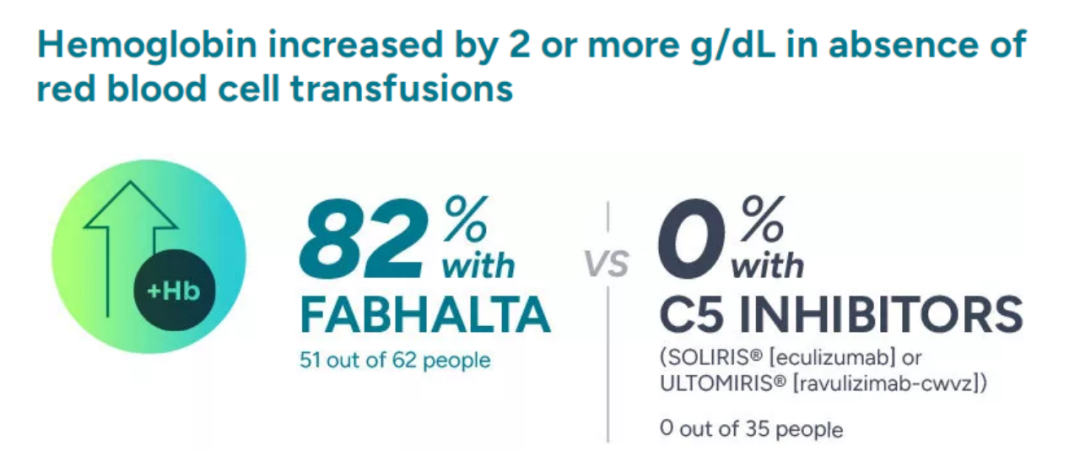
Novartis conducted two late-stage trials, recruiting patients who had either received or not received treatment with a C5 inhibitor (another PNH drug). In the first trial, without the need for blood transfusions,82% of those taking FabhaltaSubjectEveryHemoglobin per deciliterStableIncreased2 gramsAboveIn contrast, patients who continued treatment with a C5 inhibitor did not experience an increase in hemoglobin.
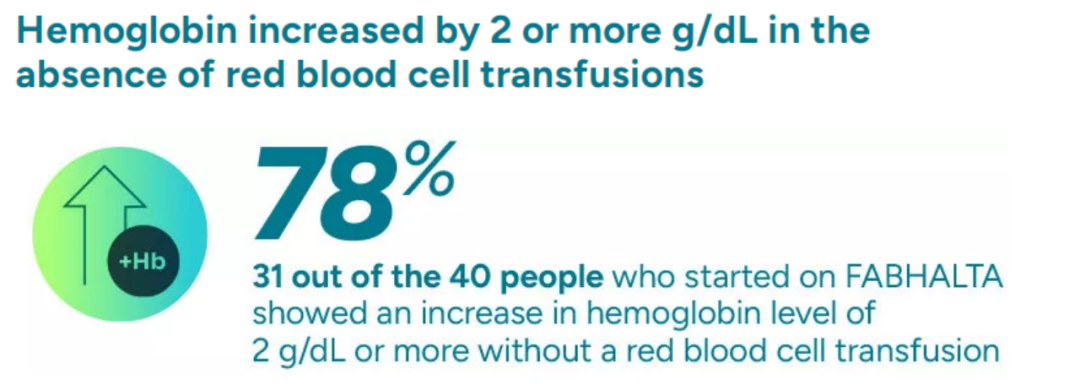
The relevant data of the second trial is78%。
Based on the results of these two trials, the FDA approved Fabhalta.
Currently, Novartis has 8 rare disease pipelines, respectively:
a. TreatmentAVXS-101 for Spinal Muscular Atrophy;
b. Treatment of IgA nephropathy (a rare disease in Europe and America, but not in Asia) with EXV811 and FUB523;
c. Fabhalta for the treatment of C3 glomerulopathy and atypical hemolytic uremic syndrome;
d. TreatmentLutathera for Gastroenteropancreatic Neuroendocrine Tumors;
e. Vijoice for the treatment of lymphatic malformations;
f. LOU064 for the treatment of multiple sclerosis.
All of the above projects have progressed to Phase III clinical trials.
WriteAt last
Rare diseases, also known as "orphan diseases," are defined by the World Health Organization as diseases with a prevalence of 0.65‰ to 1‰ of the total population, and in China, they are defined asDiseases with an incidence rate of less than 1 in 10,000 newborns, a prevalence rate of less than 1 in 10,000, and fewer than 140,000 patients. Although the number of patients for each disease is small, there are many types of rare diseases. Globally, over 7,000 rare diseases have been identified, with a total patient population of 300 million. This is a group that cannot and should not be ignored. However, the reality is that most of these diseases have no available treatment.
EnterpriseDeveloping drugs for rare diseases involves two unavoidable challenges:InvestmentOutput Ratio and Finding Enough SubjectsOn the one hand, each rare disease has a small patient population, and on the other hand, the costs required for drug development remain the same. Therefore, from an economic perspective, it is not cost-effective for companies to develop drugs for rare diseases, which is also why many of the most expensive drugs are for rare diseases. Additionally, due to the small patient population, companies need to go through more difficulties to find enough participants for clinical trials.
However, despite these two difficulties,Last centuryThe 1980sEnd,Only 5%TheThe new drug is rare.DiseaseMedicine,AndLast year, this number had already risen to43%Rare disease drugs are increasingly appearing in the pipelines of large pharmaceutical companies, and "orphan diseases" are receiving more attention. It is believed that with policy support and technological advancements, more and more people will be able to afford treatment.
After all, any drug should not be exclusive to the rich.;After all, weBorn equal, and life,ThisPriceless.
References:
Fierce Pharma: Pfizer scores FDA nod for hemophilia B gene therapy, will charge $3.5M per dose
MedCity News: AstraZeneca Acquisition Brings Drug to Fill a Rare Disease Gap Left by Takeda
Biophara Dive: Novartis gets FDA approval of closely watched rare disease drug
PharmaVoice: J&J’s growing rare disease focus brings a potential multi-use treatment to the table
Pfizer, AstraZeneca, Johnson & Johnson, Novartis, Fabhalta Official Website
BiG 10th Anniversary Preview

Register for the conference

Conference Tickets:Approval System (Free);Including main forum + sub-forum, excluding meals; priority for biotech/pharma, clinical, and academic scientists.