Global CLDN18.2-Targeted Therapeutics Pipeline Overview: Monoclonal Antibodies, Bispecifics, ADCs, and CAR-Ts

Astellas
Pharmaceutical R&D Manufacturer

Transcenta
Biologic Drug Developer

CARsgen Therapeutics
Developer of CAR-T Cell Immunotherapy Drugs
Leap Therapeutics
Biopharmaceutical Manufacturer
Junshi Biosciences
Innovative Drug Developer

Mabworks
Differentiated Antibody Drug Developer

Zai Lab
Innovative Global Biopharmaceutical Company

BoAn Biotech
Integrated Biopharmaceutical R&D and Manufacturing Company
YILING PHARMACEUTICAL
New Drug R&D and Manufacturer

Innovent
High-end Biologics Developer

Sparx Therapeutics
Biopharmaceutical Service Provider
TORL BioTherapeutics
Antibody Drug Developer

AstraZeneca
Biopharmaceutical Manufacturer

Biotheus
Innovative Biopharmaceutical Developer

Phanes China
Antibody New Drug Developer

Qilu Pharmaceutical
Specialty Formulations and Active Pharmaceutical Ingredients (API) Developer

Akeso
Innovative Antibody Drug Developer

Xencor
Monoclonal Antibody Developer

NovaBridge Biosciences
Biological Agent Developer

Keymed Biosciences
Innovative Biopharmaceutical Developer

LEPU BIOPHARMA
Innovative Oncology Treatment Product Developer

LaNova Medicines
Innovative Drug Developer

Turning Point Therapeutics
Cancer Drug Developer

ANTENGENE CORPORATION
Innovative Oncology Drug Developer

RemeGen
Biological New Drug Developer

Biocytogen
Antibody Drug Developer

CSPC
Developer of finished drugs and active pharmaceutical ingredients

Elevation Oncology
Tumor Drug Developer

Hengrui Pharma
Innovative and High-Quality Pharmaceutical Developer

MSD
Pharmaceutical R&D and Manufacturer
Kelun-Biotech
Innovative Drug Developer

Evopoint Biosciences
Biological New Drug Developer

Luye Pharma
Transdermal Therapeutic System Developer, Pharmaceutical Manufacturer

Roche
Oncology Drug Research, Development, and Manufacturing
Legend Biotech
Tumor Cell Immunotherapy Developer

KAEDI
Developer of Novel Cell Therapies

On March 26, 2024, Japan's Ministry of Health, Labour and Welfare approved the new drug application for Zolbetuximab, an anti-CLDN18.2 monoclonal antibody developed by Astellas Pharma, Inc. This product is used for the treatment of HER2-negative, CLDN18.2-positive, unresectable advanced or recurrent gastric cancer patients.It is the world's first approved drug for CLDN18.2-targeted therapy.
CLDN18.2 is a highly selective biomarker with limited expression in normal tissues and is abnormally activated or overexpressed during the development and progression of various solid tumors, such as gastric cancer, pancreatic cancer, and esophageal cancer. The specific expression of CLDN18.2 makes it a potential specific marker for tumor diagnosis and treatment, and drugs targeting it have gained significant attention.
Currently, a variety of therapeutic drugs targeting CLDN18.2 are under development globally, includingMonoclonal Antibody (mAb), Bispecific Antibody (bsAb), Antibody-Drug Conjugate (ADC), and Chimeric Antigen Receptor T-Cell (CAR-T)etc., with indications mainly focused on tumors and digestive system diseases. This article summarizes the global R&D pipelines of CLDN18.2-targeted monoclonal antibodies, bispecific antibodies, ADCs, and CAR-T drugs.
1
Global CLDN18.2 Monoclonal Antibody R&D Pipeline
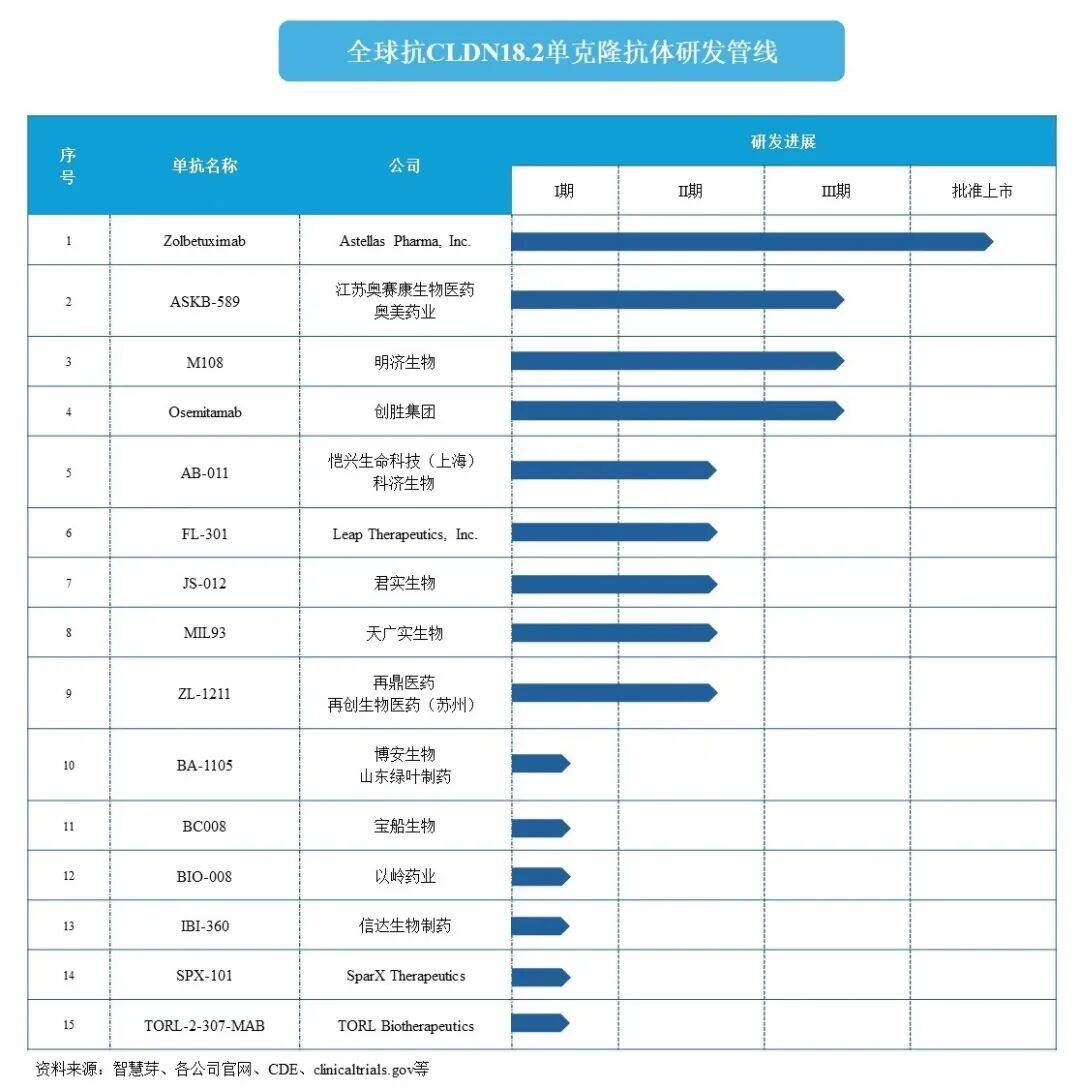
Anti-CLDN18.2 Monoclonal AntibodyYesTargeted CLDN18.2 Therapy for TumorsThe Type of Drug with the Fastest R&D ProgressCurrently, only one CLDN18.2 monoclonal antibody (Zolbetuximab) has been approved for marketing in Japan. Zolbetuximab is a chimeric IgG1 monoclonal antibody that specifically binds to CLDN18.2 on the surface of tumor cells, inducing tumor cell death by activating two immune system pathways: antibody-dependent cellular cytotoxicity (ADCC) and complement-dependent cytotoxicity (CDC).
In addition, multiple anti-CLDN18.2 monoclonal antibodies are in clinical trials: 3 in Phase III, 5 in Phase II, and 6 in Phase I.
2
Global CLDN18.2 Bispecific Antibody R&D Pipeline
Bispecific antibodies, as a new generation of antibody technology, have specific killing effects on tumor cells. Although the application of bispecific antibodies in the treatment of solid tumors has potential prospects, most of the research and development is still in the early stages. Continuous innovation and optimization of the design formats, targets, and delivery systems of bispecific antibody drugs are expected to achieve their mature application in cancer treatment.
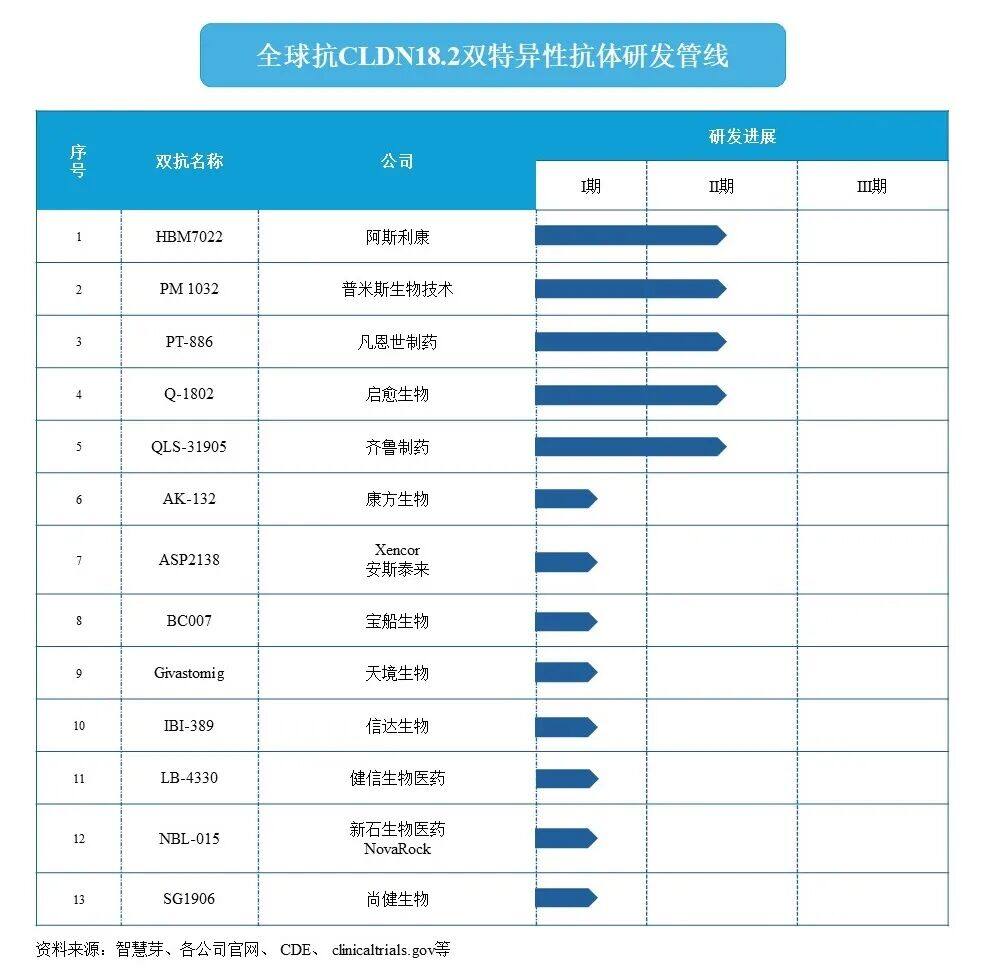
Currently, the bispecific antibody drugs targeting CLDN18.2 with the fastest global R&D progress are in Phase II clinical trials (5 drugs), and another 8 are in Phase I clinical trials.
3
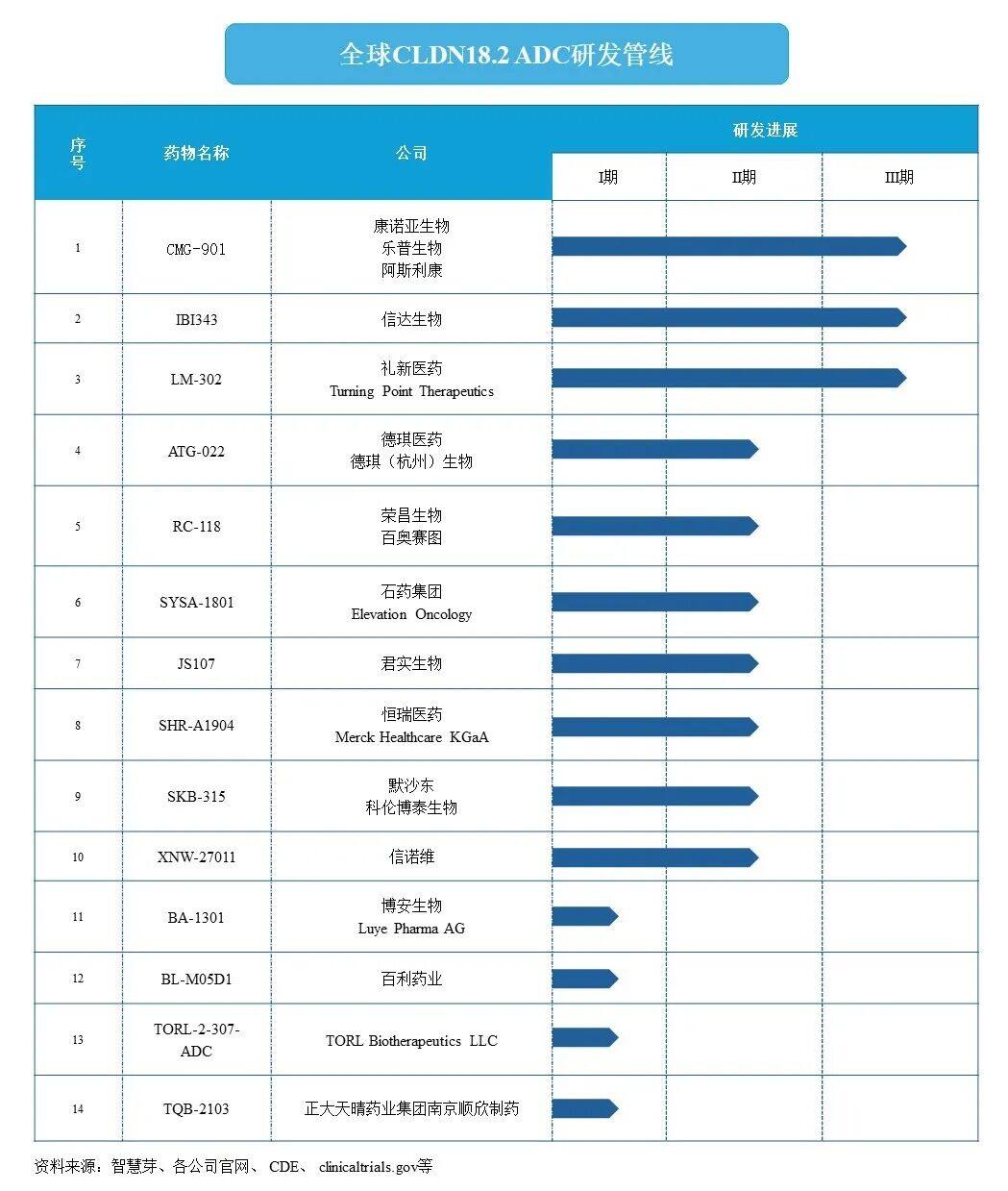
Global CLDN18.2 ADC R&D Pipeline
ADC, with its specific antigen recognition, release of cytotoxic drugs to kill target cells, and the combination of high specificity of antibodies and high antitumor activity of cytotoxic drugs, has shown great potential in the field of targeted cancer therapy.
Currently, the ADC drugs targeting CLDN18.2 with the fastest global R&D progress are in Phase III clinical trials (3 drugs), another 7 are in Phase II clinical trials, and 4 are in Phase I clinical research stages.
4
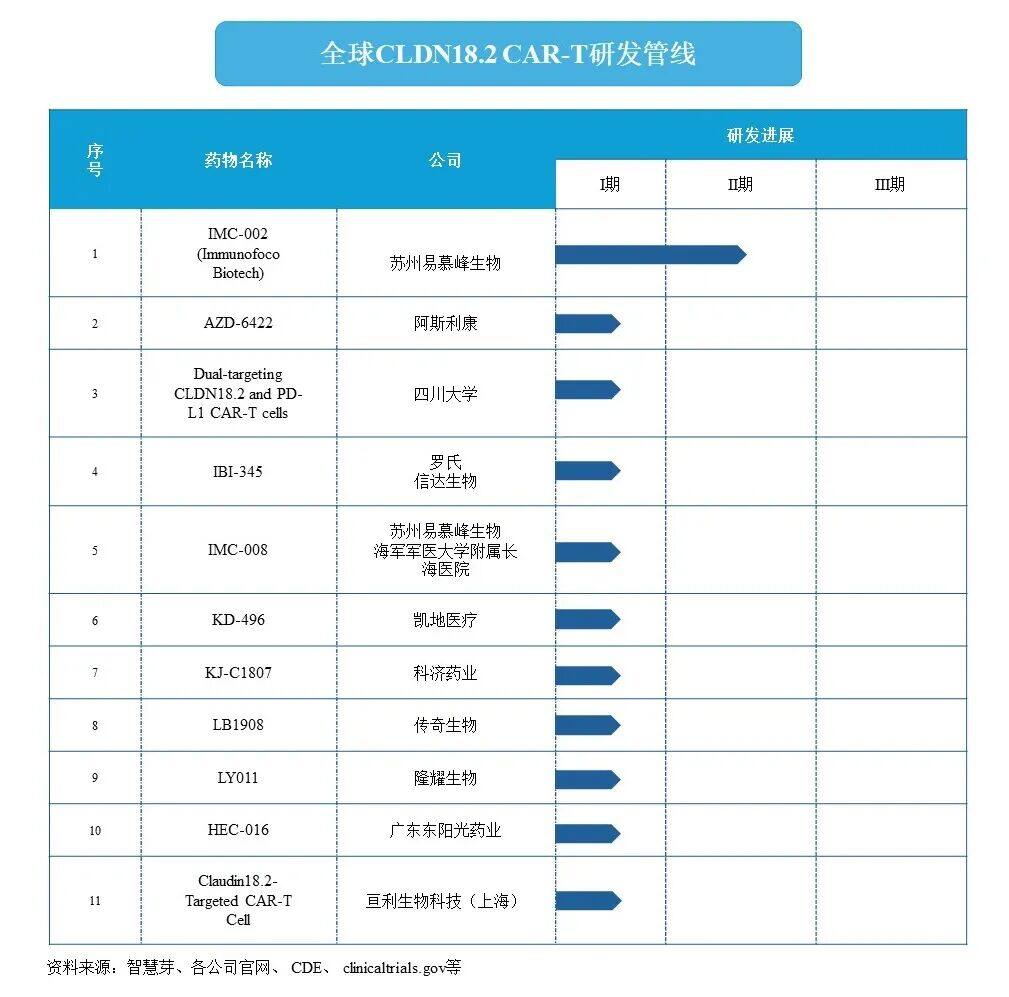
Global CLDN18.2 CAR-T R&D Pipeline
The high-specificity expression pattern of CLDN18.2 makes it an ideal target for CAR-T therapy, and the application of CLDN18.2 in CAR-T cell therapy also brings new hope for CAR-T therapy in the treatment of solid tumors.
The CAR-T therapy targeting CLDN18.2 with the fastest global R&D progress is in Phase II clinical trials (1 candidate), while another 10 CAR-T therapies are in Phase I clinical research.
Targeted drug therapy is an important strategy for cancer treatment. Most targeted therapies focus on targets expressed on the cell membrane that directly participate in tumor cell proliferation, such as receptor tyrosine kinases. However, the CLDN18.2 target is generally expressed only in non-malignant gastric epithelial cells and plays a limited role in the process of tumor cell proliferation.The discovery of the CLDN18.2 target has changed the traditional targeted therapy approach focused on oncogenic driver gene sites, expanding the scope of targeted therapy to a broader range of potential targets.。
Although the safety and efficacy of drugs targeting CLDN18.2, such as monoclonal antibodies, bispecific antibodies, ADCs, and CAR-T, still need to be further validated in clinical trials, targeting CLDN18.2 for cancer treatment holds broad clinical application prospects. It is expected to improve the quality of life and prolong the survival of patients with CLDN18.2-positive solid tumors, providing new options and bringing new hope for the treatment of relevant patients.