丨Organized by the PharmaHunter Club Research Team
This year, Novartis, the "leader" in nuclear medicine, has made another significant move. Just a few days after securing a collaboration with PeptiDream on April 30 through a $180 million upfront payment and $2.71 billion in milestone payments, Novartis announced the acquisition of U.S.-based nuclear medicine technology company Mariana Oncology for $1 billion upfront and $750 million in milestone payments.In recent years, the global radiopharmaceuticals market has been in a phase of rapid growth. Following the launch of Novartis' two peptide receptor radionuclide therapy (PRRT) drugs, Lutathera and Pluvicto, in 2017 and 2022 respectively, astute multinational corporations (MNCs) have also entered the field, increasing their investments in nuclear medicine. Since 2016, Novartis has participated in seven PRRT-related transactions with a total value exceeding $15 billion. In terms of investment, Bristol-Myers Squibb (BMS) and Eli Lilly are also highly competitive. On December 26 last year, BMS acquired RayzeBio for $4.1 billion, marking the largest acquisition in the nuclear medicine sector to date. In October of the same year, Eli Lilly acquired POINT Biopharma Global Inc. for $1.4 billion, representing a 68% premium.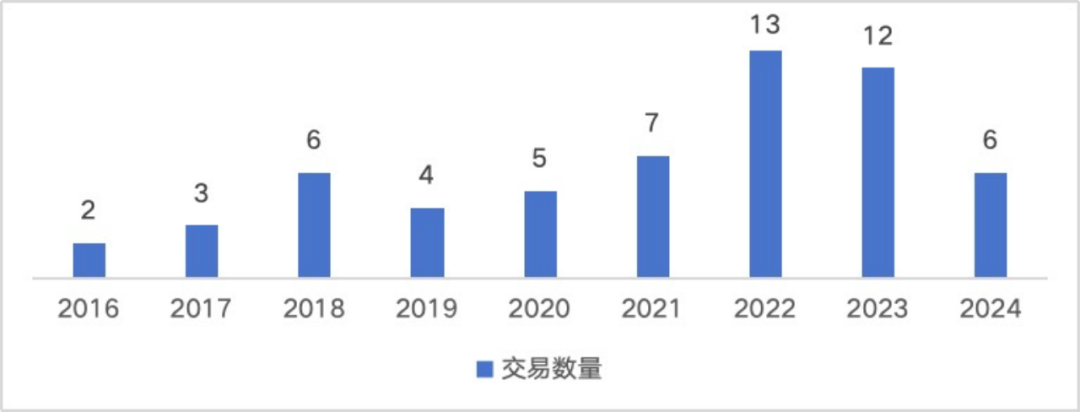
Number of PRC-related transactions from 2016 to May 2024
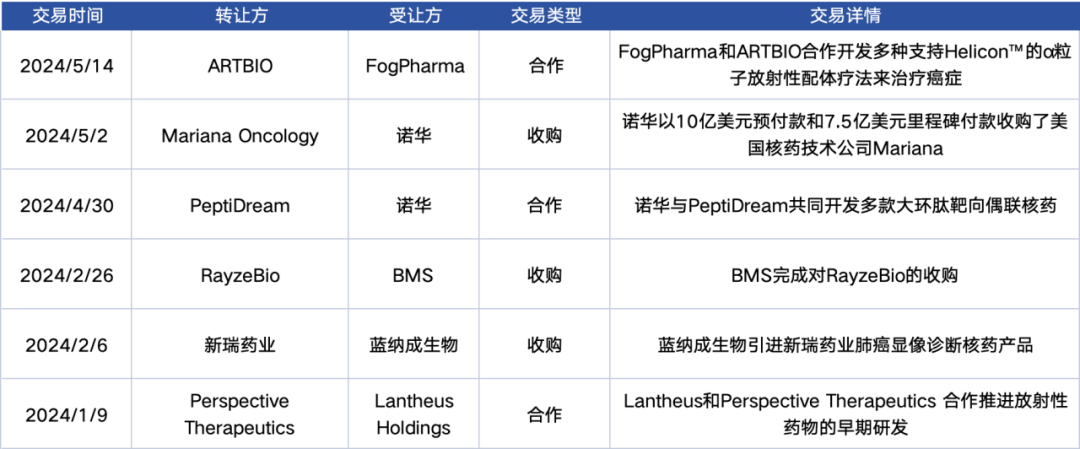
PRC Field Transaction Status as of 2024
Based on the natural advantages of cyclic peptides in terms of stability, affinity, and penetrability, their conjugation with radionuclides not only retains the benefits of traditional drug delivery but also enhances tumor drug penetration while reducing toxicity to the liver and kidneys. Peptide-radionuclide conjugates (PRC) are gradually becoming a research hotspot. This article will summarize the current research status and representative platforms in the PRC field.
Advantages of Cyclic Peptides
Cyclic peptides, which are polypeptide chains with a cyclic structure, are cyclic structured peptides derived from linear peptides. They are typically composed of 5 to 14 amino acids and are one of the most important biomolecules in nature.According to different cyclization sites, cyclic peptides can be divided into four basic structural forms: head-to-tail cyclization, side chain-to-end cyclization, head-to-side chain cyclization, and side chain-to-side chain cyclization.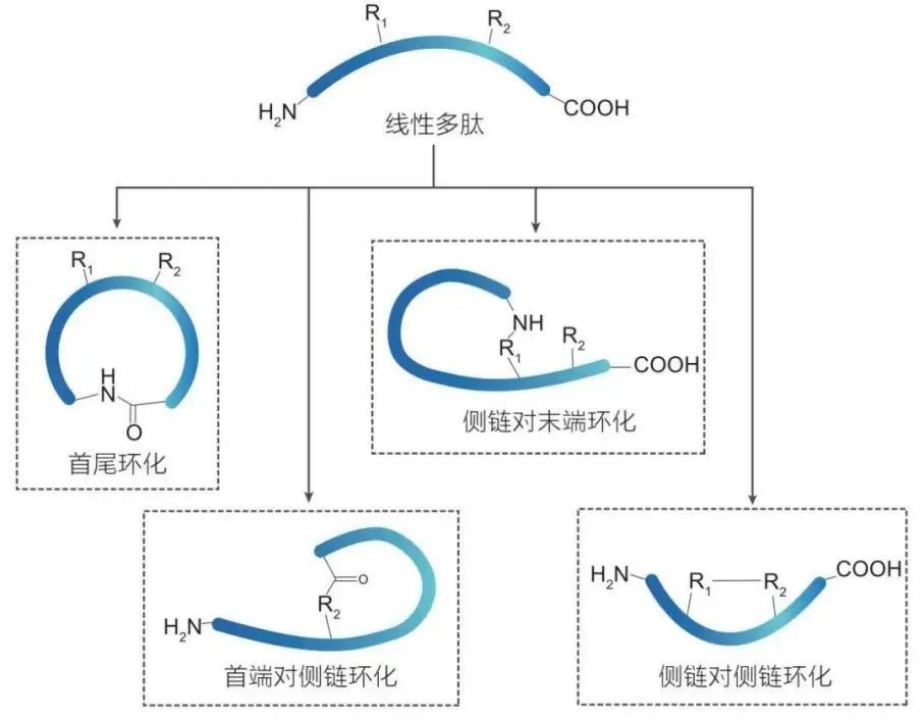
Structural changes also confer cyclic peptides with more unique physicochemical properties and pharmacokinetic characteristics compared to linear peptides.As is well known, linear peptides are inherently unstable as drugs and are highly susceptible to proteolysis within cells. Cyclization, however, promotes intramolecular hydrogen bonding within the cyclic structure, reducing the molecule's external hydrogen bonding capacity, thereby decreasing its polarity and enhancing structural rigidity and resistance to proteolysis. In principle, cyclic peptides can achieve a longer half-life and duration of action compared to linear peptides.Generally, the size of cyclic peptides is 3-5 times that of small molecule drugs. A larger surface area also increases the probability of binding to receptors, and they can even target protein targets without any binding pockets, demonstrating excellent receptor binding affinity.Different cyclization methods and different cyclization binding sites will result in different cyclic molecular patterns. In principle, the simple 20 natural amino acids from human protein sources can generate up to 25.6 billion cyclic peptide molecules. Additionally, non-proteinogenic amino acids and other variations such as N-methylation of amide bonds can be introduced. At present, cyclic peptide compound libraries are counted in the millions and hundreds of millions, far exceeding human antibody libraries. In theory, it is possible to find highly potent and specific cyclic peptide ligands for any protein target.Generally, there are three pathways for entering cells: passive diffusion, carrier-mediated transport, and endocytosis. Based on the experience of small molecule drug development, it seems that any cyclic peptide molecule with six or more amino acid residues does not possess significant membrane permeability or oral bioavailability. Indeed, the vast majority of cyclic peptides do not inherently have cell-penetrating properties, but a small subset of cyclic peptides exhibit good cell membrane permeability and oral bioavailability, such as Romidepsin and Voclosporin.
"Peptide + Radionuclide" Powerful CombinationThe development of nuclear medicine has a long history. Due to the insufficient targeting mechanism of nuclear medicine, people have developed various specific delivery methods, including peptide-radionuclide conjugates (PRC), antibody-radionuclide conjugates (ARC), and small molecule-radionuclide conjugates (SMRC). Among them, PRC drugs have received more attention because they have stronger targeting effects, lower systemic toxicity, and are easier to produce on a large scale.PRC is the conjugation of polypeptides with radionuclides. It utilizes peptide ligands associated with tumor-related receptors to conjugate with radionuclides, delivering the radionuclides to tumors through high-affinity binding between the ligand and receptor. It is mainly used for the diagnosis and treatment of neuroendocrine tumors and prostate cancer, allowing for multiple administrations with low immunogenicity.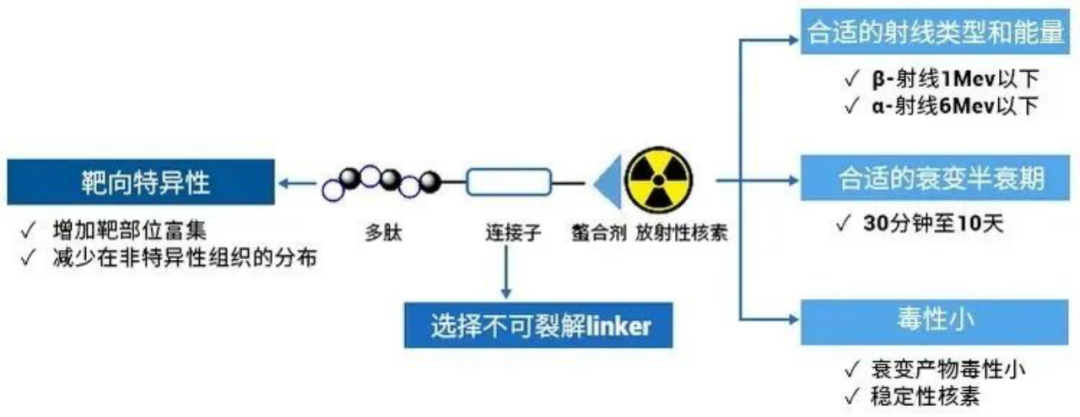
Compared with antibodies, peptides exhibit lower affinity and shorter half-life in vivo. Conversely, peptides show higher efficiency in tissue penetration and cellular internalization than antibodies. Moreover, peptides internalized into cells bind to intracellular proteins and interfere with protein-protein interactions. All of these factors demonstrate the significant potential of peptides in cancer therapy.Although similar to the concept of ADC, their structures and properties are completely different. Compared with ADC, PRC can achieve tumor penetration and almost does not produce immunogenicity. Its metabolic pathway in the body is also different, mainly through renal metabolism while ADC is metabolized by the liver. Due to the short peptide sequence, its structure is more flexible, making modifications and conjugations such as introducing non-natural amino acids and forming cyclic peptides easier, all of which enhance targeting and stability.Currently, the global PRC drug market is still in its early developmental stage. To date, seven diagnostic PRC drugs have been approved for marketing, while only two therapeutic PRC drugs have received approval: Novartis' Lutathera® and Pluvicto®.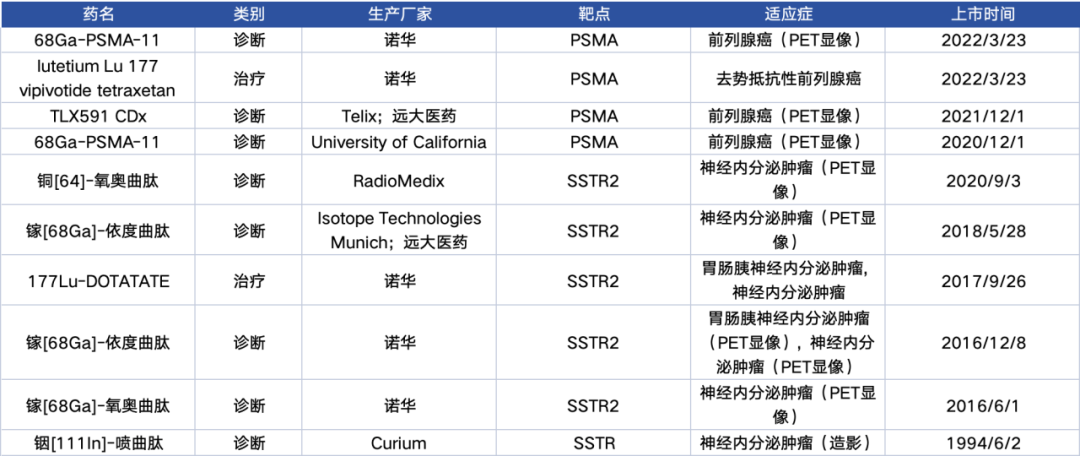
Globally Approved PRC DrugsPRC is a research hotspot in the field of targeted drugs. The fastest-progressing is Gallium-68 DOTATOC from Evergreen Theragnostics, a clinical-stage radiopharmaceutical company. This is a radiopharmaceutical that uses Positron Emission Tomography (PET) for imaging neuroendocrine tumors and submitted its marketing application on December 12, 2022. Other companies in Phase 3 clinical trials include BMS/RayzeBio, PentixaPharm, a radiopharmaceutical innovation company, Clarity Pharmaceuticals, an Australian publicly-listed nuclear medicine company, and more. In China, companies in global Phase 3 clinical trials include Radiomics, Lanathera, and Xiantong Pharmaceutical.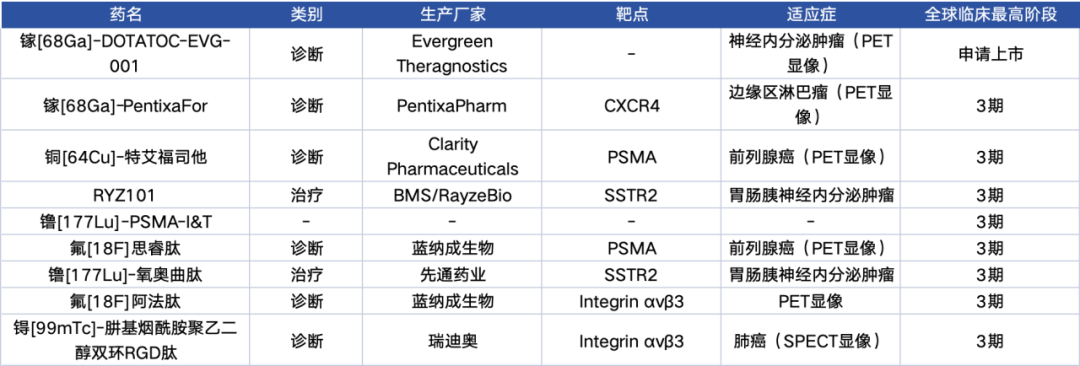
Global PRC Pipeline with Rapid Clinical ProgressRepresentative Companies of Cyclic Peptide Technology
Bicycle was founded in 2009, headquartered in Cambridge, UK, and went public on NASDAQ in April 2019.The company's bicyclic peptide technology is based on the innovative research work of Sir Greg Winter, a Nobel Prize in Chemistry laureate, and Professor Christian Heinis. Sir Greg Winter, a pioneer in the field of monoclonal antibodies and affiliated with the University of Cambridge, shared the 2018 Nobel Prize in Chemistry with Frances Arnold and George Smith for their related work on phage display for the directed evolution of antibodies. Sir Greg Winter is a co-founder of Bicycle Therapeutics.Bicycle, as a leading company in the development of novel cyclic peptide drugs, applies its technology platform to monovalent bicyclic peptides, bispecific bicyclic peptides, multispecific bicyclic peptides, peptide-drug conjugates, and peptide-oligonucleotide conjugates, perfectly overlapping with the application scope of antibody drugs.Bicycle has a proprietary phage screening platform that uses genetic engineering to insert exogenous gene fragments into the genes of specific phage proteins. After expression, a recombinant peptide library is obtained, which can be used to discover targeting peptides by binding with specific molecules.The molecular weight of Bicycle is between 1.5KDa-2KDa, with advantages of good tissue penetration and renal clearance, high affinity and selectivity. Its larger molecular footprint enables targeted protein-protein interactions, combining the pharmacological benefits of biologics with the pharmacokinetic advantages of small molecule drugs, and it has no immunogenicity.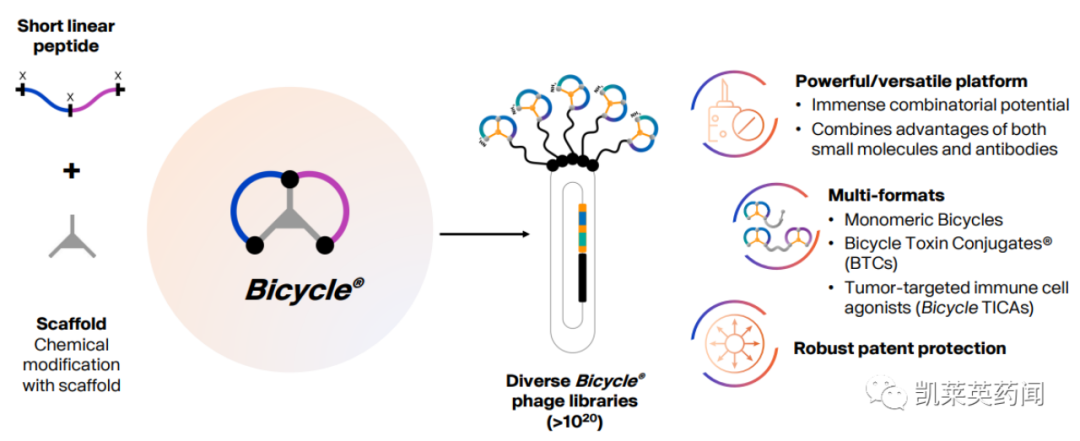
2. Transaction Cooperation:According to incomplete statistics, the company has been involved in 8 transactions, with a total disclosed transaction value exceeding $6.6 billion; collaborations span across indications such as anti-infectives, cardiovascular, hematology, ophthalmology, and respiratory.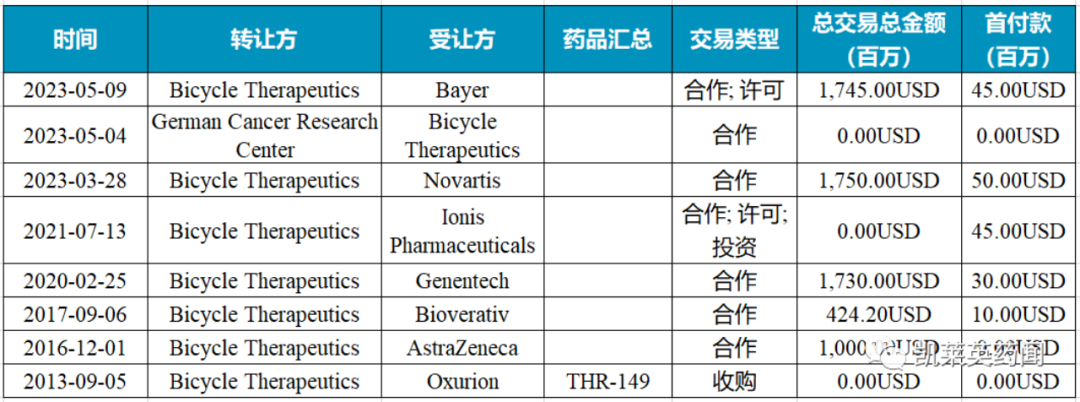
- March 2023:Bicycle and Novartis have reached a collaboration to jointly develop, manufacture, and commercialize bicyclic peptide-based radiopharmaceutical conjugates (BRCs) for multiple oncology targets.
- July 2021: Bicycle and Ionis jointly announced an exclusive licensing and collaboration agreement targeting oligonucleotide drugs. Ionis will obtain the exclusive rights to use a transferrin receptor TfR1-specific cyclic peptide molecule, while Bicycle will receive a $45 million upfront payment.
- February 2020: Bicycle announced a strategic collaboration agreement with Genentech, a subsidiary of Roche, to jointly develop novel immuno-oncology therapies based on Bicycle’s proprietary bicyclic peptide technology platform. Bicycle received a $30 million upfront payment and is eligible for up to $1.7 billion in potential milestone payments.
- September 2017: Bicycle announced a collaboration with Bioverativ to develop novel drugs for the treatment of hemophilia and sickle cell anemia. Bicycle is responsible for the early-stage research, including lead drug discovery.
- December 2016: Bicycle announced a $1 billion collaboration agreement with AstraZeneca to develop bicyclic peptide drugs for the treatment of respiratory, cardiovascular, and metabolic diseases using the latter's proprietary technology platform. Under the agreement, Bicycle will provide bicyclic peptide drug screening services for several targets designated by AstraZeneca, while AstraZeneca will be responsible for the subsequent development and commercial promotion.
- September 2013: The therapy developed by Bicycle in collaboration with Oxurion for the treatment of diabetic macular edema is THR-149, an innovative plasma kallikrein inhibitor based on bicyclic peptides.
PeptiDream, founded in 2006, is a global leader in the discovery and development of macrocyclic peptide therapies. Headquartered in Kawasaki City, Kanagawa Prefecture, Japan, PeptiDream has, since its inception, created a peptide library consisting of trillions of diverse peptides and possesses a proprietary Peptide Discovery Platform System (PDPS), which efficiently selects promising, highly selective specialty cyclic peptides from the peptide library.PeptiDream's PDPS core technology includes two major parts: PDTS (Peptide Discovery Translation System) and PDDS, wherein PDTS contains the company's underlying core technology, Flexizyme.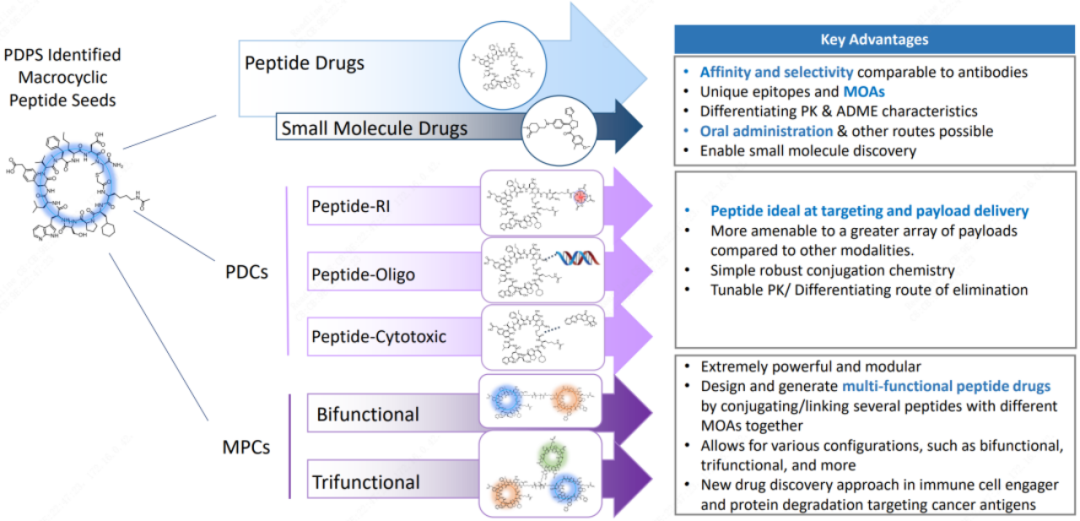
The PDPS platform has attracted strong interest from major pharmaceutical companies since its launch. Whether in the field of neurological diseases or cancer, it can efficiently identify potential compounds for various diseases, aiding in new drug discovery. As a result, several global large multinational pharmaceutical companies (MNCs), including Amgen, AstraZeneca, Bristol-Myers Squibb, Eli Lilly and Company, GlaxoSmithKline, Novartis, Merck & Co., Sanofi, Johnson & Johnson, Shionogi, and Genentech, have established partnerships with PeptiDream.- In July 2021, PeptiDream separately announced PDC (Peptide-Drug Conjugates) development collaborations with Takeda and Alnylam, with a total value of up to $5.7 billion.
- In December 2022, PeptiDream announced the signing of a new PDC co-research and licensing agreement with Merck. Under this agreement, PeptiDream will utilize its PDPS technology platform to identify candidate peptide molecules for targets of interest to Merck, assisting in the development of PDC drugs. PeptiDream will receive an upfront payment from Merck and is eligible for development, regulatory, and commercial milestone payments for the candidate products, with a potential total amount of up to 2.1 billion US dollars.
- In December 2022, PeptiDream announced the signing of a research collaboration and license agreement with Eli Lilly. Both parties will focus on the discovery and development of novel PDCs. Under the agreement, PeptiDream will leverage its PDPS technology platform to discover high-affinity macrocyclic peptide ligands to assist Eli Lilly in delivering payloads to target cells and tissues. According to the terms of the agreement, PeptiDream will receive an upfront payment from Eli Lilly and is eligible for development, regulatory, and commercial milestone payments for candidate products, with a potential total amount of $1.235 billion. This collaboration marks the third partnership between PeptiDream and Eli Lilly.
- In September 2023, PeptiDream announced a new multi-target collaboration and licensing agreement with Genentech, a subsidiary of Roche, aimed at discovering and developing novel macrocyclic peptide-radiosotope (peptide-RI) conjugates, also referred to as Peptide Radio-Conjugates (PRC). Under the terms of the agreement: PeptiDream will receive an upfront payment of $40 million (5.9 billion yen) from Genentech and is eligible to receive potential milestone payments of up to $1 billion (147.7 billion yen) based on the achievement of specific development, regulatory, and commercial milestones; additionally, PeptiDream is eligible to receive tiered royalties on net sales of any such products arising from the collaboration (excluding Japan).
Layout of Chinese Enterprises in the PRC Field
Due to technical barriers and policy factors, there are few companies in China that have ventured into radiopharmaceutical conjugates, and even fewer that have developed peptide radionuclide conjugates. As of now, there are approximately 176 RDC (Radiopharmaceutical Drug Conjugates) pipelines under research in China, of which about 112 are PRC (Peptide Radionuclide Conjugates) pipelines. A total of 45 have entered clinical stages, with five in Phase 3.- The "Therapeutic" Lutetium-177Lu Oxytocin Injection from Xiantong Pharmaceutical is currently undergoing Phase 3 clinical trials, making it one of the fastest progressing treatments;
- TLX591-CDx, co-developed by Telix and Grand Pharmaceutical for the diagnosis of prostate cancer, is currently in Phase 3 clinical trials;
- Lan Nancheng's PSMA-targeted radioactive in vivo diagnostic drug, Fluorine [18F] Cerepeptin Injection, and lung cancer imaging diagnostic product, Fluorine [18F] Alfatide Injection, are both in Phase 3 clinical trials.
- 99mTc-3PRGD2 (Technetium [99mTc] Hydrazinonicotinamide Polyethylene Glycol Bicyclic RGD Peptide Injection), developed by RayzeBio, is the first domestically innovative Class 1 new drug for tumor imaging in China's nuclear medicine field and also the world’s first broad-spectrum tumor imaging agent for SPECT imaging. It is currently in Phase 3 clinical trials.

PRC Pipeline in Phase 3 Clinical Trials in ChinaOther representative companies in the PRC include Fulllink Pharmaceuticals, Anji Biotech with its globally leading Structural Targeted Peptide Design (STP-AID) platform and technology, and New Radiance Medical, one of China's leading radioactive pharmaceutical companies.- In November 2022, Fulllink Pharmaceuticals acquired Focus-X Therapeutics, located in New Jersey, USA, for $2.45 billion, enhancing Fulllink Pharmaceuticals' technical platform and product pipeline in the peptide field. This includes two products: one is a Prostate-Specific Membrane Antigen (PSMA)-targeted peptide for treating metastatic castration-resistant prostate cancer, and the other is a Neurotensin Receptor 1 (NTSR-1)-targeted peptide with potential application in treating pancreatic cancer.
- In November 2022, Angi Bio collaborated with New Radiance Medical to develop innovative peptide radionuclide conjugate (PRC) drugs.
In recent years, China has introduced many favorable policies to promote the development of radiopharmaceuticals and nuclear medicine. In 2021, eight ministries and commissions, including the China Atomic Energy Authority, the Ministry of Science and Technology, and the Ministry of Public Security, released the "Medium and Long-term Development Plan for Medical Isotopes (2021-2035)." In 2022, the Center for Drug Evaluation of the National Medical Products Administration issued the "Regulations on the Administration of Radiopharmaceuticals (Revised)."How PRC drugs in China will develop, we still need to wait and see.
Cyclic Peptides: The Ultimate Beneficiary of Technological Iteration, A Game-Changer in the Market
PharmResearch Network: The Rise of Peptide + Radionuclide CombinationsYima Guest: Nearly $3 Billion! Novartis Expands Peptide Discovery Collaboration
Featured Article Recommendations
Disclaimer
1. All information provided by the "Drug Hunter Club" is for reference only and should not be used as a basis for any commercial transactions or medical services. If any deviation occurs from the independent use of the content from the "Drug Hunter Club," our company shall bear no responsibility, including but not limited to legal liability or compensation.
2. "Drug Hunter Club" is committed to providing reasonable, accurate, and complete information, but does not guarantee the reasonableness, accuracy, or completeness of the information, and shall not be liable for any loss or damage caused by unreasonable, inaccurate, or omitted information.
3. Some article information in the "Drug Hunter Club" is sourced from online reprints and is intended for the purpose of conveying more information, without implying endorsement of the views or verification of the authenticity of the content. If there are any questions about the content, please contact our company promptly.
4. For issues not covered in this statement, please refer to relevant national laws and regulations. In case of any conflict between this statement and national laws and regulations, the latter shall prevail.