Major Pharma Companies Intensify Pipeline Rationalization: Multiple Clinical Programs Terminated
SPH
Pharmaceutical R&D and Manufacturing
Staidson
Innovative Drug Research and Development Manufacturer
Bristol-Myers Squibb
Biopharmaceutical and Nutritional Product R&D and Sales

Gilead Sciences
Antiviral Drug Developer
Roche
Oncology Drug Research, Development, and Manufacturing

Pfizer
Pharmaceutical R&D Developer

Novartis
Drug Development and Manufacturing

Sanofi
Pharmaceutical R&D Developer

AstraZeneca
Biopharmaceutical Manufacturer
On May 1, SPH issued an announcement deciding to terminateI010Project B001, Project B002, and Project B003's clinical trials and subsequent development. The three cancer drug research and development projects have accumulated investments exceeding 300 million yuan...
Since 2024, multiple pharmaceutical companies, including multinational corporations, have terminated redundant drug research and development projects, drawing significant attention within the industry.
SPH Terminates Three R&D Projects
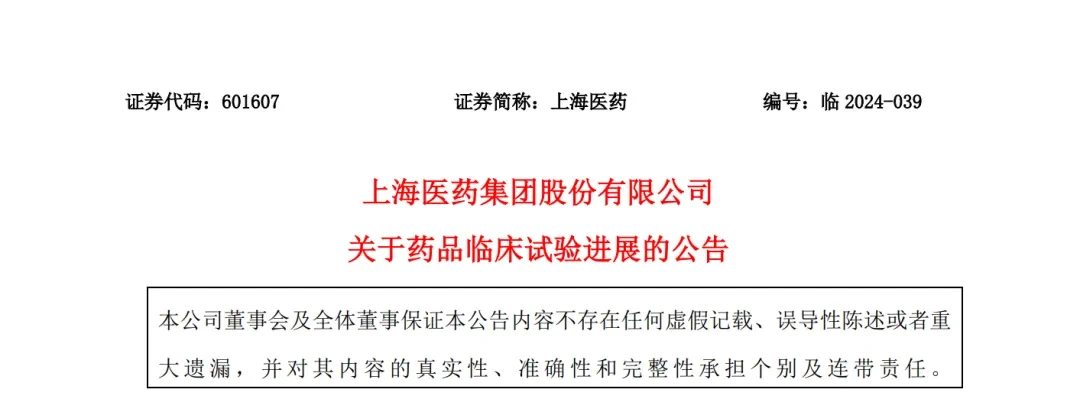
On May 1, SPH issued an announcement deciding to terminate the clinical trials and subsequent development of the I010 project, B002 project, and B003 project. Among them, the I010 project and B002 project are in Phase I clinical trials, while the B003 project is in Phase II clinical trials.
SPH stated,To allocate R&D resources reasonably and focus on advantageous R&D projects, based on a comprehensive evaluation of the future market value, business synergy, and subsequent development investment of the aforementioned R&D projects, it has been decided to terminate these R&D projects.
I010 is an epidermal growth factor receptor tyrosine kinase inhibitor, intended for the treatment of malignant tumors such as non-small cell lung cancer (NSCLC).
In November 2016, the project was approved by the National Medical Products Administration (NMPA) to conduct clinical trials and is currently in the final stage of Phase I clinical trials. To date, the project's total R&D investment has amounted to approximately RMB 47.599 million.
B002 is a novel recombinant human monoclonal antibody product intended for HER2-positive metastatic breast cancer and neoadjuvant therapy.HER2-Positive Breast CancerTreatment.
In September 2017, the project was approved by the National Medical Products Administration to conduct clinical trials, and it is now in the final stage of Phase I clinical trials. To date, the project has accumulated a total investment of approximately RMB 133 million.
B003 is a human recombinant monoclonal antibody conjugated with a small molecule drug product, intended for the treatment of HER2-positive locally advanced or metastatic breast cancer.
In January 2018, the project was approved by the National Medical Products Administration to conduct clinical trials and is currently in the patient enrollment phase of Phase II clinical trials. To date, the project has accumulated a total investment of approximately RMB 141 million.
Staidson Terminates 4 COVID-19 Clinical Trials
On March 25, Staidson issued an announcement stating that, based on the current situation of the COVID-19 pandemic and in conjunction with the progress of the annual audit work, the company conducted a review of its ongoing projects. After careful consideration, it was decided to terminate the research work on the COVID-19 indication for BDB-001 Injection, STSA-1002 Injection, STSA-1005 Injection, as well as the combination therapy of STSA-1002 and STSA-1005.
According to the basic information of the drugs whose clinical trials were terminated, the total R&D investment for the four COVID-19 projects amounted toRMB 383 millionThe earliest product to receive clinical approval was the BDB-001 injection, which occurred in February 2020. After completing Phase I clinical trials in China, the BDB-001 injection also launched international multicenter Phase II/III clinical trials in India, Indonesia, Spain, and Bangladesh.
In addition, three major COVID-19 projects entered clinical trials in 2021, and another was approved for clinical trials in August 2022. The progress of several key research and development projects is relatively behind and has not yet entered the later stages of clinical trials.
Staidson stated that the termination of the above projects in the COVID-19 indication direction will not affect their continued research in other indications, and the clinical research work already carried out will lay a solid foundation for the subsequent expansion of indications for related projects.
Beijing Tiantan Biological Products Corporation Limited Terminates a Phase III Clinical Trial
On January 31, Beijing Tiantan Biological Products Corporation Limited announced that it had decided to terminate the Phase III clinical trial and subsequent development of its holding subsidiary Rongsheng Pharmaceutical's "Intravenous Cytomegalovirus Human Immunoglobulin (pH4)."
The reason is: According to the situation in China after allogeneic hematopoietic stem cell transplantationCytomegalovirus InfectionThe current situation of prevention and treatment, based on a comprehensive and cautious analysis of the market conditions, combined with the strategic planning of Beijing Tiantan Biological Products Corporation Limited, has led to the decision to terminate the Phase III clinical trial and subsequent development of the drug.
The announcement shows that the intravenous administration of cytomegalovirus human immunoglobulin (pH4) project obtained the drug clinical trial approval in 2016. It is mainly used for the treatment of cytomegalovirus (CMV) viremia and related diseases in immunodeficient patients such as those undergoing hematopoietic stem cell transplantation. The company has invested 70.6909 million RMB in the research and development of this drug.
Turn the spotlight to multinational pharmaceutical companies.
In 2024, multiple multinational pharmaceutical companies eliminated redundant pipelines and concentrated resources.Focus on More Promising Business Assets, Promote the restructuring and transformation of enterprises.
BMS, Cut 12 Pipelines
BMS CEO Christopher Boerner said in a restructuring statement: The company will cut 12 R&D pipelines. The saved funds will be used to invest in potential blockbuster products, such as the cell therapy Breyanzi.
According to Samit Hirawat, the company's Chief Medical Officer, BMS has so far halted or outsourced the development of 12 projects, including the follow-up version of its immunotherapy Yervoy, SIRPα- and BET-targeted drugs, and will continue to review its pipeline for the remainder of the year.
Gilead Sciences Cuts 10 Projects
In the first quarter of this year, Gilead Sciences terminated two cell therapy projects: the Phase 2 trial of autologous anti-CD19 CAR-T cell therapy Brexucabtagene Autoleucel (ZUMA-25) for the treatment of rare B-cell malignancies and the Phase 1 trial of CLL-1 (KITE-222) for the treatment of relapsed or refractory acute myeloid leukemia.
In addition, Gilead Sciences has removed six trials related to the CD47 antibody magrolimab from its pipeline, including magrolimab combination therapy for the treatment of squamous cell carcinoma of the head and neck.Triple-Negative Breast Cancer, and other solid tumors such as colorectal cancer.
Magrolimab is a potential first-in-class anti-CD47 immunotherapy acquired by Gilead Sciences through its $4.9 billion acquisition of Forty Seven, Inc., but it has encountered successive setbacks during subsequent clinical development.
Roche Cuts 6 Pipelines
On April 24, according to the first-quarter report, Roche cut six projects in the first quarter of this year, including camonsertib and belvarafenib for solid tumors, the bispecific antibody RG6286 for colorectal cancer, RG6163 for psychiatric disorders, the LepB inhibitor RG6319 for urinary tract infections, camonsertib, and Enspryng for the treatment of myasthenia gravis.
CEO Thomas Schinecker stated in the company's first-quarter earnings call with the media that setting priorities and continuously reallocating resources are part of normal business operations to ensure funds are used in the best interest of patients and the company. Roche aims to have 80% of its pipeline consist of either best-in-class or first-in-class assets.
Pfizer, Abandons 4 Projects
On May 1, Pfizer announced its Q1 financial report for 2024. The report showed that while advancing promising products, Pfizer appropriately discontinued four projects in the first quarter:
Discontinuation of the Development of Gene Therapy VTX-810 for TreatmentWilson's DiseaseCurrently in Phase I; Development of the CGRP receptor antagonist zavegepant for the prevention of migraine attacks has been terminated, which was in Phase II; Development of the S1P receptor etrasimod for the treatment of atopic dermatitis and alopecia areata has been terminated in Phase II studies.
Novartis Removes Two Projects
On April 23, Novartis released its Q1 2024 performance. In the R&D pipeline, a comparison between the pipelines disclosed in Novartis' Q1 2024 and Q4 2023 financial reports revealed that adjustments were made, removing two projects, including the CD73 antibody NZV930 project and the CSF-1R inhibitor sotuletinib. Notably, NZV930 was introduced by Novartis from Surface Oncology, and several clinical trials for this drug had already been terminated previously.
Sanofi, Abandoning Some Indication Projects
On April 25, Sanofi released its Q1 2024 earnings report. The financial report showed that Sanofi has discontinued certain indication projects in its immunology and neurology pipelines, including the Phase 2 study of CD40L antibody Frexalimab for Sjögren's syndrome, the Phase 2 study of RIPK1 inhibitor Oditrasertib for Amyotrophic Lateral Sclerosis (ALS), and the Phase 2 study of Venglustat, a molecule for treating the rare genetic disease GM2 Gangliosidosis.
AstraZeneca Abandons Several Early-Stage Drugs
On April 25, according to the first quarter report, AstraZeneca will abandon several early-stage drugs, including MEDI6570, AZD7503 (ION455), and AZD5055.
MEDI6570 is a LOX-1-targeting monoclonal antibody designed to block multiple ligands of the LOX-1 receptor. This asset was undergoing a Phase 2 clinical trial named GOLDILOX for the treatment of post-myocardial infarction, but it was discontinued due to "strategic portfolio prioritization."
AZD7503, a pipeline acquired by AstraZeneca from Ionis, is a ligand-conjugated antisense oligonucleotide (LICA) drug designed to inhibit the production of the 17β-hydroxysteroid dehydrogenase 13 (HSD17B13) protein, with non-alcoholic steatohepatitis (NASH) selected as the indication.
AZD5055 is an oral Porcupine inhibitor, currently under investigation for idiopathic pulmonary fibrosis (IPF) and other progressive fibrosing interstitial lung diseases (ILDs) in Phase 1 trials.
*This WeChat Official Account remains neutral on all original and reproduced content, statements, and viewpoint judgments. The shared content is for public welfare purposes only. If any reproduced works or images have incorrect author source markings or involve infringement, the original authors are kindly reminded to contact the editor for removal.
*Editorial Responsibility| Mu Yang
*Reprint Authorization | Mr. Zhang 17551939537(WeChat same number))
*Business Cooperation | PartyTeacher13262726197(WeChat same number)