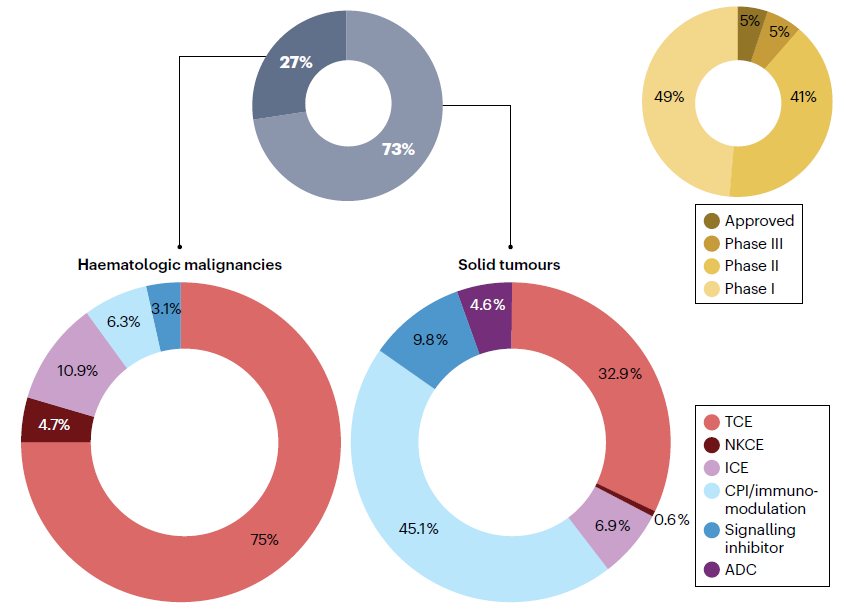
Today, the U.S. FDA announced the accelerated approval of a drug developed by Amgen.Bispecific T-cell Engager (BiTE) Imdelltra (tarlatamab)Launched for the treatment of adult patients with extensive-stage small cell lung cancer (ES-SCLC) whose disease has progressed during or after chemotherapy. A previous press release from Amgen stated,Imdelltra is the first approved BiTE therapy for the treatment of solid tumors. The approval of Tarlatamab is based on the results of the global Phase 2 clinical trial, DeLLphi-301. The trial results showed that tarlatamab demonstrated durable anti-tumor activity in patients with advanced SCLC whose disease progressed during or after platinum-based chemotherapy. Released last year,"The New England Journal of Medicine" (NEJM) Data show thatAt a median follow-up of 10.6 months, an intent-to-treat analysis of 100 patients receiving the selected 10 mg dose of tarlatamab showedObjective Response Rate (ORR) was 40%(97.5% CI: 29-52). This patient populationThe median progression-free survival (mPFS) was 4.9 months (95% CI: 2.9-6.7), and the median overall survival was 14.3 months (95% CI: 10.8-NE).Among patients who responded to the 10 mg dose of tarlatamab, 58% maintained their response for at least 6 months at the data cutoff. In terms of safety, no new safety signals were observed compared to Phase 1 clinical trials. Discontinuation due to treatment-related adverse events (TRAE) was uncommon (4%).10 mg tThe most common treatment-emergent adverse events (TEAEs) reported by patients in the arlatamab group were cytokine release syndrome (CRS; 49%), fever (38%), decreased appetite (25%), and dysgeusia (24%). CRS was primarily limited to the first and second doses, mostly grade 1 or 2, and was generally manageable with supportive care.10 mg In the tarlatamab dose group, the incidence of grade 3 CRS was low (0%), and no grade 3 immune effector cell-associated neurotoxicity syndrome (ICANS) or related neurological events were observed (0%).NEJM The paper reported 1 patient death, considered treatment-related. Tarlatamab is a targeted therapy designed by Amgen researchers.Bispecific Antibodies (bsAbs)By simultaneously binding to CD3 on T cells and DLL3 on SCLC cells, it brings the patient's own T cells into close proximity with SCLC cells, leading to the formation of immune synapses and lysis of cancer cells.DLL3 is an exciting target for the treatment of SCLC because approximately 85% to 94% of SCLC patients express DLL3 on the surface of their cancer cells, while it is minimally expressed in normal cells. Amgen plans to initiate two Phase 3 clinical trials to evaluate tarlatamab as a first-line therapy for ES-SCLC and its efficacy in treating limited-stage small cell lung cancer (LS-SCLC). SCLC is one of the most aggressive solid tumors, with a median overall survival of only about 12 months after first-line treatment and a 5-year survival rate of approximately 7%. In the United States alone, approximately 35,000 patients are diagnosed with SCLC each year. Bispecific AntibodyWith two distinct antigen-binding domains, capable of simultaneously binding to two different antigens or two different epitopes of the same antigen.。This unique structure enables bsAbs to target multiple antigens or epitopes simultaneously, triggering a series of physiological or anti-tumor responses, which can be either independent or interrelated.This type of therapy is similar to a "cocktail" mixture of two monoclonal antibodies, but for drug developers, they only need to develop one molecule, and patients may also only need to receive one treatment to achieve the desired effect. More importantly, the synergistic effect of bsAbs may lead to more significant therapeutic outcomes. InApplications of Bispecific Antibodies in Cancer Treatment During Clinical Development (Image Source: Reference [4]) According to statistics,Currently, more than 200 bsAbs are being evaluated in over 300 clinical trials, with approximately 73% of the trials targeting solid tumors and the remaining 27% aimed at treating hematologic malignancies.It is worth mentioning that,Currently, approximately 50% of bsAbs in clinical development have entered late-stage (Phase 2 and Phase 3) or have already been approved.In terms of mechanism of action, bispecific antibodies (bsAbs) for the treatment of solid tumors are mainly immunomodulators, including bispecific immune checkpoint inhibitors (CPIs, approximately 45%) and bispecific T-cell engagers (approximately 33%), followed by bsAbs targeting dual signaling pathways, immune cell engagers (ICEs), and bispecific antibody-drug conjugates (ADCs). In the treatment of hematological malignancies, bispecific T-cell engagers dominate (approximately 75%), followed by ICEs, dual CPIs, and natural killer cells.Combiner(NKCEs)。
References
[1] Imdelltra label. Retrieved May 16, 2024, from https://www.accessdata.fda.gov/drugsatfda_docs/label/2024/761344s000lbl.pdf[2] F.D.A. Approves Drug for Persistently Deadly Form of Lung Cancer. Retrieved May 16, 2024, from https://www.nytimes.com/2024/05/16/health/fda-amgen-small-cell-lung-cancer-imdelltra.html[3] FDA Grants Priority Review to Amgen's Tarlatamab Application for Advanced Small Cell Lung Cancer. Retrieved May 16, 2024, from https://www.prnewswire.com/news-releases/fda-grants-priority-review-to-amgens-tarlatamab-application-for-advanced-small-cell-lung-cancer-302014639.html[4] Klein, C., Brinkmann, U., Reichert, J.M. et al. The present and future of bispecific antibodies for cancer therapy. Nat Rev Drug Discov (2024). https://doi.org/10.1038/s41573-024-00896-6.
Source: WuXi AppTecTitle: Creative Team of Clove GardenSubmission: luoshuhan@dxy.cn