

Bayer Submits NDA for First-in-Class Therapy Elinzanetant to Treat Menopausal Vasomotor Symptoms

Bayer
Pharmaceutical Product R&D Developer
▎WuXiEdited by the Kant Content Team
Today, Bayer announced positive results from two pivotal phase 3 trials, OASIS 1 and OASIS 2, for its investigational therapy elinzanetant. Analysis shows,The therapy met all primary endpoints and key secondary endpoints. Compared with placebo, elinzanetant significantly reduced the frequency and severity of moderate to severe vasomotor symptoms (VMS; also known as hot flashes) associated with menopause.Bayer expects to submit data from the OASIS 1, 2, and 3 trials to regulatory authorities to support the approval of elinzanetant for the treatment of moderate to severe VMS associated with menopause.

In two studies,Elinzanetant Successfully Achieves All Four Primary Endpoints. Compared to placebo, there is a significant reduction in the frequency and severity of moderate to severe VMS from baseline to Week 4 and Week 12.In OASIS 1, compared with placebo, the frequency of elinzanetant significantly decreased by -3.29 (p<0.0001) at Week 4 and by -3.22 (p<0.0001) at Week 12; severity significantly decreased by -0.33 (p<0.0001) at Week 4 and by -0.40 (p<0.0001) at Week 12.
In OASIS 2, compared with placebo, elinzanetant significantly reduced frequency by -3.04 (p<0.0001) at Week 4 and by -3.24 (p<0.0001) at Week 12; severity was significantly reduced by -0.22 (p=0.0003) at Week 4 and by -0.29 (p<0.0001) at Week 12.
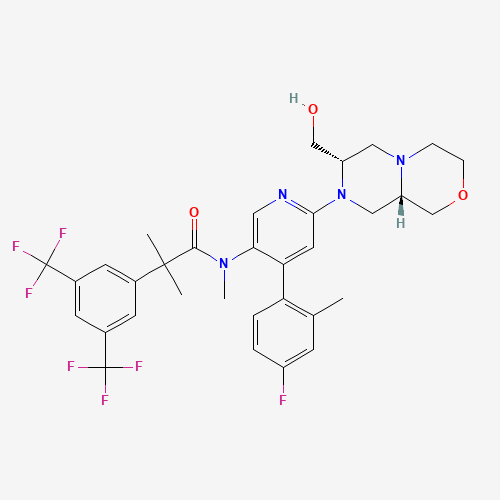
▲Elinzanetant Molecular Structure (Image Source: PubChem)
These two trials also achieved all three key secondary endpoints. Namely, compared with placebo, there was a statistically significant reduction in VMS frequency from baseline to Week 1.(respectively p<0.0001 and p=0.0013), andSleep Disorders(Both studies had p<0.0001) andQuality of Life Related to Menopause(分别为p<0.0001和p=0.0059) showed statistically significant improvement.
In two studies, elinzanetant showed a good safety profile, with headache and fatigue being the most common treatment-emergent adverse events (TEAEs) in the elinzanetant group.

Image Source: 123RF
Elinzanetant is a potential "first-in-class" dual neurokinin-1,3 (NK-1,3) receptor antagonist, administered orally once daily, and represents a non-hormonal therapy for treating moderate to severe VMS associated with menopause.Elinzanetant treats VMS by modulating a group of estrogen-sensitive neurons (KNDy neurons) in the hypothalamic region of the brain. These neurons become hypertrophic as estrogen levels decrease, leading to overactivation of the thermoregulatory pathways, thereby disrupting the body's temperature regulation mechanism and causing VMS. Elinzanetant may also reduce sleep disturbances associated with menopause.
By 2030, the number of women worldwide experiencing menopause is expected to increase to 1.2 billion, with 47 million entering this phase each year. Menopause is a transitional stage in a woman’s life associated with the gradual decline of ovarian function, typically occurring in women in their 40s or early 50s. The drop in hormone levels may lead to various symptoms, including vasomotor symptoms (VMS), sleep disturbances, and mood changes, all of which can significantly impact women's health, quality of life, and work productivity. Effectively addressing these symptoms is crucial for maintaining normal function and quality of life during menopause.

▲To learn more about the application of cutting-edge technologies in the biopharmaceuticals industry, please long press to scan the QR code above to access "WuXi AppTec Live Studio" and watch live discussions and exciting replays on related topics.


Share,PointLike,In View,Focusing on Global Biomedical Health Innovation