

Global First! AltaValve™ ushers in revolutionary breakthrough in a $10B+ TMVR market

4C Medical Technologies
Cardiovascular Consumables Developer

Source:Medical Device Business Review
Author: Jiang Jiang
Reproduction without authorization is prohibited, and reproduction is allowed only after 24 hours!
Recently, 4C Medical Technologies, Inc. (hereinafter referred to as "4C Medical"), a joint venture of Shanghai MicroPort CardioFlow Medtech Co., Ltd., announced that its Transcatheter Mitral Valve Replacement (TMVR) device, AltaValve™ System, hasReceived FDA Breakthrough Device Designation.
The certification specifically targetsModerate to Severe or Severe Mitral Regurgitation(MR), and treatment of moderate/severe mitral annulusCalcification(MAC) Moderate to Severe or Severe Mitral Regurgitation.
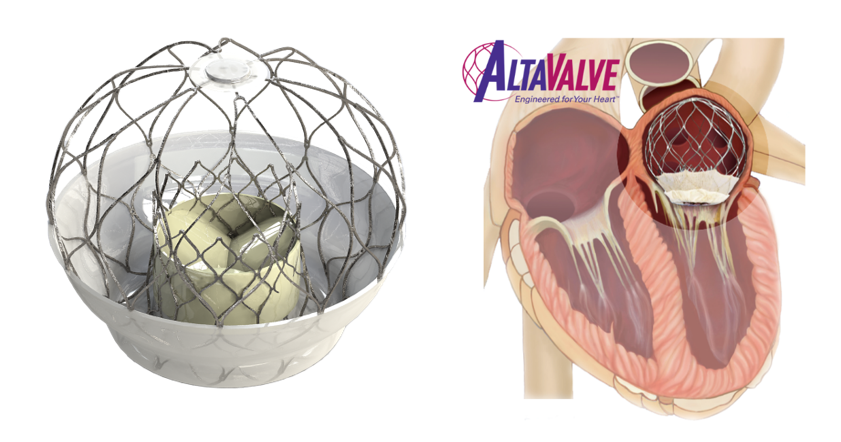
Image Source: Official WeChat Account of the Company
All along, being able to obtain FDA"Breakthrough Medical Device Designation"Medical devices, for the most part, address significant clinical needs while occupying an industry position of either "unique to us" or "superior to others." Moreover, with the support of the FDA Breakthrough Device Designation, innovative medical devices will accelerate the development, evaluation, and review process, leading to faster and more stable approval for market release in the future.
As the world's only fully retrievable, low-profile, transseptal transcatheter mitral valve system, AltaValve™'s innovative design maximally avoids the known issues associated with current TMVR technologies.Mitral Annulus Anchoring Challenge, which can protect the patient's cardiac structure during the operation,Minimize the risk of left ventricular outflow tract obstruction or injury to achieve safer and more excellent clinical outcomes.With the FDA Breakthrough Device Designation, it is expected to become the world’s first mitral regurgitation treatment solution that requires only atrial fixation after commercialization.
The mitral valve, as the valve between the left ventricle and the left atrium, is commonly associated with two main diseases: mitral regurgitation (MR) and mitral stenosis (MS). Among these, mitral regurgitation (MR) accounts for 65% of all patients with mitral valve disease and approximately 50% of all cases of heart valve disease.It is the most common valvular heart disease.
According to Frost & Sullivan estimates, by 2027 the number of global mitral regurgitation patients will reach1.14 billion peopleThe number of MR patients in China is expected to reach 13.4 million by 2030, which is 5 to 10 times the population of patients with aortic valve stenosis.
However, faced with such a large patient population, the current treatment methods appear to be insufficient. Due to the complexity of the mitral valve anatomy, this group of patients usually has complications, and the clinical options available areMedical therapies are very limited.。Compared with the significant risks and limitations of drug treatment and surgical operations,Interventional Treatment: Transcatheter Mitral Valve Replacement(TMVR) has become a new treatment option for patients with mitral regurgitation due to its advantages of minimal intraoperative trauma and fast postoperative recovery.
According to data, the 1-year and 5-year survival rates for untreated moderate to severe MR patients are 72.9% and 39.9%, respectively, while TMVR can provide a valuable alternative by implanting a new artificial valve.When properly placed, the artificial valve can effectively eliminate mitral regurgitation (MR).
Despite the remarkable efficacy of TMVR technology, there are still some notable pain points in the application of traditional transcatheter mitral valve replacement. For instance, difficulties in selecting suitable indications and...The anatomical structure of the patient is highly demanding., The fixation method of artificial valves is usually subvalvular fixation, but the traditional fixation method is not suitable for an oversized mitral valve annulus diameter.Severe Calcification of the Mitral Annulusand other conditions, and sometimes it will affect the left ventricular outflow tract. Although the existing TMVR artificial valves can basically meet clinical needs,Not suitable for all patients with moderate to severe MR.
In response to the limitations of traditional TMVR treatments, the AltaValve™ next-generation mitral valve replacement system achieves a technological breakthrough. With its unique supra-annular valve device and atrial fixation design, fixation can be completed using only the atrium.Maximally avoid the anchoring and fixation difficulties currently known in TMVR technology, and minimize the risk of left ventricular outflow tract obstruction., applicable to more patients with mitral regurgitation.
As a "transfemoral-transseptal approach" transcatheter mitral valve replacement product, AltaValve™ achieves atrial fixation only above the native mitral valve, ensuring that critical cardiac structures remain within the left ventricle.Minimize the Occurrence of Complications with Traditional TMVR Techniques, such as device embolization, left ventricular outflow tract (LVOT) obstruction, left ventricular dysfunction (e.g., chordae tendineae rupture), etc.
At the same time, the delivery system of the product provides controllable operability, adaptable to various anatomical structures. It can fully function within seconds after deployment.Ensure the hemodynamic stability of the patient; Even after full deployment, AltaValve can be reassembled, enhancing procedural safety. Minimally invasive, quick recovery, suitable for patients reluctant to undergo open-chest surgery andPatients Unsuitable for Open-Chest SurgeryIn terms of treatment options, it is undoubtedly the better choice.
In addition to significant breakthroughs in core technology, AltaValve™ has also demonstrated promising results in clinical applications.Has also been verified.
In the Early Feasibility Study (EFS), focusing on the treatment efficacy of AltaValve™ in TMVR, data from 24 patients with symptomatic severe MR who were at high risk for mortality and morbidity from conventional open-chest surgery were included. The EFS results indicate that the AltaValve™ TMVR systemTechnical success rate as high as 96%, Postoperative mitral regurgitation completely disappeared without paravalvular leakage,Minimize the Risk of LVOT Obstruction, and significantly improve MR and cardiac function in patients with severe MR. This means that the majority of patients have their conditions effectively controlled after receiving treatment.
After product iteration, the latest generation of AltaValve™ has been used for humanitarian aid. In the FIH experience of the AltaValve™ transseptal system and the first EFS experience in the United States, both patients achieved satisfactory postoperative results.
The single-center clinical experience with the AltaValve™ system shows: 100% patient acceptance rate, two consecutive patients received humanitarian assistance, and completed 30-day follow-up. The 30-day postoperative follow-up results show that the degree of mitral regurgitation in the two patients remained atNo Reflux and Mild Reflux, no device/surgery-related events, patient continues to improve.
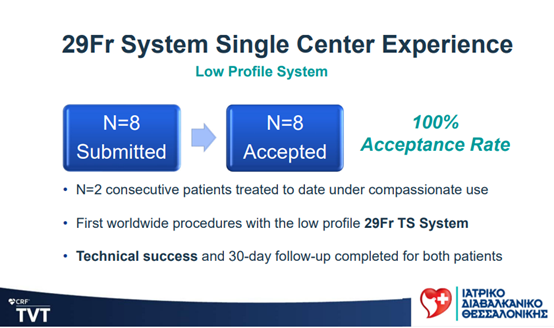
Source of the image: Official WeChat account of the company
According to Dr. Jeff Chambers, founder and chief medical officer of 4C Medical: "The AltaValve system provides a novel transcatheter treatment option to address the unmet clinical needs of patients who are not suitable for surgery or transcatheter edge-to-edge repair."
And is expected to begin global Pivotal trials of the AltaValve system later in 2024 to support CE marking and FDA approval.
It can be seen that in the mitral valve disease market, which has a large patient population but insufficient penetration, there must be hiddenHuge Growth Potential, while the AltaValve™, with its leading technological advantages, is expected to change the current clinical situation of low penetration rate, becoming an essential product for the treatment of 13.4 million patients with mitral regurgitation in China.
In the field of cardiovascular intervention, it has always been a battleground where major companies fiercely compete. In this intense environment, for AltaValve™ System to quickly capture the market, relying solely on a large patient demand and innovative technological advantages is not enough.The market strategy of enterprises is also very important.
In this aspect, HeartFlow Medical chose to use external expertise to achieve its goals.
In September 2018, HeartFlow Medical participated in the Series A financing of 4C Medical Technologies, Inc., obtaining exclusive commercial rights to its mitral valve products in China. The AltaValve™ System, launched through this powerful collaboration, is leading in both technological advancement and clinical market.With先天优势。
Due to the complexity of the mitral valve structure and high technical barriers, the development of transcatheter mitral valve replacement is quite challenging. Currently, in China's TAVR market, the majority are still in the exploratory or early clinical trial stages.
And4C MedicalAs a high-precision enterprise in the innovative treatment of structural heart disease, 4C Medical Technologies, Inc. is at the forefront of medical device innovation, focusing on developing transformative technologies for structural heart disease. The company's unique supra-annular ring implantation is the first mitral regurgitation (MR) treatment that only fixes the atrium.Awarded Two FDA Breakthrough Device Designations, which also proves the leading position of its technology in the field.
Looking at the market situation, Heartflow Medical, as one of the three major giants in the domestic mitral valve market, is relatively mature in both market size and business model.The products of HeartFlow Medical have a high market share and hospital coverage.
Based on the situation in clinical research, doctors who are proficient in transcatheter aortic valve replacement (TAVR) technology are the primary group for the clinical promotion of transcatheter mitral valve repair (TMVr) products.


Clearly, with the mature market scale of HeartFlow Medical and the technical support from 4C Medical Technologies, it undoubtedly further advances the commercialization process of AltaValve™.Provide Strong Support, and its commercial prospects are also very promising.
However, in the fiercely competitive medical device market, opportunities and challenges always coexist, and this is no exception for Heartflow Medical. In addition to facing competition from domestically produced devices, it also has to contend with the impact from two giants in the TMVR field, Edwards and Medtronic. As competition in the TMVR market becomes increasingly intense, Heartflow Medical has proactively laid out its business model to maintain competitiveness in the valve sector.
In commercial promotion, Heartflow Medical relies on MicroPort Group, sharing brand and channel advantages for commercial promotion, especially with significant synergistic effects in operations.
The cardiac valve intervention products of Xintong Medical are mainly used in the cardiology or cardiac surgery departments, which are comprehensively covered by MicroPort's departments. At the same time, there is a high degree of overlap in sales channels and academic promotion. With MicroPort's strong brand and channel advantages in the cardiovascular field, Xintong Medical has achieved accelerated growth in product commercialization. Additionally, internationally, with MicroPort's mature overseas sales team, significant manpower and financial resources have been saved for Xintong Medical’s early overseas market expansion.
In terms of product layout, Heartflow Medical continuously strengthens its strategic layout through independent research and development along with external cooperation, building up its product competitiveness and forming a comprehensive pipeline of transcatheter valve products centered around TAVR.
In addition to financing mitral valve products, in collaboration with 4C Medical Technologies, Inc., MicroPort CardioFlow Medtech Corporation continued to increase its investment in 2021, becoming the largest shareholder. It also obtained exclusive commercial rights in China for 4C Medical’s tricuspid valve product under development. This move will further enrich MicroPort CardioFlow's product portfolio in the mitral and tricuspid valve intervention fields, forming a more complete and diversified product lineup.
In recent years, HeartFlow Medical has been continuously seeking overseas market partners for joint research and development. It has established a coverage systemTranscatheter Mitral Valve Treatment Products, Transcatheter Tricuspid Valve Treatment Products, Surgical Valve Products, and Surgical AccessoriesStrategic R&D layout of products, forming a comprehensive product line and R&D layout to expand its commercial revenue capabilities.
For the performance growth, VITAHEART Medical attributed it to the continuous progress of TAVI products entering hospitals in China, which has driven a rapid increase in implant volume and revenue. Additionally, drawing on MicroPort’s coronary overseas strategy, VITAHEART Medical has continued to expand in overseas markets.Multiple key products have been approved overseas, and the global layout continues to expand.
In the commercial promotion of TMVR products, currently, it has entered nearly a hundred overseas medical institutions abroad.Hospital,A total of 120 overseas commercial implants were completed. As of December 31, 2023, the revenue generated from overseas sales of TMVR products increased by 58.9% compared to the previous year.
In the TAVR product with a higher penetration rate, its TAVR product VitaFlow was registered and listed in Argentina in 2022. In 2022, the overseas revenue reached 7.13 million RMB, increasing by 626% year-on-year, completing 63 commercial implants, continuously providing core driving force for overseas catalysis.
It can be seen that in the field of structural heart disease,Heartflow Medical Technology has experienced rapid growth through relentless R&D, acquisitions, and expansion of its operations.Overseas coverage has expanded to include four countries, namely Argentina, Thailand, Colombia, and Brazil. Efforts are underway to advance the process of obtaining EU CE certification for core products, while actively expanding into other overseas markets such as India, South Korea, Russia, Mexico, and Chile, continuously increasing global influence.
The all-round efforts of HeartFlow Medical in China and abroad also indirectly prove that, aside from the increasingly crowded TAVR sector, the mitral and tricuspid valve fields are becoming key areas for enterprises both inside and outside China to focus on.
Among them, the transcatheter mitral valve (TMV) intervention device has always been hailed as the "crown jewel" in the field of valve intervention treatment. It is the biggest hotspot in the field of structural heart disease following transcatheter aortic valve replacement (TAVR). According to Frost & Sullivan data,Global Transcatheter Mitral Valve Intervention Market to Reach $17.4 Billion, which is three to four times the size of the transcatheter aortic valve replacement market.
The huge blue ocean market will inevitably attract a group of profit-driven fighters. Not only are international leaders beginning to compete, but domestic companies in China also have multiple layouts in the R&D pipeline, each showing their unique strengths.
According to data statistics from the Eggshell Research Institute, at least 20 medical device companies in China are actively deploying in the TMV field. In the mitral valve field, apart from Cardiovations Medical, the other two of the three giantsVenus Medtech and Peijia Medtech are also expanding through acquisitions, technology introductions, and equity investments.And other methods,To introduce overseas technology to enhance product competitiveness.
Venus Medtech Acquires Cardiovalve
In January 2022, Venus Medtech announced that it had completed the 100% equity acquisition of Cardiovalve Ltd. (Cardiovalve), a company specializing in innovative transcatheter mitral and tricuspid valve therapies. This means that Cardiovalve will officially become a member of Venus Medtech's global operations team, accelerating the internationalization of innovative products.
Cardiovalve was founded in 2010 and is headquartered in Israel. The company’s self-developed Cardiovalve is an innovative transcatheter interventional valve replacement system capable of treating both mitral regurgitation and tricuspid regurgitation.
Compared with similar products, its femoral vein approach significantly enhances treatment safety. Meanwhile, the 55mm large annulus design is suitable for approximately 95% of the patient population, and the unique short stent design can effectively reduce the risk of left ventricular outflow tract obstruction. Cardiovalve has filed over 215 patent applications, of which 83 have been granted.
Peijia Medical Introduces HighLife's Patented Technology
At the end of 2020, Peijia Medical signed a licensing agreement with HighLife. According to this agreement, HighLife will grant Peijia Medical an exclusive license for its TMVR patented products under development. Peijia Medical has the right to manufacture, develop, and sell these products in Greater China, while HighLife is entitled to receive upfront licensing fees and subsequent milestone payments.
After Peijia Medical and HighLife collaborated, the two companies will establish a joint review committee to enhance information sharing regarding the development and commercialization of TMVR products. According to reports, the agreement also includes cross-implementation licensing for future product upgrades and improvements, encouraging the two companies to work closely together, focus on innovation, and share results.
HighLife SAS was founded in 2010, with its headquarters in Paris, France. The company focuses on developing a novel transcatheter replacement system for treating mitral regurgitation, aiming to perform off-pump heart surgeries through a purely endovascular approach to minimize trauma to patients. Its developed TMVR technology adopts a transseptal approach to treat patients with mitral regurgitation.
Despite the fact that domestic companies have successively gone overseas to break the deadlock, but"The ultimate test of a product is its clinical efficacy."The performance and effects of the products from these three companies in clinical applications still need to be awaited.
Looking at the financial data of the three companies in 2021,HeartFlow MedicalIn a leading position, with an income of 200 million yuan,An increase of 93.2% year-over-year; VenoMed's revenue was RMB 416 million, a year-on-year increase of 50.6%; Peijia Medical's revenue was RMB 136.5 million, an increase of 253.2% compared to RMB 38.7 million in the same period last year.
The interventional treatment of structural heart disease in China is still in a period of rapid growth, with significant room for market penetration and innovative technology advancement. However, in the long term, with leading giants ahead and domestically produced alternatives closing in, this "battle to secure the heart" is becoming increasingly intense. For domestic players, a fierce competition is inevitable, but fortunately,Some domestically produced enterprises, represented by 4C Medical Technologies, have found a breakthrough direction.
Mitral valve disease is highly complex and may present with a variety of concurrent symptoms. Drawing on clinical experience and technology from overseas to reduce complications associated with TMVR technology is the prevailing trend. In the future, in the field of mitral valve treatment, it will be possible to provideHigh safety, no complications, no reflux after surgeryCompanies will gain more market.
Currently, the AltaValve™ System, jointly developed by HeartFlow Medical and 4C Medical Technologies, Inc., has integrated two major functions: low left ventricular outflow tract obstruction and retrievability. It is the world's first mitral regurgitation treatment solution that can be fixed solely in the atrium, preserving the original physiological structure of the mitral valve to a greater extent while expanding the indications and patient population.More in line with the future development trend in the field of mitral valve treatment.
With the AltaValve™ System receiving FDA Breakthrough Device Designation, and the addition of 4C Medical Technologies' products to MicroPort CardioFlow's valve product line, this will further enrich MicroPort CardioFlow's product offerings in the mitral valve intervention field, creating a more complete and diversified product portfolio. In a few years, the TMVR landscape could be quite different.
In general, in the face of fierce market competition, continuously deepen the research and exploration of products.Innovative approaches remain a crucial direction for the development of the mitral valve field in China.
So, can HeartFlow Medical, which is already ahead, leverage its more comprehensive and differentiated product layout advantages to create a successful commercialization path for domestically produced TMVR? Let us wait and see.
The content of this article is for reference only and does not constitute investment advice. Readers are expected to effectively distinguish. Due to human factors, there may be some information gaps. If there are any issues with the company's information, please contact us in a timely manner. Thank you for your understanding.The interpretation of policies only represents the viewpoint of this platform, and the content shall be subject to official documents.If any platform reprints this article, it must take responsibility for the content of the article itself. Medical Device Business Review is not responsible for the impact of secondary dissemination caused by the reprint.
*Advertisement