

Junshi Biosciences Announces First-in-Class IL-2-Free TIL Therapy GC101 Demonstrates Robust Efficacy in Advanced Gynecologic Cancers in Landmark Publication in BMC Medicine
Juncell Therapeutics
Solid Tumor Cell Therapy Developer
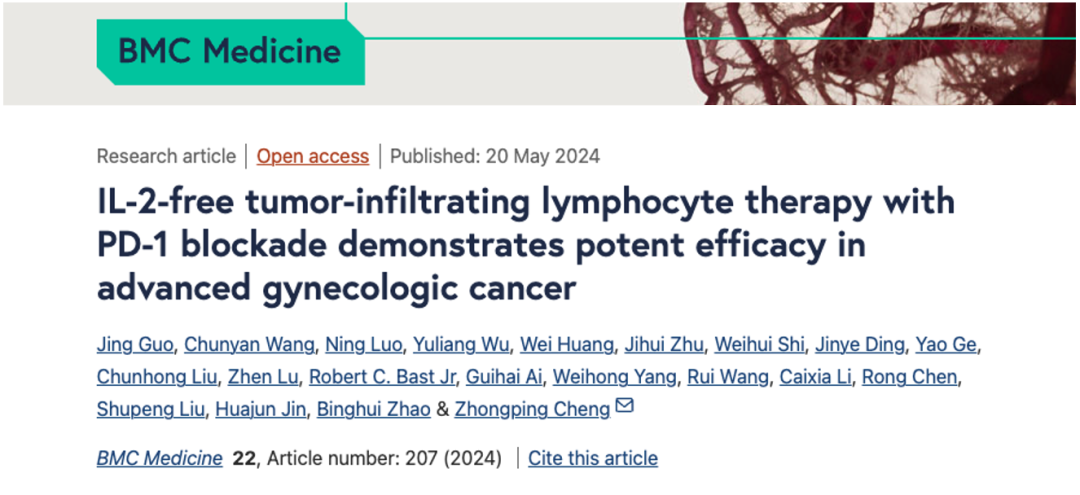
On May 20, Juncell Therapeutics and the team led by Director Cheng Zhongping from the Department of Obstetrics and Gynecology at Shanghai Tenth People's Hospital published an innovative research article titled "IL-2-free tumor-infiltrating lymphocyte therapy with PD-1 blockade demonstrates potent efficacy in advanced gynecologic cancer" in the journal *BMC Medicine*. This marks the world’s first clinical report of TIL therapy that achieved favorable efficacy without the use of IL-2, signifying an important advancement and breakthrough for TIL therapy.
Tumor-infiltrating lymphocyte (TIL) therapy has demonstrated promising clinical efficacy across various types of cancer, with a single administration potentially offering clinical cure or long-term survival benefits for patients with advanced cancer. On February 16 this year, the first TIL therapy was approved.FDAApproved for marketing and officially entering clinical application.
However, the clinical protocol for traditional TIL therapy is complex: before the infusion of TIL cells, high-dose chemotherapy lymphodepletion pretreatment is required; after the infusion of TIL cells, repeated injections of high-dose IL-2 are necessary. Patients must complete the treatment in a sterile ward or ICU, posing significant challenges to both medical institutions and patients.
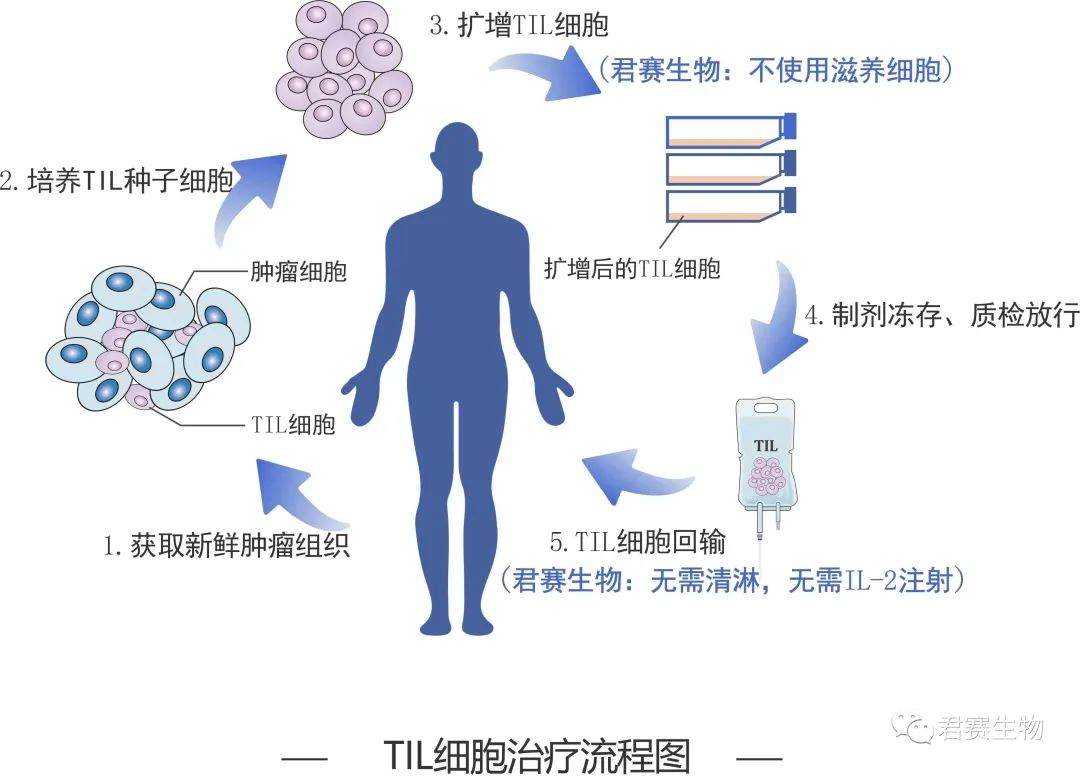
Juncell Therapeutics has innovated the culture system of TIL cells, independently establishing the DeepTIL® technology platform. This platform enables the efficient culture of TIL cells without feeder cells and high concentrations of IL-2. Indicators such as culture success rate, cell quantity, cell viability, and anti-tumor activity all reach internationally leading levels. The obtained TIL cells (approved by the National Medical Products Administration, product code GC101) exhibit stronger in vivo adaptability and avoid dependency on high concentrations of IL-2. Therefore, prior to GC101 TIL cell infusion, only low-dose chemotherapy pretreatment is required (without reaching lymphodepletion levels); after cell infusion, there is no need for supplementary IL-2 injections, allowing patients to receive treatment in general wards, significantly enhancing the safety and accessibility of TIL therapy.
This study (NCT04766320) enrolled a total of 16 patients with recurrent, refractory gynecological conditions.Cancer PatientsAmong 14 evaluable patients (2 dropped out due to the COVID-19 pandemic), the median ECOG score was 2, with an average of 3.4 metastatic lesions and an average of 3.4 lines of systemic treatment received. 42.9% (6/14) of the patients had received standard-dose PD-1 antibody therapy and developed resistance. After TIL cell infusion therapy, no severe adverse reactions related to the cells were observed; 5 patients (35.7%) achieved objective response, with 3 patients achieving complete response that was long-lasting.
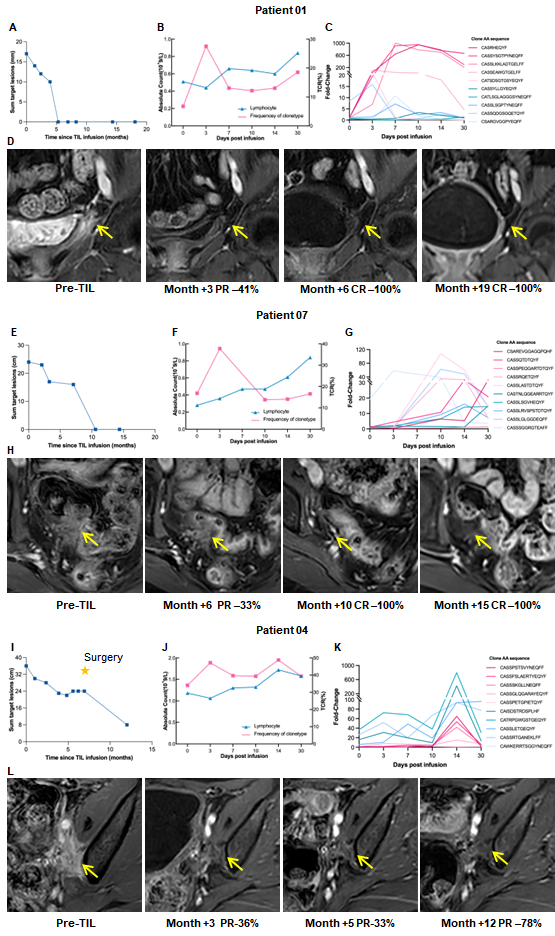
Imaging Comparison Before and After TIL Infusion and TCR Clonal Tracking Detection of TIL Sources
(A.E.I. Changes in the sum of tumor target lesion diameters; B.F.J. Trends in total lymphocyte and TIL-derived T-cell clonal frequency in peripheral blood of patients; C.G.K. Changes in TCR clones of reinfused TILs and endogenous TCR clones within 30 days after TIL infusion; D.H.L. Imaging results)
Clinical PK/PD studies show that, regardless of whether patients are resistant to PD-1 antibodies, using only 1/4 of the standard dose of PD-1 antibody to block PD-1 molecules on the surface of TIL cells, under low-dose preconditioning and without IL-2 injection, GC101 TIL cells can effectively survive and proliferate in patients, and this is positively correlated with efficacy.
Jinhua Jun, Founder, CEO & CTO of Juncell Therapeutics, stated:
"We are very pleased to see the clinical research results of our innovative TIL therapy for advanced gynecological tumors published in 'BMC Medicine.' Thank you to all the enrolled patients for their trust, to Director Cheng Zhongping's team for their support, and to authoritative experts for their recognition."
This study, through detailed data on safety, efficacy, and clinical companion testing, demonstrates that the optimized culture system of TIL cells can break the dependency on IL-2, avoid the use of lymphodepleting preconditioning, and achieve favorable clinical outcomes. We look forward to this innovative TIL therapy bringing new hope to patients and offering a better medication experience."
About Juncell Therapeutics
Juncell Therapeutics focuses on the development of TIL therapy, independently establishing the internationally leading DeepTIL® cell enrichment and expansion and NovaGMP® gene modification technology platforms. Based on these, it has developed a series of world-leading TIL innovative therapies, two of which have entered the clinical trial stage and are currently recruiting patients with advanced solid tumors from the public.
GC101, the world's first natural TIL therapy that requires no lymphodepletion and no IL-2 injection, and GC203, the world’s first non-viral vector gene-modified TIL therapy, have both demonstrated excellent clinical efficacy in 9 different types of advanced solid tumors (including those resistant to multiple lines of treatment).Pancreatic CancerCompared with high-grade gliomas, 7 patients had complete tumor clearance, and the longest disease-free survival time was nearly 3 years.
Juncell Therapeutics will adhere to the noble mission of "Refining Cells, Guarding Life," embrace the inspiring vision of "Creating Miracles with Science, Turning Miracles into Everyday Realities," and uphold the core values of "Focus, Innovation, Inclusiveness, and Sharing." The company is committed to developing more high-quality TIL innovative therapies to meet the diverse needs of cancer patients.
For more information, please visit: www.juncell.com
Document Address:
https://doi.org/10.1186/s12916-024-03420-0