

SKB264 (Sacituzumab Tirumotecan) Demonstrates Over Three-Fold Improvement in PFS for TROP2-High Metastatic Triple-Negative Breast Cancer in Phase III Trial
Kelun-Biotech
Innovative Drug Developer

MSD
Pharmaceutical R&D and Manufacturer
▎WuXiEdited by Kant Content Team
The abstract for the 2024 American Society of Clinical Oncology (ASCO) Annual Meeting was officially released today. Sacituzumab tirumotecan (SKB264/MK-2870), a TROP2-targeted antibody-drug conjugate (ADC) jointly developed by MSD and Kelun-Biotech, demonstrated impressive results in a phase 3 trial for the treatment of previously treated advanced triple-negative breast cancer (TNBC). The analysis showed,Patients with high TROP2 expression who received SKB264 monotherapy had a progression-free survival (PFS) more than three times that of the chemotherapy group.

In this randomized Phase 3 clinical trial, researchers examined the efficacy and safety of SKB264 (n=130) compared with physician’s choice of chemotherapy (eribulin, vinorelbine, capecitabine, or gemcitabine, n=133) for treating patients with locally recurrent or metastatic TNBC who had received two or more prior therapies, including at least one for metastatic disease. The primary endpoint of the trial was PFS determined by blinded independent central review (BICR). TROP2 expression in patients was assessed using a semi-quantitative H-score from immunohistochemistry (IHC) staining.
As of the interim analysis results on June 21, 2023, the trial met the primary endpoint of PFS.The risk of disease progression or death in patients treated with SKB264 was reduced by 69% (HR=0.31, 95% CI: 0.22-0.45, P<0.00001). The median PFS assessed by BICR for the SKB264 group was 5.7 months (95% CI: 4.3-7.2), while the median PFS for the chemotherapy group was 2.3 months (95% CI: 1.6-2.7)., where the 6-month progression-free survival rates for the SKB264 group and the chemotherapy group were 43.4% and 11.1%, respectively.Subgroup analysis of patients with tumor TROP2 expression H-score >200 showed,The median PFS in the SKB264 group was 5.8 months, compared to the chemotherapy group (1.9 months) more than 3 times (HR=0.28, 95% CI: 0.17-0.48).
As of November 30, 2023, the first pre-specified interim analysis for overall survival (OS) in patients showed that during the median follow-up period of 10.4 months,The OS of the SKB264 group demonstrated a statistically significant advantage (HR=0.53; 95% CI: 0.36-0.78; P=0.0005).The median OS in the SKB264 group has not yet been reached (95% CI: 11.2-NE), while the median OS in the chemotherapy group was 9.4 months (95% CI: 8.5-11.7). The objective response rate (ORR) assessed by BICR was 43.8% in the SKB264 group and 12.8% in the chemotherapy group.

Image Source: 123RF
The most common ≥3 grade treatment-related adverse events (SKB264 group vs chemotherapy group) were decreased neutrophil count (32.3% vs 47.0%), anemia (27.7% vs 6.1%), and decreased white blood cell count (25.4% vs 36.4%).
Breast cancer is the most common cancer among women worldwide and the leading cause of cancer-related deaths in women. China has a high incidence of breast cancer, with approximately 420,000 new cases diagnosed in 2020, resulting in nearly 120,000 deaths. Based on the expression levels of hormone receptors (HR) and human epidermal growth factor receptor 2 (HER2), breast cancer can be classified into different subtypes. If both HR and HER2 are negative, it is categorized as triple-negative breast cancer.Triple-negative breast cancer is considered "the most difficult breast cancer to treat" because of its high metastasis, difficulty in treatment, and high recurrence rate.TROP2 protein is highly expressed in TNBC and correlates with poorer survival rates.
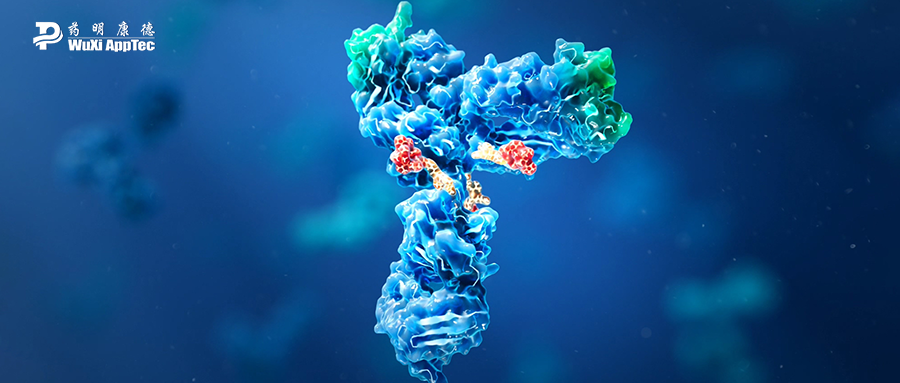
SKB264 is a TROP2-targeted ADC formed by combining a novel, hydrolysable linker with the payload belotecan derivative, a topoisomerase I inhibitor, boasting a Drug-to-Antibody Ratio (DAR) as high as 7.4.This linker can undergo pH-dependent cleavage in the extracellular environment and can also be cleaved intracellularly by enzymatic action to release a membrane-permeable payload, allowing them to kill neighboring cancer cells after killing the ADC-ingesting cancer cells, producing a "bystander effect."
SKB264 has been granted Breakthrough Therapy Designation four times by the Center for Drug Evaluation (CDE) of China's National Medical Products Administration, and its first marketing application has also been accepted by the CDE and included in the priority review for the indication of triple-negative breast cancer.Kelun-Biotech has granted MSD an exclusive paid license to develop, use, manufacture, and commercialize the therapy outside of Greater China (including mainland China, Hong Kong, Macao, and Taiwan).
At this year's American Association for Cancer Research (AACR) conference, two companies also announced the preliminary efficacy of SKB264 in a Phase 2 study for the treatment of patients with advanced gastric cancer or gastroesophageal junction cancer (GEJ).Positive Results. The analysis showed,The ORR of 41 evaluable patients was 22.0% (9 partial responses, 2 pending confirmation), and the disease control rate (DCR) reached 80.5%.

▲To learn more about the application of cutting-edge technologies in the biopharmaceutical industry, please long-press and scan the QR code above to access "WuXi Live Studio" and watch live discussions and exciting replays on related topics.
References:
[1] Sacituzumab tirumotecan (SKB264/MK-2870) in patients (pts) with previously treated locally recurrent or metastatic triple-negative breast cancer (TNBC): Results from the phase III OptiTROP-Breast01 study. Retrieved May 23, 2024 from https://meetings.asco.org/abstracts-presentations/239101
Disclaimer: The content team of WuXi AppTec focuses on introducing the research progress in global biopharmaceuticals and health. This article is for information exchange only, and the views expressed in the article do not represent the position of WuXi AppTec, nor does it mean that WuXi AppTec supports or opposes the views mentioned in the article. This article is not a recommendation for treatment plans. For guidance on treatment options, please visit a正规 hospital.
Copyright Statement: This article is from the content team of WuXi AppTec. Individuals are welcome to share it on their social media platforms, but unauthorized reproduction by media or institutions in any form to other platforms is prohibited. For authorization to reproduce, please reply with "reprint" on the WeChat Official Account of "WuXi AppTec" to obtain reprint guidelines.


Share,PointLike,In ViewFocusing on Global Biomedical Health Innovation