

Semaglutide Shows Potential as First GLP-1 Therapy for Diabetic Kidney Disease, Phase 3 FLOW Trial Published in NEJM
Novo Nordisk
Insulin Developer and Manufacturer
▎WuXiEdited by Kant Content Team
Today, Novo Nordisk announced the latest results of its pivotal therapy Ozempic (semaglutide) from the FLOW Phase 3 clinical trial at the European Renal Association (ERA) conference. The analysis showed that Ozempic met the primary endpoint and all secondary endpoints of the trial. Compared with the placebo,Ozempic can reduce the risk of major cardiovascular events by 18% and the risk of death from any cause by 20% in patients with chronic kidney disease (CKD) and type 2 diabetes.The detailed results of the trial were also simultaneously published in the prestigious medical journal, The New England Journal of Medicine. According to the previously announced press release,Ozempic has the potential to become the first glucagon-like peptide-1 (GLP-1) class therapy for treating such patients.Novo Nordisk Plans to Submit Regulatory Application for Ozempic Label Expansion in the U.S. and EU in 2024
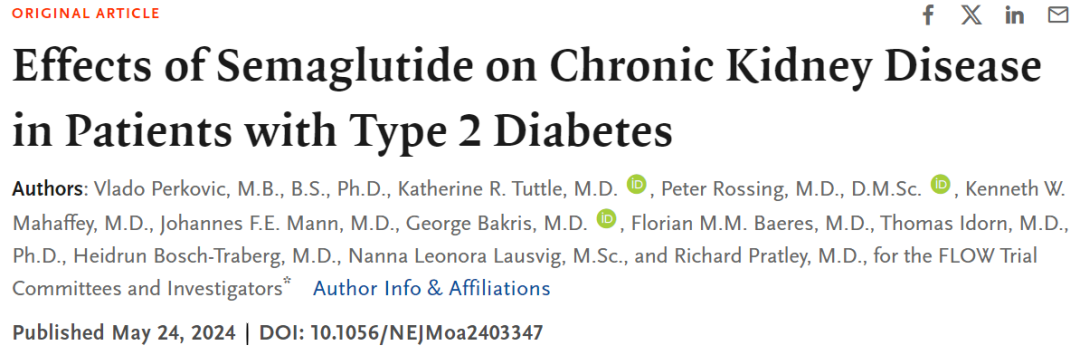
FLOW Clinical Trial is a randomized, double-blind, placebo-controlled clinical trial designed to evaluate the efficacy of 1.0 mg subcutaneous Ozempic compared to placebo as an adjunct to standard care in preventing the progression of kidney damage, as well as the risk of renal and cardiovascular death, in patients with CKD and type 2 diabetes.The trial recruited 3,533 patients with CKD andType 2 DiabetesPatient.The primary endpoint of the trial is a composite endpoint consisting of multiple components, including: the time to onset of a sustained decline in estimated glomerular filtration rate (eGFR) of ≥50% from baseline; and eGFR declining to <15 mL/min/1.73 m².2Time to initiate chronic kidney replacement therapy (dialysis or kidney transplantation); death from kidney disease or death from cardiovascular disease in patients with type 2 diabetes and chronic kidney disease. Key secondary endpoints include the annual rate of change in eGFR, major adverse cardiovascular events (non-fatal myocardial infarction, non-fatal stroke, cardiovascular death), and all-cause mortality.
In October 2023, due to Ozempic reaching the pre-specified efficacy criteria for early termination of the trial, Novo Nordisk, based on the recommendation of the independent Data Monitoring Committee (DMC),RecommendationEarly termination of the FLOW trial.
The analysis showed that, at a median follow-up time of 3.4 years,The risk of major endpoint events in the Ozempic group (n=1767) was 24% lower than that in the placebo group (n=1766) (HR=0.76, 95% CI: 0.66-0.88, P=0.0003).This result is similar to the further risk analysis results for kidney-related events (HR=0.79, 95% CI: 0.66-0.94) and death due to cardiovascular causes (HR=0.71, 95% CI: 0.56-0.89) in patients.
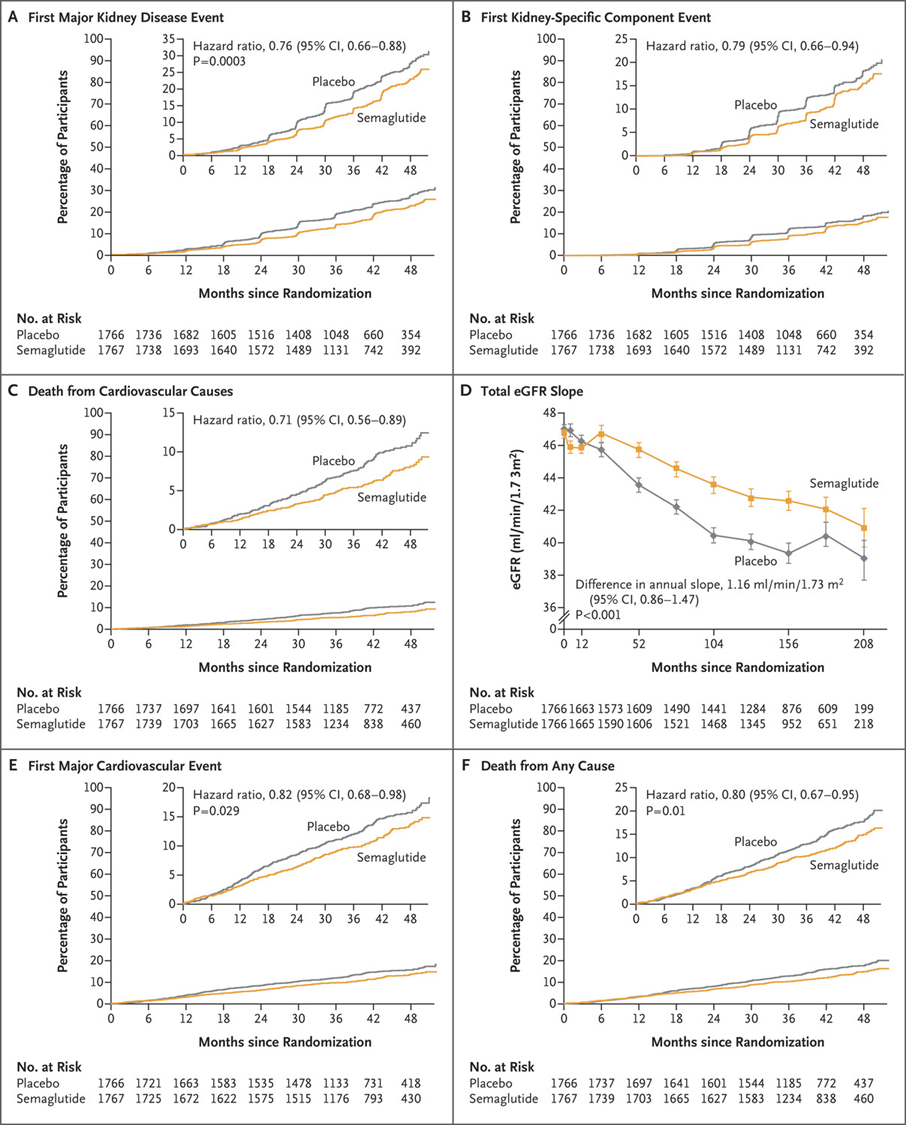
▲Main endpoint and confirmatory secondary endpoint results of the FLOW trial (Image source: Reference [1])
In addition,All confirmatory secondary endpoint results were statistically in favor of Ozempic.The average annual eGFR slope was smaller (indicating a slower decline) for Ozempic patients, at 1.16 ml/min/1.73 m².2(P<0.001),The risk of major cardiovascular events was reduced by 18% (HR=0.82, 95% CI: 0.68-0.98; P=0.029), and the risk of all-cause mortality was reduced by 20% (HR=0.80, 95% CI: 0.67-0.95, P=0.01).
In terms of safety, the proportion of serious adverse events reported in the Ozempic group was lower than that in the placebo group (49.6% vs 53.8%).
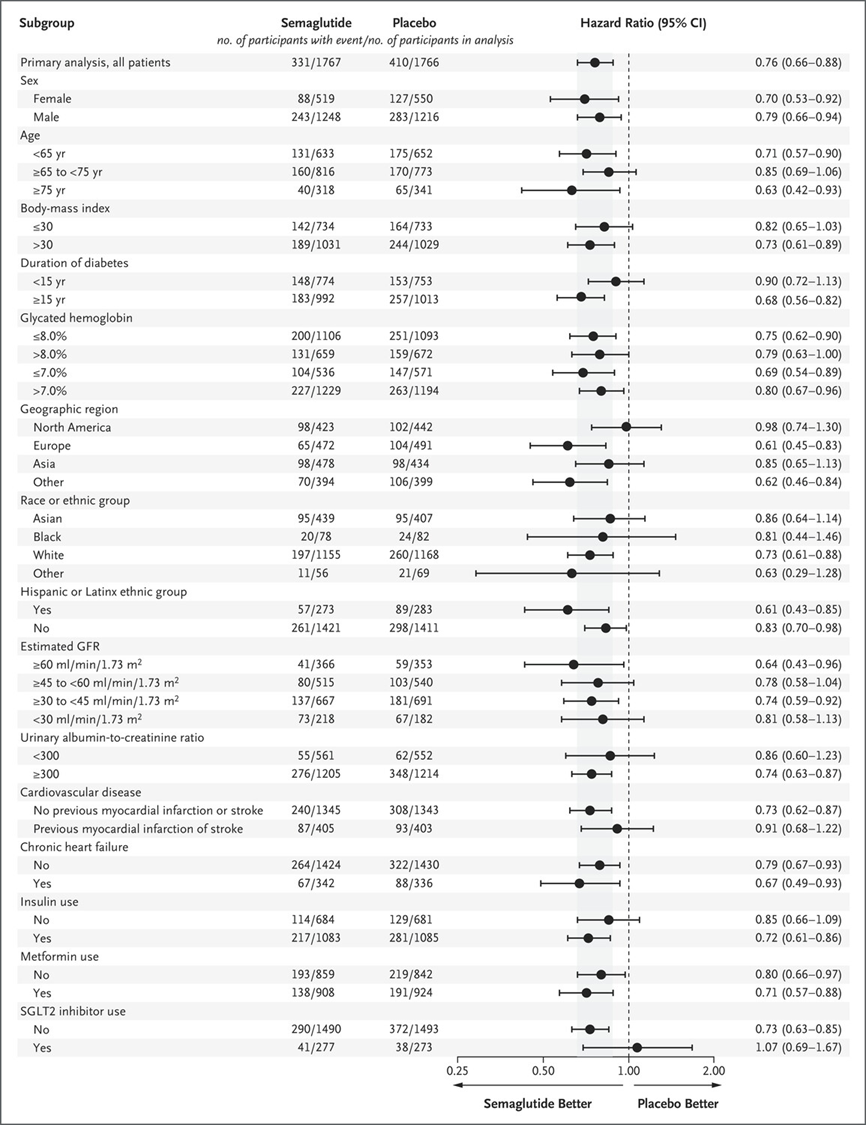
▲Subgroup Analysis of the Primary Endpoint Results of the FLOW Trial (Image Source: Reference [1])
Diabetes is one of the major reasons threatening human health worldwide.According to estimates by the World Health Organization (WHO), approximately 422 million people worldwide have diabetes.This disease is often caused by the body's inability to produce enough insulin or to properly utilize the insulin it synthesizes. As a result, these patients' ability to regulate blood sugar is significantly affected. Additionally, individuals with type 2 diabetes have a higher risk of developing other conditions. For example,Patients with type 2 diabetes have a 2-4 times higher risk of developing cardiovascular disease compared to healthy individuals, and approximately 40% of type 2 diabetes patients also have CKD.
Ozempic is a GLP-1 receptor agonist that stimulates insulin production.The once-weekly injectable form of the therapy received FDA approval in 2017.Approved for the treatment of type 2 diabetes. And in January 2020, it received FDA approval againApproval, used to reduce the risk of major adverse cardiovascular events (MACE) in adult patients with type 2 diabetes and known heart disease, such as heart attacks, strokes, or death.
In recent years,Novo Nordisk Continuously Explores the Application Potential of Semaglutide, the Main Efficacy Component of Ozempic.Besides the FDA in June 2021ApprovalIn addition to its use in treating ordinary obese patients (brand name: Wegovy), Novo Nordisk also conducted a phase 3 trial in April this year.STEP HFpEF DMIn China, it was observed that Wegovy significantly reduced heart failure-related symptoms and physical limitations while improving exercise function in obese patients with type 2 diabetes and heart failure with preserved ejection fraction (HFpEF). According to information from the ClinicalTrials.gov website, Novo Nordisk will also initiate aPhase 2 TrialTo examine the effects of three drugs, including semaglutide, on liver function, degree of liver fibrosis, and alcohol consumption in patients with alcohol-related liver disease.According to the industry media STAT, this could be the company's first examination of the impact of GLP-1 class drugs on addictive effects.

▲To learn more about the application of cutting-edge technologies in the biopharmaceutical industry, please long-press and scan the QR code above to access "WuXi Live Studio" and watch live discussions and exciting replays on related topics.


Share,PointLike,In view, Focusing on Global Biomedical Health Innovation