

GSK, Johnson & Johnson, Merck, Gilead, and Sanofi Update Phase III Clinical Data; Five Innovative Drugs Approved in China, Three Being First-in-Class

GSK
Pharmaceutical R&D Manufacturer

Johnson & Johnson
Medical Device R&D and Manufacturer

Haisco
New Drug Research and Development, Production, and Sales
Welcome to follow Asymchem Pharma News
(Collection period: 5.20-5.24, domestic part includes the first clinical application,First Application for Market Launch, First Approval for Market Launch(Innovative drugs)
Innovative Drug Approved for Marketing in China
1. Haisco: Cligarabalin Besylate Capsules
Mechanism of Action: α2δ Modulator
Indications: Diabetic Peripheral Neuropathy
On May 20, the official website of the National Medical Products Administration ("NMPA") disclosed the approval of Haisco's Class 1 innovative drug, Cligabalin Besylate Capsules (trade name: Simening), for marketing to treat diabetic peripheral neuropathic pain (DPNP) in adults. Cligabalin (HSK16149) is a third-generation central nervous system calcium channel modulator that acts on the α2δ subunit and features a novel tricyclic cage structure. The drug exhibits significantly higher receptor binding inhibitory activity against radiolabeled ligand Gabapentin than Pregabalin, with advantages including good analgesic effects, fewer side effects (weaker central nervous system-related side effects), long-lasting efficacy, and low dosing frequency. Clinical data on the drug’s treatment of DPNP were presented at the 2023 American Diabetes Association Scientific Sessions (ADA). In a randomized, double-blind, placebo- and pregabalin-controlled Phase II/III study, a total of 729 patients were enrolled and divided into two phases: the first phase was a parallel control study using placebo and pregabalin, while the second phase was a placebo-controlled study. Both phases had a treatment duration of 13 weeks.
The results showed that: (1) In the first stage, in addition to the negative control group using a placebo, there was also a positive control group using pregabalin. The results showed that in the groups using different doses of HSK16149 capsules, especially in the HSK16149 40mg/day and 80mg/day dose groups, the pain relief rate was almost similar to that of pregabalin, and there was a trend of separation from the placebo. There was a significant difference in the change of the average daily pain score (ADPS) relative to baseline at week 5. (2) In the second stage, compared with the placebo, there was a significant difference in the change of ADPS relative to baseline at week 13 for HSK16149 40mg/day and HSK16149 80mg/day; the decrease in HSK16149 had already been greater than that of the placebo from week 1, and there was a significant difference at week 2, indicating that the drug had already shown pain relief in the first week, and the relief continued until week 13. (3) HSK16149 could also significantly improve the sleep quality of DPNP patients and enhance their health status. (4) In terms of safety, most treatment-related adverse events were mild or moderate and could resolve on their own without intervention. A small number of patients were observed to experience dizziness and drowsiness after medication at the beginning of the study, but the incidence was low and they basically recovered quickly.
2. CSPC/Betapharma: Rizetinib Mesylate Capsules
Mechanism of Action: EGFR Inhibitor
Indications: Non-Small Cell Lung Cancer
On May 20, the NMPA official website disclosed the approval of Betapharma (Shanghai) Co., Ltd.'s application for the marketing of Rociletinib Mesylate Capsules (brand name: Rebidar). It is indicated for the treatment of adult patients with locally advanced or metastatic non-small cell lung cancer (NSCLC) who have progressed on or after treatment with epidermal growth factor receptor (EGFR) tyrosine kinase inhibitors (TKIs) and whose tumors have been confirmed to harbor EGFR T790M mutations. Rociletinib (BPI-7711), developed by Betapharma, is an irreversible and highly selective third-generation small molecule EGFR TKI that irreversibly inhibits EGFR mutants such as EGFR T790M and L858R. In March 2021, Betapharma granted CSPC Pharmaceutical Group the exclusive commercialization rights for BPI-7711 in Greater China (including Hong Kong and Macao Special Administrative Regions, but excluding Taiwan region).
According to the Phase IIb clinical trial data disclosed at the 2022 ASCO: (1) In all patients, the ORR assessed by the Blinded Independent Central Review Committee (BICR) was 64.6%, with a partial response (PR) rate of 64.6%, stable disease (SD) rate of 25.2%, and progressive disease (PD) rate of 4%. The DCR was 89.8%, the median DOR was 12.5 months, the median PFS was 12.2 months, and the median OS was 23.9 months. (2) In patients with EGFR exon 19 deletion, the ORR was 72.4%, PR was 72.4%, SD was 16.6%, and PD was 5.5%. The DCR was 89%, and the median PFS was 12.4 months. (3) In patients with EGFR L858R mutation, the ORR was 51.9%, PR was 51.9%, SD was 40.5%, and PD was 1.3%. The DCR was 92.4%, and the median PFS was 10.3 months. (4) For patients who were positive for tissue samples at baseline, the ORR was 70%, PR was 70%, SD was 23.3%, and PD was 3.3%. The DCR was 93.3%, and the median PFS was 13.9 months. (5) For patients who were positive for plasma samples at baseline, the ORR was 56.9%, PR was 56.9%, SD was 29.3%, and PD was 5.2%. The DCR was 86.2%, and the median PFS was 9.6 months. (6) Among 91 patients with central nervous system (CNS) metastases, 29 patients had at least one brain target lesion, with an intracranial ORR of 69.0% and an intracranial DCR of 100%. The time to CNS progression was 16.5 months. (7) In terms of safety, the most common adverse reactions included: decreased white blood cell count (27.9%), decreased platelet count (23.0%), and anemia (22.6%). No interstitial lung disease was reported.
3. Zai Lab: Combination Packaging of Injectable Sodium Sulbactam/Injectable Sodium Durlobactam
Mechanism of Action: β-lactamase Inhibitor
Indications: Acinetobacter Infection
On May 20, the NMPA official website disclosed the approval of the combination package of injectable sulbactam sodium and injectable durlobactam sodium (trade name: Ding Youle/XACDURO) submitted by Entasis Therapeutics for marketing. This drug is used to treat hospital-acquired bacterial pneumonia (HABP) and ventilator-associated bacterial pneumonia (VABP) in patients aged 18 years and above caused by susceptible isolates of the Acinetobacter baumannii-calcoaceticus complex. Sulbactam is a β-lactam antibacterial agent and an Ambler class A serine β-lactamase inhibitor, while durlobactam is a diazabicyclooctane, non-β-lactam β-lactamase inhibitor that protects sulbactam from degradation by β-lactamases. This drug has previously been approved by the FDA for treating adult HABP and VABP caused by susceptible isolates of the Acinetobacter baumannii-calcoaceticus complex and is the first FDA-approved targeted therapy for this pathogen. Zai Lab holds the exclusive license to develop and commercialize sulbactam sodium-durlobactam sodium in Greater China (mainland China, Hong Kong, Taiwan, and Macau), South Korea, Vietnam, Thailand, Cambodia, Laos, Malaysia, Indonesia, the Philippines, Singapore, Australia, New Zealand, and Japan.
The approval of this drug in China was based on the positive results of the ATTACK study (NCT03894046), a global Phase 3 registrational study that evaluated the safety and efficacy of sulbactam-durlobactam versus colistin E for treating patients with Acinetobacter baumannii infections. In the study, sulbactam-durlobactam demonstrated non-inferiority in the primary endpoint — the 28-day all-cause mortality rate in patients with carbapenem-resistant Acinetobacter infections — compared to colistin E, with a statistically significant improvement in clinical cure rates. The drug was well-tolerated and exhibited a favorable safety profile throughout the clinical study program.
4. Lilly: Tirzepatide Injection
Mechanism of Action: GIP/GLP-1 Receptor Agonist
Indications: Type 2 Diabetes
On May 21, the NMPA official website disclosed the approval of Eli Lilly's tirzepatide injection (brand name: Mufengda) for marketing in China. It is indicated for adult patients with type 2 diabetes (T2DM) whose blood glucose levels remain inadequately controlled despite treatment with metformin and/or sulfonylureas, in addition to diet control and exercise. Tirzepatide is a once-weekly glucose-dependent insulinotropic polypeptide (GIP)/ glucagon-like peptide-1 (GLP-1) receptor agonist that selectively binds to and activates both the GIP receptor and GLP-1 receptor, two natural incretin receptors, reducing fasting and postprandial blood glucose levels in T2DM patients. The drug was approved by the FDA in May 2022 for the treatment of type 2 diabetes under the brand name Mounjaro and received approval for a weight loss indication in November 2023, marketed under the brand name Zepbound. According to Eli Lilly’s financial report, Mounjaro, the hypoglycemic version of tirzepatide, generated $5.163 billion in sales in 2023, representing a year-over-year increase of 970%; while the weight loss version, Zepbound, achieved $176 million in sales within one month of its launch.
The approval was mainly based on the global pivotal Phase III registration trials SURPASS 1-5 conducted in patients with T2DM and the pivotal Phase III registration trial SURPASS-AP-Combo in the Asia-Pacific region. SURPASS-2 showed that the mean reductions in HbA1c from baseline at week 40 were 2.09% and 2.37% in the 5 mg and 10 mg treatment groups, respectively, while the mean reduction in HbA1c in the semaglutide 1 mg group was 1.86%. SURPASS-AP-Combo showed that the mean reductions in HbA1c from baseline at week 40 were 2.24% and 2.44% in the 5 mg and 10 mg treatment groups, respectively, while the mean reduction in HbA1c in the insulin glargine group was 0.95%.
5. Akeso Biopharma: Eftilacimab Injection
Mechanism of Action: Targeting PD-1/VEGF Bispecific Antibody
Indications: Non-Small Cell Lung Cancer
On May 24, the NMPA official website announced the approval of Akeso Biopharma's Ivonescimab Injection (trade name: Yida Fang) for marketing. In combination with pemetrexed and carboplatin, it is indicated for the treatment of patients with locally advanced or metastatic non-squamous non-small cell lung cancer (NSCLC) who are positive for EGFR gene mutations and have progressed after treatment with epidermal growth factor receptor (EGFR) tyrosine kinase inhibitors (TKIs). Ivonescimab (AK112) is a humanized bispecific antibody of the IgG1 subtype that targets and binds to both human vascular endothelial growth factor-A (VEGF-A) and programmed death protein-1 (PD-1). It can simultaneously bind to VEGF-A and PD-1, competitively blocking the interaction between VEGF-A, PD-1, and their ligands, thereby exerting anti-tumor activity. In December 2022, the company granted Summit Therapeutics exclusive development rights for AK112 in the United States, Europe, Canada, and Japan under a collaboration agreement valued at up to $5 billion in total transaction value (including a $500 million upfront payment), plus double-digit royalties on net sales.
At the European Lung Cancer Conference (ELCC) in March 2024, the company presented updated data from a Phase II clinical study (AK112-201) on the drug's first-line treatment in combination with chemotherapy for advanced non-small cell lung cancer (NSCLC). Previous study results were successively published at the 2023 ASCO Annual Meeting and in eClinical Medicine, a subsidiary journal of the internationally renowned medical journal The Lancet. As of October 2023, the median follow-up time was further extended to 21.3 months, showing the following results: (1) In cohort 1, which included EGFR/ALK wild-type NSCLC patients treated with Ivonescimab in combination with chemotherapy, the objective response rate (ORR) for first-line treatment of non-squamous NSCLC reached 54.2%, the disease control rate (DCR) reached 95.8%, and the median duration of response (mDOR) reached 15.4 months. The median progression-free survival (mPFS) was 13.3 months, with a 9-month PFS rate of 58.9% and a 9-month overall survival (mOS) rate of 81.9%. For squamous NSCLC patients, the ORR was 71.4%, DCR was 90.5%, and mDOR reached 12.7 months; mPFS was 11.1 months, with a 9-month PFS rate of 65.1% and a 9-month OS rate of 90.4%; no intracranial hemorrhage was observed in brain metastasis patients receiving treatment. (2) In cohort 2, which included advanced non-squamous NSCLC patients with EGFR mutations who progressed after EGFR-TKI treatment, with a median follow-up time of 25.8 months, the ORR was 68.4%, DCR was 94.7%, and mDOR was 8.7 months; mPFS was 8.5 months, mOS reached 22.5 months, and the 12-month OS rate was approximately 73.7%. (3) In cohort 3, which included advanced NSCLC patients previously treated with anti-PD-1 therapy combined with platinum-based doublet chemotherapy who experienced disease progression, with a median follow-up time of 24.7 months, the ORR was 40%, DCR was 80%, and mDOR was 12.7 months; mPFS was 7.1 months, mOS reached 17.1 months, and the 12-month OS rate was 65%.
Summary of NDA for Innovative Drugs in China

1. JACOBIO: Citrate Gelaireset Tablets
Mechanism of Action: KRAS G12C Inhibitor
Indications: Non-Small Cell Lung Cancer
On May 21, Jacobio Pharmaceuticals' glecirasib (JAB-21822) New Drug Application (NDA) was accepted by the CDE and included in the priority review process for the treatment of second-line and above patients with advanced or metastatic non-small cell lung cancer harboring KRAS G12C mutations. Glecirasib (JAB-21822) is a KRAS G12C inhibitor independently developed by Jacobio. Currently, multiple clinical trials for patients with advanced solid tumors have been initiated in China, the United States, and several European countries. The drug has been granted Breakthrough Therapy Designation by the CDE for second-line and above treatment of patients with advanced or metastatic non-small cell lung cancer with KRAS G12C mutations. It has also received Orphan Drug Designation from the FDA for pancreatic cancer indication and Breakthrough Therapy Designation from the CDE.
The acceptance of this NDA is based on a Phase II registrational clinical study conducted in China. The results showed that in second-line non-small cell lung cancer patients treated with monotherapy, the confirmed objective response rate (cORR) was 47.9% (56/117), including 4 patients achieving complete response (CR) and 36 patients with tumor reduction exceeding 50%. The disease control rate (DCR) was 86.3%. The median progression-free survival (mPFS) was 8.2 months, and the median overall survival (mOS) was 13.6 months. The median duration of response (mDoR) data is not yet mature, with 6-month and 12-month duration of response rates being 73.6% and 56.6%, respectively.
2. Baxter: Cyclophosphamide Tablets
Mechanism of Action: DNA Alkylating Agent
Indications: Tumor
On May 22, Baxter's NDA for Cyclophosphamide Tablets was accepted by the CDE. Cyclophosphamide is a nitrogen mustard derivative that is hydrolyzed by excess phosphoramidase or phosphatase present in the liver or tumors within the body, transforming into the active form of phosphoramide mustard to exert its effects. The drug is effective against both leukemia and solid tumors, often included in combination chemotherapy regimens with other anticancer drugs. Beyond oncology indications, the drug has been developed for various autoimmune diseases; it is also used alongside prednisone and anti-lymphocyte globulin to prevent rejection during organ transplantation.
Summary of IND for Innovative Drugs in China
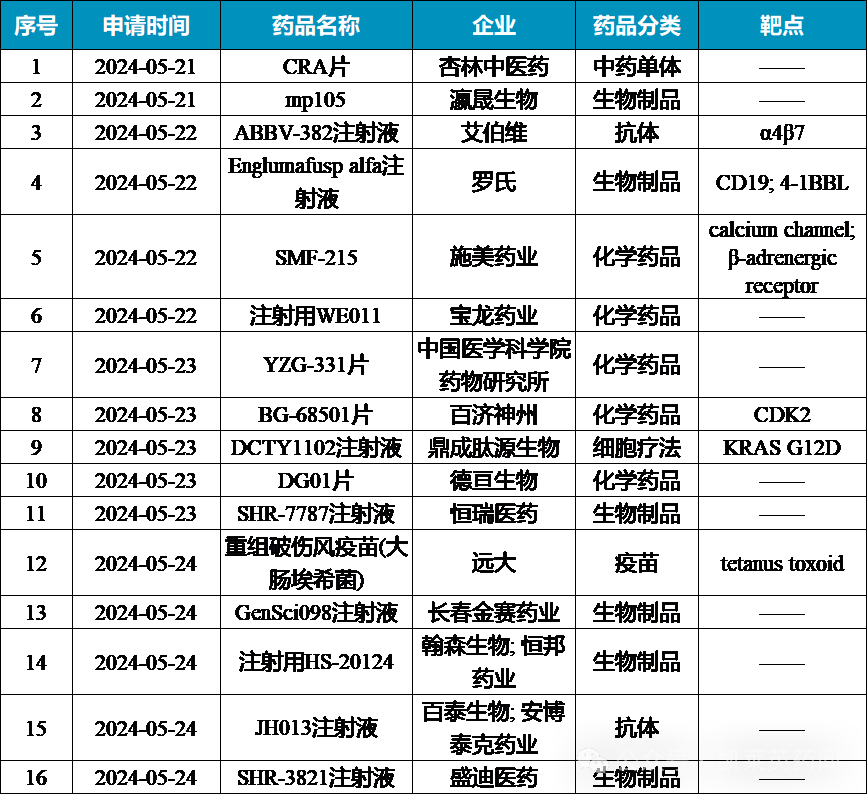
1. Roche: Englumafusp Alfa Injection
Mechanism of Action: Targeting CD19/4-1BBL Bispecific Antibody
Indications: Tumor
On May 22, the clinical trial application for Englumafusp alfa injection from Roche was accepted by the CDE. Englumafusp alfa is a CD19/4-1BBL bispecific antibody that can target the surface of B cells through CD19 on one hand, and on the other hand, 4-1BBL can bind to 4-1BB on T cells activated by CD20-TCB, thereby maintaining and enhancing the activity of T cells. The Phase 1 clinical trial is divided into two parts: the A treatment group mainly explores the efficacy of the combination of englumafusp alfa and glogitamab, while the B treatment group focuses on dose escalation to determine the recommended Phase II dose (RP2D) of englumafusp alfa. The results showed that: (1) For aNHL, in patients who had received at least one drug treatment, the CRR was 43% and the BORR was 62.8%; among those who had received at least one CD19/4-1BBL treatment, the CRR was 47.4% and the BORR was 67.9%. For iNHL, in patients who had received at least one drug treatment, the CRR was 65.4% and the BORR was 88.5%; among those who had received at least one CD19/4-1BBL treatment, the CRR was 68% and the BORR reached as high as 92%. (2) To study whether CD19/4-1BBL plays a role, the researchers analyzed the CD8+ T cells and CD8 effector cells in peripheral blood, showing a significant increase in CD8+ T cells in peripheral blood compared to CD20/CD3 monotherapy, and a significant increase in effector memory T cells.
2. Institute of Materia Medica, Chinese Academy of Medical Sciences: YZG-331 Tablets
Mechanism of Action: ——
Indications: Sedation
On May 23, the clinical trial application for YZG-331 tablets from the Institute of Materia Medica, Chinese Academy of Medical Sciences, was accepted by the CDE. This drug is derived from natural sources and its structural type differs from barbiturates, benzodiazepines, and non-benzodiazepine sedative-hypnotic drugs currently used in clinical practice. It increases GAD activity to elevate hypothalamic GABA levels and activates LAT1 and OCT3 to promote peripheral extracellular histamine release. According to literature: (1) Five minutes after administration of this drug, histamine levels in plasma and the pineal gland rapidly increased to their highest concentration, and while they declined at 30 minutes, they remained slightly elevated. (2) GABA levels rapidly increased five minutes after YZG-331 administration, and high levels of brain GABA persisted for up to eight hours post-administration; no significant changes were observed in glutamine and glutamate levels or their ratios in brain microregions within GABA-related metabolic pathways, while GABA levels in the thalamus, midbrain, and hypothalamus increased by 14%-21%. (3) GAD activity in the hypothalamus and thalamus increased 1.2-fold after YZG-331 administration. (4) Within histamine-related metabolic pathways, histamine levels in the YZG-331 group's pineal gland increased more than tenfold, while histidine decreased by only 20%; after administration, histamine levels in rat plasma, skin, and gastric mucosa rapidly increased.
3. BeiGene: BG-68501 Tablets
Mechanism of Action: CDK2 Inhibitor
Indications: Solid Tumors
On May 23, the clinical trial application (IND) for BeiGene's BG-68501 tablets was accepted by the CDE. BG-68501 (ETX-197) was initially developed by Ensem, and BeiGene acquired the drug in November 2023 for $1.33 billion along with a certain percentage of sales royalties. Currently, BG-68501 has initiated dosing at the second dose level of monotherapy in its first-in-human clinical trial, with clinical pharmacokinetics meeting expectations and no dose-limiting toxicity observed.
4. Dingcheng Peptide Source: DCTY1102 Injection
Mechanism of Action: KRAS G12D Inhibitor
Indications: Tumor
On May 23, the IND for DCTY1102 Injection developed by Dingcheng Peptide Source Biotechnology was accepted by the CDE. DCTY1102 is a KRAS G12D inhibitor developed by the company, intended for patients with the HLA-A 11:01 genotype and a positive KRAS G12D tumor antigen mutation. The KRAS G12D mutation occurs most frequently in pancreatic and colorectal cancers, accounting for approximately 45%. This product is expected to bring new treatment options to patients with pancreatic cancer, colorectal cancer, and lung cancer. Dingcheng Peptide Source focuses on the research and development and commercialization of cellular immunotherapy products, specializing in the study of specific cellular immune treatment technologies, product development, and clinical applications. It possesses an entire cell therapy industry chain, forming a closed-loop path of "research-production-medical application." Its independently developed cellular products such as TCR-T, CAR-T, CAR-NK, and TIL have filed 116 national patents and 10 international patents, obtained authorization for 70 national patents and 2 international patents. Technologies targeting multiple sites including KRAS, EGFRvIII, AFP, Claudin18.2, and NY-ESO-1 have reached international leading standards, among which EGFRvIII has received orphan drug designation from the U.S. FDA.
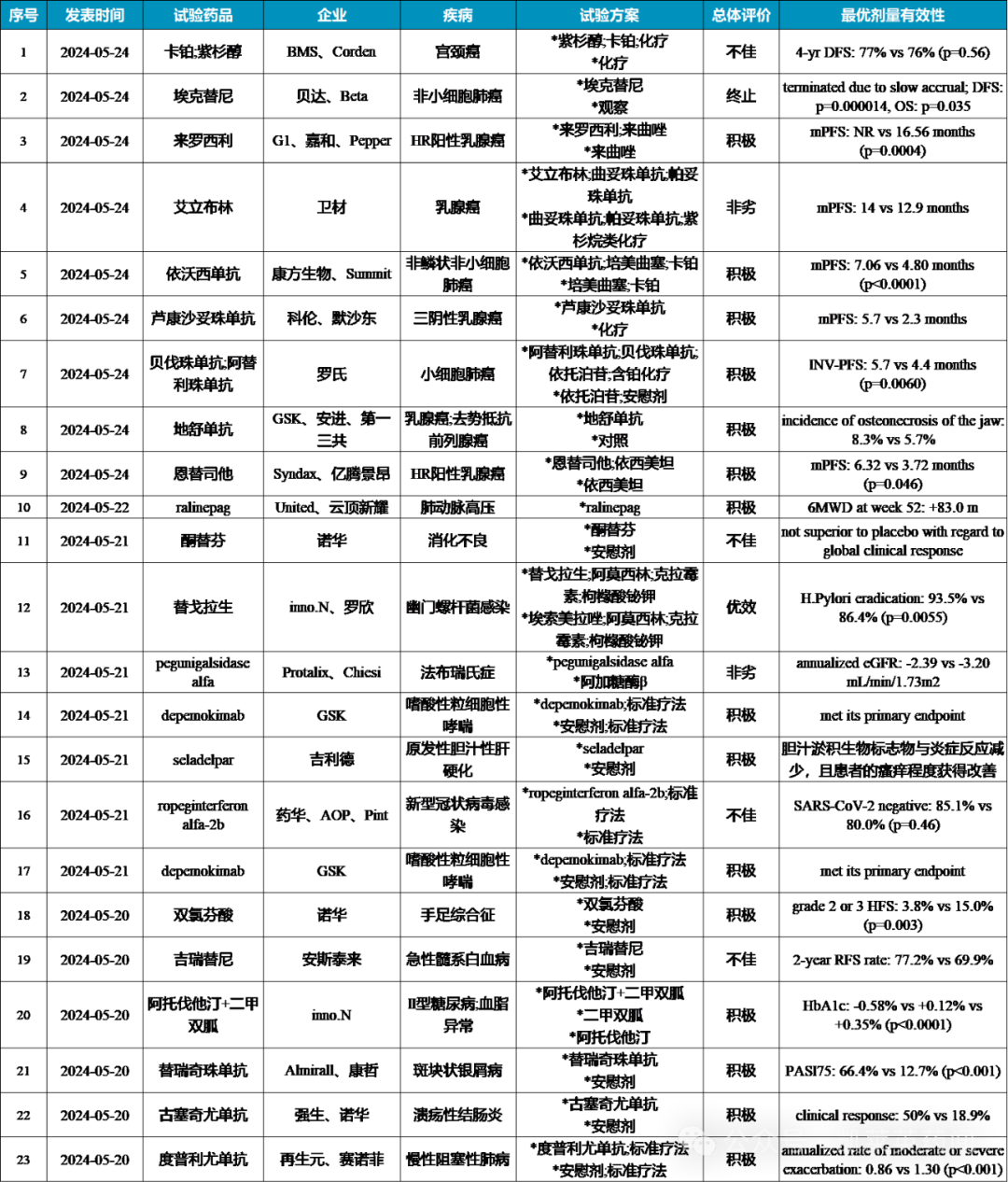
Global New Drug Phase III Clinical Summary


"Under observation"Click once