

Hong Kong Poised to Become a Global Hub for Clinical Trials: Exclusive Interview with Dr. Tao Du, Founder of Eglen Medicine

Evergreen Therapeutics
Innovative Drug Developer
Recently, the "4th Asian Healthcare Summit (ASGH)" co-organized by the Hong Kong Special Administrative Region Government and the Hong Kong Trade Development Council was held at the Hong Kong Convention and Exhibition Center. The forum received high attention from the SAR government, with leaders such as John Lee, Chief Executive of the Hong Kong Special Administrative Region, Cao Xue Tao, Vice Minister of the National Health Commission, Vincent Lin, Chairman of the Hong Kong Trade Development Council, and Lo Chung Ma, Secretary for Health of the Hong Kong Special Administrative Region, attending the meeting. The conference also invited more than 80 international experts from the global healthcare industry, including Professor Roger Kornberg, winner of the 2006 Nobel Prize in Chemistry, leading figures in the scientific research and medical fields, as well as business elites and investors.
On the day of the event, "Co-creating a Healthy and Innovative Collaborative Ecosystem, Developing Hong Kong into a Medical Innovation Hub" became a key topic in the main forum of the conference. A high-level roundtable forum was hosted by Professor Lau Chak-sing, Dean of the Li Ka Shing Faculty of Medicine at the University of Hong Kong, where guests engaged in an in-depth discussion on this topic. With their exceptional industry insights and unique perspectives, the guests' contributions were widely praised and warmly received by the attendees.
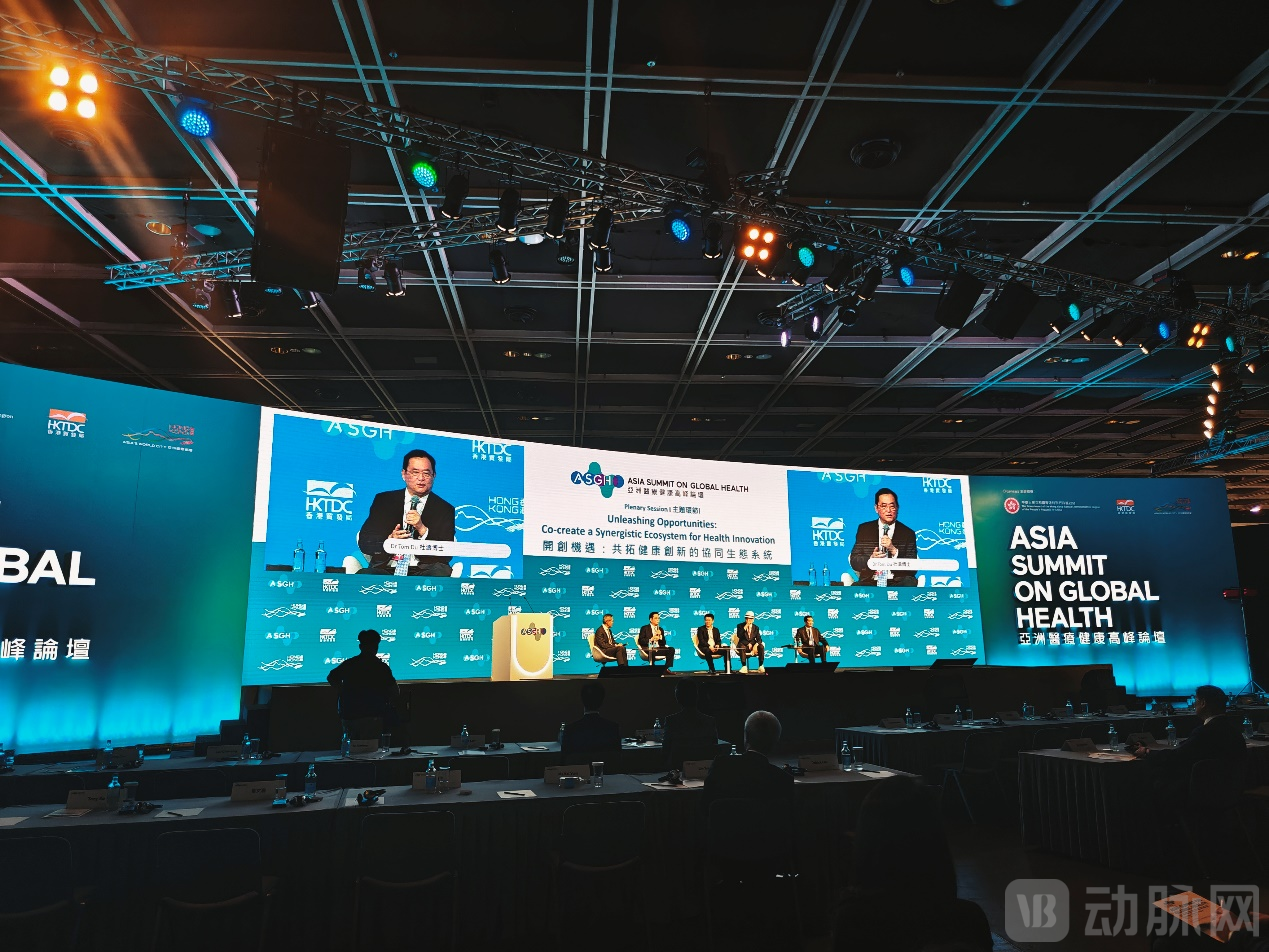 Roundtable Forum Venue
(From the left: Dean of the Li Ka Shing Faculty of Medicine, The University of Hong KongProfessor Liu Zexing;Former Senior Review Officer of the FDA, Co-founder of Evergreen TherapeuticsDr. Tao Du;Senior Vice President of GreenLeaf Pharmaceutical GroupDr. Sun Zhigang;President of Hong Kong Biomedical Innovation AssociationProfessor Lu Yu-Lin;Academician of the Russian Academy of Engineering, Co-founder of ClinChoice Medicine and SinoBio PartnersDr. Zhang Dan)
At present, Hong Kong is actively promoting the construction of the "Hong Kong version of the FDA," and international drug regulation and clinical trials have undoubtedly become the focus of attention from multiple parties. Meanwhile, during the capital downturn cycle, going global has become an important direction for pharmaceutical companies' efforts. According to VCBeat database, from 2020 to 2023, the transaction amount of China's pharmaceutical companies’ outbound licensing projects increased year by year, reaching $7.891 billion, $15.676 billion, $31.151 billion, and $47.267 billion respectively.
Not long ago, Dr. Tao Du, former senior review officer of the FDA and chairman of Evergreen Therapeutics, hosted the roundtable forum "Biotech's New Practices in Going Overseas" at the 2024 VBEF Future Healthcare Ecosystem Exhibition. He conducted an in-depth discussion with well-known pharmaceutical companies in China on the topic of Chinese innovative drugs going overseas, engaging in a “virtual dialogue” with the main forum topic of this high-level forum.
More notably, according to China Daily, as of November 2023, China has more than 10,000 large-scale pharmaceutical enterprises. How will the overseas demands of tens of thousands of pharmaceutical companies be met? What role will Hong Kong play in the biotech industry's expansion abroad? … After the conclusion of this Asia Healthcare and Wellness Summit, VCBeat conducted an in-depth dialogue with Dr. Du Tao, addressing numerous questions about the development of China's innovative pharmaceutical companies.
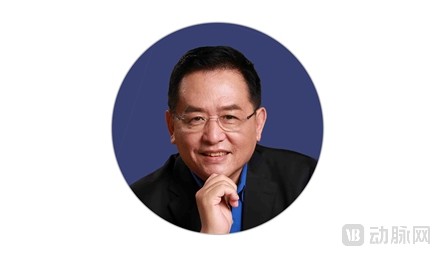
Dr. Tao Du, Founder and Chairman of Evergreen Therapeutics; Ph.D. in Pathology from McGill University, Canada, and Postdoctoral Fellow in Pharmacology at Harvard Medical School; Former Senior Review Official at the U.S. FDA with 7 years of experience in new drug review and approval; Dr. Du has served as Chief Representative of United Healthcare China, Director of Clinical Registration Department, and Senior Director of Clinical and Regulatory Affairs at Hutchison MediPharma Hong Kong; Founded HPC Pharma Consulting Co., Ltd. and served as CEO (acquired by a listed company in 2016), during which he led an international team to complete FDA clinical approvals for over 80 new drugs for multiple Chinese and foreign companies; Incoming Chairman of the International Innovative Drug Regulatory Committee of the China Pharmaceutical Innovation and Research Development Association (PhIRDA), and the second President of the FDA Experts Association; Guest Professor at Peking Union Medical College.
The following is a transcript of the interview (some text has been edited by VCBeat without affecting the meaning).
VCBeat: What development potential does Hong Kong have in the biopharmaceutical field in Asia and even globally?
Dr. Tao DuI believe Hong Kong has tremendous advantages in participating in innovative biopharmaceuticals. First, due to Hong Kong's relatively relaxed visa policies, it is possible to recruit not only local patients but also relatively easily attract patients from different countries or regions, such as those from neighboring Asian countries like India, Malaysia, Pakistan, and Indonesia to be trial participants — an advantage that is not easily achievable in mainland China.
When an innovative drug from China enters international markets such as Europe and the U.S., local regulatory authorities often take ethnic differences into consideration and require more comprehensive clinical data to demonstrate its efficacy across diverse populations. For instance, if a Chinese company applies to the FDA for approval of a nasopharyngeal cancer drug targeting the Asian population in the U.S., the process would not only require clinical trial data from Chinese subjects but also trials on other Asian ethnic groups, since "Asian" encompasses multiple ethnicities. Hong Kong, as a key gateway neighboring mainland China, has the foundation—similar to Singapore—to conduct clinical trials focused on Asian populations. Given its small size, ease of management, and well-established medical infrastructure, with proper development, it could easily become a hub for international clinical trials.
VCBeat: Compared with other cities in mainland China, what innate advantages do you think Hong Kong has in becoming a hub for international clinical trials?
Dr. Tao Du: First of all, Hong Kong has an excellent research and education system. Among the seven universities in Hong Kong, five are ranked in the top hundred worldwide. It is rare to find such a high density of top-tier institutions in a single city on the international stage. Additionally, Hong Kong's medical schools are among the best in Asia, enabling Hong Kong to cultivate a sufficient number of professionals in clinical-related fields.
Another advantage is Hong Kong's language communication capabilities. Healthcare professionals in Hong Kong, including doctors and nurses, are bilingual in Chinese and English, allowing them to communicate easily with patients from different countries. This provides a condition for recruiting international participants. This talent advantage can fully establish Hong Kong as a clinical trial base with the goal of attracting and serving Asian populations.
The third point is that Hong Kong has a very sound medical system, equipped with world-class medical facilities and equipment, capable of providing diagnosis and treatment for the vast majority of diseases. This offers a wide range of choices for enrolling target subjects with different indications.
Finally, compared to mainland cities, Hong Kong has a smaller area and restricted population movement due to visa limitations, making it easier to manage international patients participating in clinical research in Hong Kong.
VCBeat: Why is Hong Kong currently the right time to develop the biopharmaceutical industry?
Dr. Tao DuThe quality of universities in Hong Kong is very high, and many professors' research achievements are also highly industrially valuable. The excellent talent pool and scientific research results provide an important foundation for the development of Hong Kong's innovative pharmaceuticals industry. However, due to the weak industrial base of biomedicine in Hong Kong and the lack of local companies willing or able to undertake the transformation of these achievements, a large portion of these R&D results cannot be locally transformed.
As the international situation continues to evolve, Hong Kong's service and financial industries are facing fierce competition from countries like Singapore. Under these circumstances, leveraging its existing foundation and advantages to make timely industrial adjustments is a wise choice. The biopharmaceutical industry demands high levels of technological innovation and professional expertise while offering the potential for high-paying jobs. Given Hong Kong’s current state of educational resources, talent density, and medical infrastructure, now is an opportune time to develop the biopharmaceutical sector.