

Medtronic Launches Next-Gen Mazor X™ Eagle Spine Surgical Robot in China, Redefining Orthopedic Robotics Market

Medtronic
Medical Device Manufacturer

Source:Medical Device Business Review
Author: Jiang Lecture
Reproduction without authorization is prohibited, and reproduction is allowed only 24 hours later!
Orthopedic surgical robots have become one of the hottest tracks in the medical device industry. Under the monopoly of Intuitive Surgical's da Vinci Surgical System, which has high technical barriers and a large market share, many medical device giants are continuously innovating to break through in the orthopedic细分赛道.
Recently, it has been hailed as "the next Da Vinci"Medtronic Robot Brings New Spine Surgery Technology to the Orthopedic Field!
According to Medtronic's announcement, itsFully Upgraded Mazor X™ Eagle Spine Surgical RobotIntegrated Platform Successfully Launched in China. As an innovative "pioneer" in the field of spinal surgery robotics, the Medtronic Mazor X Spine Surgery Robot has continuously led the industry's technological development since its launch in 2021, accumulating...A vast amount of clinical data and experience now basically covers all complex spinal surgeries.
This official launchMazor X™️Eagle Leading Spine Surgery Robot Integrated Platform, a full-dimensional upgrade based on the original foundation, featuringGlobal foresight, full-process precision, all-dimensional visibilityThe three major features, relying on Medtronic's advanced surgical planning system and artificial intelligence system with higher algorithms,Advance Spinal Surgery into the Intelligent Era.
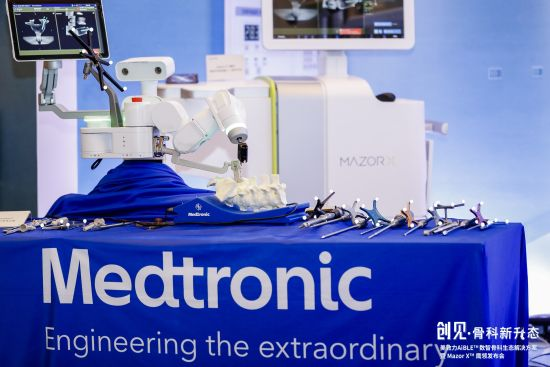
Image source: Official WeChat account of the company
In recent years, the incidence of orthopedic diseases has been increasing year by year. According to data from Frost & Sullivan,Over 200 Million Spinal Disease Patients in ChinaSince there are many important nerves, blood vessels, muscles, and other soft tissues surrounding the spine, any minor intervention can affect the whole body. Spinal surgery is widely recognized in the industry as "dancing on the tip of a knife."
In traditional surgical procedures, the operation relies heavily on the surgeon's clinical experience, as it is impossible to visualize the nerves and blood vessels hidden beneath, within, or encased by the bones during surgery.Intraoperative "blind spots" can pose potential safety risks during spinal surgery., and thus lead to postoperative complications. At present, this pain point is also a public issue faced by spinal surgeries worldwide. Against this backdrop,It is imperative to seek innovation and breakthroughs in medical technology in this field.
The introduction of Medtronic's Mazor X™ Eagle Spine Surgical Robot has brought about a revolutionary improvement to this dilemma and provided new insights into the clinical treatment of this condition. Compared with traditional spine surgery, this surgical robot integrates technologies such as AI preoperative planning, precise intraoperative operation, and navigational visualization, assisting doctors.Break through the bottlenecks of limited vision and operational blind spots in traditional surgery, enhancing surgical safety and precision.
Surgical PlanningIt is another major challenge encountered in spinal surgery. As orthopedics continues to advance towards intelligence and precision, safety, efficiency, and minimally invasive procedures have become essential requirements for clinical orthopedic treatments.Among these features, the intelligent planning of the entire surgical process is an important characteristic of the Mazor X™ Eagle Spine Surgical Robot. Based on Medtronic's extensive big data accumulation over many years, it is capable of...Artificial intelligence develops detailed and comprehensive surgical plans.
Traditional surgery planning relies heavily on C-arm fluoroscopy, which often fails to provide a direct view of the complete pedicle. Most of the time, it depends on spinal surgeons calculating and planning mentally based on the patient's CT images and practical experience. However, with the advent of AI as a special "brain," doctors can now use artificial intelligence software to conduct comprehensive preoperative planning in advance.
Preoperatively,Doctors can use intelligent software to conduct comprehensive preoperative planning, including screw placement, skin incision, pathways, cage planning, spinal parameter calculations, deformity classification, osteotomy simulation, and more, to create targeted surgical plans and interactive experiences for patients. Additionally, utilizing Mazor X™'s unique single-vertebra cross-modal registration technology, preoperative planning and patient registration can be completed with just two 2D images.
Intraoperative,Through the Mazor X™ robotic arm 3D spatial scanning technology, the surgical area is scanned and reconstructed to achieve fully automatic and efficient positioning. With the cooperation of the patient, robotic arm, and operating table in a triad-fixed patient-following platform, precise positioning is enabled, assisting doctors in effortlessly completing highly efficient percutaneous pinning minimally invasive surgery without guidewires during the operation. Combined with visualized power tools, this enhances pinning stability and reduces surgery time by half. The realization of this technology marks a revolutionary breakthrough in achieving 0 guidewires, 0 radiation, and 100% precise pinning in percutaneous minimally invasive surgery.
As the pioneer of global spinal navigation robots, Mazor has undergone three technological iterations. Since the first-generation Mazor spinal robot was put into use in 2004, the Mazor series products have accumulated nearly 20 years of clinical application experience.Globally, more than 50,000 surgeries have been successfully completed, with over 200,000 screws implanted.
According to clinical data, compared with traditional open spinal surgery, patients who undergo spinal surgery assisted by the Mazor surgical robot have an averageHospital stay reduced by 43%,Reduce intraoperative bleeding by nearly 50%, the incidence of complications decreased by 48%, the number of follow-up visits decreased by 46%, the postoperative infection rate was lower, and it also reduced radiation exposure to both patients and doctors during surgery.
Since its launch in China, the fully upgraded Mazor X™ has been successfully applied in more than 30 authoritative spinal centers across the country, includingSignificant results have been achieved in the management of various complex clinical cases., achieving a breakthrough in the field of spinal surgery in China. Not only does it enhance the minimally invasive conversion rate and improve the precision and safety of spinal surgeries in Chinese hospitals, but the standardization and reproducibility it brings to surgical procedures will also help shorten the learning curve for young doctors.
The spine is called the "second lifeline" of the human body and is the "pillar and mainstay" of the body. With the intensification of aging,The incidence in the spinal field is increasing., the patient population is large and shows a trend of becoming younger. Minimally invasive, reducing invasive procedures, and improving surgical precision have become major trends in the current field of surgery. Due to its own advantages, robotic technology is playing an increasingly important role in spinal surgery.
Under the huge market demand, the field of spinal surgery robots has also become a hotspot at present.The direct driving force behind the giants' increased efforts.As a leading medical device company in the industry, Medtronic has always been forward-looking in its layout in this field and has not hesitated to invest heavily.
As early as 2018, Medtronic$1.64 billion(Approximately RMB 11.2 billion)Acquired Mazor Robotics, a surgical robotics company in Israel., thereby acquiring the Mazor X surgical platform. The completion of this acquisition established Medtronic's absolute leading position in the field of spinal surgery robotics. Since then, the pace of developing new products and investing in promising companies within the industry has never ceased, setting an example for the industry.
The core technology of surgical robots lies in achieving coordinated control between the surgical navigation system and the robotic arm.Worldwide, only a handful of companies have mastered the core technology of orthopedic surgical navigation and positioning robots and entered clinical application, with Israel's Mazor Robotics being one of the leading players. This is also the most important factor for Medtronic's decision to acquire Mazor.Through Acquisition, Medtronic Gains Access to Technology Sources, integrating with its own surgical navigation system, leveraging existing channel advantages, focusing on market expansion, and solidifying its leading position in the spinal surgery robotics field.
Notably, prior to Medtronic's acquisition of Mazor Robotics, more than 200 Mazor systems had already been clinically deployed across four continents, guiding the placement of over 200,000 implants in 45,000 surgeries, making minimally invasive spinal surgery a standard procedure in many hospitals.
Since entering the orthopedic market, Medtronic has continuously increased its investment in the spinal field. After the first-generation Mazor spinal surgery robot was approved for use in the United States, Medtronic leveraged the technology from Mazor Robotics to enhance the Mazor spinal surgery robot.Continuous Upgrading and Iteration, successively increasing investment in Europe, India and other countries, and launching the second-generation MazorX and MazorX Stealth Edition robotic guidance surgical systems.Launch the global commercialization process of spinal surgery robots.
According to the data, after a series of mergers and acquisitions, Medtronic has now become the world's largest spinal manufacturer, with a market share of approximately 28%.In Medtronic's surgical robot strategic layout, China has also become an important part.
In 2012, Medtronic spent $816 million to acquire the then-leading Chinese spinal company.Kang Hui, especially with Kanghui's spinal business becoming the focus of R&D. Subsequently, the localization of Kanghui's R&D was advanced, based on the local demand in the spinal market, implementing a dual-brand strategy in the Chinese orthopedic market to capture the market.
Later, Medtronic continued to rely on domestic innovation in China and kept upgrading its spinal robotics technology. In 2021, the company launched the Mazor X Spine Surgery Intelligent Navigation Robot in China.First Achieved Full Visualization Operation in Spinal Surgery, "Shaking Up" China's Orthopedic Market.
It should be pointed out that the development of the surgical robot industry is not as simple as just selling equipment. Often,"Surgical Robot + Surgical Products + Medical Services"An overall solution. As a result, the combination of Medtronic's spinal surgery robot and spinal products significantly broadens Medtronic's moat in the spinal field it has long been cultivating, encompassing both technology and market.
The launch of the Mazor X™️ Hawk spinal surgical robotic integrated platform this time represents another upgrade by Medtronic in this field. However, such a move is not only aimed at perfecting Medtronic's product line in the spinal field in the Chinese market, but more importantly, it can improve the quality of clinical treatment in China and boost the creation of an intelligent surgical ecosystem in China.
To judge whether a device can have influence in the future market, apart from the advantages of the product itself, the value of the track it is in is also an important indicator.
According to statistics, the market size of spinal surgery robots in China was approximately 280 million RMB by the end of 2021.It is expected to reach 850 million RMB by 2025., with a compound annual growth rate of about 25%. At the same time, an increasing number of regional medical insurance departments in China are"Orthopedic Surgical Robot" Included in Medical Insurance Payment Scope, greatly reducing the financial burden of medical expenses for patients. From the perspective of value-based healthcare, an increasing number of orthopedic surgeries in China will see the presence of surgical robots.
Driven by strong market demand and continuous policy support, it is foreseeable that mobile robots are becoming the mainstream in assisting surgical treatments in China.As the domestic market space continues to soar, new entrants are also making continuous efforts.
In the past few years, not only Medtronic, but also multinational giants such asStryker, Zimmer Biomet, etc., have also been actively pursuing technological acquisitions andChina's spinal robotics sector is actively planning and laying out its strategies.Currently, various surgical robot systems are at different stages of development or commercialization.
AsZimmer BiometAdopting a commercial strategy nearly identical to Medtronic's in 2016AcquisitionMedtech, a French surgical robotics company with a robot-assisted surgical platform, subsequently developed applications supporting both brain and spinal surgeries on a single system.Bifunctional Robot ROSA ONE, and in March 2020Enter the Chinese market, becoming the only surgical navigation robot in China approved for marketing and applicable to both brain surgery and spinal surgery, starting its market layout in China.
StrykerFollowing closely, during the earnings call in November 2023, Stryker outlined the timeline for the launch of its new Mako robotic application. Stryker stated that it would...Launch of Mako Spine Robotic System in China in the Second Half of 2024This robot will focus on the placement of pedicle screws, and it will be faster and smoother than the products currently on the market.
In the face of severe competition in the orthopedic market, spinal surgery robots in niche sectors represent an efficient path for manufacturers to break through the challenges in the orthopedic industry. At this stage, China's surgical robot market has completed its early education phase. Aligned with the national 5G strategy and the development direction of intelligent robots, and supported by policies promoting hierarchical medical treatment and medical insurance, orthopedic surgical robots and new technologies in more specialized orthopedic fields are witnessing positive development in the Chinese market.
With the increasing popularity of spinal robots in the Chinese market and the gradual rise in public acceptance of surgical robots, this vast potential market demand, which has yet to be met, is leading to a flourishing industry landscape and fierce competition among major players.
Although research on spinal surgical robots in China started relatively late, apart from multinational medical device giants like Medtronic and Zimmer Biomet expanding their presence in the field, currently,Domestic MarketDriven by a favorable environment and massive demand, there are also more and moreLocal Players Join the CompetitionMoreover, Chinese surgical robot players have made certain research accumulations in key technologies, continuously achieving breakthroughs in the field of spinal surgical robots, which will continue to accelerate the localization of细分赛道.
InTINAVIFor example, in October 2023, China launched its domestically developed third-generation orthopedic surgical robot.TianjiSeries, is the world's first capable of conductingOrthopedic Robot System for Spinal Full-Segment, Pelvic, and Limb Fracture Surgeries, with a surgical positioning accuracy of 0.8 millimeters, the technology is at an internationally leading level, achieving an innovative breakthrough for domestically produced surgical robots, transitioning from catching up, to running neck-and-neck, to taking the lead on a global scale.
As of March 2024, the number of orthopedic robotic surgeries performed by the Tianji series has exceeded 70,000 cases. In the spinal surgical robot market, the "Tianji Robot" ranks first in both installation volume and surgical volume in China.
Another exampleXin Jun Te, as a domestic enterprise with full independent intellectual property rights, its productsORTHBOT Intelligent Spinal Orthopedic Surgery RobotIt is the first domestically produced fully intelligent orthopedic surgical robot in China that integrates navigation and surgical operation.
Last year, ORTHBOT, the intelligent spinal orthopedic surgery robot, obtained the EU MDR CE certification. This is the first MDR CE certificate obtained by a Chinese spinal robot manufacturer, which also means that Xin Jun Te has obtained the first "passport" to enter the international market, taking the first step in laying out key regions globally.
Reports show that by 2030, the total number of spinal surgeries in China will exceed 3 million. With the increase in average life expectancy and the progression of initial surgery timelines, the need for spinal surgeons to utilize innovative therapies to address the challenges posed by complex degenerative surgeries will intensify. To a certain extent, the national procurement of spinal products has significantly accelerated the progress of product innovation and technology introduction, enabling faster catalyzation of local innovative enterprises to fully leverage their strengths.
With the acceleration of global aging, it is foreseeable that the global spinal industry is moving towards "globalization, intelligence, and precision." The large population base and the increasing speed of aging have determinedThe Chinese market will become the largest market for spinal surgeries globally.Under this major industry trend, what are the future development directions of the rising spinal surgery robot market in China?
A comparison of spinal surgery robot products at home and abroad shows that the product design of multinational medical device giants in the field of spinal surgery robots is" Surgical Robot + Artificial Intelligence + Proprietary Consumables " IntegrationThey plan to provide a complete platform solution while focusing on the Chinese market for key deployment, accelerating the commercialization process.
The product design advantages of spinal surgery robots in China are mainly reflected inAccuracy, Minimally Invasiveness, Reproducibility, etc.At present, spinal robots produced in China cannot complete efficient full-process surgical operations. Most of them are limited to navigation assistance for spinal screw placement or assisting with certain steps in replacement surgeries. In terms of commercial layout, looking at the commercialization progress of companies like Tinavi and Xinjun Special, their business focus is more on cultivating the domestic market rather than expanding overseas.
In the future, Chinese spinal surgery robot companies need to continuously improve in order to maintain a competitive edge.Expand coverage to seek new growth points, while establishing differentiated competitive advantages by focusing on their specialized niche markets.When robotic technology becomes a practical and effective option for all hospital surgeons, it will truly become the future of spinal surgery.
Taking Medtronic (Spine Division) as an example, it continuously empowers product iteration by acquiring innovative technologies. The newly launched next-generation Mazor X™ has conquered several pain points in spinal surgery with its superior performance. The main principles of modern spinal surgery involve decompression, orthopedics, and stability. The global intelligence advantages of Medtronic’s Mazor X™ meet the operational needs of hospitals and doctors, making it an industry benchmark.
Persistence in innovation and intelligence is the key focus for future efforts in China's spinal market.As the industry accelerates its iteration, giant medical device companies with mature commercial scale will inevitably continue to break through in technology, bringing more intelligent and versatile products. Meanwhile, as newcomers, advanced Chinese medical device manufacturers have already begun to make their mark and can continue to rise rapidly in the domestic market by leveraging favorable policies. Only in turbulent times do we truly recognize the essence of a hero. Let us wait and see what new surprises orthopedic device companies from China and abroad will bring us in the spinal field in the future!
All views in this article do not constitute investment advice.Medical Device ManufacturerThe industry review remains neutral on all viewpoints in the article and is solely for sharing and exchange.
*Advertisement


▼More Book Recommendations▼