

AstraZeneca's Potential First-in-Class Oral PCSK9 Inhibitor AZD0780 Demonstrates Nearly 80% Reduction in LDL Cholesterol in Phase 1 Trial

AstraZeneca
Biopharmaceutical Manufacturer
▎WuXiEdited by Kant Content Team
Today, AstraZeneca announced positive results from the Phase 1 clinical trial of its investigational oral PCSK9 inhibitor AZD0780 at the European Atherosclerosis Society (EAS) conference.When AZD0780 is combined with the statin rosuvastatin, it can reduce patients' low-density lipoprotein cholesterol (LDL-C) levels by nearly 80%.AZD0780 has entered the Phase 2b clinical trial in January this year for the treatment of patients with dyslipidemia.

Elevated levels of LDL-C in plasma are a major risk factor for cardiovascular diseases, estimated to cause approximately 2.6 million deaths globally each year.Despite the availability of multiple approved therapies, the global burden of dyslipidemia continues to rise. More than 70% of patients with atherosclerotic cardiovascular disease (ASCVD) still fail to achieve their LDL-C target levels, indicating that the need for more diverse and effective treatment options in high-risk patients remains unmet.
The Phase 1 trial, recently published, aims to evaluate the pharmacodynamics, pharmacokinetics, safety, and tolerability of AZD0780 as a monotherapy and in combination with rosuvastatin on plasma LDL-C levels in untreated patients with hypercholesterolemia.Subjects received placebo, 30 mg or 60 mg AZD0780 (n=15 per group) daily for four weeks. Another cohort of 35 subjects received 20 mg rosuvastatin for three weeks followed by 30 mg AZD0780 or placebo for four weeks.

Image Source: 123RF
The analysis shows,In patients with untreated hypercholesterolemia, AZD0780 demonstrated a significant 52% (95% CI: -57, -45) reduction in LDL-C levels on the basis of rosuvastatin treatment, with an overall LDL-C decrease of 78% compared to baseline.In addition, preliminary data comparing fed and fasting conditions suggest that AZD0780 has flexibility with food intake. No serious adverse events were reported, and AZD0780 demonstrated good tolerability.
AZD0780 is an oral, potential "first-in-class" small molecule inhibitor of PCSK9., developed for the treatment of patients with dyslipidemia who cannot be controlled by statin drugs.
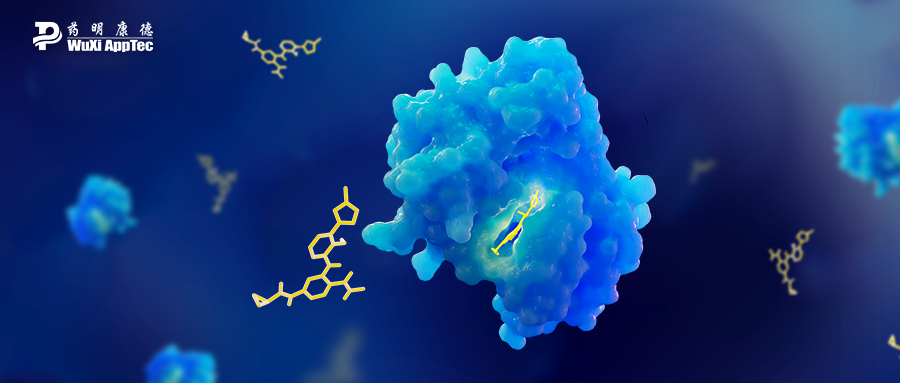
PCSK9 is aClinically VerifiedTarget for lowering LDL-C levels.The role of PCSK9 protein is to inhibitLow-Density Lipoprotein Receptor (LDLR)Recycling and Reuse.Therefore, reducing the level of PCSK9 protein allows more LDL receptors to return to the surface of liver cells, bind with more LDL, and remove them from the bloodstream.
Currently, the development pipeline for targeting PCSK9 to lower cholesterol can mainly be divided into two major directions. The first category is oral small molecules, represented by AstraZeneca's AZD0780 and Merck (MSD)'s MK-0616.MK-0616 is a macrocyclic molecule that binds to PCSK9 and inhibits the interaction between PCSK9 and LDLR, which can be administered in a daily tablet form. In a Phase 2b clinical trial, patients with hypercholesterolemia were randomized to receive one of four different doses (6 mg–30 mg) of MK-0616 or a placebo. The trial results showed,At Week 8, all doses of MK-0616 significantly reduced patients' LDL-C compared to placebo, with reductions ranging from 41.2% (6 mg) to 60.9% (30 mg).The therapeutic effect of the drug reached nearly peak level after two weeks of treatment and was maintained during the 8-week treatment period. Currently, MK-0616 has entered phase 3 clinical research. At the end of last year, Merck initiated two international multicenter studies on MK-0616 in China.Phase 3 Clinical Study, with indications including atherosclerosis and hypercholesterolemia. Notably, this therapy was selected as the DrugHunter.com 2023 Therapy of the Year.Top Ten "Star" Small MoleculesOne of.
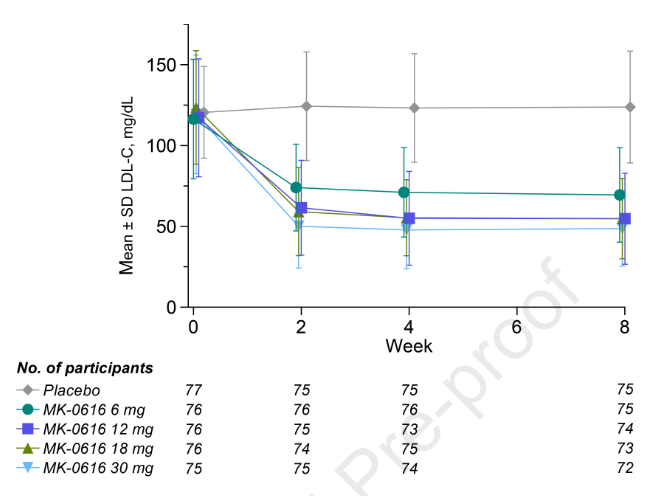
▲MK-0616 significantly reduces LDL-C in patients (Image source:Reference [2])
Another type of PCSK9-targeted therapy utilizes gene editing to suppress the expression of PCSK9. This type of therapy has the potential to achieve long-term maintenance of low cholesterol levels in patients with a single dose.The in-development single-base editor VERVE-101 developed by Verve Therapeutics is one such example. In November 2023, the data for VERVE-101 was released.Phase 1 Trial DataDisplay,A participant receiving the high-dose treatment maintained a 55% reduction in LDL-C over six months, marking the first proof-of-concept for gene editing in humans.VERVE-101 is expected to release more data in the second half of 2024, while VERVE-102, which also targets PCSK9 but has a different design from VERVE-101, will initiate a Phase 1 clinical trial in the first half of 2024.
The PCSK9-targeted siRNA therapy Leqvio (inclisiran) developed by Novartis also demonstrated gene silencing effects lasting up to six months after a single injection. The ORION-8 clinical trial, published in August last year,Phase 3 TrialLong-term data shows,Twice-yearly dosing of Leqvio added to statin therapy results in sustained lowering of LDL-C for more than six years in patients with ASCVD, ASCVD risk equivalents, or heterozygous familial hypercholesterolemia (HeFH).In addition, SGB-3403, the lead product of RNAi therapy startup SaintRNA Bio, has entered the clinical trial stage in China and Australia.SGB-3403 is an siRNA-GalNAc conjugate targeting PCSK9 in hepatocytes., which uses the next-generation GalNAc conjugation technology developed by Shengyin Biotech for delivery to liver cells, inhibiting the synthesis of PCSK9 protein in the liver through RNAi.

Image Source: Provided by SinoBio, Produced by the Content Team of WuXi AppTec

▲To learn more about the application of cutting-edge technologies in the biopharmaceutical industry, please long-press and scan the QR code above to access "WuXi AppTec Live Studio" and watch live discussions and exciting replays on related topics.
[2] Ballantyne et al., (2023). Efficacy and safety of the oral PCSK9 inhibitor MK-0616: a phase 2b randomized controlled trial. Journal of the American College of Cardiology, DOI: 10.1016/j.jacc.2023.02.018


Share,PointLike,In View, Focusing on Global Biomedical Health Innovation