

Medtronic Announces Leadership Shake-up in Core Neuroscience Businesses Amid Strategic Realignment

Medtronic
Chronic Disease Medical Device and Therapy Developer

Source: Medical Device Business Review
Author: Commenter
Reproduction without authorization is prohibited, and reproduction is allowed 24 hours later.
Trillion-Dollar Neuroscience Track: A New Paradigm is Quietly Unfolding
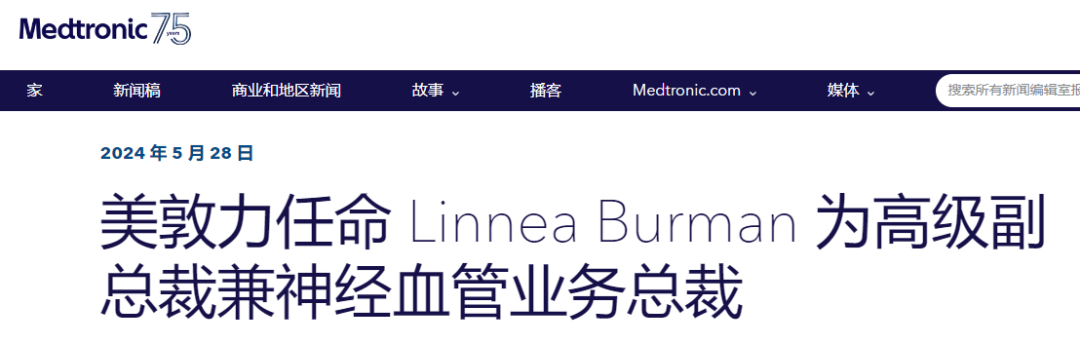
On May 28, 2024, Medtronic officially announced two major personnel appointment updates:NeurovascularAndPelvic HealthTwo Major Business UnitsEach welcomed 1 new memberPresident。
Notably, within Medtronic's overall business portfolio, these two divisions both fall under its "Neuroscience Portfolio"Segment's Specialty Therapies Business Branch.
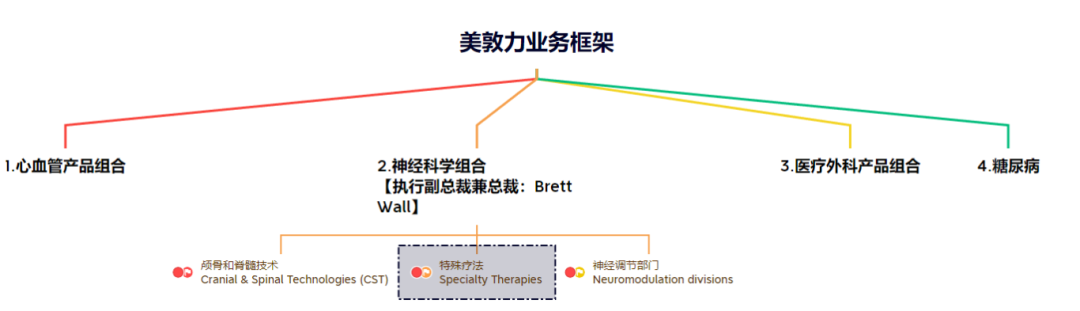
Chart: Medical Device Business Review
This is also following the last OctoberNeuromodulation BusinessPresidentAfter Renewal,Medtronic's Neuroscience BusinessAnother round of significant personnel adjustments.
The announcement shows that Burman will succeed Dan Volz as the company's Senior Vice President andPresident of Neurovascular Business。

Linnea Burman
In her new role, Burman willResponsible for Medtronic's global business portfolio strategy, product development, commercial execution, and overall financial performance in stroke treatment.。
A few months ago, taking officeNeuromodulation BusinessPresidentPaolo Di Vincenzo likewise,Burman will also report to Brett Wall, Executive Vice President of Medtronic and President of the Neuroscience Portfolio.
Burman has more than 20 years of experience in managing global teams in the medical technology industry.
Previously, she served as the largest division of Medtronic's neuroscience business, which also delivered the most impressive performance in recent years.Cranial and Spinal Technologies (CST) BusinessVice President and General Manager of Supporting Technologies, Burman is reportedly a key figure in this business unit.FounderAndBusiness Strategy Driver。
Meanwhile, during his tenure at Medtronic, Burman also played a key role in driving the market development for post-stroke spasticity indications.
Emily Elswick
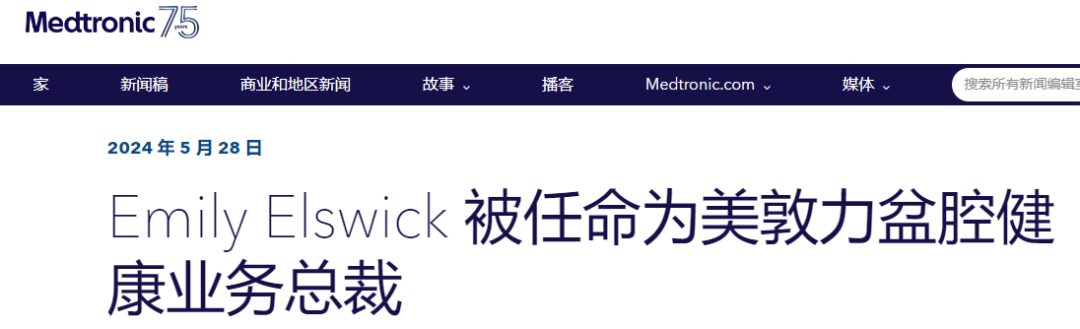
Medtronic also announced that Emily Elswick, former Vice President of the CEO Office, now serves asPresident of Pelvic Health, SimilarlyA Member of the Neuroscience Leadership Team。

Emily Elswick
Elswick is a 20-year veteran of Medtronic, and her previous role focused on implementing company-wide strategic initiatives, including coordinating the annual strategic planning and capital allocation processes.
She also used to be at MedtronicVice President and General Manager of Lung Health and Visualization,Lead a cross-functional global organization dedicated to developing minimally invasive diagnostic and therapeutic solutions.
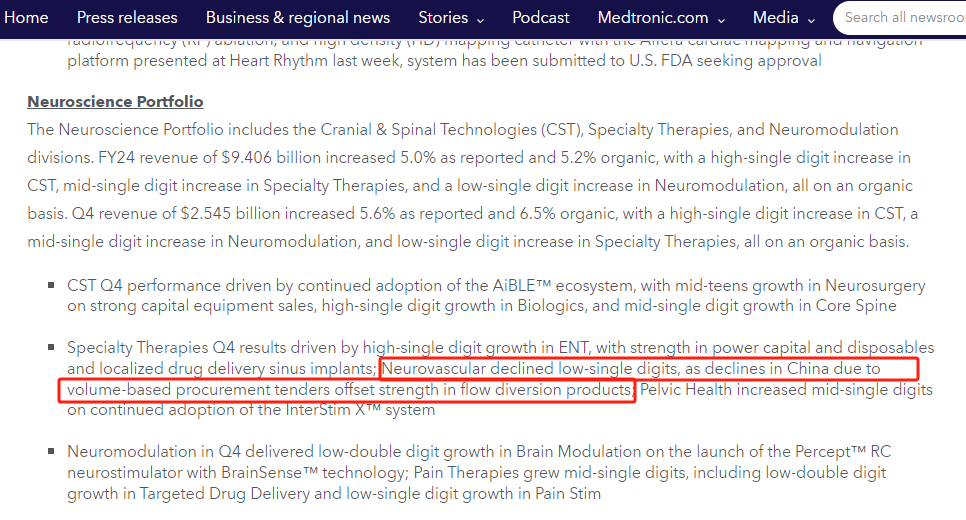
According to Medtronic's latest disclosed fiscal year 2024 report, its neurovascular business has declined due to the impact of China's volume-based procurement.
The sustained adoption of the InterStim X™ system, however, resulted in single-digit growth for the pelvic health business.
Regarding the appointment of the two new presidents this time, Brett Wall, Executive Vice President of Medtronic and President of the Neuroscience Portfolio, expressed approval and optimism.
As the second oldest division of Medtronic, the neuroscience business has been one of its core framework operations since the early days and continues to deliver solid performance.
Data shows that in the fiscal year 2024, its neuroscience division achieved $9.406 billion in revenue, equivalent to RMB68.1 billion。
At the same time, it is the department with the highest growth rate in Medtronic's revenue increase for FY24, excluding the diabetes business, and has maintained a high growth momentum over the years.
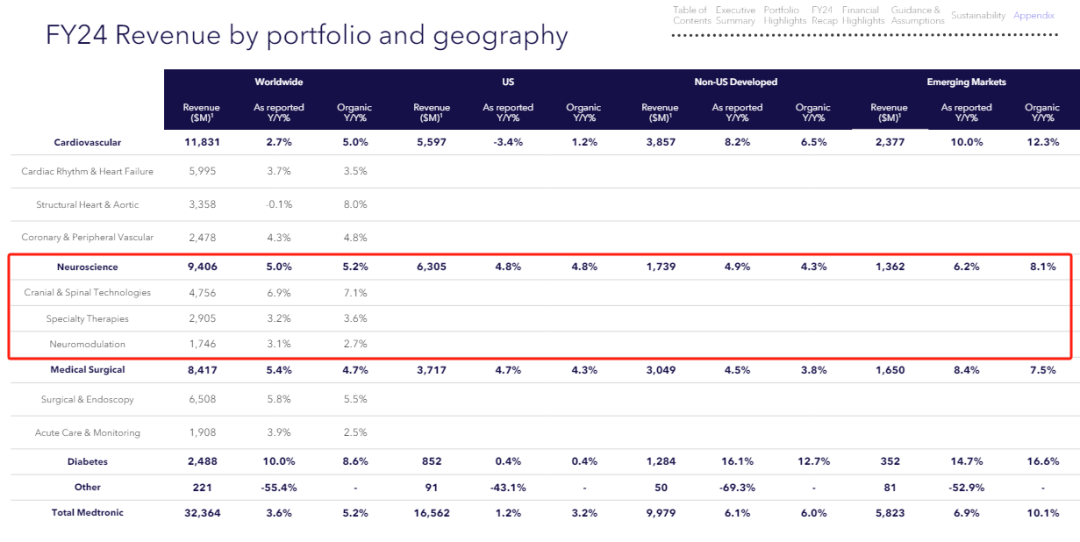
Medtronic 2024 Fiscal Year Report
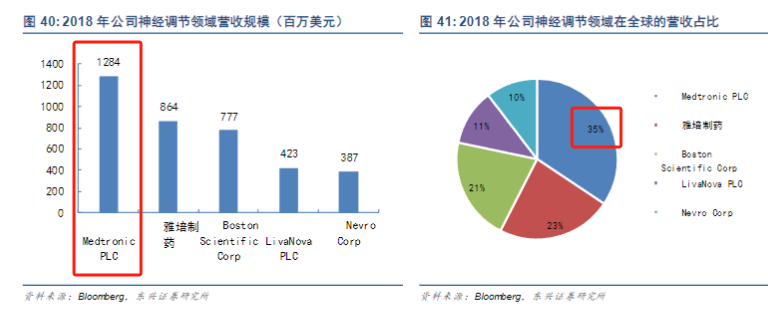
In terms of market position, the "Neuro modulation Business" segment, which is the smallest in Medtronic's neuroscience business, still holds a global market share of up to one-third, demonstrating its undeniable strength.
How did Medtronic, which started with cardiac pacemakers, gradually establish its status in the field of neuroscience?
Going back to 1969, Medtronic, which had been established for just 20 years, launched the implantable spinal cord stimulator and brain stimulator, taking its first step into the neuromodulation business.
In 1976, when most medical device companies around the world were still unfamiliar with this concept, Medtronic took the lead in establishingNeurology Business Department, opening up another major business branch following cardiovascular.
Since then, products such as the Neuromod 3700, ESI, and Pieces, including brain stimulators and spinal cord stimulators, have been successively introduced.
In 1983, Medtronic released a treatment for pain.World's First Implantable Controllable Neurostimulation Device Itrel。
Through nearly 20 years of independent research and development, by the end of the 20th century, this medical device giant had preliminarily built its own moat in this field with a high technical threshold, leading the industry by a large margin.
During the formative stage of the industry, Medtronic seized the market opportunity ahead of others, established a strong reputation, and laid a solid foundation for future development.
After completing the preliminary system setup and reaching a certain scale, Medtronic began to look for acquisition targets to strengthen its own team.
In 2000, a medical vascular device company called ev3 was established in the United States.
This company successfully launched the revolutionary liquid embolic agent Onyx, after which it became possible to treat and even potentially cure cerebral vascular malformations and dural arteriovenous fistulas through minimally invasive means.
This disruptive therapy has greatly advanced the progress of neurointerventional technology.
In 2010, Covidien acquired ev3 for $2.6 billion in cash.
Two years later, Solitaire FR, the flagship thrombectomy stent under Covidien, received FDA approval for marketing.
Subsequently, in 2015, Medtronic successfully acquired Covidien. After this largest acquisition in the history of the medical device industry was completed, neurointervention and neuromodulation also became one of Medtronic's leading businesses.
At this point, Medtronic's dominant position in the field of neuroscience has been officially established.
It is worth mentioning that behind the resounding name of a medical device company, the product itself is often the lifeline.
Take the benchmark product of Medtronic Covidien's neurointervention — the Solitaire FR thrombectomy stent, for example. Its patented open-curl design can help doctors achieve better vascular recanalization during thrombectomy.The introduction of this product was once hailed as heralding a new era in acute stroke care.
After more than a decade of market testing, this product remains highly competitive.
In the field of neuromodulation, Medtronic'sSCS (Spinal Cord Stimulation) accounts for more than 54%, which is inseparable from the representative products.IntellisPowerful role played.
The product was approved by the FDA in 2017.As the smallest neurostimulator in global spinal cord stimulation systems currently, Intellis weighs only 29.1 grams, with an implantation depth increased to 3cm.。
Medtronic previously stated that more than 320,000 patients with chronic pain worldwide have used Medtronic's Spinal Cord Stimulation (SCS) technology.
Thanks to breakthroughs and outstanding performance in battery life, algorithm usage, and complementary product applications, Intellis has been highly popular since its launch and remains a significant driver of revenue growth.
The first-mover advantage and continuously reinforced product moat not only make Medtronic's name renowned worldwide at present but also pave the way for further expansion in the future.
According to the analysis report by Deloitte Switzerland's Life Sciences and Healthcare Financial Advisory team, neurological disorders are the second leading cause of death globally.
Neurological disorders and neuropsychiatric disorders cause 9 million and 8 million deaths respectively each year, together accounting for over 30% of total deaths.This means that one in every three people on Earth dies from neurological disorders.
Behind this lies a vast market worth trillions.
According to statistics, the global neuroscience market size was $612 billion in 2022, and it is expected to reachExpected to reach 721 billion US dollars (approximately RMB$5.2 Trillion)。
But given the extremely high industry barriers, this market's vast potential has been monopolized for years by a few medical device companies with first-mover advantages and strong capabilities.
Looking GloballyNeuromodulation Market, the leader in the top four细分 markets of spinal cord stimulation (SCS), deep brain stimulation (DBS), vagus nerve stimulation (VNS), and sacral nerve stimulation (SNS)Medtronic、Boston Scientific、Abbott、LivaNovaOccupyMore than 90%Share.
And inNeurointervention FieldThere is a similar situation. According to a research report released by the Southwest Securities Research and Development Center in April 2024, in 2022,Medtronic、Stryker、MicroventionSuch as foreign-funded enterprisesOccupyChina79% of the market。
However, with the evolution of regional policies, the rise of new forces, and the arrival of new opportunities, this competitive landscape seems to be quietly changing.
Medtronic clearly stated in its 2024 fiscal year report released last week:Impacted by China's volume-based procurement policy, the neurovascular business experienced a single-digit decline.
As early as 2003, ev3 entered China with cutting-edge medical devices such as coils, balloons, microcatheters, and microguidewires, becoming one of the first companies to deeply engage in China's neurointerventional field. With its leading technology, Medtronic and other medical device companies have enjoyed absolute "decision-making power" in this market for many years.
However, in the recently announced financial reports of major medical device multinational corporations, these companies that once enjoyed absolute advantages have frequently seen a decline in their performance in China.
And the underlying factor — volume-based procurement, continues to advance in a normalized manner.
It is reported that since the beginning of 2024, the neurointervention market has already undergone multiple rounds of centralized procurement.
In the 3+N28 category of neurointerventional products from the Beijing-Tianjin-Hebei region's medical consumables group procurement, specific products from Medtronic, Johnson & Johnson, and Stryker have experienced losing bids.The losing bidder is prohibited from selling products in the region for two years.
With the叠加of global cost-cutting, efficiency enhancement, and layoffs, even established medical device companies are inevitably feeling "the pressure" in this new environment.
Driven by the new environment, a group of new forces have also emerged.
Taking the Chinese market as an example,Several China-based companies, such as Xinwei Medical, MicroPort NeuroTech, and GuiChuang TongQiao, have demonstrated a differentiated competitive landscape, not only completingComprehensive coverage, while also establishing strengths in various细分 fields.
And this trend is further accelerating as the reshuffle caused by centralized procurement takes place.
Last month, information from the National Medical Products Administration showed,Developed independently by Suzhou Zhongtian Medical Device Technology Co., Ltd.Carotid Artery Stent System - Tian Tian Mi®Has passed the review and entered the "Green Channel" for special review of innovative medical devices.Expected to successfully obtain the first certificate for domestically produced carotid artery stents.
In addition to a new wave of policies, the old leading players in the international market are also rejuvenating their structures, presenting new faces.
In the neuromodulation sector, LivaNova ranks just behind Medtronic, Abbott, and Boston Scientific.
The story of Medtronic dates back to at least the 1980s.Among the two major advantageous businesses, one is the extracorporeal circulation device ECMO, and the other isVagus Nerve Stimulation Therapy(VNS), which accounts for 80% of the market share.
In order to further focus on its advantageous business in neuromodulation, this veteran leading company has successively divested its businesses in psychological management, valves, etc., including the Advanced Circulatory Support (ACS) business that was closed last year.
Moreover, in February this year, Medtronic welcomed a new CEO, who was previously the head of Johnson & Johnson's surgical business.Vladimir MakatsariaMr.,The company's prospects should not be underestimated.
Notably, neuroscience is closely aligning with cutting-edge fields like artificial intelligence, with brain-computer interfaces serving as a significant example.
In February this year,Elon Musk, the former world's richest man and renowned American entrepreneur, tweeted,His brain-computer interface company Neuralink has conductedFirst Human Transplant of Brain-Computer Interface Device, the transplant recipient is currently recovering well.
A short tweet, but behind it lies a milestone leap on the path to market for invasive brain-computer interface products.
Once the news about Musk was released, it instantly sparked a global internet buzz, making the field of neuroscience one of the focal points.
Subsequently, in ChinaTsinghua University's official website released news stating that the Tsinghua University and Xuanwu Hospital teams successfully conductedWireless Minimally Invasive Brain-Computer Interface Clinical Trial。
Notably, in recent years, whether it’s Elon Musk, or some brain science practitioners and related fund institutions in China, investors and participants in brain-computer interface technology have been flocking in.
Previously, according to statistics from Arterial Network, from 2017 to the first quarter of 2022, there were 23 new brain-computer interface startups globally; in the past seven years, the global healthcare + brain-computer interface market has seen 243 financing transactions, with a total financing amount of approximately US$2.87 billion (equivalent to RMB...RMB 20.6 billion)。
Among them, China's Tsinghua University and Zhejiang University, as well as overseas Stanford University, Intel, IBM, Qualcomm, Westwell Lab, and AI-CTX, have all made significant breakthroughs in the field of neuromorphic chip research.
In the new environment, with new forces and at a new high point, the track of neuroscience has once again been endowed with new imagination.
So, after this series of new officials take office, can Medtronic once again sound the charge and bring new breakthroughs and surprises to the industry? Let's wait and see.
All views in this article do not constitute investment advice.Medical Device ManufacturerThe industry review remains neutral on all viewpoints in the article and is solely for sharing and exchange.
*Advertisement

▼More Book Recommendations▼