

Novartis Announces One-Year Efficacy and Safety Data of Remibrutinib in Chronic Spontaneous Urticaria, Plans Global Regulatory Submissions in H2 2024

Novartis
Drug Development and Manufacturing

Welcome to follow Asymchem Pharma News

Today, Novartis announced the long-term efficacy and safety data of remibrutinib. Remibrutinib is a highly selective Bruton's tyrosine kinase (BTK) inhibitor being developed for the treatment of chronic spontaneous urticaria (CSU); in the pivotal Phase III studies REMIX-1 and REMIX-2, it showed efficacy for patients who still had symptoms while using second-generation H1-antihistamines.CSU Patients,Remibrutinib demonstrated significant symptom improvement in the early stages of treatment, which persisted until Week 52 (1 year).。
CompanySubmission of the remibrutinib marketing application for CSU indication to global health authorities will commence in the second half of 2024.。
About REMIX-1 and REMIX-2
REMIX-1 and REMIX-2 are two global, multicenter, randomized, double-blind, parallel-group, placebo-controlled Phase III studies, with REMIX-1 including 470 participants and REMIX-2 including 455 participants, aiming to determine the efficacy of taking 25 mg twice daily.remibrutinibEfficacy, Safety, and Tolerability in Treating Adult Patients with CSU. These subjects have inadequate disease control with second-generation H1-antihistamines and show poor response to placebo.
The primary outcome measure is the absolute change from baseline in the weekly Urticaria Activity Score (UAS7) at Week 12, as well as the weekly Itch Severity Score (ISS7) and the weekly Hives Severity Score (HSS7).The latest disclosed data shows:
Patients treated with remibrutinib showed improvement in UAS7 as early as Week 1, which was sustained up to 1 year (Week 52).
The assessment in Week 52 showed that nearly half of the patients had no itching or hives at all (UAS7=0).
Over a period of 1 year, remibrutinib demonstrated good and consistent safety; exposure-adjusted rates did not increase with long-term treatment. The most common (≥5%) adverse events were respiratory infections (including COVID-19 and nasopharyngitis) and headache, all comparable to placebo.
Detailed data will be presented at the 2024 European Academy of Allergy and Clinical Immunology (EAACI) Congress, held from May 31 to June 3 in Valencia, Spain.
About Remibrutinib
Remibrutinib is the most significant next-generation product in Novartis' autoimmune pipeline, and alsoThe world's first BTK inhibitor to successfully complete Phase III clinical trials in the autoimmune field, the drug can block the BTK cascade and prevent the release of histamine that causes itchy hives (wheals) and swelling. When remibrutinib is used in combination with a standard dose of antihistamine, it targets two parts of the inflammatory pathway: remibrutinib inhibits histamine release, while antihistamines block histamine receptors, thus providing a "two-pronged approach" to alleviate CSU symptoms.
In addition to CSU, the company is also exploring the research of remibrutinib in several other immune-mediated diseases, such as hidradenitis suppurativa, food allergies, chronic inducible urticaria, and multiple sclerosis.
Previously, the company disclosed preliminary efficacy data of remibrutinib in the REMIX study: compared with the placebo group, the remibrutinib group showed significant improvements from baseline in UAS7, ISS7, and HSS7 at week 12. The proportion of patients with well-controlled symptoms (UAS7≤6) was significantly higher starting as early as week 2 (and continuing through week 12), with about one-third of patients experiencing no itching or hives at week 12.
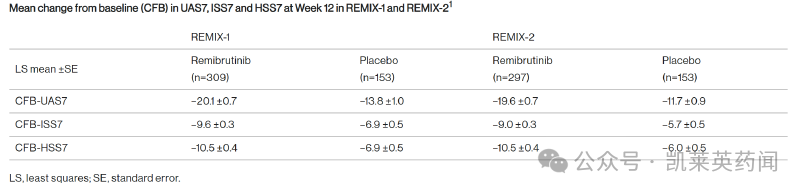
In terms of safety, the overall incidence of adverse events was comparable to placebo (64.0% in the remibrutinib group vs 64.7% in the placebo group), including infections (32.8% vs 34.0%) and abnormal liver function tests. Elevations in liver transaminases occurred in both groups but were asymptomatic, transient, and reversible.
About BTK Inhibitors
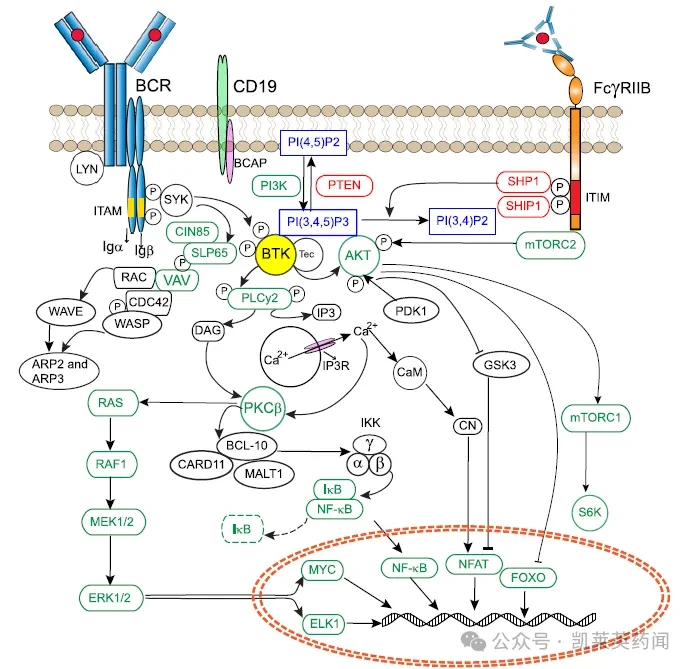
BTK is a non-receptor protein tyrosine kinase (NRTK) that belongs to the TEC kinase family and plays an important role in signal transduction pathways such as the B-cell surface receptor (BCR). Under physiological conditions, BTK is involved in the development and maturation of B cells, as well as the proliferation, transport, chemotaxis, and adhesion of B cells.
On one hand, abnormal activation of BTK is associated with various hematological tumor diseases: in multiple B-cell hematological tumors such as CLL/SLL, persistent activation of BTK leads to downstream pathways like AKT, ERK, and NF-κB, inhibiting apoptosis of malignant B lymphocytes and causing their abnormal proliferation.
On the other hand, abnormal activation of BTK is associated with multiple autoimmune diseases. In various autoimmune diseases such as rheumatoid arthritis (RA), multiple sclerosis (MS), and systemic lupus erythematosus (SLE), BTK mediates pathophysiological processes closely related to the disease, including the production of autoantibodies and the secretion of various pro-inflammatory factors.
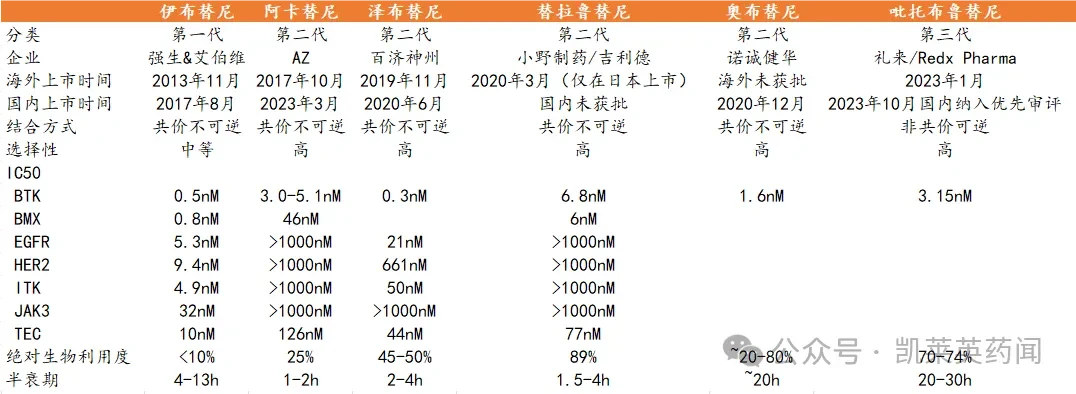
Currently, there are mainly three generations of BTK inhibitors on the market.
First Generation: Ibrutinib is the world's first approved BTK inhibitor, with the most indications covered;
Second Generation: Acalabrutinib, Zanubrutinib, Orelabrutinib, and other second-generation inhibitors focus on enhancing drug targeting and safety. Among them, Zanubrutinib has a broader range of indications, while Acalabrutinib covers only some core indications.
The third generation: represented by Pirtobrutinib, is a non-covalent inhibitor that adopts a new binding site.
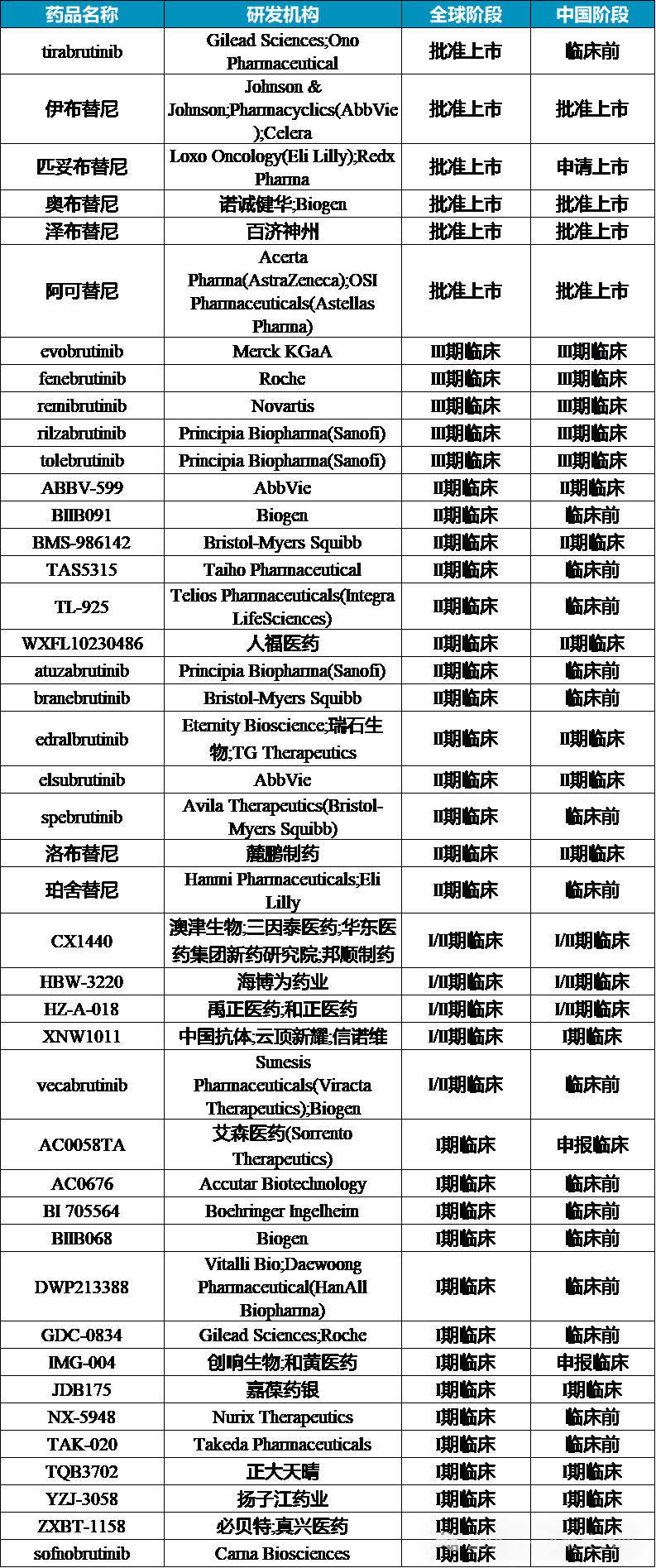
At the same time, BTK inhibitors have been shown to provide clinical benefits in the treatment of autoimmune diseases and inflammation, including ITP, SLE, MS, RA, etc. In addition to Novartis' remibrutinib, China's InnoCare Pharma’s orelabrutinib has also undergone a series of validations for indications such as ITP, SLE, and MS; furthermore, IMG-004, co-developed by Connect Biopharma and Hutchmed, was specifically designed for autoimmune diseases.
Progress in the Development of BTK Inhibitors for Autoimmune Diseases
Globally, the overall market for BTK inhibitors has seen steady growth in recent years; however, sales of the representative drug ibrutinib reached $3.596 billion in 2023, showing a certain degree of decline, mainly due to the gradual maturation of second-generation BTK inhibitors such as acalabrutinib and zanubrutinib.
About Chronic Urticaria
Chronic urticaria is an autoimmune disease caused by various factors leading to temporary inflammatory hyperemia and tissue edema in the skin, mucous membranes, and blood vessels, lasting more than six weeks. Clinically, it manifests as wheals and plaques occurring不定时地 on the trunk, face, or limbs, causing itching. Nearly half of moderate to severe patients suffer from painful angioedema, significantly impacting their quality of life.
Globally, there are approximately 40 million patients with chronic urticaria, of which about 1.1 million are receiving treatment in the United States. Among them, only 600,000 patients have their condition controlled after receiving standard antihistamine therapy, and only around 80,000 patients are treated with biologics, indicating unmet clinical needs.
About Novartis' Layout in the Autoimmune Field
After spinning off the generics company Sandoz, Novartis has formed an operating structure centered on four main segments with a focus on innovative drugs: (1) Cardiovascular, Renal, and Metabolic; (2) Immunology; (3) Neuroscience; and (4) Oncology. Among the four key segments currently being operated, the oncology segment accounted for the largest share of revenue in 2023 at 42.71%, followed by the immunology segment at 24.51%, the cardiovascular, renal, and metabolic segment at 20.08%, and the neuroscience segment at 12.71%.
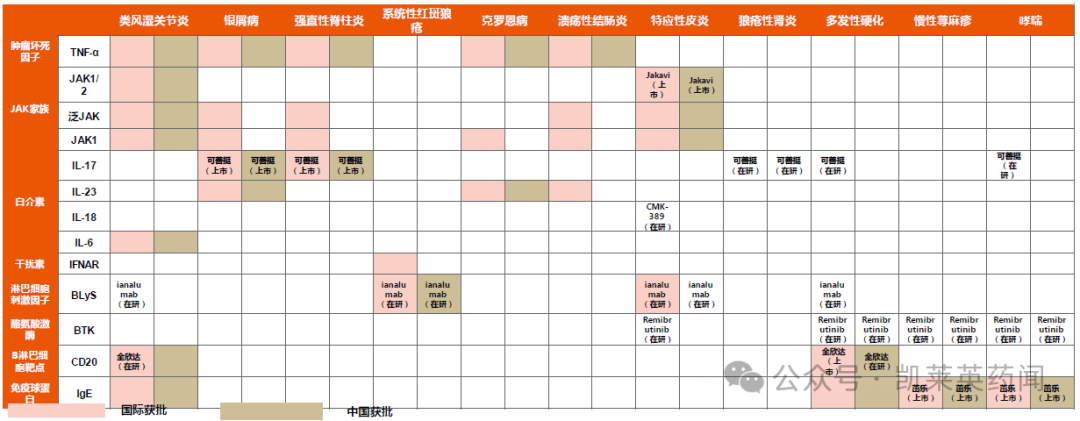
Autoimmune diseases are conditions caused by the immune response to self-antigens, leading to damage of one's own tissues. These diseases are the third most common chronic illnesses after cardiovascular diseases and cancer. Novartis has established a strong presence in various key indications of autoimmune diseases with its core products such as Cosentyx and Jakavi, as well as key pipeline candidates like remibrutinib and ianalumab. Taking CSU (chronic spontaneous urticaria) as an example, Xolair (omalizumab) is the first and only injectable biologic approved for CSU, currently co-promoted by Novartis and Genentech, a subsidiary of Roche.
Novartis' Product Portfolio in the Autoimmune Sector
References
1. Company Official Website
2. Huachuang Securities, Ping An Securities, Southwest Securities, Debang Securities, Northeast Securities




"Views"Click once